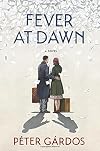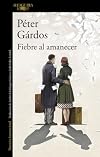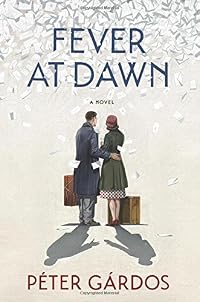
Fever at Dawn
by Péter Gárdos
On This Page
Description
July 1945. Miklos is a twenty-five-year-old Hungarian who has survived the camps and has been brought to Sweden to convalesce. His doctor has just given him a death sentence: his lungs are filled with fluid and in six months he will be gone. But Miklos has other plans. He didn't survive the war only to drown from within, and so he wages war on his own fate. He acquires the names of the 117 Hungarian women also recovering in Sweden, and he writes a letter to each of them in his beautiful show more cursive hand. One of these women, he is sure, will become his wife. In another part of the country, Lili reads his letter and decides to write back. For the next few months, the two engage in a funny, absurd, hopeful epistolary dance. Eventually, they find a way to meet. Based on the true story of Péter Gárdos's parents. show lessTags
Recommendations

















Member Reviews
A strange and humorous novel, like a Catch 22 of Jewish refugee life post concentration camp. Sweden has resettled a good number of camp survivors who are broken in all aspects. Tuberculosis leaves Miklos, a Yossarian type, with a year to live, but instead of retreating into despair, he obtains a list and sends love letters to the 117 Hungarian women who are also recovering in Sweden. Miklos has good male companions and is pleased to share the women who correspond with him. All except Lili, whom he keeps for himself. There's something about her...
This is a true story of how the author's parents met. How fortunate that he found all of their letters after they died, and how lucky was Peter Gardos to have such funny, trusting souls arise show more from the wreckage of Europe and from their hideous memories to become his mother and father. show less
This is a true story of how the author's parents met. How fortunate that he found all of their letters after they died, and how lucky was Peter Gardos to have such funny, trusting souls arise show more from the wreckage of Europe and from their hideous memories to become his mother and father. show less
I struggled with how to properly convey my thoughts about this book.
"Fever at Dawn" is a fictionalized account about the love story of author Peter Gardos's parents, Miklos and Lili, who are both Holocaust survivors. After being liberated from their separate concentration camps, Miklos and Lili are each taken to Sweden where they are sent to recuperate in hospitals. Miklos learns that having survived the Nazis, he has developed a virulent tuberculosis which will claim his life in 6 months or less. Deciding he has no time to lose, Miklos begins a letter writing campaign to introduce himself all the displaced Hungarian Jewish women in Sweden, which is how he meets Lili.
While their real-life story deserves 5 stars, the book doesn't quite show more measure up. There were moments of whimsy, humor, and at times a feeling of hope, but in general the book felt choppy and dull. Originally written in Hungarian, it seems that something -- the language, tone, or flow -- was lost in translation.
2.5 stars
Thank you to NetGalley and Houghton Mifflin Harcourt for a galley of this book in exchange for an honest review. show less
"Fever at Dawn" is a fictionalized account about the love story of author Peter Gardos's parents, Miklos and Lili, who are both Holocaust survivors. After being liberated from their separate concentration camps, Miklos and Lili are each taken to Sweden where they are sent to recuperate in hospitals. Miklos learns that having survived the Nazis, he has developed a virulent tuberculosis which will claim his life in 6 months or less. Deciding he has no time to lose, Miklos begins a letter writing campaign to introduce himself all the displaced Hungarian Jewish women in Sweden, which is how he meets Lili.
While their real-life story deserves 5 stars, the book doesn't quite show more measure up. There were moments of whimsy, humor, and at times a feeling of hope, but in general the book felt choppy and dull. Originally written in Hungarian, it seems that something -- the language, tone, or flow -- was lost in translation.
2.5 stars
Thank you to NetGalley and Houghton Mifflin Harcourt for a galley of this book in exchange for an honest review. show less
A strange little book that's based on the true story of how the author's parents met and married. Miklos' character just about bursts off the pages, which only makes it more obvious and disappointing that Lili is such a passive invalid. I've read some criticism of the book's seemingly light-hearted treatment of Holocaust survivors, but I think Gardos includes enough brief flashbacks to the main characters' experiences in concentration camps to let the reader know he respects the trauma they endured. I don't begrudge Miklos' sometimes comedic adventures, but I wish Lili had been allowed to have some as well.
Fever at Dawn by Péter Gárdos began with a box of letters, or, more accurately, the letter-writers, who would become his parents.
"But for fifty years I did not know that their letters still existed. In the midst of political unheaval and the chaos of moving to new apartments, my parents had carted them around without ever talking about them. They were preserved by being invisible." (This quote is from the epilogue.)
The novel is translated from the Hungarian by Elizabeth Szász, the language straight-forward, the cadence uncomplicated, and the tone ever-so-slightly formal.
Sometimes a metaphor shines forth. (Here's a gem: "The occasional Swedish nurse, with her braided hair, crisply starched cloak and bonnet, was squeezed in between show more them [200 soldiers] like a raisin in a bun.")
Mostly, however, the emphasis is on the broader story, and even though the two letter-writers are at the heart of it, they are not necessarily presented clearly to readers. (In some ways, they, too, are preserved by being invisible.)
Consider this description of Miklós, who has decided that he will send a photograph to Lili, even though he is not satisfied with his appearance.
"Tibor Hirsch, electronic radio technician and photographer’s assistant, hesitated. But Miklós was his friend, and was giving him begging looks, so he put aside his professional pride.
Within five minutes he had worked out how to take a photograph in which my father would be more or less recognisable. He posed Harry in the foreground. In half-profile, at the most flattering angle. A watery sun came out for the briefest moment. Hirsch positioned them with backlight for an artistic feel. He instructed Miklós to run up and down a few metres behind Harry."
Miklós is caught in the image, in a blur, behind his friend. This is highly appropriate, as readers are really only catching a glimpse of him as well, between the lines of letters that he wrote.
But somehow it also captures an aspect of a playful but shy, honest but off-beat man, who, while recovering from the horrors of WWII, in a Swedish hospital, wrote letters to many women seeking companionship, romance even.
When his doctor realises how serious Miklós is taking his pursuit, Dr.Lindholm is not impressed.
“'Last time I tell you, say good bye to her, remember? But even if you were healthy, and you are not, I don’t allow female visitor to male hospital. As a reading man you must understand this.'
'What should I understand?'
'You once mentioned The Magic Mountain? Sensuality is…how I put it…unsettling. Is dangerous.'"
But Miklós is determined: unstoppable and unflappable. He has a poet's heart, and he has something to say.
"The poem soared above the noise of the wheels. Miklós, like a cross between a troubadour and train conductor, marched the length of the carriages. He left half-empty compartments behind him without regret. He had no intention of sitting down. Instead he wanted to form some sort of bond with his fellow travellers, / strangers who were staring in astonishment or sympathy at this passenger holding forth in an unfamiliar language. Maybe some of them could sense in him the lovesick ministreal. Maybe some thought he was a harmless madan. Miklós didn’t give a damn; he walked on, reciting his poem."
Unlike his, Lili's photograph is straight-forward, but her story takes some unexpected turns as well. (Her experience in another Swedish hospital bears some similarities to Miklós' but the relationships between her and her friends are drawn in greater detail, and her prognosis is not determined to be fatal.)
In the wake of a genocidal war, there are deep and devastating themes at work here: freedom and recovery, faith and mortality, loneliness and devotion.
But these ideas are explored in a broader context, so that readers can explore the layers at will.
Rather like Lili's father's suitcase: "Every Monday at dawn Lili’s father, Sándor Reich, trudged down Hernád Street in Budapest carrying two huge Vulkan cabin trunks. In each one, like the layers of an onion, dozens of smaller and smaller cases and bags lay one inside the other."
Fever at Dawn is a simple and short story, but its reverberations cross generations and will attract a wide variety of readers.
This review originally appeared here, on BuriedInPrint. show less
"But for fifty years I did not know that their letters still existed. In the midst of political unheaval and the chaos of moving to new apartments, my parents had carted them around without ever talking about them. They were preserved by being invisible." (This quote is from the epilogue.)
The novel is translated from the Hungarian by Elizabeth Szász, the language straight-forward, the cadence uncomplicated, and the tone ever-so-slightly formal.
Sometimes a metaphor shines forth. (Here's a gem: "The occasional Swedish nurse, with her braided hair, crisply starched cloak and bonnet, was squeezed in between show more them [200 soldiers] like a raisin in a bun.")
Mostly, however, the emphasis is on the broader story, and even though the two letter-writers are at the heart of it, they are not necessarily presented clearly to readers. (In some ways, they, too, are preserved by being invisible.)
Consider this description of Miklós, who has decided that he will send a photograph to Lili, even though he is not satisfied with his appearance.
"Tibor Hirsch, electronic radio technician and photographer’s assistant, hesitated. But Miklós was his friend, and was giving him begging looks, so he put aside his professional pride.
Within five minutes he had worked out how to take a photograph in which my father would be more or less recognisable. He posed Harry in the foreground. In half-profile, at the most flattering angle. A watery sun came out for the briefest moment. Hirsch positioned them with backlight for an artistic feel. He instructed Miklós to run up and down a few metres behind Harry."
Miklós is caught in the image, in a blur, behind his friend. This is highly appropriate, as readers are really only catching a glimpse of him as well, between the lines of letters that he wrote.
But somehow it also captures an aspect of a playful but shy, honest but off-beat man, who, while recovering from the horrors of WWII, in a Swedish hospital, wrote letters to many women seeking companionship, romance even.
When his doctor realises how serious Miklós is taking his pursuit, Dr.Lindholm is not impressed.
“'Last time I tell you, say good bye to her, remember? But even if you were healthy, and you are not, I don’t allow female visitor to male hospital. As a reading man you must understand this.'
'What should I understand?'
'You once mentioned The Magic Mountain? Sensuality is…how I put it…unsettling. Is dangerous.'"
But Miklós is determined: unstoppable and unflappable. He has a poet's heart, and he has something to say.
"The poem soared above the noise of the wheels. Miklós, like a cross between a troubadour and train conductor, marched the length of the carriages. He left half-empty compartments behind him without regret. He had no intention of sitting down. Instead he wanted to form some sort of bond with his fellow travellers, / strangers who were staring in astonishment or sympathy at this passenger holding forth in an unfamiliar language. Maybe some of them could sense in him the lovesick ministreal. Maybe some thought he was a harmless madan. Miklós didn’t give a damn; he walked on, reciting his poem."
Unlike his, Lili's photograph is straight-forward, but her story takes some unexpected turns as well. (Her experience in another Swedish hospital bears some similarities to Miklós' but the relationships between her and her friends are drawn in greater detail, and her prognosis is not determined to be fatal.)
In the wake of a genocidal war, there are deep and devastating themes at work here: freedom and recovery, faith and mortality, loneliness and devotion.
But these ideas are explored in a broader context, so that readers can explore the layers at will.
Rather like Lili's father's suitcase: "Every Monday at dawn Lili’s father, Sándor Reich, trudged down Hernád Street in Budapest carrying two huge Vulkan cabin trunks. In each one, like the layers of an onion, dozens of smaller and smaller cases and bags lay one inside the other."
Fever at Dawn is a simple and short story, but its reverberations cross generations and will attract a wide variety of readers.
This review originally appeared here, on BuriedInPrint. show less
Una historia de amor verídica, preciosa, esta es la historia de los padres del autor, dos judíos Húngaros rescatados de campos de concentración. Milkos con un peso de 20 kilos, enfermo de Tifus, sin dientes y declarado con 6 meses de vida, escribe 117 cartas a 117 mujeres húngaras rescatadas y emplazadas a Suecia (como él), varias le contestan, pero es de Lili de quien se enamora. Preciosa historia, con una narrativa hermosa y sentida. No es solo una historia de amor, es una historia además de supervivencia y reencuentros, de esa lucha de querer vivir y querer seguir adelante
Quick little novel, a post-holocaust love story, based on contemporary letters, written by the resulting son. The story is blighted by 'holocaust porn', a page or two of no doubt true, but needless, descriptions by the son of what the parents must have experienced in the camps.
It’s July 1945 and Miklos is seriously ill having just barely survived the Nazi camps during WWII. In a Swedish hospital, Dr. Lindholm said he has no more than six months to live; he has incurable Tuberculosis (TB). Impulsively, Miklos began seeking a wife. He wrote to Hungarian women in hospitals and rehabilitation centers in Sweden — 117 letters in all. He had beautiful handwriting with “shapely letters” and “elegant loops.” Lili Reich was one of the few who took the time to respond. He tells his friend, “… she’s the one.” She was a patient at the Smalandsstenar rehabilitation hospital. After many letters, they finally agreed to meet. He traveled quite some distance. Lili had also suffered during the war and was show more left in a very frail state from the brutality she’d endured within a Nazi camp.
Peter Gardos is the author. He is also the son of Miklos and Lily. He tells this sweet romantic story from the letters exchanged between his parents – two people who survived the Holocaust. This book was originally written in Hungarian, so I’m not sure if it was due to translation issues, but the writing told in third person is broken periodically referencing ‘my father’. The story was charming, and of course based on reality, but I didn’t feel the author personified the emotional level I would have expected of their relationship. Rating: 3 out of 5. show less
Peter Gardos is the author. He is also the son of Miklos and Lily. He tells this sweet romantic story from the letters exchanged between his parents – two people who survived the Holocaust. This book was originally written in Hungarian, so I’m not sure if it was due to translation issues, but the writing told in third person is broken periodically referencing ‘my father’. The story was charming, and of course based on reality, but I didn’t feel the author personified the emotional level I would have expected of their relationship. Rating: 3 out of 5. show less
Members
- Recently Added By
Author Information

10 Works 237 Members
Awards and Honors
Distinctions
Common Knowledge
- Original title
- Hajnali láz
- Original publication date
- 2010
- Original language
- Hungarian
Classifications
- Genres
- Fiction and Literature, General Fiction
- DDC/MDS
- 894.51134 — Literature & rhetoric Literatures of other languages Literatures of Altaic, Uralic, Hyperborean, Dravidian languages; literatures of miscellaneous languages of south Asia Finno-Ugric languages Ugric languages Hungarian Hungarian fiction 2000–
- LCC
- PH3382.17 .A37 .H3513 — Language and Literature Uralic languages. Basque language Uralic. Basque Hungarian
- BISAC
Statistics
- Members
- 220
- Popularity
- 145,929
- Reviews
- 14
- Rating
- (3.64)
- Languages
- 12 — Danish, Dutch, English, Estonian, French, German, Hungarian, Italian, Portuguese, Russian, Spanish, Swedish
- Media
- Paper, Audiobook, Ebook
- ISBNs
- 40
- ASINs
- 6