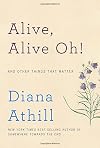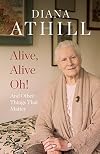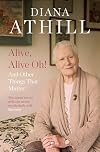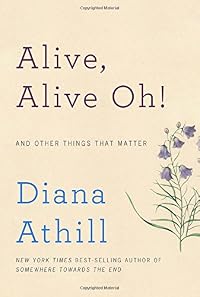
Alive, Alive Oh!
by Diana Athill
On This Page
Description
"A luminous, wise, and joyful insight into what really matters at the end of a long life, from the beloved author of the award-winning Somewhere Towards the End. What will you remember if you live to be 100? Diana Athill charmed readers with her prize-winning memoir Somewhere Towards the End, which transformed her into an unexpected literary star. Now, on the eve of her ninety-eighth birthday, Athill has written a sequel every bit as unsentimental, candid, and beguiling as her most beloved show more work. Writing from her cozy room in Highgate, London, Diana begins to reflect on the things that matter after a lifetime of remarkable experiences, and the memories that have risen to the surface and sustain her in her very old age. 'My two valuable lessons are: avoid romanticism and abhor possessiveness,' she writes. In warm, engaging prose she describes the bucolic pleasures of her grandmother's garden and the wonders of traveling as a young woman in Europe after the end of the Second World War. As her vivid, textured memories range across the decades, she relates with unflinching candor her harrowing experience as an expectant mother in her forties and crafts unforgettable portraits of friends, writers, and lovers. A pure joy to read, Alive, Alive Oh! sparkles with wise and often very funny reflections on the condition of being old. Athill reminds us of the joy and richness of every stage of life--and what it means to live life fully, without regrets" -- show lessTags
Recommendations






Member Reviews
At only about 150 pages, this was a really quick read but it definitely contained some real nuggets of wisdom and was really refreshing in its honesty. At 98, Diana Athill writes about various times in her life including her idyllic sounding childhood, living through the second world war, and her moving into assisted living in old age. Probably the most eye opening chapter is that in which she describes her long affair with Barry, who was married when they first got together and with whom she became pregnant, only to have a miscarriage fairly late in the pregnancy. Athill is very candid about her feelings surrounding the miscarriage, how she felt guilty for not being as sad as she felt she ought to have been at the loss of the child; show more how the fact that she survived the miscarriage (it was a very traumatic one) was infinitely more joyful to her than the happiness she felt at being pregnant. Athill never did have children, and on occasion I found myself thinking she sounded quite selfish and even a bit mean. Actually, however, she is of course just as "good" as anyone else and should be admired for her honesty and integrity in making public her own mistakes and flaws. I found this book to be a poignant reminder of our inescapable human nature. Athill embraces all of her life experiences, avoiding the sugarcoating of events which ultimately left me with a feeling of great respect for her, and a feeling of optimism for the future. show less
Candid and beautifully written memoir of key moments that have shaped a life well lived. I particularly enjoyed her clear-sighted and unsentimental perspective on relationships of all sorts. An inspiring book.
Yesterday was Diana Athill’s birthday – she was one hundred years old – an age which seems quite remarkable to many of us, but which, apparently more of us will be reaching. It was a complete coincidence that I chose to read what is surprisingly not her most recent memoir, just a few days before her big day. Having received her book Stet as part of a secret Santa gift exchange between booky friends I was reminded that I had received Alive, Alive Oh! last Christmas and elected to read that one first.
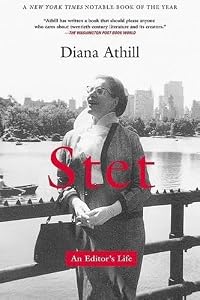
Diana Athill is best known now for her memoirs and short stories, though she began her career in publishing. Working as an editor with Andre Deutsch – one of the founders of the company, through a fifty-year career she worked with show more some of the biggest names in literature. Her book Stet – which I received recently, is the memoir about that work, and the people she met and worked with. I am looking forward to reading that.
“My two valuable lessons are: avoid romanticism and abhor possessiveness.”
Alive, Alive Oh! was published in Diana Athill’s ninety eighth year, and in this work while dipping into the past as she does in all her books, she also considers what it is like to grow old. She reflects on what it is that stays with one in memory, having already lived a very long life. Surprisingly it isn’t the things you might imagine. She has found herself recalling places visited, things once experienced are remembered with great fondness. She remembers the grounds of the family home. In beautifully descriptive prose she recalls a grandmother’s garden, a memory of place which increasingly sustains her.
(Incidentally, it is worth pointing out to anyone who has yet to read anything by Dina Athill, that her memoirs are neither written or published chronologically, so it is perfectly possible to start anywhere).
“The terrace felt more like house than garden because one stepped out onto it so easily, and after breakfast Gran used to sit on its stone steps while she brushed Lola, her poodle. It was a place for civilised behaviour, where we interacted with our grown-ups more than in most places. The urns that stood at intervals on its wall has been brought back from Italy by Gramps, and small pink roses, with a lot of heavily scented honeysuckle, clambered over the walls – on summer evenings, through the bedroom windows overlooking the terrace there used to come delicious waves of honeysuckle.”
Recalling her visits to Europe and Tobago, the friends she made – and experiences as a traveller.
In the title chapter, Diana talks honestly and quite harrowingly about the miscarriage she suffered when she was in her forties. Having decided years before that she didn’t want children – she considered a termination, she had done it before – but something changed. She describes so poignantly the enormous happiness that she experienced once she decided she would have the child. The child was the result of her affair with Jamaican poet Barry Reckford – their relationship was anything but conventional.
“Those weeks of April and May were the only ones in my life when spring was wholly, fully beautiful. All other springs carried with them regret at their passing. If I thought, ‘Today the white double cherries are at their most perfect,’ it summoned up the simultaneous awareness: ‘Tomorrow the edges of their petals will begin to turn brown.’ This time a particularly ebullient, sun-drenched spring simply existed for me. It was as though, instead of being a stationary object past which a current was flowing, I was flowing with it, in it at the same rate. It was a happiness new to me, but it felt very ancient, and complete.”
However, Diana tragically miscarried the child – described here with gut wrenching honesty, it was an event which very nearly killed her too. Finding herself alive at the end of this traumatic event, Diana realised just how much she loved being alive, how pleased she was at still being so.
In her ninety seventh year, Diana made the decision to go into a retirement home in Highgate in London. She adjusts to her new surroundings remarkably quickly. She discovers a wonderful freedom in this existence, released from the daily worries of managing her own home. She describes some gardening in the company of two nonagenarian friends, what wonderful spirit. I wish I had half their energy.
“Only three of us turned up. Elva had a hospital appointment that day and the others simply forgot, something only too likely to happen at any event in a home for old people. No one was there but nearly blind Vera, aged ninety-four, Pamela, also ninety-four, and me, three weeks before my ninety-seventh birthday…which really amounted to being just Pamela, because although she is the same age as Vera, she is slim and amazingly nimble for her age. It was Vera who said, ‘Let’s try to get one of them in, at least,’ but it could only be Pamela who got down on her knees – squelch, squelch in that sodden clay – to spread out the rose’s roots at the bottom of the hole. I then did the sprinkling of nourishing rose food, Vera did the tipping of compost out of a bucket, and Vera and I then jointly scraped clay back into the hole before hoisting Pamela to her feet (no one in this place can get up once down) so that she could tread the plant in.”
I must say the place where she lives does sound wonderful – probably a little outside the price bracket of most of us- it is lovely to think of her there, happy, cared for and I suspect still writing.
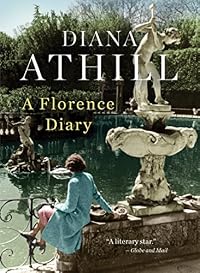
Diana Athill’s most recent book is A Florence Diary – a very slight volume in which she describes a trip to Florence by train with a friend in 1947 – it is high on my wishlist. show less
Diana Athill is best known now for her memoirs and short stories, though she began her career in publishing. Working as an editor with Andre Deutsch – one of the founders of the company, through a fifty-year career she worked with show more some of the biggest names in literature. Her book Stet – which I received recently, is the memoir about that work, and the people she met and worked with. I am looking forward to reading that.
“My two valuable lessons are: avoid romanticism and abhor possessiveness.”
Alive, Alive Oh! was published in Diana Athill’s ninety eighth year, and in this work while dipping into the past as she does in all her books, she also considers what it is like to grow old. She reflects on what it is that stays with one in memory, having already lived a very long life. Surprisingly it isn’t the things you might imagine. She has found herself recalling places visited, things once experienced are remembered with great fondness. She remembers the grounds of the family home. In beautifully descriptive prose she recalls a grandmother’s garden, a memory of place which increasingly sustains her.
(Incidentally, it is worth pointing out to anyone who has yet to read anything by Dina Athill, that her memoirs are neither written or published chronologically, so it is perfectly possible to start anywhere).
“The terrace felt more like house than garden because one stepped out onto it so easily, and after breakfast Gran used to sit on its stone steps while she brushed Lola, her poodle. It was a place for civilised behaviour, where we interacted with our grown-ups more than in most places. The urns that stood at intervals on its wall has been brought back from Italy by Gramps, and small pink roses, with a lot of heavily scented honeysuckle, clambered over the walls – on summer evenings, through the bedroom windows overlooking the terrace there used to come delicious waves of honeysuckle.”
Recalling her visits to Europe and Tobago, the friends she made – and experiences as a traveller.
In the title chapter, Diana talks honestly and quite harrowingly about the miscarriage she suffered when she was in her forties. Having decided years before that she didn’t want children – she considered a termination, she had done it before – but something changed. She describes so poignantly the enormous happiness that she experienced once she decided she would have the child. The child was the result of her affair with Jamaican poet Barry Reckford – their relationship was anything but conventional.
“Those weeks of April and May were the only ones in my life when spring was wholly, fully beautiful. All other springs carried with them regret at their passing. If I thought, ‘Today the white double cherries are at their most perfect,’ it summoned up the simultaneous awareness: ‘Tomorrow the edges of their petals will begin to turn brown.’ This time a particularly ebullient, sun-drenched spring simply existed for me. It was as though, instead of being a stationary object past which a current was flowing, I was flowing with it, in it at the same rate. It was a happiness new to me, but it felt very ancient, and complete.”
However, Diana tragically miscarried the child – described here with gut wrenching honesty, it was an event which very nearly killed her too. Finding herself alive at the end of this traumatic event, Diana realised just how much she loved being alive, how pleased she was at still being so.
In her ninety seventh year, Diana made the decision to go into a retirement home in Highgate in London. She adjusts to her new surroundings remarkably quickly. She discovers a wonderful freedom in this existence, released from the daily worries of managing her own home. She describes some gardening in the company of two nonagenarian friends, what wonderful spirit. I wish I had half their energy.
“Only three of us turned up. Elva had a hospital appointment that day and the others simply forgot, something only too likely to happen at any event in a home for old people. No one was there but nearly blind Vera, aged ninety-four, Pamela, also ninety-four, and me, three weeks before my ninety-seventh birthday…which really amounted to being just Pamela, because although she is the same age as Vera, she is slim and amazingly nimble for her age. It was Vera who said, ‘Let’s try to get one of them in, at least,’ but it could only be Pamela who got down on her knees – squelch, squelch in that sodden clay – to spread out the rose’s roots at the bottom of the hole. I then did the sprinkling of nourishing rose food, Vera did the tipping of compost out of a bucket, and Vera and I then jointly scraped clay back into the hole before hoisting Pamela to her feet (no one in this place can get up once down) so that she could tread the plant in.”
I must say the place where she lives does sound wonderful – probably a little outside the price bracket of most of us- it is lovely to think of her there, happy, cared for and I suspect still writing.
Diana Athill’s most recent book is A Florence Diary – a very slight volume in which she describes a trip to Florence by train with a friend in 1947 – it is high on my wishlist. show less
Joy's Review: Vignettes, musings, and memories by a woman who understands how to write! Thoughtful, but chatty; quirky, but universal; erudite, but down-to-earth. She'd be a great option for the question "What famous person would you like to have dinner with".
I expect a lot of people will reference the warmth, life experience and wisdom of the author - which are all true. But what I loved about the short essays which make up this book is the liveliness, optimism, memories and practical strength. I particularly loved reading the colourful description and recollection of her grandparents' estate, gentle education of her mother into aspects of her life, and the collective planting of a rose garden in her retirement village.
Brilliant - honest and fascinating. Memoir written as a series of essays
I have no idea in the world how I came to read this book: it must have jumped into my book bag at the library for I have no recollection of wanting it, let alone getting it. Hmmm. It seems that Athill is sharper at 100 than I am at my age!
It was an enjoyable, quick read. Humorous, sad, charming. A life well lived and someone to spin a good tale out of it.
It was an enjoyable, quick read. Humorous, sad, charming. A life well lived and someone to spin a good tale out of it.
Members
- Recently Added By
Author Information

15+ Works 2,486 Members
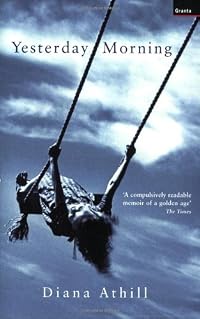
Diana Athill was born in England on December 21, 1917. She was educated at Oxford University. During World War II, she as a researcher with the BBC. She worked as an editor at Allan Wingate and then at André Deutsch. Athill started writing autobiography in her early 40s. Her memoir, Instead of a Letter, was published in 1962. Her other memoirs show more included After a Funeral; Make Believe; Alive, Alive Oh!; Stet; Yesterday Morning; and A Florence Diary. Somewhere Towards the End won a Costa Book Award and a National Book Critics Circle Award. Her other works included a volume of short stories entitled An Unavoidable Delay and a novel entitled Don't Look at Me Like That. She was awarded the Order of the British Empire in 2009. She died on January 23, 2019 at the age of 101. (Bowker Author Biography) show less
Some Editions
Awards and Honors
Distinctions
The Guardian Book of the Day (2015-11-23)
Common Knowledge
- Canonical title
- Alive, Alive Oh!
- Dedication
- For Phil and Annabel, with love and endless gratitude
- First words
- 'Sometimes I sits and thinks and sometimes I just sits': I have forgotten who it is who is supposed to have said that, but it is a good description of a state quite often observed in a retirement home, and considered pitiable... (show all).
- Quotations
- Only three of us turned up [to plant six roses].... No one was there but nearly blind Vera, aged 94, Pamela, also 94, and me, three weeks before my 97th birthday ... Pamela got down on her knees - squelch, squelch in that sod... (show all)den clay - to spread out the rose's roots at the bottom of the hole. I then did the sprinkling of nourishing rose food, Vera did the tipping of compost out of a bucket, and Vera and I jointly scraped clay back into the hole before hoisting Pamela to her feet ... so that she could tread the plant in.... She said, "Well, we've done that one so we might as well do another". AND WE ENDED BY DOING ALL SIX.... One good thing about being physically incapable of doing almost anything is that if you do manage to do even a little something, you feel great.
To start with I could potter about in the garden, and even plant things, provided I didn't offend the gardeners. I gathered that the place had been a jungle until the Guild had found them, man and wife, an incredibly hard-wor... (show all)king pair who come only once a week and somehow manage to keep the place spick and span. Given the chance, I fear I would have offended them, because their passion for tidiness makes them too severe with shrubs, which they chop ruthlessly into square or doughnut shapes regardless of their nature, which deeply offends me, and also the other ex-gardeners among the residents.
One good thing about being physically incapable of doing almost anything is that if you manage to do even a little something, you feel great. - Last words
- (Click to show. Warning: May contain spoilers.)Everyone laughed when he said that and so did I, and as I laughed I thought: 'Dead right!'
Classifications
- Genres
- Biography & Memoir, Literature Studies and Criticism
- DDC/MDS
- 828.91409 — Literature & rhetoric English & Old English literatures English miscellaneous writings English miscellaneous writings 1900- English miscellaneous writings 1900-1999 English miscellaneous writings 1945-1999 Individual authors
- LCC
- PR6051 .T43 .Z463 — Language and Literature English English Literature 1961-2000
- BISAC
Statistics
- Members
- 205
- Popularity
- 158,669
- Reviews
- 13
- Rating
- (4.03)
- Languages
- English
- Media
- Paper, Ebook
- ISBNs
- 8
- ASINs
- 3