Brooklyn's Sweet Ruin: Relics and Stories of the Domino Sugar Refinery
by Paul Raphaelson
On This Page
Description
Brooklyn's Domino Sugar Refinery, once the largest in the world, shut down in 2004 after a long struggle. Most New Yorkers know it only as an icon on the landscape, multiplied on T-shirts and skateboard graphics. Paul Raphaelson, known internationally for his formally intricate urban landscape photographs, was given access to every square foot of the refinery weeks before its demolition. Raphaelson spent weeks speaking with former Domino workers to hear first-hand the refinery's more show more personal stories. He also assembled a world-class team of contributors: Pulitzer Prize-winning photography editor Stella Kramer, architectural historian Matthew Postal, and art director Christopher Truch. The result is a beautiful, complex, thrilling mashup of art, document, industrial history, and Brooklyn visual culture. Strap on your hard hat and headlamp, and wander inside for a closer look. show lessTags
Member Reviews
Brooklyn's Sweet Ruin by Paul Raphaelson is the kind of book you'll buy for the beautiful photographs then be engrossed by the history and process of sugar refining as well as reading about art photography of ruins, particularly recent ruins.
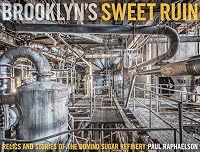
The images were amazing, several looked like they could easily have been conceived as Escher prints, with pipes and ducts running every which way. And the top of the bin distributor looks like something out of an early expressionist horror film, or maybe The Cabinet of Dr Caligari.
Raphaelson's essay(s) added a lot to the appreciation of both the photographs as art and the refinery as a place that was important in many worker's lives.
I would highly recommend this to those who like photography, show more especially urban and/or ruin photography. It also has some interesting ideas to offer on art and worker's plights, but that wouldn't, alone, be a reason to buy the book. More like added benefits.
Reviewed from a copy made available by the publisher via Edelweiss. show less
The images were amazing, several looked like they could easily have been conceived as Escher prints, with pipes and ducts running every which way. And the top of the bin distributor looks like something out of an early expressionist horror film, or maybe The Cabinet of Dr Caligari.
Raphaelson's essay(s) added a lot to the appreciation of both the photographs as art and the refinery as a place that was important in many worker's lives.
I would highly recommend this to those who like photography, show more especially urban and/or ruin photography. It also has some interesting ideas to offer on art and worker's plights, but that wouldn't, alone, be a reason to buy the book. More like added benefits.
Reviewed from a copy made available by the publisher via Edelweiss. show less
Ratings
Members
- Recently Added By
Author Information
1 Work 9 Members
Classifications
Statistics
- Members
- 8
- Popularity
- 2,303,456
- Reviews
- 1
- Rating
- (5.00)
- Languages
- English
- Media
- Paper
- ISBNs
- 1