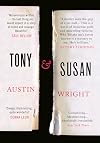
Tony and Susan
by Austin Wright
On This Page
Description
Fiction. Literature. Suspense. Thriller. HTML:Fifteen years ago, Susan Morrow left her first husband, Edward Sheffield, an unpublished writer. Now, she's enduring middle class suburbia as a doctor's wife, when out of the blue she receives a package containing the manuscript of her ex-husband's first novel. He writes asking her to read the book; she was always his best critic, he says.As Susan reads, she is drawn into the fictional life of Tony Hastings, a math professor driving his family show more to their summer house in Maine. And as we read with her, we too become lost in Sheffield's thriller. As the Hastings' ordinary, civilized lives are disastrously, violently sent off course, Susan is plunged back into the past, forced to confront the darkness that inhabits her, and driven to name the fear that gnaws at her future and will change her life.
Tony and Susan is a dazzling, eerie, riveting novel about fear and regret, blood and revenge, marriage and creativity. It is simply one of a kind. "A superb and thrilling novel...extrodinary." — Ian McEwan
"Compelling...mesmerizing...absolutely irresistible."—New York Times
"A perfect and literary puzzle, an irresistible tale anout marriage and murder, both thriling and moving." — Scott Turow
"A page-turner of a literary thriller." — Sara Waters
"Beautifully written, perfectly paced, impressively clever, and ultimately shocking in a way you never see coming." — Nelson DeMille
"Absolutely terrifying, beautiful, and appalling. Parts of it shocked me, and I am not easily shocked." — Ruth Rendell. show less
Tags
Recommendations











Member Reviews
Este es uno de los libros que me cuesta reseñar y para ello hay dos razones, la primera es que trata dos historias, una de ellas, la vida de Susan y la otra, la historia de "Animales nocturnos", el manuscrito que Edward, ex-esposo de Susan, envía a nuestra protagonista para pedir su opinión; ambas tienen un tono bastante distinto, aun cuando se encuentran relacionadas. La otra razón, y es lo que me quitaré de encima rápidamente, es que he visto la película y considero que es un tanto superior al libro, el director hizo un manejo del lenguaje visual impresionante, además de que introdujo algunas variaciones a la historia y los personajes que, sin perder su esencia, hacen que todo, especialmente el final, sea más profundo e show more interesante (dejando de lado el hecho de que Susan debe serv despreciable para lograr este efecto).
Creo que lo más sencillo es hablar de las historias de manera separada y luego conjuntarlas en la conclusión. Susan es una mujer que tras casarse con Edward, quien fuera un compañero de casa cuando fue niña, espera tener un futuro brillante, pero tras la deserción de Edward a su prometedora carrera como abogado para seguir su sueño de ser escritor, Susan se ve en una vorágine de frustración, soledad y suelos rotos, que lleva a la ruptura de su matrimonio, un segundo casamiento y el abandono de sus sueños profesionales en pos de apoyar la carrera de su actual marido. Su historia se centra en describirnos a Susan y como fue que su carácter la llevo a su situación actual, dando como resultado un personaje complejo, lleno de matices y con un profundidad bastante respetable, que fácilmente puede ser cualquier otro lector, tanto por la manera en que describe que se lleva a cabo su proceso lector como por todos los pensamientos que transitan su cabeza. Es a través de ella que conocemos a Edward, por tanto la descripción de él a pesar de ser detallada como la de un hombre inseguro, frustrado y con cierta simpleza, combate con la nueva imagen que Susan crea ahora gracias a las percepciones que le da la novela. A pesar de ser ella quien narra, y hablarnos muchísimas veces de su vid en realidad nunca llegamos a conocer a Susan, la manera en que Wright la describe nos lleva a dudar constantemente de quien es ella en realidad, por lo que terminamos notando que a pesar de su aparentemente civilizado exterior, nos deja entrever un interior oscuro y profundo, cargado de culpas, ira y terror por sí misma.
"Animales nocturnos" es el libro creado por Edward, narra la desgracia en la que cae Tony, cuando tras un viaje por carretera, pierde a su esposa e hija en un terrible asesinato perpetuado por tres bandidos. Esta historia es muchísimo más interesante que la vida de Susan, especialmente por lo que muestra acerca el autor y lo que fue su vida, quedando claro que esta historia es la prueba física de que se ha liberado de la sombra de Susan, además de que desea vengarse de ella (cosa que logra gracias a este manuscrito). Es aquí donde la parte de misterio se desarrolla de manera explícita, la persecución, el sentimiento de abandono y la soledad son tratados de manera magnífica, y puedo decir que el final de este manuscrito me pareció excelente y lo suficientemente trágico, inesperado y simbólico.
Ahora bien, en conjunto ambas historias lo que buscan es demostrar la naturaleza de Susan y Edward, y como se deterioraron y lastimaron el uno al otro, además de cómo al caer la noche ninguno de los dos fue un santo. Cargada de introspección e hilada a través de personajes realistas e interesantes, se presta a ser magnífica dado que trata de una buena manera tanto historia como personajes, aunque no de manera conjunta. Aun con todo esto, la realidad es que al terminar la lectura algo falta: el misterio que rodeo una parte de la historia sabe a poco, y te deja la sensación de que el cierre total fue terriblemente abrupto y anti-climático. No se puede negar que el autor hace un buen trabajo en crear ambos mundos, y el desarrollo de personajes es excelente, pero esa inquietud que siente Susan durante la lectura, queda opacada por la dificultad del lector de sentir lo mismo por la totalidad del libro. show less
Creo que lo más sencillo es hablar de las historias de manera separada y luego conjuntarlas en la conclusión. Susan es una mujer que tras casarse con Edward, quien fuera un compañero de casa cuando fue niña, espera tener un futuro brillante, pero tras la deserción de Edward a su prometedora carrera como abogado para seguir su sueño de ser escritor, Susan se ve en una vorágine de frustración, soledad y suelos rotos, que lleva a la ruptura de su matrimonio, un segundo casamiento y el abandono de sus sueños profesionales en pos de apoyar la carrera de su actual marido. Su historia se centra en describirnos a Susan y como fue que su carácter la llevo a su situación actual, dando como resultado un personaje complejo, lleno de matices y con un profundidad bastante respetable, que fácilmente puede ser cualquier otro lector, tanto por la manera en que describe que se lleva a cabo su proceso lector como por todos los pensamientos que transitan su cabeza. Es a través de ella que conocemos a Edward, por tanto la descripción de él a pesar de ser detallada como la de un hombre inseguro, frustrado y con cierta simpleza, combate con la nueva imagen que Susan crea ahora gracias a las percepciones que le da la novela. A pesar de ser ella quien narra, y hablarnos muchísimas veces de su vid en realidad nunca llegamos a conocer a Susan, la manera en que Wright la describe nos lleva a dudar constantemente de quien es ella en realidad, por lo que terminamos notando que a pesar de su aparentemente civilizado exterior, nos deja entrever un interior oscuro y profundo, cargado de culpas, ira y terror por sí misma.
"Animales nocturnos" es el libro creado por Edward, narra la desgracia en la que cae Tony, cuando tras un viaje por carretera, pierde a su esposa e hija en un terrible asesinato perpetuado por tres bandidos. Esta historia es muchísimo más interesante que la vida de Susan, especialmente por lo que muestra acerca el autor y lo que fue su vida, quedando claro que esta historia es la prueba física de que se ha liberado de la sombra de Susan, además de que desea vengarse de ella (cosa que logra gracias a este manuscrito). Es aquí donde la parte de misterio se desarrolla de manera explícita, la persecución, el sentimiento de abandono y la soledad son tratados de manera magnífica, y puedo decir que el final de este manuscrito me pareció excelente y lo suficientemente trágico, inesperado y simbólico.
Ahora bien, en conjunto ambas historias lo que buscan es demostrar la naturaleza de Susan y Edward, y como se deterioraron y lastimaron el uno al otro, además de cómo al caer la noche ninguno de los dos fue un santo. Cargada de introspección e hilada a través de personajes realistas e interesantes, se presta a ser magnífica dado que trata de una buena manera tanto historia como personajes, aunque no de manera conjunta. Aun con todo esto, la realidad es que al terminar la lectura algo falta: el misterio que rodeo una parte de la historia sabe a poco, y te deja la sensación de que el cierre total fue terriblemente abrupto y anti-climático. No se puede negar que el autor hace un buen trabajo en crear ambos mundos, y el desarrollo de personajes es excelente, pero esa inquietud que siente Susan durante la lectura, queda opacada por la dificultad del lector de sentir lo mismo por la totalidad del libro. show less
I loved this book. So much. As I read I found so much to quote, I didn't stop to write every bit out, but quite for quite a few I had to. It was so great.
I initially started reading it because I had really enjoyed Nocturnal Animals, and that film was based on this book. The film is also fascinating and intriguing in its own way, but the book... this book is just wonderful.
Susan is our main narrator. She receives a book from her ex-husband, Edward, and over the course of three nights she reads it. The book is a thriller, a family driving to Maine are run off the road, and violent terrible things happen. Edward's book is all about that event, and the fall out from it. Susan's story is all about the act of reading that book, but also the show more memories that thinking about her ex bring up. And her feelings about her current life.
Have I said yet that I loved it?
Okay, I suppose I have, but I really did. It is just such an interesting book, it really makes you think. And I loved the way Susan thought about the book she was reading, the act of reading itself is central to her story. Books about books! what could be better?
I loved Susan's feelings about books, how she was hesitant sometimes to start one, because books require an investment, time and thought. And by the time you finish a book you have been to different places, been different people, forced to think differently. Susan worries that "she could be a different person by the time she’s through". How perfect is that? She's also very aware of the author as author. How Edward is guiding the reader's expectations. How everything that happens in a story happens because of the author. And I love that she appreciates that fact. Authors need to be aware that they have created that entire universe, and so when they populate their book with horrible things and horrible people they don't get to say "but sure reality is like that" because a book is not reality. It is a totally fabricated story and the author needs to be aware of that ((obviously non-fiction books are not a complete fabrication, but at the the same time the author is choosing to write about a specific topic with a specific slant. Nothing is completely objective)). I also really identified with Susan's acknowledgement that we read stories that often depend on bad things happening to the characters. "how much her pleasure depends on his distress.".
I've already written almost 500 words ((thank you automatic wordpress word count)) and I haven't even touched on the depiction of women and violence against women!
Because, and slight spoiler alert here, but its covered in many blurbs so I'm not going to hide it, Edward's book features the kidnapping, rape, and murder of two women. Laura and Helen, the wife and daughter of Tony Hastings. Tony is the main protagonist of Nocturnal Animals, the book within Tony and Susan
On one level it is a fairly standard thriller, but on the other hand Tony is a clear example of a man who is motivated and driven by things that happen to "his women". Laura and Helen are clear examples of fridged women, they are there to be hurt and murdered, in order to create Tony's story. And along the way Tony reveals that he wants revenge because he wants those who hurt him ((him!)) to be punished in order to realise that they can't get away with that, they cannot do that to him. It centres the entire tragedy on him, as so many of these stories do, the women are props. There to display that he is a man.
And I read that story as quite explicitly calling out that as wrong. Others may not read the book in the same way. Perhaps Wright is as guilty as Edward here?
But as well as that story there is also Susan's story. Her life with Edward, and after him, with Arnold.
It is an examination of the roles people play in relationships. In her relationship with Edward Susan was the one who initiated a lot of things. But at the same time she was expected to support Edward, to give up her own dreams in order to work and support him financially as he lived the life of a "writer". She was also expected to critique his work, but when she did so honestly she was punished ((emotionally)) and accused of not being supportive enough. Of no understanding how hard it was to be a writer. Later, in her life with Arnold she finds herself once again subsumed into the supporting role. He has the prestigious career, she is determined to be supportive and loyal after what happened in her first marriage, she will not leave again, and so she becomes wife and mother without a life outside the home. Expected always to go along with things, to not raise objections, to not be "difficult".
There is also this idea throughout the novel that Tony's story, the book Edward wrote, is some sort of revenge. Revenge for Susan leaving him in the first place. And that, to me, is a perfect indictment of Edward as a person. He is equating a relationship ending with rape and murder. How self centred and arrogant is that!
I've probably forgotten half of what I meant to say about this book, but I've said more than enough I reckon. Give this book a go, and then come back and let me know what you thought. show less
I initially started reading it because I had really enjoyed Nocturnal Animals, and that film was based on this book. The film is also fascinating and intriguing in its own way, but the book... this book is just wonderful.
Susan is our main narrator. She receives a book from her ex-husband, Edward, and over the course of three nights she reads it. The book is a thriller, a family driving to Maine are run off the road, and violent terrible things happen. Edward's book is all about that event, and the fall out from it. Susan's story is all about the act of reading that book, but also the show more memories that thinking about her ex bring up. And her feelings about her current life.
Have I said yet that I loved it?
Okay, I suppose I have, but I really did. It is just such an interesting book, it really makes you think. And I loved the way Susan thought about the book she was reading, the act of reading itself is central to her story. Books about books! what could be better?
I loved Susan's feelings about books, how she was hesitant sometimes to start one, because books require an investment, time and thought. And by the time you finish a book you have been to different places, been different people, forced to think differently. Susan worries that "she could be a different person by the time she’s through". How perfect is that? She's also very aware of the author as author. How Edward is guiding the reader's expectations. How everything that happens in a story happens because of the author. And I love that she appreciates that fact. Authors need to be aware that they have created that entire universe, and so when they populate their book with horrible things and horrible people they don't get to say "but sure reality is like that" because a book is not reality. It is a totally fabricated story and the author needs to be aware of that ((obviously non-fiction books are not a complete fabrication, but at the the same time the author is choosing to write about a specific topic with a specific slant. Nothing is completely objective)). I also really identified with Susan's acknowledgement that we read stories that often depend on bad things happening to the characters. "how much her pleasure depends on his distress.".
I've already written almost 500 words ((thank you automatic wordpress word count)) and I haven't even touched on the depiction of women and violence against women!
Because, and slight spoiler alert here, but its covered in many blurbs so I'm not going to hide it, Edward's book features the kidnapping, rape, and murder of two women. Laura and Helen, the wife and daughter of Tony Hastings. Tony is the main protagonist of Nocturnal Animals, the book within Tony and Susan
On one level it is a fairly standard thriller, but on the other hand Tony is a clear example of a man who is motivated and driven by things that happen to "his women". Laura and Helen are clear examples of fridged women, they are there to be hurt and murdered, in order to create Tony's story. And along the way Tony reveals that he wants revenge because he wants those who hurt him ((him!)) to be punished in order to realise that they can't get away with that, they cannot do that to him. It centres the entire tragedy on him, as so many of these stories do, the women are props. There to display that he is a man.
And I read that story as quite explicitly calling out that as wrong. Others may not read the book in the same way. Perhaps Wright is as guilty as Edward here?
But as well as that story there is also Susan's story. Her life with Edward, and after him, with Arnold.
It is an examination of the roles people play in relationships. In her relationship with Edward Susan was the one who initiated a lot of things. But at the same time she was expected to support Edward, to give up her own dreams in order to work and support him financially as he lived the life of a "writer". She was also expected to critique his work, but when she did so honestly she was punished ((emotionally)) and accused of not being supportive enough. Of no understanding how hard it was to be a writer. Later, in her life with Arnold she finds herself once again subsumed into the supporting role. He has the prestigious career, she is determined to be supportive and loyal after what happened in her first marriage, she will not leave again, and so she becomes wife and mother without a life outside the home. Expected always to go along with things, to not raise objections, to not be "difficult".
There is also this idea throughout the novel that Tony's story, the book Edward wrote, is some sort of revenge. Revenge for Susan leaving him in the first place. And that, to me, is a perfect indictment of Edward as a person. He is equating a relationship ending with rape and murder. How self centred and arrogant is that!
I've probably forgotten half of what I meant to say about this book, but I've said more than enough I reckon. Give this book a go, and then come back and let me know what you thought. show less
This book is a story within a story and is the basis of the new movie “Nocturnal Animals” starring Jake Gyllenhaal and Amy Adams. Susan, divorced from Edward and now married to Arnold, receives a letter from Edward, whom she hasn’t heard from in 20 years. He’s written a book and wants her opinion. His book is “Nocturnal Animals”, a very suspenseful thriller whose main character, Tony Hastings, is driving his wife and daughter to their summer home in Maine when they run into some seriously scary problems.
I wanted to read this book before seeing the movie but the only edition I could get from the library was the audio version. I haven’t listened to an audio book in a very long time but think I could get very used to being show more able to do other things, like cook dinner or work on a jigsaw puzzle, while someone is reading to me – nice! I found this to be thoroughly addictive and stayed up late into the night wanting to hear just one more chapter.
The book smoothly moves back and forth between Edward’s novel and what’s happening to Susan as she reads this book. Susan begins to re-live her past with Edward. She begins to wonder what type of man Edward has become and whether this book and Edward’s request for her to read it is his means of sending her some type of a message about their marriage. Is he calling her to account for not trusting his ability to become an author? The book started to drag a bit for me towards the end and Susan at times could be irritating but the ultimate endings of both stories was pitch perfect. This is a literary work so don’t get it just for the thriller part. It’s the type of literary work that will have different meaning to different readers and would be a great choice for discussion in a book club as it leaves a lot of questions in the reader’s mind. I’ve actually seen this marketed as the new “Gone Girl” even though it was written in 1993. This book is much more profound than “Gone Girl” will ever be.
A unique and inventive story about the power of the written word, the responsibility of authors to their readers, revenge, grief, marriage and trust. The movie has become a must see for me but I’m not sure if a movie version of this book will fly since it’s the author’s writing ability that shines more so than the story. Though I’ve started another book, I can’t stop thinking about this one and know I will never forget it. Sad that the author is no longer with us and won’t know of the revival his book has had.
Highly recommended. show less
I wanted to read this book before seeing the movie but the only edition I could get from the library was the audio version. I haven’t listened to an audio book in a very long time but think I could get very used to being show more able to do other things, like cook dinner or work on a jigsaw puzzle, while someone is reading to me – nice! I found this to be thoroughly addictive and stayed up late into the night wanting to hear just one more chapter.
The book smoothly moves back and forth between Edward’s novel and what’s happening to Susan as she reads this book. Susan begins to re-live her past with Edward. She begins to wonder what type of man Edward has become and whether this book and Edward’s request for her to read it is his means of sending her some type of a message about their marriage. Is he calling her to account for not trusting his ability to become an author? The book started to drag a bit for me towards the end and Susan at times could be irritating but the ultimate endings of both stories was pitch perfect. This is a literary work so don’t get it just for the thriller part. It’s the type of literary work that will have different meaning to different readers and would be a great choice for discussion in a book club as it leaves a lot of questions in the reader’s mind. I’ve actually seen this marketed as the new “Gone Girl” even though it was written in 1993. This book is much more profound than “Gone Girl” will ever be.
A unique and inventive story about the power of the written word, the responsibility of authors to their readers, revenge, grief, marriage and trust. The movie has become a must see for me but I’m not sure if a movie version of this book will fly since it’s the author’s writing ability that shines more so than the story. Though I’ve started another book, I can’t stop thinking about this one and know I will never forget it. Sad that the author is no longer with us and won’t know of the revival his book has had.
Highly recommended. show less
Incredibly haunting and stark. This book took me well out of my comfort zone. Very well written with a plot that scares. Often I wanted to put this book down, but I was compelled to finish.
When Tony, his wife Susan and daughter Helen take their usual vacation drive to their Maine home, they decide to be adventurous and drive to Maine throughout the long, dark night. All is well as they attempt to fulfill their decision, until along a back road Pennsylvania, off the interstate area, they are forced into a dangerous car game.
While the car in front slows to a slow pace, the one in back is right on their bumper. Closing in on the family, to no avail he attempts to pass as the front car speeds up and follows in the left lane blocking his show more progress.
A fatal mistake is made as they are pulled over because of a flat tire. From there the book grows darker and more dangerous. As they attackers fix the tire and a few get into Tony's car as they force him to leave his daughter and wife and make him drive in their car. As he watches the car with his family fade into the distance, the terror continues. show less
When Tony, his wife Susan and daughter Helen take their usual vacation drive to their Maine home, they decide to be adventurous and drive to Maine throughout the long, dark night. All is well as they attempt to fulfill their decision, until along a back road Pennsylvania, off the interstate area, they are forced into a dangerous car game.
While the car in front slows to a slow pace, the one in back is right on their bumper. Closing in on the family, to no avail he attempts to pass as the front car speeds up and follows in the left lane blocking his show more progress.
A fatal mistake is made as they are pulled over because of a flat tire. From there the book grows darker and more dangerous. As they attackers fix the tire and a few get into Tony's car as they force him to leave his daughter and wife and make him drive in their car. As he watches the car with his family fade into the distance, the terror continues. show less
I haven't read a fiction book in a while. Look, it was OK. There are way worse books out there.
A few things make it unworthy of more than two stars though. Unrealistic scenes. Boring and unlikable characters, and characters that have no place in the story. Under-developed twists and revelations that never get revealed.
Tony Hastings infuriated me. Ok, so I get how the abduction happened. A sheltered, naive university professor faces an unfamiliar hostile situation, and a series of cowardly misjudgments of trust leads to disaster. Fine.
The last part of the book just went to a whole new level of unbelievable and leaves a plethora of questions unanswered.
First of all, so Bobby Andes- the initially likable character on Tony's side- show more suddenly has terminal cancer. Oh? How convenient. Worse: somehow this means he throws all pretences and respectability to the wind in pursuit of his own agenda. Ok, well, perhaps it could have been a noble pursuit- a dying man's mission to avenge the pitiful Tony and rid the world of an evil killer- but frankly, this part of the book is all over the place. Why is he suddenly not really a cop anymore? Why is he willing to put Tony at risk?
Who the hell are the two women who show up to the camp and what is the point of their appearance? WHY DO THEY UNLOCK RAY'S HANDCUFFS?
The worst, though, and unforgivable, in my opinion, is Tony toward the end:
Who would stand in front of the man who humiliated you, and raped and murdered your wife and daughter, WITH A GUN, and not be fighting with every ounce of strength not to pull the trigger?
No, sorry, I can't swallow that. No-one is that 'civilized'. And if they are, they deserve to be blinded with a fork, as far as I'm concerned.
What seems to be the take-away message is that it's not always noble to 'do what's expected of you'. Or something. It's not a particularly profound message. That said, I found the book gripping. It showed great potential in places- it's just a shame that it never took off. show less
A few things make it unworthy of more than two stars though. Unrealistic scenes. Boring and unlikable characters, and characters that have no place in the story. Under-developed twists and revelations that never get revealed.
Tony Hastings infuriated me. Ok, so I get how the abduction happened. A sheltered, naive university professor faces an unfamiliar hostile situation, and a series of cowardly misjudgments of trust leads to disaster. Fine.
The last part of the book just went to a whole new level of unbelievable and leaves a plethora of questions unanswered.
First of all, so Bobby Andes- the initially likable character on Tony's side- show more suddenly has terminal cancer. Oh? How convenient. Worse: somehow this means he throws all pretences and respectability to the wind in pursuit of his own agenda. Ok, well, perhaps it could have been a noble pursuit- a dying man's mission to avenge the pitiful Tony and rid the world of an evil killer- but frankly, this part of the book is all over the place. Why is he suddenly not really a cop anymore? Why is he willing to put Tony at risk?
Who the hell are the two women who show up to the camp and what is the point of their appearance? WHY DO THEY UNLOCK RAY'S HANDCUFFS?
The worst, though, and unforgivable, in my opinion, is Tony toward the end:
Who would stand in front of the man who humiliated you, and raped and murdered your wife and daughter, WITH A GUN, and not be fighting with every ounce of strength not to pull the trigger?
No, sorry, I can't swallow that. No-one is that 'civilized'. And if they are, they deserve to be blinded with a fork, as far as I'm concerned.
What seems to be the take-away message is that it's not always noble to 'do what's expected of you'. Or something. It's not a particularly profound message. That said, I found the book gripping. It showed great potential in places- it's just a shame that it never took off. show less
What a travail! The novel within the novel, "Nocturnal Animals" which takes up about 90% of this book is written in the style of Jim Thompson where the characters having no moral compass appear to have undergone extensive lobotomies having little similarities to any humankind that I've ever run into. I found it impossible to care or identify with anyone inside or outside of the internal novel. If we were told that the entire story took place on a planet other than Earth or perhaps in some other dimension this would make for more of a satisfying ending than the one we are presented with.
Knowingly disturbing and deliberately gratuitous. This is not an easy ready by any means. But it is undeniably clever, and it's for this reason I gave it 4 stars. It's a novel within a novel, while at the same time being an essay on what it is to write, and to read. No shortage of references to literary theory here, for those that like their close reading to have been provided by the author. For me, Paul Auster's Oracle Night is an infinitely more subtle readable novel/essay which is a joy to read, rather than something you feel you ought to get through because you can see how smart it is, if this makes sense. If I was rating this simply on reading pleasure, I'd give it 2 stars.
Members
- Recently Added By
Published Reviews
De roman Tony & Susan verscheen in 1994 voor het eerst in Nederland als Het schreeuwen van de nacht en is onlangs herontdekt en heruitgegeven. Anno 2010 heeft het boek de titel Tony & Susan meegekregen. Maar zij zijn niet de enige personages: de roman gaat over Tony & Laura en Helen en Susan & Edward en Arnold. Wie zijn al deze mensen en wat doen ze in dit boek?
added by frosanne
added by frosanne
Lists

Fiction with Men's Given Names in the Title
302 works; 11 members
Author Information

8 Works 755 Members
Series
Belongs to Publisher Series
Common Knowledge
- Canonical title*
- Tres nits
- Original title
- Tony and Susan; Tony&Susan
- Alternate titles*
- Het schreeuwen van de nacht
- Original publication date
- 1993
- People/Characters
- Susan Morrow; Edward Sheffield; Tony Hastings
- Related movies
- Nocturnal Animals (2016 | IMDb)
- Dedication
- For Sally
- First words
- This goes back to the letter Susan Morrow's first husband Edward sent her last September.
- Last words
- (Click to show. Warning: May contain spoilers.)Dat zou hij doen als zij erop stond, maar ze betwijfelde of hij ook maar iets zou zien.
(Click to show. Warning: May contain spoilers.)He would do that if she insisted, but she doubted he would see anything. - Blurbers
- McEwan, Ian; Bellow, Saul; Waters, Sarah; Turow, Scott; DeMille, Nelson; Lee, Min Jin (show all 7); Rendell, Ruth
- Original language
- English, US
*Some information comes from Common Knowledge in other languages. Click "Edit" for more information.
Classifications
Statistics
- Members
- 694
- Popularity
- 41,298
- Reviews
- 42
- Rating
- (3.26)
- Languages
- 13 — Catalan, Danish, Dutch, English, Finnish, French, German, Italian, Norwegian (Bokmål), Portuguese, Russian, Spanish, Swedish
- Media
- Paper, Audiobook, Ebook
- ISBNs
- 61
- UPCs
- 1
- ASINs
- 12