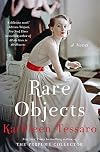
Rare Objects
by Kathleen Tessaro
On This Page
Description
In Depression-era Boston, a city divided by privilege and poverty, two unlikely friends are bound by a dangerous secret in this mesmerizing work of historical fiction from the New York Times bestselling author of The Perfume Collector. Maeve Fanning is a first generation Irish immigrant, born and raised among the poor, industrious Italian families of Boston's North End by her widowed mother. Clever, capable, and as headstrong as her red hair suggests, she's determined to better herself show more despite the overwhelming hardships of the Great Depression. However, Maeve also has a dangerous fondness for strange men and bootleg gin-a rebellious appetite that soon finds her spiraling downward, leading a double life. When the strain proves too much, Maeve becomes an unwilling patient in a psychiatric hospital, where she strikes up a friendship with an enigmatic young woman, who, like Maeve, is unable or unwilling to control her un-lady-like desire for freedom. Once out, Maeve faces starting over again. Armed with a bottle of bleach and a few white lies, she lands a job at an eccentric antiques shop catering to Boston's wealthiest and most peculiar collectors. Run by an elusive English archeologist, the shop is a haven of the obscure and incredible, providing rare artifacts as well as unique access to the world of America's social elite. While delivering a purchase to the wealthy Van der Laar family, Maeve is introduced to beautiful socialite Diana Van der Laar-only to discover she's the young woman from the hospital. Reunited with the charming but increasingly unstable Diana and pursued by her attractive brother James, Mae becomes more and more entwined with the Van der Laar family-a connection that pulls her into a world of moral ambiguity and deceit, and ultimately betrayal. Bewitched by their wealth and desperate to leave her past behind, Maeve is forced to unearth her true values and discover how far she'll to go to reinvent herself. show lessTags
Recommendations











Member Reviews
I was pleasantly surprised by this novel set in Depression-era Boston. Maeve, the heroine, has plenty of demons to wrestle - she's run away to New York City before, been institutionalized after a suicide attempt, and manages to get her hands on a lot of alcohol during the Prohibition era. When she takes a position at an antiques shop, she gains entry into the world of the Boston elite, whose members may be facing challenges not all that distant from her own. An excellent book and a compassionate perspective of mental illness.
Telling stories is a form of invention. Stretching or hiding the truth can also be in the service of invention and creating a new persona. We all tell stories every day, intentionally and unintentionally, making them up to create who we are publicly. Some people are quite skilled at it and go through several iterations of themselves to suit their situation until they finally settle in their own skin. The main character in Kathleen Tessaro's newest novel, Rare Objects, is such a person, changing like a chameleon until she finally looks to the core of herself, faces the stories hiding in her past, and becomes a reflection of what is most true about her.
Maeve Fanning is back in Boston and living with her mother after running away to New show more York City. There were many reasons she fled Boston, among others were that she wanted to escape the provincialism and expectations of those around her. New York was not the city she imagined and she found a hard life there, one derailed by random, sometimes dangerous men, bootleg gin, and one almost ended by a suicide attempt. After her mandatory stay at an asylum and now back at home, she is ready to look for a job but it's the midst of the Depression and so there are no jobs to be had, especially for a young, redheaded Irish woman. The only job that presents itself is one that she is not suited for, secretary and sales clerk at a very exclusive antique store. Changing her appearance, Anglicizing her name, and creating a fiction that carefully hides the truth of her less than genteel origins, she intrigues one of the shop's partners and lands the job. It is through the antiques store that she will come to renew her acquaintance with Diana Van der Laar, a wealthy heiress she met briefly during her stay in the asylum. And it it through Diana that she will meet the disturbing but captivating James, Diana's brother. Maeve, now know as May, is caught up in the glittering and false world of the Van der Laars, spending nights at speakeasies, dancing and drinking. She is seduced by the life and the people, sinking ever further into troubles she cannot stop.
May is inquisitive and intelligent. She's resourceful and full of promise, except when her desires, alcohol and the wrong men among them, sabotage her. She is understandably attracted to wealth and to all that it offers, even though she sees that the gilded cage that Diana lives in is no more freeing than the cage of poverty found in the tenements of the North Side. And she comes to understand everyone is just as busy inventing the self as she is, regardless of the price of the cage they live in. The themes of living the truth and the disparity of class would perhaps have been enough to drive the story but Tessaro also includes alcoholism, abortion, promiscuity, homosexuality as mental illness (as it was viewed at the time), the shady origins of the diamond industry in South Africa, religious intolerance, and adultery as well. While the story of May's tempestuous friendship with Diana and obsession with James is page turning, the inclusion of so many other issues cause all of them to be a bit short changed and feel like too many social issues in one story. The characters are all troubled in some way and the ominous tone and sense of foreboding don't ever lessen in the reading. The beginning of the novel, where an older Maeve looks backwards into her past when she steps into a room at the Museum of Fine Arts and sees a black agate ring, doesn't quite come full circle in the end, especially given the painful memories it stirs up. But despite these handful of weaknesses, it's a hard book to put down and the reader will be swept along in May's tale of self-invention, wealth, and deceit. show less
Maeve Fanning is back in Boston and living with her mother after running away to New show more York City. There were many reasons she fled Boston, among others were that she wanted to escape the provincialism and expectations of those around her. New York was not the city she imagined and she found a hard life there, one derailed by random, sometimes dangerous men, bootleg gin, and one almost ended by a suicide attempt. After her mandatory stay at an asylum and now back at home, she is ready to look for a job but it's the midst of the Depression and so there are no jobs to be had, especially for a young, redheaded Irish woman. The only job that presents itself is one that she is not suited for, secretary and sales clerk at a very exclusive antique store. Changing her appearance, Anglicizing her name, and creating a fiction that carefully hides the truth of her less than genteel origins, she intrigues one of the shop's partners and lands the job. It is through the antiques store that she will come to renew her acquaintance with Diana Van der Laar, a wealthy heiress she met briefly during her stay in the asylum. And it it through Diana that she will meet the disturbing but captivating James, Diana's brother. Maeve, now know as May, is caught up in the glittering and false world of the Van der Laars, spending nights at speakeasies, dancing and drinking. She is seduced by the life and the people, sinking ever further into troubles she cannot stop.
May is inquisitive and intelligent. She's resourceful and full of promise, except when her desires, alcohol and the wrong men among them, sabotage her. She is understandably attracted to wealth and to all that it offers, even though she sees that the gilded cage that Diana lives in is no more freeing than the cage of poverty found in the tenements of the North Side. And she comes to understand everyone is just as busy inventing the self as she is, regardless of the price of the cage they live in. The themes of living the truth and the disparity of class would perhaps have been enough to drive the story but Tessaro also includes alcoholism, abortion, promiscuity, homosexuality as mental illness (as it was viewed at the time), the shady origins of the diamond industry in South Africa, religious intolerance, and adultery as well. While the story of May's tempestuous friendship with Diana and obsession with James is page turning, the inclusion of so many other issues cause all of them to be a bit short changed and feel like too many social issues in one story. The characters are all troubled in some way and the ominous tone and sense of foreboding don't ever lessen in the reading. The beginning of the novel, where an older Maeve looks backwards into her past when she steps into a room at the Museum of Fine Arts and sees a black agate ring, doesn't quite come full circle in the end, especially given the painful memories it stirs up. But despite these handful of weaknesses, it's a hard book to put down and the reader will be swept along in May's tale of self-invention, wealth, and deceit. show less
Maeve Fanning is the daughter of an Irish immigrant trying to muddle through Depression era Boston. In an attempt to get away from Boston’s North End, she begins a dangerous downward spiral when she moves to New York and takes the only job she can find as dancing with men at clubs, drinking and eventually landing herself in a psychiatric hospital in upstate New York. While in the hospital, Maeve crosses paths with another young woman who seems as lost as herself. When Maeve returns home to Boston, she feels defeated; in need of a job, Maeve transforms herself to look to part for a salesgirl in an upper-class antiques store. Catering to the wealthiest collectors, the store sells unique and rare pieces. Maeve soon starts to find her show more place among the antiques and their proprietor until one day a familiar face from the psychiatric hospital shows up as a customer. Maeve and the fabulously wealthy Diana Van der Laar join together in their shared unbalanced emotional states; but as Maeve is pulled into Diana’s upper-class world, she must hide her true self even more and risk losing who she is altogether.
From the very opening sentence of Rare Objects, I knew I was hooked. I was immediately entranced by Maeve’s character; she was moving forward, reinventing herself, trying her best to forget an event in the past and doing it all with strength and conviction. From there, Maeve’s story only grew on me. From her tumultuous but loving relationship with her mother, to her desperate time in New York and the psychiatric hospital back to the North end of Boston and the antiques shop, Maeve’s journey is one of high aspirations, friendships and most of all identity. Diana’s character also made my heart break, though unstable, she is constantly doing her best to be herself in a world that won’t let her be. The writing drew me into all of Maeve’s different worlds; I could imagine the hustle and rich scents of Boston’s North end, the glamour and starkness of the Van der Laar household and the hope and peacefulness amid the objects in the antiques shop. Overall, I loved the message that things that have been broken and found their way back together again are all the more beautiful.
This book was received for free in return for an honest review. show less
From the very opening sentence of Rare Objects, I knew I was hooked. I was immediately entranced by Maeve’s character; she was moving forward, reinventing herself, trying her best to forget an event in the past and doing it all with strength and conviction. From there, Maeve’s story only grew on me. From her tumultuous but loving relationship with her mother, to her desperate time in New York and the psychiatric hospital back to the North end of Boston and the antiques shop, Maeve’s journey is one of high aspirations, friendships and most of all identity. Diana’s character also made my heart break, though unstable, she is constantly doing her best to be herself in a world that won’t let her be. The writing drew me into all of Maeve’s different worlds; I could imagine the hustle and rich scents of Boston’s North end, the glamour and starkness of the Van der Laar household and the hope and peacefulness amid the objects in the antiques shop. Overall, I loved the message that things that have been broken and found their way back together again are all the more beautiful.
This book was received for free in return for an honest review. show less
The novel Rare Objects, by Kathleen Tessaro, gives us a portrait of an Irish working class girl from Boston’s North End, who has beauty, brains, and an unfortunate predilection for liquor and the wrong sort of men. Yet, in the midst of the Great Depression of the 1930’s, Maeve Fanning (who goes by May) is lucky enough to find a job at an antique dealer’s shop, where she finds herself surrounded by old and rare objects. Possessed of a love of reading and a quick mind, May quickly becomes an asset to the business, especially since she happens to know the daughter of one of Boston’s wealthiest families, Diana Van der Laar. May and Diana become fast friends despite Diana’s mysterious moods and family secrets--and despite May’s show more own love of alcohol in an era of speakeasies. Tessaro dwells lovingly on both the Italian atmosphere of the North End and on the art objects in the antique shop and the Museum of Fine Arts, Boston. Pulled between these two extremes, I was reminded variously of Theodore Dreiser and Henry James.
Narrating in the first person, at times May seems too articulate and too sophisticated in her knowledge of art for someone of her background. Yet the focus on the meaning of objects gives the novel depth. Beyond simply creating a luxurious backdrop, the author offers a philosophy of “things” that runs throughout the book like veins in an agate. For example, the antique dealer, Mr. Kessler, says of collecting: “At its root is an ancient belief, a hope, in the magic of objects. No matter how sophisticated we think we are, we still search for alchemy.” (72) May does indeed seem to be searching for alchemy, first through alcohol, then through the aegis of two mysterious men: Diana’s wealthy brother, James Van der Laar; and Mr. Kessler’s business partner, the British archaeologist Mr. Winshaw. James offers May a seductive glimpse of the high life, playing on her desire for gifts, drink and attention. Mr. Winshaw is mysterious largely because he is off traveling and searching for “rare objects”; and when he does appear, he seems critical of May, which naturally piques her interest.
May’s drinking problem is handled as a moral issue that could tip her life into ruin, depending on how she deals with it. The author hints at reasons behind her drinking, including uncertain parentage and an unhappy love affair; but mostly we are given the sense that May is a decent girl who has lost her way and needs to find her path. In the end we learn perhaps the rarest object is that thing or person which has been repaired, symbolized by May’s broken teacup which Mr. Winshaw mends with gold. show less
Narrating in the first person, at times May seems too articulate and too sophisticated in her knowledge of art for someone of her background. Yet the focus on the meaning of objects gives the novel depth. Beyond simply creating a luxurious backdrop, the author offers a philosophy of “things” that runs throughout the book like veins in an agate. For example, the antique dealer, Mr. Kessler, says of collecting: “At its root is an ancient belief, a hope, in the magic of objects. No matter how sophisticated we think we are, we still search for alchemy.” (72) May does indeed seem to be searching for alchemy, first through alcohol, then through the aegis of two mysterious men: Diana’s wealthy brother, James Van der Laar; and Mr. Kessler’s business partner, the British archaeologist Mr. Winshaw. James offers May a seductive glimpse of the high life, playing on her desire for gifts, drink and attention. Mr. Winshaw is mysterious largely because he is off traveling and searching for “rare objects”; and when he does appear, he seems critical of May, which naturally piques her interest.
May’s drinking problem is handled as a moral issue that could tip her life into ruin, depending on how she deals with it. The author hints at reasons behind her drinking, including uncertain parentage and an unhappy love affair; but mostly we are given the sense that May is a decent girl who has lost her way and needs to find her path. In the end we learn perhaps the rarest object is that thing or person which has been repaired, symbolized by May’s broken teacup which Mr. Winshaw mends with gold. show less
Story of an interesting time and place, as well as well interesting characters. So many of the more modern historical stories (i.e. Depression Era rather than Colonial) seem to be set in NYC, so the streets of Mae's Boston, especially the working class/immigrant neighborhoods were a refreshing change. The blending, or rather clash, of cultures within the city, and how Mae slid between her upbringing and the blue-blood world was also well handled, often giving the reader two sides to various situations. The fabric of pretense that swathed through Mae's life was almost a character in itself, but also served to remind the reader that the problems we struggle with today are not necessarily unique to this time period. An added bonus for me, show more was the glimpse into the antiquities trade.
All this is sounding rather stiff, but I really enjoyed the book. show less
All this is sounding rather stiff, but I really enjoyed the book. show less
In Depression-era Boston, a city divided by privilege and poverty, two unlikely friends are bound by a dangerous secret in this mesmerizing work of historical fiction from the New York Times bestselling author of The Perfume Collector.
Maeve Fanning is a first generation Irish immigrant, born and raised among the poor, industrious Italian families of Boston’s North End by her widowed mother. Clever, capable, and as headstrong as her red hair suggests, she’s determined to better herself despite the overwhelming hardships of the Great Depression.
However, Maeve also has a dangerous fondness for strange men and bootleg gin—a rebellious appetite that soon finds her spiraling downward, leading a double life. When the strain proves too show more much, Maeve becomes an unwilling patient in a psychiatric hospital, where she strikes up a friendship with an enigmatic young woman, who, like Maeve, is unable or unwilling to control her un-lady-like desire for freedom.
Once out, Maeve faces starting over again. Armed with a bottle of bleach and a few white lies, she lands a job at an eccentric antiques shop catering to Boston’s wealthiest and most peculiar collectors. Run by an elusive English archeologist, the shop is a haven of the obscure and incredible, providing rare artifacts as well as unique access to the world of America’s social elite. While delivering a purchase to the wealthy Van der Laar family, Maeve is introduced to beautiful socialite Diana Van der Laar—only to discover she’s the young woman from the hospital.
Reunited with the charming but increasingly unstable Diana and pursued by her attractive brother James, Mae becomes more and more entwined with the Van der Laar family—a connection that pulls her into a world of moral ambiguity and deceit, and ultimately betrayal. Bewitched by their wealth and desperate to leave her past behind, Maeve is forced to unearth her true values and discover how far she’ll to go to reinvent herself. show less
Maeve Fanning is a first generation Irish immigrant, born and raised among the poor, industrious Italian families of Boston’s North End by her widowed mother. Clever, capable, and as headstrong as her red hair suggests, she’s determined to better herself despite the overwhelming hardships of the Great Depression.
However, Maeve also has a dangerous fondness for strange men and bootleg gin—a rebellious appetite that soon finds her spiraling downward, leading a double life. When the strain proves too show more much, Maeve becomes an unwilling patient in a psychiatric hospital, where she strikes up a friendship with an enigmatic young woman, who, like Maeve, is unable or unwilling to control her un-lady-like desire for freedom.
Once out, Maeve faces starting over again. Armed with a bottle of bleach and a few white lies, she lands a job at an eccentric antiques shop catering to Boston’s wealthiest and most peculiar collectors. Run by an elusive English archeologist, the shop is a haven of the obscure and incredible, providing rare artifacts as well as unique access to the world of America’s social elite. While delivering a purchase to the wealthy Van der Laar family, Maeve is introduced to beautiful socialite Diana Van der Laar—only to discover she’s the young woman from the hospital.
Reunited with the charming but increasingly unstable Diana and pursued by her attractive brother James, Mae becomes more and more entwined with the Van der Laar family—a connection that pulls her into a world of moral ambiguity and deceit, and ultimately betrayal. Bewitched by their wealth and desperate to leave her past behind, Maeve is forced to unearth her true values and discover how far she’ll to go to reinvent herself. show less
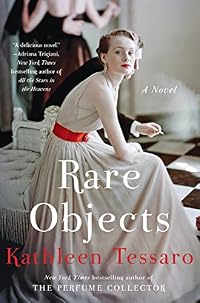
I picked this one up because the synopsis interested me for several reasons. First, it is set in the early thirties, and second, because it appeared to be an immigrant story. I also love the cover! Sadly, I didn’t love the book. I didn’t find the characters likeable, which is not really an issue most of the time. But more than not liking the characters, I just couldn’t make a connection with them. While I loved the cover, and enjoyed the descriptions of the lifestyles, I really did not care what happened to the characters. The story started off well enough, with Maeve getting a job in an antique shop. I really enjoyed the descriptions of the ‘finds’ and the stories that were built around them. But then the story began to drag. show more I am pretty sure that if I hadn’t committed to this review, I would have set the book aside. While it did pick up again at the end, and I ALMOST was happy for the resolution for Diana, it wasn’t enough for me to feel happy that I read the book.
While I did not enjoy the book, if you read through other reviews on the tour, you will find I am clearly in the minority! So please do read through the other reviews (the stops on the tour are listed below), especially if you have read and enjoyed Kathleen Tessaro in the past, before you decide whether or not this is a book you would enjoy!
This book review is included in a tour by TLC Book Tours. I was provided a copy for review purposes. show less
While I did not enjoy the book, if you read through other reviews on the tour, you will find I am clearly in the minority! So please do read through the other reviews (the stops on the tour are listed below), especially if you have read and enjoyed Kathleen Tessaro in the past, before you decide whether or not this is a book you would enjoy!
This book review is included in a tour by TLC Book Tours. I was provided a copy for review purposes. show less
Members
- Recently Added By
Author Information

8 Works 2,870 Members
Kathleen Tessaro was born in Pittsburgh, Pennsylvania. She attended the University of Pittsburgh before entering the drama program of Carnegie Mellon University. In the middle of her sophomore year, she went to study in London for three months and stayed for the next twenty-three years. She began writing at the suggestion of a friend and was an show more early member of the Wimpole Street Writer's Workshop. Her debut novel, Elegance, became a New York Times bestseller. All of Kathleen's novels (Innocence, The Flirt, The Debutante, The Perfume Collector, and most recently, Rare Objects) have been translated into many languages and sold all over the world. (Bowker Author Biography) show less
Common Knowledge
- Canonical title
- Rare Objects
- People/Characters
- Maeve Fanning; Diana Van der Laar; James Van der Laar; Karl Kessler; Mr. Winshaw
- Important places
- Boston, Massachusetts, USA
- Epigraph
- A man's character is his fate.
HERACLITUS, FRAGMENTS - Dedication
- This book is dedicated to my dear friend ROBERT TROTTA, whose remarkable character has forever shaped the fate of my son for the better and given me proof time and again of true heroism in this world. I am beholden to you, si... (show all)r.
- First words
- Looking back is a dangerous thing.
- Quotations
- Aging does that; it makes you amenable to far more ambiguous feelings and opinions than the inflexible black-and-white thinking of youth.
James Van der Laar was like a disease, spreading through my mind and body, even in his absence.
At night I lay in bed, imagining his hands on my skin, his body on mine.
I might have been infected, dying even. But I didn... (show all)'t want to be cured.
The Italian saints were far too vivid for her liking—Saint Lucia holding her eyes on a little silver plate, or Saint Agatha offering her breasts like two splendid cakes on a gold tray.
For the Irish, Catholicism was a sacrifice, an open wound that brought persecution and hardship. But for the Italians, it was celebration.
He'd always been Michael Fanning, never father or Da. And he wasn't just a man but an era; the golden age in Ma's life, illuminated by optimism and possibility, gone before I was born. I'd grown up praying to him, begging for... (show all) his guidance and mercy, imagining him always there, watching over me with those inquisitive, unblinking eyes. God the Father, the Son, the Holy Ghost, and Michael Fanning. In my mind, the four of them sat around heaven, drinking tea, smoking cigarettes, taking turns choosing the forecast for the day.
But Ma was never one to let a subject die an easy death if she could kick it around the room a few more times.
Now here I was, on a street I'd never even been down before, in my counterfeit coat and curls.
"But for the buyer, he's fitting another intricate piece into a carefully curated world of his own construction. At its root is an ancient belief, a hope, in the magic of objects. No matter how sophisticated we think we are, ... (show all)we still search for alchemy."
I couldn't bear to look upon the satisfaction in my mother's face any more than I could stand to stare too long at the sun.
Action is key; in motion, we are all of us magnificent.
So there you have it. If the world were good, Miss Fanning, it wouldn't be interesting. But in my experience, when it's real, it's very interesting indeed.
"And so we have to suffer," I concluded.
Talking with him was like being tossed into a dangerous, fast-moving current; one had to swim hard against the unrelenting tide of his arguments.
"Yes! Absolutely! Don't y... (show all)ou see? Our souls are forged in adversity. Without it, we're shapeless, indistinct! Suffering isn't punishment, it's a catalyst!" He began to pace the floor, as if he were pulling ideas from the air around him. "Why, a man might think himself capable of anything when life is calm, might imagine himself equal to great sacrifice, dignity, or courage. But only in our desperate moments do we truly know what we're made of or who we are. The hour of our calamity is the only true test of our character—without it we're unformed and incomplete!"
"And what if the hour of our calamity is our last?" I countered. (Apparently I had just as many philosophical opinions as he did, which surprised me.)
Quite suddenly he stopped pacing. "Now there's a question," he admitted. Some inner shadow darkened his fervor. "Then we die," he said quietly. "But we die having truly lived. And nothing can diminish that."
"You know me." Mr. Winshaw shrugged. "I prefer useless friends."
There was sanity in our madness together that I couldn't find with anyone else.
Now, as I took a seat across from him, I could feel his concern and disappointment like a low-hanging dark cloud.
Father Grady had years of practice in waiting behind him. He knew, perhaps better than any man in Boston, the art of silence. In a congregation full of first- and second-generation Irish immigrants, people uniquely skilled in... (show all) the lavish use of language, he'd learned to navigate all manner of domestic, political, and spiritual crises by carefully rationing his words. He knew better than to argue, debate, cajole, or sympathize; any conversation was likely to muddy the waters of clear, calm reflection. Quiet unnerved his people, disarmed them. It forced them into that uncomfortable empty space where only God would go and where humor, charm, and intellect were of no use.
The door closed, and the sounds of the playground, the universal echo of childhood, faded behind me.
Life was quiet and uneventful, temporarily suspended, like an intermission between acts.
But I didn't expand, so he didn't pursue the point. Instead he accepted the change with the same grave attitude with which he accepted most good things in his life: as divine gifts that were diminished or even removed when qu... (show all)estioned.
So I kept to a strict daily schedule, just as he prescribed. I woke, ate, and went to bed at the same times, exercised by walking briskly, and practiced the daily relaxation methods he'd taught me. Underneath, however, my hea... (show all)d churned, soaring between giddy anticipation and depression. "You must remain positive," Mr. Baylor advised. "Do something physical when the urge strikes—clean the oven, iron, scrub the floor." One of the benefits of my "Episcopalian regime" (as my mother put it) was that the apartment was always spotless.
"Refocus your mind!" Mr. Baylor had urged with his trademark emphatic energy. "Life isn't going to fall into your lap, Miss Fanning. Go on! Try something new!"
I began to develop an eye and an appreciation for where I was and what I was doing.
"I'm better now. Much better than I was. It's going to work this time, I know."
Her determination made her seem all the more fragile.
"Yes, I'll think about it. I promise." She removed her hand carefully, as if the physical contact were dangerous, possibly even painful.
"When you're real, you feel real," he clarified. "And when you're not, you feel see-through, like a piece of glass."
Then I saw Mickey through the crowd, standing with his arm around Hildy. He was laughing. For years, I'd assumed that he could only be happy with me.
So I ran, as a child runs from a gang of kids from another neighborhood, terrified and desperate.
"Stop meddling!" Mr. Kessler called from his office. "You're going to talk us out of a perfectly good salesgirl!"
"Yes, but what if she's not a salesgirl? What about your ambitions and interests? What your aspirations?"
"Mama! Just look at her flowers!"
"Yes." She nodded. "Either someone's been very naughty, or they're about to be."
"After all, the family is what matters! The family tells you everything you need to know about the person. The family is what is left after the roses fade."
"When you meet a man, you have to think, not just feel. Where they come from, where they're going, what they believe in..."
"Luck?" she snorted. "Luck is for gamblers and fools! You make a choice!"
"Because happiness isn't made of fun. It's made of solid, real things. It's made of paychecks and clean clothing, and hot food and healthy children, and a man who can look you in the eye when he comes home because he has noth... (show all)ing to hide. It's not so rare. In fact, it's so common people don't notice it. They look for roses when they should be looking for indoor plumbing."
Ma, on the other hand, was thrilled about the bouquet. She couldn't have been more delighted if they'd been given to her.
This wasn't my world; I'd been admitted by mistake. Any minute now they would discover I was a fraud and show me to the door.
I was alone in the shop one morning when a gentleman came in, dressed in a boldly fashionable blue seersucker suit and lavender tie. His straw boater was tilted at a rakish angle, and he moved with a certain barely contained ... (show all)energy, as if he might burst into dance at any moment. His eyes were lively and sharp, his mouth curved automatically into a smile, as if he were forever enjoying some private joke.
"Sometimes, my dear, being broken is the most interesting thing that can happen."
I stared after her, cut adrift in a sea of tulle and taffeta, alone and out of place.
"Don't be seduced by the tinsel and the lights. You're worth more than that."
Occasionally a vague political opinion was tossed into the arena; it fell like a cigarette butt onto the ground, smoldering only a little before being crushed out.
No one asked me who I was or where I'd come from; on Nicky's arm I blended into the fabric of their world seamlessly.
The summer that had been at first such a relief was now a sentence to be endured.
The air in the shop was heavy and still, smelling of centuries. Outside, people pushed through invisible membranes of humidity and lethargy. It was a morbid, narcotic heat, the kind that presses against the skin and weighs do... (show all)wn thought, making children teary and adults bad-tempered.
I began to talk, about James and Diana; about the apartment; even about the hospital and Mr. Baylor; about everything that had been pressing in, crushing me. It came out sloppily and unchecked, like a handbag tossed on the gr... (show all)ound, private contents spilling out in all directions.
Instead he stared at his shadow in the glow of the streetlamp as it stretched far beyond the limits of his natural form, reaching out to touch the darkness around us.
I got home just as the early dawn light began to bleed into the night sky.
The full weight of my accumulated lies and betrayals settled upon me.
The whole experience was like being caught in a sudden violent tempest that, now spent, left only a calm and placid sea.
The world was full of collectors, scouring the earth for pieces of themselves. - Last words
- (Click to show. Warning: May contain spoilers.)TO THE MERMAID OF BOSTON HARBOR
FROM A DROWNING MAN
Classifications
Statistics
- Members
- 191
- Popularity
- 170,540
- Reviews
- 10
- Rating
- (3.88)
- Languages
- English
- Media
- Paper, Audiobook, Ebook
- ISBNs
- 17
- ASINs
- 3