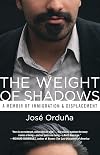
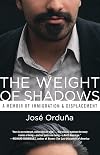
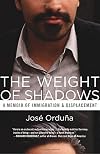
The Weight of Shadows: A Memoir of Immigration & Displacement
by José Orduña
On This Page
Description
Tracing his story of becoming a US citizen, José Orduña's memoir explores the complex issues of immigration and assimilation. José Orduña chronicles the process of becoming a North American citizen in a post-9/11 United States. Intractable realities--rooted in the continuity of US imperialism to globalism--form the landscape of Orduña's daily experience, where the geopolitical meets the quotidian. In one anecdote, he recalls how the only apartment his parents could rent was one that show more didn't require signing a lease or running a credit check, where the floors were so crooked he once dropped an orange and watched it roll in six directions before settling in a corner. Orduña describes the absurd feeling of being handed a piece of paper--his naturalization certificate--that guarantees something he has always known: he has every right to be here. A trenchant exploration of race, class, and identity, The Weight of Shadows is a searing meditation on the nature of political, linguistic, and cultural borders, and the meaning of "America." show lessTags
Recommendations





Member Reviews
I was very moved by Jose Orduna's experience of becoming a naturalized citizen post 9/11. Assimilation has always struck me as such a conflicting and Z Orduna's experiences speak strongly of it. From the guilt he carries for his parents disjointed familial relationships to make a better life for him in the U.S. to his need to come face to face with illegal immigration and recognize and validate their experiences.
"There's no humane or ethical way to deny people who live in countries riddled with violence, poverty, and corruption the right to try to make a livable life in your country much less so when your country's government has been deeply involved in creating the conditions being fled..."
"There's no humane or ethical way to deny people who live in countries riddled with violence, poverty, and corruption the right to try to make a livable life in your country much less so when your country's government has been deeply involved in creating the conditions being fled..."
 This review was written for LibraryThing Early Reviewers.
Jose has lived in America his entire life. And his entire life, his home country has been primed and ready to permanently remove him from everything familiar. After many years, Jose has begun completing his naturalization paperwork and the terrifying reality of his situation is making him reexamine his world.
This memoir is thoughtful, angry, sad, and timely. As Jose works to make his residency permanent, he comes face to face with the suffering that goes on daily as immigrants risk everything. Jose's own parents went through many struggles to make a life for him in America. Everything could have been very different for them. The horrors that go on along the border are chilling and should fill every reader with outrage. This book show more examines the true cost of the wall. show less
This memoir is thoughtful, angry, sad, and timely. As Jose works to make his residency permanent, he comes face to face with the suffering that goes on daily as immigrants risk everything. Jose's own parents went through many struggles to make a life for him in America. Everything could have been very different for them. The horrors that go on along the border are chilling and should fill every reader with outrage. This book show more examines the true cost of the wall. show less
This review was written for LibraryThing Early Reviewers.Summary: In this personal memoir, the author documents his own experience of naturalization, and the shadow existence of both documented and undocumented immigrants in the United States.
Citizenship. If you were born in the USA, you've never thought much about this except when applying for a passport, or as I was doing today, TSA Precheck. I never think twice about my presence in this country, and celebrate the rights affirmed in our constitution. What this book reminded me of is that these are citizen rights. For immigrants on visas, and even those with the coveted "green card" who have Lawful Permanent Resident status, they are in a shadow land of being permitted without belonging. For those without such papers, life is even more in show more the shadows, fearing a trip to the hospital or a traffic stop or a raid on one's workplace (where one often is paying taxes, working at low wages doing work Americans don't want).
José Orduña, Mexican by birth, grew up in Chicago, obtained a green card, and while a graduate student at the University of Iowa, became a naturalized citizen. The first half of this book describes his own "shadow" existence and that of his friend, "Octavio" who has no papers. One senses the efforts to escape the weight of this shadow life as they binge drink together. Orduña weaves their stories with those of others who live with the constant fears of arrest, deportation, and separation from family. He helps us begin to see the contradictions in our local and national economies that depend upon the undocumented and yet punish them, and how that shadow of this fear is troubling even to those legally in the country. This part culminates with his application to become a citizen, the interviews, the biometrics, and finally, the citizenship ceremony. He describes the moment, when he is welcomed via a video of the President to U.S. citizenship:
"How strange to be welcomed now, since I've lived my life here from before I can remember. My cultural references are decidedly eighties and nineties United States--Urkel, Alex B. Keaton, Tom & Jerry, Biggie--and despite my best efforts I sometimes slip into a Chicago accent, cutting my A's short. When I did visit Veracruz as a middle-schooler, the kids I played pickup games of soccer with would immediately detect that something about me was off. I had my first kiss in a bathroom in Bucktown in Chicago in grammar school, and I lost my virginity less than a block away in a church parking lot."
The second half of the book shifts from his own experience of becoming a citizen to his time working with No More Deaths, an organization providing water and basic supplies in drops for those attempting to cross deserts to enter the country, and other organizations that try to advocate for those arrested in the attempt, often without receiving needed medical aid nor legal advice. We learn that our border walls and patrols channel people into the most inhospitable parts of the American Southwest, where death is a constant danger, where over 6,000 deaths have been documented (how many more that are not?) and where deportees often are returned to areas where they are most likely to be killed by Mexican drug lords. The question that cuts through all the ambiguities of our immigration policies is the question of basic human rights and the priority obligations of protecting human life. While their shadow existence has become weighty and dangerous, their real dignity is often stripped by lack of due process and abuse, rape of women on both sides of the border, and a contempt for life.
Toward the end of the book he describes this shadow existence by comparing it to Fenómeno, a painting by Remedios Varo:
"The painting is of a man and his shadow, except the shadow walks upright filling the three-dimensional space of the man while he is confined to the flat parameters of the shadow world."
He goes on to say that the painting captures what was happening to many of his people, either in Mexico, or the desert, the murdering or "disappearing".
Immigration policy is certainly contested ground. This book won't resolve it but it will help us hear "other" voices besides the ones most dominating our media. Neither the author, nor other immigrants are presented to us as saints, but rather simply as human beings who work and strive for the same things many of us were born into. It challenges us to not reduce immigrants to shadows and stereotypes while facing the contradictions between our articulated values and the lived reality of the American "dream".
________________________________
Disclosure of Material Connection: I received this book free from the publisher via a LibraryThing giveaway. I was not required to write a positive review. The opinions I have expressed are my own. I am disclosing this in accordance with the Federal Trade Commission’s 16 CFR, Part 255 : “Guides Concerning the Use of Endorsements and Testimonials in Advertising.” show less
Citizenship. If you were born in the USA, you've never thought much about this except when applying for a passport, or as I was doing today, TSA Precheck. I never think twice about my presence in this country, and celebrate the rights affirmed in our constitution. What this book reminded me of is that these are citizen rights. For immigrants on visas, and even those with the coveted "green card" who have Lawful Permanent Resident status, they are in a shadow land of being permitted without belonging. For those without such papers, life is even more in show more the shadows, fearing a trip to the hospital or a traffic stop or a raid on one's workplace (where one often is paying taxes, working at low wages doing work Americans don't want).
José Orduña, Mexican by birth, grew up in Chicago, obtained a green card, and while a graduate student at the University of Iowa, became a naturalized citizen. The first half of this book describes his own "shadow" existence and that of his friend, "Octavio" who has no papers. One senses the efforts to escape the weight of this shadow life as they binge drink together. Orduña weaves their stories with those of others who live with the constant fears of arrest, deportation, and separation from family. He helps us begin to see the contradictions in our local and national economies that depend upon the undocumented and yet punish them, and how that shadow of this fear is troubling even to those legally in the country. This part culminates with his application to become a citizen, the interviews, the biometrics, and finally, the citizenship ceremony. He describes the moment, when he is welcomed via a video of the President to U.S. citizenship:
"How strange to be welcomed now, since I've lived my life here from before I can remember. My cultural references are decidedly eighties and nineties United States--Urkel, Alex B. Keaton, Tom & Jerry, Biggie--and despite my best efforts I sometimes slip into a Chicago accent, cutting my A's short. When I did visit Veracruz as a middle-schooler, the kids I played pickup games of soccer with would immediately detect that something about me was off. I had my first kiss in a bathroom in Bucktown in Chicago in grammar school, and I lost my virginity less than a block away in a church parking lot."
The second half of the book shifts from his own experience of becoming a citizen to his time working with No More Deaths, an organization providing water and basic supplies in drops for those attempting to cross deserts to enter the country, and other organizations that try to advocate for those arrested in the attempt, often without receiving needed medical aid nor legal advice. We learn that our border walls and patrols channel people into the most inhospitable parts of the American Southwest, where death is a constant danger, where over 6,000 deaths have been documented (how many more that are not?) and where deportees often are returned to areas where they are most likely to be killed by Mexican drug lords. The question that cuts through all the ambiguities of our immigration policies is the question of basic human rights and the priority obligations of protecting human life. While their shadow existence has become weighty and dangerous, their real dignity is often stripped by lack of due process and abuse, rape of women on both sides of the border, and a contempt for life.
Toward the end of the book he describes this shadow existence by comparing it to Fenómeno, a painting by Remedios Varo:
"The painting is of a man and his shadow, except the shadow walks upright filling the three-dimensional space of the man while he is confined to the flat parameters of the shadow world."
He goes on to say that the painting captures what was happening to many of his people, either in Mexico, or the desert, the murdering or "disappearing".
Immigration policy is certainly contested ground. This book won't resolve it but it will help us hear "other" voices besides the ones most dominating our media. Neither the author, nor other immigrants are presented to us as saints, but rather simply as human beings who work and strive for the same things many of us were born into. It challenges us to not reduce immigrants to shadows and stereotypes while facing the contradictions between our articulated values and the lived reality of the American "dream".
________________________________
Disclosure of Material Connection: I received this book free from the publisher via a LibraryThing giveaway. I was not required to write a positive review. The opinions I have expressed are my own. I am disclosing this in accordance with the Federal Trade Commission’s 16 CFR, Part 255 : “Guides Concerning the Use of Endorsements and Testimonials in Advertising.” show less
This review was written for LibraryThing Early Reviewers.I am not usually a fan of memoirs. This book is an exception. It was very, very well written. It reminded me of a very well written dystopian work of literature by someone such as Margaret Atwood for example, except that this is not fiction. This is a memoir about the immigration experience in the United States. It is harrowing, enlightening, sad, and engaging. I was very impressed with this work.
A lot of the book was not new information for me, but it was told in such a way that intensified the experience for me as a reader by personalizing the actors affected by the situations presented. For example, I was moved thinking about what it would be like to know that you could be deported after being pulled over for a minor traffic stop show more without your family being notified. I cannot imagine what it would be like to know that you are just disappearing and your friends and family will not know where you went because to notify them with cause them to be deported as well. That is terrible and dehumanizing for these people.
One thing that was new to me was the farce of a trial that illegals receive through the streamlining program. People who may not even speak English are given 20 minutes with an attorney, rushed into a courtroom en masse, and rushed back out of the courtroom to be detained and sometimes laterally repatriated back to Mexico hundreds of miles from where they crossed and where they came from. From a country that claims to believe in the natural rights of people, this is terrible and dehumanizing.
This is a very good book about a very terrible situation. It was written in a very non-politically partisan way (both the Obama and Bush administrations take a lot of heat), and it focusses more on the impact on individuals than on group dynamics. I felt like these stories needed to be told, and I am glad that Orduña told them. I highly recommend this book. show less
A lot of the book was not new information for me, but it was told in such a way that intensified the experience for me as a reader by personalizing the actors affected by the situations presented. For example, I was moved thinking about what it would be like to know that you could be deported after being pulled over for a minor traffic stop show more without your family being notified. I cannot imagine what it would be like to know that you are just disappearing and your friends and family will not know where you went because to notify them with cause them to be deported as well. That is terrible and dehumanizing for these people.
One thing that was new to me was the farce of a trial that illegals receive through the streamlining program. People who may not even speak English are given 20 minutes with an attorney, rushed into a courtroom en masse, and rushed back out of the courtroom to be detained and sometimes laterally repatriated back to Mexico hundreds of miles from where they crossed and where they came from. From a country that claims to believe in the natural rights of people, this is terrible and dehumanizing.
This is a very good book about a very terrible situation. It was written in a very non-politically partisan way (both the Obama and Bush administrations take a lot of heat), and it focusses more on the impact on individuals than on group dynamics. I felt like these stories needed to be told, and I am glad that Orduña told them. I highly recommend this book. show less
This review was written for LibraryThing Early Reviewers.Cross posted from my blog at http://acatalogofcuriosity.blogspot.com/2016/04/creating-story-from-arbitrary-jo...
I hear the phrase "must read" tossed around a lot, and when I find a book particularly captivating, I'm often tempted to use it myself. It comes up especially when a book illuminates something about society, so that reading it is "homework" for the ongoing process that is being a good member of the community. It's overwhelming, as a reader, for so many "musts" to come out each year. I recommend José Orduña's The Weight of Shadows: A Memoir of Immigration and Displacement in part because it's well-balanced between analysis and emotion and touches on many people's experiences. If you only read one or two of this year's must show more reads, I recommend this one.
Orduña writes expressively of his own experience, of challenges faced by friends with different immigration statuses, and of people he meets in his travels. It's a compelling book which reads like a novel when Orduña is talking about his family or childhood. He reflects on the slow process of coming to understand that his families situation was different from other families he knew after coming to the United States from Mexico as a toddler. He also speaks frankly about risks he has taken such as accepting a fellowship which took him out of the US while in the final stages of his citizenship application. I appreciated that the book rejects the notion that immigrants need to prove their worth and respectability. Orduña writes about going on all-night benders and other exploits without self-flagellation but without any "I Hope They Serve Beer in Hell" style bravado. While our political climate paints immigrants with a broad brush, the choices that he makes in how he portrays himself underscore the fact that the author is a person, as unique and common as anyone else.
The Weight of Shadows also successfully balances Orduña's need to speak from his own experience and analysis of situations much more dire than his own. He looks at intersections of race, nationality, and the effects of colonialism while describing his visit to the Philippines. He discusses how arbitrary it is that he is in a position to bring water to would-be immigrants in the desert on the US-Mexico border. On one of these trips, he met a group of men from his mother's home region, who picked up on the regional accent of his Spanish. It's a difference of circumstance only that these men are crossing the desert to improve their lives, and US border patrol and paramilitary vigilante groups deny them access to food, water, and medical care, while Orduña is there by choice. Despite all of the systematic reinforcement of power structures in the immigration system, he gets strange looks and rude words from fellow US citizens, but nothing more.
My main complaint about the book is that the chapter about his time volunteering with No More Deaths to save the lives of immigrants crossing the border stands out from the others with its intense emotional weight, so the rest of the book feels disconnected from it. Orduña tries to connect it to his own journey with immigration, and I think he does a decent job, I just wished for more. For all that it feels like a novel in some places, the book lacks a strong narrative arc, which bothered me. Perhaps, since the sheer meaninglessness of many of the immigration regulations is a recurring theme in the book, that's part of the point.
I added The Weight of Shadows to my reading list for this blog because I believe that being informed about what's going on in society and how that affects individuals is necessary to teaching and creating good museum experiences. I'm not alone -- just for museums, there is a growing tide of resources and groups devoted to creating more civic-minded, welcoming spaces. The Incluseum, #museumsrespondtoferguson, and The International Journal of the Inclusive Museum are a few. What The Weight of Shadows did for me was remind me of the importance of empathy -- we never know how complicated people's stories are. Additionally, it made me think I should be more proactive about providing multilingual resources in the museum where I work. If someone lives here and English is not their dominant language, they probably face many more barriers than communication every day, and they deserve all of the consideration and courtesy we can extend to them. show less
I hear the phrase "must read" tossed around a lot, and when I find a book particularly captivating, I'm often tempted to use it myself. It comes up especially when a book illuminates something about society, so that reading it is "homework" for the ongoing process that is being a good member of the community. It's overwhelming, as a reader, for so many "musts" to come out each year. I recommend José Orduña's The Weight of Shadows: A Memoir of Immigration and Displacement in part because it's well-balanced between analysis and emotion and touches on many people's experiences. If you only read one or two of this year's must show more reads, I recommend this one.
Orduña writes expressively of his own experience, of challenges faced by friends with different immigration statuses, and of people he meets in his travels. It's a compelling book which reads like a novel when Orduña is talking about his family or childhood. He reflects on the slow process of coming to understand that his families situation was different from other families he knew after coming to the United States from Mexico as a toddler. He also speaks frankly about risks he has taken such as accepting a fellowship which took him out of the US while in the final stages of his citizenship application. I appreciated that the book rejects the notion that immigrants need to prove their worth and respectability. Orduña writes about going on all-night benders and other exploits without self-flagellation but without any "I Hope They Serve Beer in Hell" style bravado. While our political climate paints immigrants with a broad brush, the choices that he makes in how he portrays himself underscore the fact that the author is a person, as unique and common as anyone else.
The Weight of Shadows also successfully balances Orduña's need to speak from his own experience and analysis of situations much more dire than his own. He looks at intersections of race, nationality, and the effects of colonialism while describing his visit to the Philippines. He discusses how arbitrary it is that he is in a position to bring water to would-be immigrants in the desert on the US-Mexico border. On one of these trips, he met a group of men from his mother's home region, who picked up on the regional accent of his Spanish. It's a difference of circumstance only that these men are crossing the desert to improve their lives, and US border patrol and paramilitary vigilante groups deny them access to food, water, and medical care, while Orduña is there by choice. Despite all of the systematic reinforcement of power structures in the immigration system, he gets strange looks and rude words from fellow US citizens, but nothing more.
My main complaint about the book is that the chapter about his time volunteering with No More Deaths to save the lives of immigrants crossing the border stands out from the others with its intense emotional weight, so the rest of the book feels disconnected from it. Orduña tries to connect it to his own journey with immigration, and I think he does a decent job, I just wished for more. For all that it feels like a novel in some places, the book lacks a strong narrative arc, which bothered me. Perhaps, since the sheer meaninglessness of many of the immigration regulations is a recurring theme in the book, that's part of the point.
I added The Weight of Shadows to my reading list for this blog because I believe that being informed about what's going on in society and how that affects individuals is necessary to teaching and creating good museum experiences. I'm not alone -- just for museums, there is a growing tide of resources and groups devoted to creating more civic-minded, welcoming spaces. The Incluseum, #museumsrespondtoferguson, and The International Journal of the Inclusive Museum are a few. What The Weight of Shadows did for me was remind me of the importance of empathy -- we never know how complicated people's stories are. Additionally, it made me think I should be more proactive about providing multilingual resources in the museum where I work. If someone lives here and English is not their dominant language, they probably face many more barriers than communication every day, and they deserve all of the consideration and courtesy we can extend to them. show less
This review was written for LibraryThing Early Reviewers."This is America.
Each passage and inscription of a human being as "illegal" is a reiteration.
We are in the zone where justice reaches its vanishing point,
sheds its veneer, and reveals itself fully as punishment."… José Orduña
José Orduña was born in Veracruz, Mexico. His mother, Yoli, was a semester from graduating with a degree in agronomy when she found out she was pregnant. Unmarried, Yoli was forced to quit school and summarily disowned by her parents. Martin Orduña , José's father and his parents gave her a home. After they married, Martin left his wife and new baby with his parents while he joined his Aunt Hilda in Chicago hoping to find work. When José was 2-years old his mother and he joined Martin entering the United show more States on a tourist visa.
Yoli and Martin struggled to make a life for themselves and José in the US. Limited by legalities and language, lived in shadows; caught between two worlds. Yearning for Mexico but needing the US for for a life. Fearful of ignoring the need for "papers" and fearful of living under the radar just one small mistake from the unimaginable without them.
José as a child was aware there was tension in the home but growing up "American" he really didn't grasp the dangers facing his family. He knew that he wasn't one of "them" facing bullying and discrimination in the community and school but he couldn't remember any other life. Their labor class income limited their options, but nonetheless, his parents were determined to make a better life for their child and they did the very best they could for him.
It must have taken extreme courage for Martin and Yoli to begin the process of obtaining their "papers." Once they step out in the open and into the system they would be exposed as "undocumented" and subject to the arbitrary whims of every "politically correct authority". The smallest misstep- running a stop sign, failing to signal a turn, anger a neighbor - could result in displacement.
Orduña relates his life's story with a sharp edge in The Weight of Shadows . Every sentence conjures a raw emotion. He holds nothing back in explaining his ambivalence at having to "earn" his right to be here; a place he feels he already had a right to be.
He lays his story and the story of friends and relatives all out straight with every wart and wrinkle exposed. The hypocritical history of immigration into the US is laid open across the path of every "undocumented alien". An immigration system so unwieldy, unpredictable and arbitrary that is often safer to just stay in the background.
It's a tough story to read. Every page sizzles with his unrestrained emotion. The descriptions of the desert crossings, the inhumane treatment of detainees, the despair, the fear, the hunger, the pain, and the desperation. You cringe at what you know to be the truth that an employer would take advantage of an undocumented status to pay inadequate salaries or withhold time off with the threat of job loss.
"We've been used as disposable, malleable bodies that can be drawn in and purged according to labor demands and cyclical xenophobic trends."
It is difficult to establish happiness and a necessary sense of communion with members of a society that allow for you, in actuality and in representation , the space of a maid, a nanny, a janitor, a day laborer, or a landscaper, and nothing else, and who barely meet your eye.
And in the end, following the rules, José Orduña was sworn in as a naturalized United States citizen in July of 2011. It is not a day to celebrate. The piece of paper just makes him legal.
He says, "I feel a[n]...ambivalence about being here [at the ceremony]...because being here doesn't feel like a celebration or an accomplishment. It's something of a relief, of course, but it also feels like acquiescence - like I'm tacitly agreeing that this is necessary and legitimate...I am one of the 'good ones' and that I have 'done it the right way'.
At times I didn't think I could read on...The use of Spanish in the beginning without context felt purposeful. The described trip to the Philippines was unnecessary and salacious. But, as a debut work, it's a truthful chronicle voiced by one who knows too well what it means to be an "illegal alien". There is no doubt Orduña's voice will be heard again and again.
Note: A copy of the book was received though LibraryThing and Beacon Press free of charge in exchange for my honest review. show less
Each passage and inscription of a human being as "illegal" is a reiteration.
We are in the zone where justice reaches its vanishing point,
sheds its veneer, and reveals itself fully as punishment."… José Orduña
José Orduña was born in Veracruz, Mexico. His mother, Yoli, was a semester from graduating with a degree in agronomy when she found out she was pregnant. Unmarried, Yoli was forced to quit school and summarily disowned by her parents. Martin Orduña , José's father and his parents gave her a home. After they married, Martin left his wife and new baby with his parents while he joined his Aunt Hilda in Chicago hoping to find work. When José was 2-years old his mother and he joined Martin entering the United show more States on a tourist visa.
Yoli and Martin struggled to make a life for themselves and José in the US. Limited by legalities and language, lived in shadows; caught between two worlds. Yearning for Mexico but needing the US for for a life. Fearful of ignoring the need for "papers" and fearful of living under the radar just one small mistake from the unimaginable without them.
José as a child was aware there was tension in the home but growing up "American" he really didn't grasp the dangers facing his family. He knew that he wasn't one of "them" facing bullying and discrimination in the community and school but he couldn't remember any other life. Their labor class income limited their options, but nonetheless, his parents were determined to make a better life for their child and they did the very best they could for him.
It must have taken extreme courage for Martin and Yoli to begin the process of obtaining their "papers." Once they step out in the open and into the system they would be exposed as "undocumented" and subject to the arbitrary whims of every "politically correct authority". The smallest misstep- running a stop sign, failing to signal a turn, anger a neighbor - could result in displacement.
Orduña relates his life's story with a sharp edge in The Weight of Shadows . Every sentence conjures a raw emotion. He holds nothing back in explaining his ambivalence at having to "earn" his right to be here; a place he feels he already had a right to be.
He lays his story and the story of friends and relatives all out straight with every wart and wrinkle exposed. The hypocritical history of immigration into the US is laid open across the path of every "undocumented alien". An immigration system so unwieldy, unpredictable and arbitrary that is often safer to just stay in the background.
It's a tough story to read. Every page sizzles with his unrestrained emotion. The descriptions of the desert crossings, the inhumane treatment of detainees, the despair, the fear, the hunger, the pain, and the desperation. You cringe at what you know to be the truth that an employer would take advantage of an undocumented status to pay inadequate salaries or withhold time off with the threat of job loss.
"We've been used as disposable, malleable bodies that can be drawn in and purged according to labor demands and cyclical xenophobic trends."
It is difficult to establish happiness and a necessary sense of communion with members of a society that allow for you, in actuality and in representation , the space of a maid, a nanny, a janitor, a day laborer, or a landscaper, and nothing else, and who barely meet your eye.
And in the end, following the rules, José Orduña was sworn in as a naturalized United States citizen in July of 2011. It is not a day to celebrate. The piece of paper just makes him legal.
He says, "I feel a[n]...ambivalence about being here [at the ceremony]...because being here doesn't feel like a celebration or an accomplishment. It's something of a relief, of course, but it also feels like acquiescence - like I'm tacitly agreeing that this is necessary and legitimate...I am one of the 'good ones' and that I have 'done it the right way'.
At times I didn't think I could read on...The use of Spanish in the beginning without context felt purposeful. The described trip to the Philippines was unnecessary and salacious. But, as a debut work, it's a truthful chronicle voiced by one who knows too well what it means to be an "illegal alien". There is no doubt Orduña's voice will be heard again and again.
Note: A copy of the book was received though LibraryThing and Beacon Press free of charge in exchange for my honest review. show less
This review was written for LibraryThing Early Reviewers."This is America.
Each passage and inscription of a human being as "illegal" is a reiteration.
We are in the zone where justice reaches its vanishing point,
sheds its veneer, and reveals itself fully as punishment."… José Orduña
José Orduña was born in Veracruz, Mexico. His mother, Yoli, was a semester from graduating with a degree in agronomy when she found out she was pregnant. Unmarried, Yoli was forced to quit school and summarily disowned by her parents. Martin Orduña , José's father and his parents gave her a home.
After they married, Martin left his wife and new baby with his parents while he joined his Aunt Hilda in Chicago hoping to find work. When José was 2-years old his mother and he joined Martin entering the United show more States on a tourist visa
.
Yoli and Martin struggled to make a life for themselves and José in the US. Limited by legalities and language, lived in shadows; caught between two worlds. Yearning for Mexico but needing the US for for a life. Fearful of ignoring the need for "papers" and fearful of living under the radar just one small mistake from the unimaginable without them.
José as a child was aware there was tension in the home but growing up "American" he really didn't grasp the dangers facing his family. He knew that he wasn't one of "them" facing bullying and discrimination in the community and school but he couldn't remember any other life.
Their labor class income limited their options, but nonetheless, his parents were determined to make a better life for their child and they did the very best they could for him.
It must have taken extreme courage for Martin and Yoli to begin the process of obtaining their "papers." Once they step out in the open and into the system they would be exposed as "undocumented" and subject to the arbitrary whims of every "politically correct authority". The smallest misstep- running a stop sign, failing to signal a turn, anger a neighbor - could result in displacement.
Orduña relates his life's story with a sharp edge in The Weight of Shadows . Every sentence conjures a raw emotion. He holds nothing back in explaining his ambivalence at having to "earn" his right to be here; a place he feels he already had a right to be.
He lays his story and the story of friends and relatives all out straight with every wart and wrinkle exposed. The hypocritical history of immigration into the US is laid open across the path of every "undocumented alien". An immigration system so unwieldy, unpredictable and arbitrary that is often safer to just stay in the background.
It's a tough story to read. Every page sizzles with his unrestrained emotion. The descriptions of the desert crossings, the inhumane treatment of detainees, the despair, the fear, the hunger, the pain, and the desperation. You cringe at what you know to be the truth that an employer would take advantage of an undocumented status to pay inadequate salaries or withhold time off with the threat of job loss.
"We've been used as disposable, malleable bodies that can be drawn in and purged according to labor demands and cyclical xenophobic trends."
"It is difficult to establish happiness and a necessary sense of communion with members of a society that allow for you, in actuality and in representation , the space of a maid, a nanny, a janitor, a day laborer, or a landscaper, and nothing else, and who barely meet your eye."
And in the end, following the rules, José Orduña was sworn in as a naturalized United States citizen in July of 2011. It is not a day to celebrate. The piece of paper just makes him legal.
He says, "I feel a[n]...ambivalence about being here [at the ceremony]...because being here doesn't feel like a celebration or an accomplishment. It's something of a relief, of course, but it also feels like acquiescence - like I'm tacitly agreeing that this is necessary and legitimate...I am one of the 'good ones' and that I have 'done it the right way'.
At times I didn't think I could read on...The use of Spanish in the beginning without context felt purposeful. The described trip to the Philippines was unnecessary and salacious. But, as a debut work, it's a truthful chronicle voiced by one who knows too well what it means to be an "illegal alien". There is no doubt Orduña's voice will be heard again and again.
Note: A copy of the book was won though LibraryThing and Beacon Press free of charge in exchange for my honest review. show less
Each passage and inscription of a human being as "illegal" is a reiteration.
We are in the zone where justice reaches its vanishing point,
sheds its veneer, and reveals itself fully as punishment."… José Orduña
José Orduña was born in Veracruz, Mexico. His mother, Yoli, was a semester from graduating with a degree in agronomy when she found out she was pregnant. Unmarried, Yoli was forced to quit school and summarily disowned by her parents. Martin Orduña , José's father and his parents gave her a home.
After they married, Martin left his wife and new baby with his parents while he joined his Aunt Hilda in Chicago hoping to find work. When José was 2-years old his mother and he joined Martin entering the United show more States on a tourist visa
.
Yoli and Martin struggled to make a life for themselves and José in the US. Limited by legalities and language, lived in shadows; caught between two worlds. Yearning for Mexico but needing the US for for a life. Fearful of ignoring the need for "papers" and fearful of living under the radar just one small mistake from the unimaginable without them.
José as a child was aware there was tension in the home but growing up "American" he really didn't grasp the dangers facing his family. He knew that he wasn't one of "them" facing bullying and discrimination in the community and school but he couldn't remember any other life.
Their labor class income limited their options, but nonetheless, his parents were determined to make a better life for their child and they did the very best they could for him.
It must have taken extreme courage for Martin and Yoli to begin the process of obtaining their "papers." Once they step out in the open and into the system they would be exposed as "undocumented" and subject to the arbitrary whims of every "politically correct authority". The smallest misstep- running a stop sign, failing to signal a turn, anger a neighbor - could result in displacement.
Orduña relates his life's story with a sharp edge in The Weight of Shadows . Every sentence conjures a raw emotion. He holds nothing back in explaining his ambivalence at having to "earn" his right to be here; a place he feels he already had a right to be.
He lays his story and the story of friends and relatives all out straight with every wart and wrinkle exposed. The hypocritical history of immigration into the US is laid open across the path of every "undocumented alien". An immigration system so unwieldy, unpredictable and arbitrary that is often safer to just stay in the background.
It's a tough story to read. Every page sizzles with his unrestrained emotion. The descriptions of the desert crossings, the inhumane treatment of detainees, the despair, the fear, the hunger, the pain, and the desperation. You cringe at what you know to be the truth that an employer would take advantage of an undocumented status to pay inadequate salaries or withhold time off with the threat of job loss.
"We've been used as disposable, malleable bodies that can be drawn in and purged according to labor demands and cyclical xenophobic trends."
"It is difficult to establish happiness and a necessary sense of communion with members of a society that allow for you, in actuality and in representation , the space of a maid, a nanny, a janitor, a day laborer, or a landscaper, and nothing else, and who barely meet your eye."
And in the end, following the rules, José Orduña was sworn in as a naturalized United States citizen in July of 2011. It is not a day to celebrate. The piece of paper just makes him legal.
He says, "I feel a[n]...ambivalence about being here [at the ceremony]...because being here doesn't feel like a celebration or an accomplishment. It's something of a relief, of course, but it also feels like acquiescence - like I'm tacitly agreeing that this is necessary and legitimate...I am one of the 'good ones' and that I have 'done it the right way'.
At times I didn't think I could read on...The use of Spanish in the beginning without context felt purposeful. The described trip to the Philippines was unnecessary and salacious. But, as a debut work, it's a truthful chronicle voiced by one who knows too well what it means to be an "illegal alien". There is no doubt Orduña's voice will be heard again and again.
Note: A copy of the book was won though LibraryThing and Beacon Press free of charge in exchange for my honest review. show less
Members
- Recently Added By
Published Reviews
ThingScore 75
Articulate and timely, Orduña’s book probes the underside of the American dream while offering a fierce vision of the way race and class continue to shape government policy in a country that still bills itself as the land of opportunity for all.
added by hipdeep
Lists

Best Autobiographies and Memoirs
370 works; 67 members

Best Biographies, Autobiographies and Memoirs
465 works; 160 members

Favorite Memoirs
64 works; 13 members

Non-Fiction Worth Reading
1,016 works; 262 members

Best Books Won from LibraryThing Early Reviewers
11 works; 3 members

Biographies of Little Known People
39 works; 2 members

Books We Discovered On LibraryThing
530 works; 130 members
Author Information
1 Work 47 Members
Common Knowledge
- Original publication date
- 2016
- Dedication
- For Yolanda and Martín, and for all those who refuse to live as shadows
- First words
- Toward the tail end of the evening rush where Octavio and I work, three large men with sharp faces come through the back door.
- Blurbers
- D'Agata, John; Rodriguez, Richard; Walker, Jerald; Deen, Shulem; Perdomo, Willie
Classifications
- Genres
- Nonfiction, Biography & Memoir, History, General Nonfiction, Politics and Government
- DDC/MDS
- 973.046872 — History & geography History of North America United States United States Ethnic And National Groups Hispanic Americans
- LCC
- E184 .M5 .O76 — History of the United States United States Elements in the population Afro-Americans
- BISAC
Statistics
- Members
- 47
- Popularity
- 638,450
- Reviews
- 25
- Rating
- (3.95)
- Languages
- English
- Media
- Paper, Ebook
- ISBNs
- 2
- ASINs
- 2