On This Page
Description
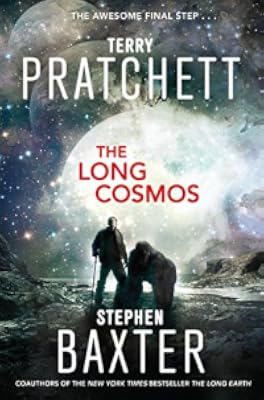
The thrilling conclusion to the internationally bestselling Long Earth series explores the greatest question of all: What is the meaning of life? 2070-71. Nearly six decades after Step Day, a new society continues to evolve in the Long Earth. Now, a message has been received: "Join us." The Next-the hyper-intelligent post-humans-realize that the missive contains instructions for kick-starting the development of an immense artificial intelligence known as The Machine. But to build this show more computer the size of an Earth continent, they must obtain help from the more populous and still industrious worlds of mankind. Meanwhile, on a trek in the High Meggers, Joshua Valienté, now nearing seventy, is saved from death when a troll band discovers him. Living among the trolls as he recovers, Joshua develops a deeper understanding of this collective-intelligence species and its society. He discovers that some older trolls, with capacious memories, act as communal libraries, and live on a very strange Long Earth world, in caverns under the root systems of trees as tall as mountains. Valienté also learns something much more profound . . . about life and its purpose in the Long Earth: We cultivate the cosmos to maximize the opportunities for life and joy in this universe, and to prepare for new universes to come. show lessTags
Recommendations








Member Reviews
A man walks into a bar and the barman says “Why the long face?” So the man says “One of my favourite authors died not so long ago. He was best known for a series of wonderful fantasy novels that mixed satire and slapstick to such an intelligent degree that I'd find myself admiring how clever he was even while slapping my knee and having a good chortle.
“He was no one-trick pony, though. He wrote other books in other genres. Some by himself and some with other authors. Most recently he set out upon a collaboration with a science fiction author who has written some of my favourite and least favourite novels in the genre.
“It finished just recently after five years and five books. Unfortunately it ran out of ideas about four and a show more half books ago. The basic notion was a good one: imagine if our world was just one in an infinite string of Earths, each differing from its two neighbours by some chance event turning out differently in the past. Here a volcano erupted, on its neighbour it didn’t. Here an asteroid struck full on, next door it merely grazed the surface, and two doors down it missed entirely. Not a single Earth, then, but a Long Earth of infinite resources and possibilities. And imagine if, all of a sudden, people discovered how to take steps between neighbouring worlds.
“Five years ago came [b:The Long Earth|13003102|The Long Earth|Terry Pratchett|https://d.gr-assets.com/books/1327436946s/13003102.jpg|18164154], a novel that set up this situation but didn’t really know what to do with it beyond having the main characters wander between some of the worlds on the Long Earth and point at all the pretty differences. Next was [b:The Long War|16113738|The Long War (The Long Earth, #2)|Terry Pratchett|https://d.gr-assets.com/books/1371856263s/16113738.jpg|21930358] which ostensibly asked what war would look like when the battle grounds could span planets at once infinitely close and infinitely far apart. The answer, it turned out, was a lacklustre shrug. There was no war. Instead the main characters wandered between some more of the worlds on the Long Earth and pointed at all the pretty differences.
“The halfway point in this saga was [b:The Long Mars|18586487|The Long Mars (The Long Earth, #3)|Terry Pratchett|https://d.gr-assets.com/books/1397123447s/18586487.jpg|26325671]. Middles are infamously tricky to write since you no longer have the freshness of the beginning nor the excitement of the end. Fortunately the third book afforded us fresh excitement by having the main characters take a spaceship to Mars and then wander between some worlds on the Long Mars and point at all the pretty differences. It was totally unlike the other books because, you know, Mars.
“Book four was next, [b:The Long Utopia|23213813|The Long Utopia (The Long Earth #4)|Terry Pratchett|https://d.gr-assets.com/books/1422281412s/23213813.jpg|42756235]. Believe it or not I kind of liked this one, or at least it provoked some feelings beyond utter tedium. Something new was introduced, the notion that our Long Earth and some other, cosmically distant Long Planet could become tangled somehow, and at the places where they were joined one could step not just in the usual two directions to your neighbouring worlds, but in a third direction to reach the other planet. It set up a neat invasion storyline. I mean, it wasn’t great, but it did suggest the authors hadn’t completely forgotten that they were supposed to be telling a story.
“Which brings us here, to the final part of the series. The Long Cosmos is clearly trying to build to an epic and grand conclusion. Underpinning the plot is the attempt to build a continent-sized supercomputer that will presumably tell us the meaning of life, the Universe, and everything. But building computers takes time. So, to fill in the years, one of the main character’s sons goes missing. Then a different character’s grandson goes missing. There are endless jokes about the fact that the characters we’ve been following for five books are now old. All this so that, finally, the computer gets up and running. What is its purpose? I dunno, it’s never particularly explained. It does at least somehow tell people how to repeat the fourth book and step between different planets, not just between copies of their own. And so the main characters wander between some different worlds around the galaxy and point at all the pretty differences.
“It’s not a conclusion by any means. The new worlds seem to be as uninteresting as the endless copies of Earth (and Mars) that we’ve spent four books staring at. Maybe the characters will meet some aliens on one of the new planets, but they’ve already met other sentient life on the Long Earth without much changing. You feel like there could be a sixth book where they learn how to step between different times and it’d be just as much of a grand finish.
“And what’s worse is that the books aren’t even bad. They’re occasionally a little amusing, occasionally a little interesting, and occasionally a little thought provoking. But only occasionally and only a little. They didn’t make me angry at how bad they were, nor bored that I was reading them. I was just disappointed and a little sad that an author who brought me so much joy has his name on these books that brought me so little.”
To which the horse standing behind him says “Actually I think he was talking to me.” show less
“He was no one-trick pony, though. He wrote other books in other genres. Some by himself and some with other authors. Most recently he set out upon a collaboration with a science fiction author who has written some of my favourite and least favourite novels in the genre.
“It finished just recently after five years and five books. Unfortunately it ran out of ideas about four and a show more half books ago. The basic notion was a good one: imagine if our world was just one in an infinite string of Earths, each differing from its two neighbours by some chance event turning out differently in the past. Here a volcano erupted, on its neighbour it didn’t. Here an asteroid struck full on, next door it merely grazed the surface, and two doors down it missed entirely. Not a single Earth, then, but a Long Earth of infinite resources and possibilities. And imagine if, all of a sudden, people discovered how to take steps between neighbouring worlds.
“Five years ago came [b:The Long Earth|13003102|The Long Earth|Terry Pratchett|https://d.gr-assets.com/books/1327436946s/13003102.jpg|18164154], a novel that set up this situation but didn’t really know what to do with it beyond having the main characters wander between some of the worlds on the Long Earth and point at all the pretty differences. Next was [b:The Long War|16113738|The Long War (The Long Earth, #2)|Terry Pratchett|https://d.gr-assets.com/books/1371856263s/16113738.jpg|21930358] which ostensibly asked what war would look like when the battle grounds could span planets at once infinitely close and infinitely far apart. The answer, it turned out, was a lacklustre shrug. There was no war. Instead the main characters wandered between some more of the worlds on the Long Earth and pointed at all the pretty differences.
“The halfway point in this saga was [b:The Long Mars|18586487|The Long Mars (The Long Earth, #3)|Terry Pratchett|https://d.gr-assets.com/books/1397123447s/18586487.jpg|26325671]. Middles are infamously tricky to write since you no longer have the freshness of the beginning nor the excitement of the end. Fortunately the third book afforded us fresh excitement by having the main characters take a spaceship to Mars and then wander between some worlds on the Long Mars and point at all the pretty differences. It was totally unlike the other books because, you know, Mars.
“Book four was next, [b:The Long Utopia|23213813|The Long Utopia (The Long Earth #4)|Terry Pratchett|https://d.gr-assets.com/books/1422281412s/23213813.jpg|42756235]. Believe it or not I kind of liked this one, or at least it provoked some feelings beyond utter tedium. Something new was introduced, the notion that our Long Earth and some other, cosmically distant Long Planet could become tangled somehow, and at the places where they were joined one could step not just in the usual two directions to your neighbouring worlds, but in a third direction to reach the other planet. It set up a neat invasion storyline. I mean, it wasn’t great, but it did suggest the authors hadn’t completely forgotten that they were supposed to be telling a story.
“Which brings us here, to the final part of the series. The Long Cosmos is clearly trying to build to an epic and grand conclusion. Underpinning the plot is the attempt to build a continent-sized supercomputer that will presumably tell us the meaning of life, the Universe, and everything. But building computers takes time. So, to fill in the years, one of the main character’s sons goes missing. Then a different character’s grandson goes missing. There are endless jokes about the fact that the characters we’ve been following for five books are now old. All this so that, finally, the computer gets up and running. What is its purpose? I dunno, it’s never particularly explained. It does at least somehow tell people how to repeat the fourth book and step between different planets, not just between copies of their own. And so the main characters wander between some different worlds around the galaxy and point at all the pretty differences.
“It’s not a conclusion by any means. The new worlds seem to be as uninteresting as the endless copies of Earth (and Mars) that we’ve spent four books staring at. Maybe the characters will meet some aliens on one of the new planets, but they’ve already met other sentient life on the Long Earth without much changing. You feel like there could be a sixth book where they learn how to step between different times and it’d be just as much of a grand finish.
“And what’s worse is that the books aren’t even bad. They’re occasionally a little amusing, occasionally a little interesting, and occasionally a little thought provoking. But only occasionally and only a little. They didn’t make me angry at how bad they were, nor bored that I was reading them. I was just disappointed and a little sad that an author who brought me so much joy has his name on these books that brought me so little.”
To which the horse standing behind him says “Actually I think he was talking to me.” show less
An excellent conclusion to the Long Earth series.
Like all good science fiction, this book/series tackles big ideas, speculating on themes of space, time, evolution, the future, the past, the role of technology in our lives, the meaning of sapience, the meaning of humanity. The characters are engaging and memorable, prickly and endearing. And the world(s)-building! Amazing!
I was grateful for the short info-dumps that explained some of the more difficult scientific concepts—they conveyed pertinent information without taking the reader out of the story itself. And I cried—parts of the final chapters were that moving. I won’t soon forget my sojourns through the worlds of the Long Earth.
Like all good science fiction, this book/series tackles big ideas, speculating on themes of space, time, evolution, the future, the past, the role of technology in our lives, the meaning of sapience, the meaning of humanity. The characters are engaging and memorable, prickly and endearing. And the world(s)-building! Amazing!
I was grateful for the short info-dumps that explained some of the more difficult scientific concepts—they conveyed pertinent information without taking the reader out of the story itself. And I cried—parts of the final chapters were that moving. I won’t soon forget my sojourns through the worlds of the Long Earth.
This is a quite satisfying conclusion to this epic pioneer hard SF tale of many Earths. :) With a sideline of many many cosmos, too. :)
I'm really glad I got to read all five books, and I didn't even get very misty-eyed by the thought that Mr. Baxter had to finish this without Sir Terry. The manuscripts had been penned long before his death, so the core story and practically everything else is as he'd have wished it.
I can see that, too. All those plot threads and hints get tied up in a very cool way, with some of the more interesting Earths explored deeply, one-on-one with Joshua and his troll friends, all the way to the end where a Contact-like exploration of the galaxy ensues. :) With multi-galaxy benefits, of course.
The whole concept show more is very intelligence-friendly. This isn't a universe that doesn't reward consciousness and intelligence. Indeed, things are set up quite nicely to help everyone along that path. Imagination has its rewards. :)
More than anything, these are very optimistic books. I've been missing that in my reading diet. :)
So glad this exists. :) show less
I'm really glad I got to read all five books, and I didn't even get very misty-eyed by the thought that Mr. Baxter had to finish this without Sir Terry. The manuscripts had been penned long before his death, so the core story and practically everything else is as he'd have wished it.
I can see that, too. All those plot threads and hints get tied up in a very cool way, with some of the more interesting Earths explored deeply, one-on-one with Joshua and his troll friends, all the way to the end where a Contact-like exploration of the galaxy ensues. :) With multi-galaxy benefits, of course.
The whole concept show more is very intelligence-friendly. This isn't a universe that doesn't reward consciousness and intelligence. Indeed, things are set up quite nicely to help everyone along that path. Imagination has its rewards. :)
More than anything, these are very optimistic books. I've been missing that in my reading diet. :)
So glad this exists. :) show less
A man walks into a bar and the barman says “Why the long face?” So the man says “One of my favourite authors died not so long ago. He was best known for a series of wonderful fantasy novels that mixed satire and slapstick to such an intelligent degree that I'd find myself admiring how clever he was even while slapping my knee and having a good chortle.
“He was no one-trick pony, though. He wrote other books in other genres. Some by himself and some with other authors. Most recently he set out upon a collaboration with a science fiction author who has written some of my favourite and least favourite novels in the genre.
“It finished just recently after five years and five books. Unfortunately it ran out of ideas about four and a show more half books ago. The basic notion was a good one: imagine if our world was just one in an infinite string of Earths, each differing from its two neighbours by some chance event turning out differently in the past. Here a volcano erupted, on its neighbour it didn’t. Here an asteroid struck full on, next door it merely grazed the surface, and two doors down it missed entirely. Not a single Earth, then, but a Long Earth of infinite resources and possibilities. And imagine if, all of a sudden, people discovered how to take steps between neighbouring worlds.
“Five years ago came [b:The Long Earth|13003102|The Long Earth|Terry Pratchett|https://d.gr-assets.com/books/1327436946s/13003102.jpg|18164154], a novel that set up this situation but didn’t really know what to do with it beyond having the main characters wander between some of the worlds on the Long Earth and point at all the pretty differences. Next was [b:The Long War|16113738|The Long War (The Long Earth, #2)|Terry Pratchett|https://d.gr-assets.com/books/1371856263s/16113738.jpg|21930358] which ostensibly asked what war would look like when the battle grounds could span planets at once infinitely close and infinitely far apart. The answer, it turned out, was a lacklustre shrug. There was no war. Instead the main characters wandered between some more of the worlds on the Long Earth and pointed at all the pretty differences.
“The halfway point in this saga was [b:The Long Mars|18586487|The Long Mars (The Long Earth, #3)|Terry Pratchett|https://d.gr-assets.com/books/1397123447s/18586487.jpg|26325671]. Middles are infamously tricky to write since you no longer have the freshness of the beginning nor the excitement of the end. Fortunately the third book afforded us fresh excitement by having the main characters take a spaceship to Mars and then wander between some worlds on the Long Mars and point at all the pretty differences. It was totally unlike the other books because, you know, Mars.
“Book four was next, [b:The Long Utopia|23213813|The Long Utopia (The Long Earth #4)|Terry Pratchett|https://d.gr-assets.com/books/1422281412s/23213813.jpg|42756235]. Believe it or not I kind of liked this one, or at least it provoked some feelings beyond utter tedium. Something new was introduced, the notion that our Long Earth and some other, cosmically distant Long Planet could become tangled somehow, and at the places where they were joined one could step not just in the usual two directions to your neighbouring worlds, but in a third direction to reach the other planet. It set up a neat invasion storyline. I mean, it wasn’t great, but it did suggest the authors hadn’t completely forgotten that they were supposed to be telling a story.
“Which brings us here, to the final part of the series. The Long Cosmos is clearly trying to build to an epic and grand conclusion. Underpinning the plot is the attempt to build a continent-sized supercomputer that will presumably tell us the meaning of life, the Universe, and everything. But building computers takes time. So, to fill in the years, one of the main character’s sons goes missing. Then a different character’s grandson goes missing. There are endless jokes about the fact that the characters we’ve been following for five books are now old. All this so that, finally, the computer gets up and running. What is its purpose? I dunno, it’s never particularly explained. It does at least somehow tell people how to repeat the fourth book and step between different planets, not just between copies of their own. And so the main characters wander between some different worlds around the galaxy and point at all the pretty differences.
“It’s not a conclusion by any means. The new worlds seem to be as uninteresting as the endless copies of Earth (and Mars) that we’ve spent four books staring at. Maybe the characters will meet some aliens on one of the new planets, but they’ve already met other sentient life on the Long Earth without much changing. You feel like there could be a sixth book where they learn how to step between different times and it’d be just as much of a grand finish.
“And what’s worse is that the books aren’t even bad. They’re occasionally a little amusing, occasionally a little interesting, and occasionally a little thought provoking. But only occasionally and only a little. They didn’t make me angry at how bad they were, nor bored that I was reading them. I was just disappointed and a little sad that an author who brought me so much joy has his name on these books that brought me so little.”
To which the horse standing behind him says “Actually I think he was talking to me.” show less
“He was no one-trick pony, though. He wrote other books in other genres. Some by himself and some with other authors. Most recently he set out upon a collaboration with a science fiction author who has written some of my favourite and least favourite novels in the genre.
“It finished just recently after five years and five books. Unfortunately it ran out of ideas about four and a show more half books ago. The basic notion was a good one: imagine if our world was just one in an infinite string of Earths, each differing from its two neighbours by some chance event turning out differently in the past. Here a volcano erupted, on its neighbour it didn’t. Here an asteroid struck full on, next door it merely grazed the surface, and two doors down it missed entirely. Not a single Earth, then, but a Long Earth of infinite resources and possibilities. And imagine if, all of a sudden, people discovered how to take steps between neighbouring worlds.
“Five years ago came [b:The Long Earth|13003102|The Long Earth|Terry Pratchett|https://d.gr-assets.com/books/1327436946s/13003102.jpg|18164154], a novel that set up this situation but didn’t really know what to do with it beyond having the main characters wander between some of the worlds on the Long Earth and point at all the pretty differences. Next was [b:The Long War|16113738|The Long War (The Long Earth, #2)|Terry Pratchett|https://d.gr-assets.com/books/1371856263s/16113738.jpg|21930358] which ostensibly asked what war would look like when the battle grounds could span planets at once infinitely close and infinitely far apart. The answer, it turned out, was a lacklustre shrug. There was no war. Instead the main characters wandered between some more of the worlds on the Long Earth and pointed at all the pretty differences.
“The halfway point in this saga was [b:The Long Mars|18586487|The Long Mars (The Long Earth, #3)|Terry Pratchett|https://d.gr-assets.com/books/1397123447s/18586487.jpg|26325671]. Middles are infamously tricky to write since you no longer have the freshness of the beginning nor the excitement of the end. Fortunately the third book afforded us fresh excitement by having the main characters take a spaceship to Mars and then wander between some worlds on the Long Mars and point at all the pretty differences. It was totally unlike the other books because, you know, Mars.
“Book four was next, [b:The Long Utopia|23213813|The Long Utopia (The Long Earth #4)|Terry Pratchett|https://d.gr-assets.com/books/1422281412s/23213813.jpg|42756235]. Believe it or not I kind of liked this one, or at least it provoked some feelings beyond utter tedium. Something new was introduced, the notion that our Long Earth and some other, cosmically distant Long Planet could become tangled somehow, and at the places where they were joined one could step not just in the usual two directions to your neighbouring worlds, but in a third direction to reach the other planet. It set up a neat invasion storyline. I mean, it wasn’t great, but it did suggest the authors hadn’t completely forgotten that they were supposed to be telling a story.
“Which brings us here, to the final part of the series. The Long Cosmos is clearly trying to build to an epic and grand conclusion. Underpinning the plot is the attempt to build a continent-sized supercomputer that will presumably tell us the meaning of life, the Universe, and everything. But building computers takes time. So, to fill in the years, one of the main character’s sons goes missing. Then a different character’s grandson goes missing. There are endless jokes about the fact that the characters we’ve been following for five books are now old. All this so that, finally, the computer gets up and running. What is its purpose? I dunno, it’s never particularly explained. It does at least somehow tell people how to repeat the fourth book and step between different planets, not just between copies of their own. And so the main characters wander between some different worlds around the galaxy and point at all the pretty differences.
“It’s not a conclusion by any means. The new worlds seem to be as uninteresting as the endless copies of Earth (and Mars) that we’ve spent four books staring at. Maybe the characters will meet some aliens on one of the new planets, but they’ve already met other sentient life on the Long Earth without much changing. You feel like there could be a sixth book where they learn how to step between different times and it’d be just as much of a grand finish.
“And what’s worse is that the books aren’t even bad. They’re occasionally a little amusing, occasionally a little interesting, and occasionally a little thought provoking. But only occasionally and only a little. They didn’t make me angry at how bad they were, nor bored that I was reading them. I was just disappointed and a little sad that an author who brought me so much joy has his name on these books that brought me so little.”
To which the horse standing behind him says “Actually I think he was talking to me.” show less
Curiously less cosmic than the "The Long Utopia" that preceded this final book in the series. Though it begins with a mysterious message to "join us" that is received across the long Earths, the actual mission to do so is a relatively small part of the book, and quite anticlimactic. More time is spent on Joshua Valiente's ill-fated camping trip. It's not a bad story, it's just in no way "cosmic", nor much in the way of a satisfying finale.
If you paid your dues with the previous four, go ahead and finish the series.
If you paid your dues with the previous four, go ahead and finish the series.
This final episode in Pratchett and Baxter's shared 'Long Earth' series has all the failings of the earlier volumes. By this time, Baxter was doing nearly all the work; Pratchett made a couple of contributions, and they stand out quite clearly. This book has an introduction by Baxter which sets out quite clearly that the latter three books were mainly his work. And it is more of the same; multiple characters get into various scrapes, some characters come back into the story (though they had never really left) and one character who died two or three books ago is resurrected in flashback. The book draws thematically on Carl Sagan's 'Contact' and the Robert Zemeckis film of that book; the resemblance to the film is at times quite marked. show more The book starts with a SETI message being received across the whole Long Earth, but its nature and origin are not examined in any depth, despite it appearing on the third page of the novel and so permeating the whole book.
Whilst this series was a nice gesture by Baxter and parts of the publishing industry towards Pratchett, it cannot be counted as any sort of significant work. show less
Whilst this series was a nice gesture by Baxter and parts of the publishing industry towards Pratchett, it cannot be counted as any sort of significant work. show less
Ties the series together nicely. I liked that the book finally explores the stepping hominids that populate the long earth - they were introduced in the first book and forgotten during the middle books. Not so keen that they were portrayed by a gorilla on the cover, as their actual description is a bit different.
The main character is now in his seventies, so the aging authors wrote him a lot more successfully than before, in my opinion. The ending wasn't perfect but it was fitting.
The main character is now in his seventies, so the aging authors wrote him a lot more successfully than before, in my opinion. The ending wasn't perfect but it was fitting.
Members
- Recently Added By
Published Reviews
ThingScore 100
For The Long Cosmos specifically, a good working knowledge of the film version of Carl Sagan's Contact is useful, as the book often plays out as a homage, while long-term fans will be excited to learn that as well as going east and west, we finally step north. Not all our questions are answered, but Baxter's scientific grounding will make you dwell once more on that chilling quantum idea that show more to exist is to be observed, as well as on more quotidian reflections about what is important in life – your family, your childhood and the connections you make.
If you've been following the series from the beginning, the last chapter will make you cry, all on its own. And that's before you have to think about the fact that there will, now, be no more Pratchett books, and all that we have lost. show less
If you've been following the series from the beginning, the last chapter will make you cry, all on its own. And that's before you have to think about the fact that there will, now, be no more Pratchett books, and all that we have lost. show less
added by Cynfelyn
Lists

Wishlist
50 works; 1 member

2017 Hugo Eligible Novels
145 works; 14 members

My Wishlist-SciFi-Fantasy
65 works; 3 members

al.vick-wishlist-next-in-series
110 works; 1 member

al.vick-wishlist-scifi-fant
181 works; 2 members
Author Information

422+ Works 580,612 Members
Terry Pratchett was on born April 28, 1948 in Beaconsfield, United Kingdom. He left school at the age of 17 to work on his local paper, the Bucks Free Press. While with the Press, he took the National Council for the Training of Journalists proficiency class. He also worked for the Western Daily Press and the Bath Chronicle. He produced a series show more of cartoons for the monthly journal, Psychic Researcher, describing the goings-on at the government's fictional paranormal research establishment, Warlock Hall. In 1980, he was appointed publicity officer for the Central Electricity Generating Board with responsibility for three nuclear power stations. His first novel, The Carpet People, was published in 1971. His first Discworld novel, The Colour of Magic, was published in 1983. He became a full-time author in 1987. He wrote more than 70 books during his lifetime including The Dark Side of the Sun, Strata, The Light Fantastic, Equal Rites, Mort, Sourcery, Truckers, Diggers, Wings, Dodger, Raising Steam, Dragons at Crumbling Castle: And Other Tales, and The Shephard's Crown. He was diagnosis with early onset Alzheimer's disease in 2007. He was knighted for services to literature in 2009 and received the World Fantasy award for life achievement in 2010. He died on March 12, 2015 at the age of 66. (Bowker Author Biography) show less

260+ Works 43,820 Members
Series

Belongs to Publisher Series
Work Relationships
Common Knowledge
- Canonical title
- The Long Cosmos
- Original title
- The Long Cosmos
- Original publication date
- 2016-06-14
- People/Characters
- Joshua Valienté; Stella Welch; Dev Bilaniuk; Sancho; Nelson Azikiwe; Maggie Kauffman (show all 31); Jane Sheridan; Bill Chambers; Daniel Rodney Valienté; Jan Roderick; Monica Jansson; Stuart Mann; Bettany Diamond; Lee Malone; Roberta Golding; Jules van Herp; Indra Newton; Second Person Singular; Clifford Driscoll; Chet Wilson; Benjamin Abrahams; Lobsang; Ed Cutler; Carly Maric; Jo Margolis; Douglas Black; Marvin Lovelace; Thomas Tallis; Phyllida Green; Wotan Ulm; Sofia Piper
- Original language
- English
Classifications
Statistics
- Members
- 1,016
- Popularity
- 25,639
- Reviews
- 17
- Rating
- (3.62)
- Languages
- 10 — Czech, English, Estonian, Finnish, French, German, Hungarian, Polish, Russian, Spanish
- Media
- Paper, Audiobook, Ebook
- ISBNs
- 39
- ASINs
- 7