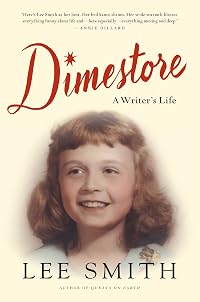
Dimestore: A Writer's Life
by Lee Smith
On This Page
Description
“A memoir that shines with a bright spirit, a generous heart and an entertaining knack for celebrating absurdity.”—The New York Times Book Review“This is Smith at her finest.”—Library Journal, starred review
Set deep in the mountains of Virginia, the Grundy of Lee Smith’s youth was a place of coal miners, tent revivals, mountain music, drive-in theaters, and her daddy’s dimestore. When she was sent off to college to gain some “culture,” she understood that perhaps the show more richest culture she would ever know was the one she was leaving. Lee Smith’s fiction has always lived and breathed with the rhythms and people of the Appalachian South. But never before has she written her own story.
Dimestore’s fifteen essays are crushingly honest, wise and perceptive, and superbly entertaining. Together, they create an inspiring story of the birth of a writer and a poignant look at a way of life that has all but vanished. show less
Tags
Recommendations

Member Reviews
I received a copy of this book from LibraryThing Early Reviewers, in exchange for an honest review. I'd rate it a strong 4-4.5 stars, if they let me toss in a half star. It's good, really good, but maybe short of the magical I need for a five-star rating.
After reading Lee Smith's memoir, I'm inspired to go back and read through more of her fiction. I feel now like I know her, or at least her voice -- and she has a writer's voice that just rings out so clear and strong and true in this collection of essays/recollections that I found it difficult to put down. Her memories of her childhood don't sugarcoat her family background, but she delivers her family members and her home town to us with obvious love and appreciation in all of their show more dysfunctional glory. show less
After reading Lee Smith's memoir, I'm inspired to go back and read through more of her fiction. I feel now like I know her, or at least her voice -- and she has a writer's voice that just rings out so clear and strong and true in this collection of essays/recollections that I found it difficult to put down. Her memories of her childhood don't sugarcoat her family background, but she delivers her family members and her home town to us with obvious love and appreciation in all of their show more dysfunctional glory. show less
 This review was written for LibraryThing Early Reviewers.
I admit that I have not read a Lee Smith book since I was in college and majoring in creative writing, but I have never forgotten her work. I was excited to see that I had received this as part of the ER giveaway.
Smith is a generous, confident, efficient writer, and it shows in these essays. In relatively few pages she is able to capture the ways that time is not linear, but rather layered in our lives. Our lives reflect the past, present, and future at all times, and Smith is able to show that in essays about mental illness, the character of a small, isolated town, and the joys of being with family at the holidays. I read this just after returning from a trip for a funeral for a member of my family, so perhaps the themes in this book show more resonated especially strongly. But any skillful writer--and Smith is certainly one--is able to tap into universal truths that transcend our experiences or cultural backgrounds. show less
Smith is a generous, confident, efficient writer, and it shows in these essays. In relatively few pages she is able to capture the ways that time is not linear, but rather layered in our lives. Our lives reflect the past, present, and future at all times, and Smith is able to show that in essays about mental illness, the character of a small, isolated town, and the joys of being with family at the holidays. I read this just after returning from a trip for a funeral for a member of my family, so perhaps the themes in this book show more resonated especially strongly. But any skillful writer--and Smith is certainly one--is able to tap into universal truths that transcend our experiences or cultural backgrounds. show less
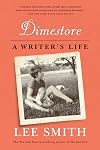
This review was written for LibraryThing Early Reviewers.Remember that line from the film, Jerry Maguire, "You had me from hello"? Well I thought of that when I began reading Lee Smith's DIMESTORE: A WRITER'S LIFE recently. Because she had me from the cover photo, an old b&w photo - 60s vintage, I suspect - of her as a beautiful young mother sitting in the grass with a chubby baby. In fact when she describes her own mother in the essay, "Lady Lessons" - "... and she was, I have to say, an absolutely adorable young woman." - she could have been describing herself. Like mother, like daughter no doubt.
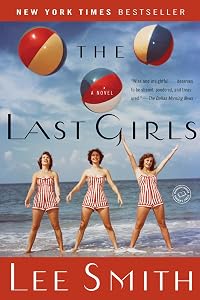
Smith's memoir is equal parts bitter and sweet, funny and sad. Because there are memories of loving, if at times dysfunctional parents, a failed first marriage, and the loss of a very talented son show more who suffered from mental illness for all of his adult life ("Goodbye to the Sunset Man"). In "Big River" her raft trip down the Mississippi with fifteen other Hollins classmates, made famous in her bestseller, THE LAST GIRLS, is given a closer look, in a delightfully light-hearted manner.
"If anything really bad happened to us, we figured we could call up our parents collect and they would come and fix things. We expected to be taken care of ... We all smoked cigarettes. We were all cute."
And "Driving Miss Daisy Crazy" gives us the mythical maiden-lady English teacher, Miss Daisy, who "believes it is true about the two ladies who got kicked out of the Nashville Junior League: on for having an orgasm, and the other for having a job."
If I had to pick a favorite piece here, it would probably be "Blue Heaven," in which Smith takes us up through the years as she falls in love multiple times, from college days in 1965, through her "last love" with her current husband and up to 2012. I should probably note here that Lee Smith and I are the same age, which is probably why I could relate to so many things in this book. Or maybe I should choose "A Life in Books," where she talks of how writing helped assuage the grief she felt when her mother and her son died. She says -
"Writing cannot bring our loved ones back, but it can sometimes fix them in our fleeting memories as they were in life, and it can always help us make it through the night."
There is plenty in DIMESTORE (a title taken from her father's store in tiny Grundy, Virginia) about writing and writers too, but mostly I loved all she shared about her personal life. Her dad's store made me remember the dimestores of my own childhood, one of which, like her father's, evolved into a Ben Franklin store before it finally closed its doors just a half dozen years ago, the end of an era. Sadly, free-range childhoods like ours are long gone too, of course, which is why books like DIMESTORE are so very important. Thank you, Lee. My highest recommendation.
- Tim Bazzett, author of the memoir, REED CITY BOY show less
Smith's memoir is equal parts bitter and sweet, funny and sad. Because there are memories of loving, if at times dysfunctional parents, a failed first marriage, and the loss of a very talented son show more who suffered from mental illness for all of his adult life ("Goodbye to the Sunset Man"). In "Big River" her raft trip down the Mississippi with fifteen other Hollins classmates, made famous in her bestseller, THE LAST GIRLS, is given a closer look, in a delightfully light-hearted manner.
"If anything really bad happened to us, we figured we could call up our parents collect and they would come and fix things. We expected to be taken care of ... We all smoked cigarettes. We were all cute."
And "Driving Miss Daisy Crazy" gives us the mythical maiden-lady English teacher, Miss Daisy, who "believes it is true about the two ladies who got kicked out of the Nashville Junior League: on for having an orgasm, and the other for having a job."
If I had to pick a favorite piece here, it would probably be "Blue Heaven," in which Smith takes us up through the years as she falls in love multiple times, from college days in 1965, through her "last love" with her current husband and up to 2012. I should probably note here that Lee Smith and I are the same age, which is probably why I could relate to so many things in this book. Or maybe I should choose "A Life in Books," where she talks of how writing helped assuage the grief she felt when her mother and her son died. She says -
"Writing cannot bring our loved ones back, but it can sometimes fix them in our fleeting memories as they were in life, and it can always help us make it through the night."
There is plenty in DIMESTORE (a title taken from her father's store in tiny Grundy, Virginia) about writing and writers too, but mostly I loved all she shared about her personal life. Her dad's store made me remember the dimestores of my own childhood, one of which, like her father's, evolved into a Ben Franklin store before it finally closed its doors just a half dozen years ago, the end of an era. Sadly, free-range childhoods like ours are long gone too, of course, which is why books like DIMESTORE are so very important. Thank you, Lee. My highest recommendation.
- Tim Bazzett, author of the memoir, REED CITY BOY show less
This review was written for LibraryThing Early Reviewers.With a title like DIMESTORE, this book already breathes anticipation.
It draws many old-timers into their own memories before even opening the book:
Woolworths! Ben Franklin! Five and Ten!
And while Lee Smith does deliver good stories around her Father's Dimestore,
it never fully realizes a feeling of place, of actually being inside the store.
The smells, the sounds, the entry and door, the aisles, the floors,
the colors and first tastes of the candy in glass cases that only opened
from the back,
the open wood cases of all the ??? merchandise...all this is missing.
The best parts were the Best Preface Ever (invoking a longing and nostalgia for
people and places never seen or heard of) and the author's memories of Ralph Stanley's music
and show more her hero, Lou Crabtree in "On Lou's Porch."
Many of the other stories seem oddly unfinished: How did she explain her absence at the presentation she'd been invited to in "Dimestore?"
What happened after she couldn't blow out the Baked Alaska?
Compared with Hillbilly Elegy, this sounds like Hillbilly Heaven > not much ignorance and
where's the racism hiding?
Good quotes:
"Somebody one said there are only two plots in fiction...somebody takes a trip and
a stranger comes to town...." Fun to argue!
"When you write fiction, you up the ante, generally speaking, since real life rarely affords enough excitement or conflict to spice up a page sufficiently."
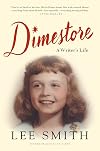
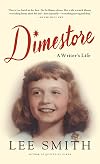
The paperback cover offers a provocative story on its own.
More photographs would have been really welcome. show less
It draws many old-timers into their own memories before even opening the book:
Woolworths! Ben Franklin! Five and Ten!
And while Lee Smith does deliver good stories around her Father's Dimestore,
it never fully realizes a feeling of place, of actually being inside the store.
The smells, the sounds, the entry and door, the aisles, the floors,
the colors and first tastes of the candy in glass cases that only opened
from the back,
the open wood cases of all the ??? merchandise...all this is missing.
The best parts were the Best Preface Ever (invoking a longing and nostalgia for
people and places never seen or heard of) and the author's memories of Ralph Stanley's music
and show more her hero, Lou Crabtree in "On Lou's Porch."
Many of the other stories seem oddly unfinished: How did she explain her absence at the presentation she'd been invited to in "Dimestore?"
What happened after she couldn't blow out the Baked Alaska?
Compared with Hillbilly Elegy, this sounds like Hillbilly Heaven > not much ignorance and
where's the racism hiding?
Good quotes:
"Somebody one said there are only two plots in fiction...somebody takes a trip and
a stranger comes to town...." Fun to argue!
"When you write fiction, you up the ante, generally speaking, since real life rarely affords enough excitement or conflict to spice up a page sufficiently."
The paperback cover offers a provocative story on its own.
More photographs would have been really welcome. show less
This review was written for LibraryThing Early Reviewers.Writers can spring from anywhere, even a seemingly nothing town like Grundy, Va. Although she grew up reading books and telling stories in Grundy, it took Lee Smith several years for this realization to hit her. Until then she had wondered what the daughter of a Ben Franklin store manager living deep in coal-mining country might possibly have to write about. Now in her 70s, the author of more than a dozen novels lives in North Carolina but keeps returning to those western Virginia mountains in her mind. That place and those people, she discovered, are virtually all she has to write about, and they are more than enough.
Smith tells her story in disjointed fashion in "Dimestore: A Writer's Life," mostly a collection of magazine and show more newspaper articles published over the past 20 years. She describes growing up in Grundy and how, at the time at least, it seemed like paradise. She tells of being her father's "doll consultant" every year at Christmas. As a child she wanted to become a saint, or at least an angel in the Christmas pageant. Neither happened. Both of her parents suffered from bouts of severe depression, and she admits her own fears of this condition. She tells of romances, marriages, children and the tragic loss of one of those children. Mostly, however, she writes about writing and, as she puts it, "the therapeutic power of language." After the death of her son, in fact, a psychiatrist wrote a prescription for her. It said only, "Write fiction every day." It was just the therapy she needed
In one of her better essays, one called "On Lou's Front Porch," she gives one of the better definitions of writing you will find. Writing, she says, "is not about fame, or even publication. It is not about exalted language, abstract themes, or the escapades of glamorous people. It is about our own real world and our own real lives and understanding what happens to us day by day, it is about playing with children and listening to old people." show less
Smith tells her story in disjointed fashion in "Dimestore: A Writer's Life," mostly a collection of magazine and show more newspaper articles published over the past 20 years. She describes growing up in Grundy and how, at the time at least, it seemed like paradise. She tells of being her father's "doll consultant" every year at Christmas. As a child she wanted to become a saint, or at least an angel in the Christmas pageant. Neither happened. Both of her parents suffered from bouts of severe depression, and she admits her own fears of this condition. She tells of romances, marriages, children and the tragic loss of one of those children. Mostly, however, she writes about writing and, as she puts it, "the therapeutic power of language." After the death of her son, in fact, a psychiatrist wrote a prescription for her. It said only, "Write fiction every day." It was just the therapy she needed
In one of her better essays, one called "On Lou's Front Porch," she gives one of the better definitions of writing you will find. Writing, she says, "is not about fame, or even publication. It is not about exalted language, abstract themes, or the escapades of glamorous people. It is about our own real world and our own real lives and understanding what happens to us day by day, it is about playing with children and listening to old people." show less
This review was written for LibraryThing Early Reviewers.The grass is always greener somewhere other than where we've grown up. Lee Smith, growing up in Grundy, Virginia believes this until she learns better. Her large family and community are close-knit, supportive, warm and friendly. She learns much from her father's Dimestore but takes life, and her parents' nurturing and love for granted.
When young she loved reading, telling stories and writing about exotic locations and characters. She avoided writing about what she knew best, Grundy, until she attended college and took courses with Louis D. Rubin, Jr. who became her favorite professor. Hearing Eudora Welty speak, and reading James Still's River of Earth were life-changing. Smith was thunderstruck recognizing what a treasure trove her show more home was, and she now understood why so many brilliant writers had come from Appalachia.
Her descriptive memoirs are powerful and capture the essence of small town America from an earlier time when jello, caring and participating in community events were big through the years of mining companies closing making Grundy a ghost town, and the process of the town growing up and joining the 21st Century.
Excellent read. show less
When young she loved reading, telling stories and writing about exotic locations and characters. She avoided writing about what she knew best, Grundy, until she attended college and took courses with Louis D. Rubin, Jr. who became her favorite professor. Hearing Eudora Welty speak, and reading James Still's River of Earth were life-changing. Smith was thunderstruck recognizing what a treasure trove her show more home was, and she now understood why so many brilliant writers had come from Appalachia.
Her descriptive memoirs are powerful and capture the essence of small town America from an earlier time when jello, caring and participating in community events were big through the years of mining companies closing making Grundy a ghost town, and the process of the town growing up and joining the 21st Century.
Excellent read. show less
This review was written for LibraryThing Early Reviewers.A delightful collection of memoir-like essays. Smith makes us feel comfortable, as if she's telling us stories on the porch. She combines amusing looks at people's foibles with insightful views that honor the mountain folks' integrity. She exposes the love and pain that accompany her family, and she introduces us to writers she has admired such as James Still and Katharine Butler Hathaway. Dimestore lends insight into Smith's own writing and the writing of many writers who share her heritage.
This review was written for LibraryThing Early Reviewers.Members
- Recently Added By
Lists

Books Read in 2016
4,666 works; 197 members

Bitter Southerner Summer Reading Roundup
198 works; 8 members

Memoirs by Writers
6 works; 1 member
Author Information

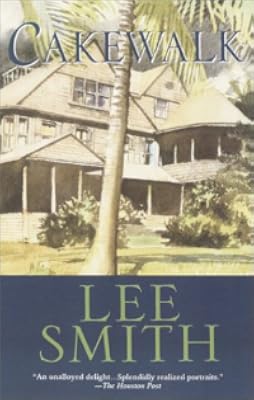
Lee Smith is a novelist, short story writer, and educator. She was born in 1944 in Grundy, Virginia. Smith attended Hollins College in Roanoke, Virginia. In her senior year at Hollins, Smith entered a Book-of-the-Month Club contest, submitting a draft of a novel called The Last Day the Dog Bushes Bloomed. The book, one of 12 entries to receive a show more fellowship, was published in 1968. Smith wrote reviews for local papers and continued to write short stories. Her first collection of short stories, Cakewalk, was published in 1981. Smith taught at North Carolina State University. Her novel, Oral History, published in 1983, was a Book-of-the-Month Club featured selection. She has received two O. Henry Awards, the Robert Penn Warren Prize for Fiction, the North Carolina Award for Fiction, the Lila Wallace/Reader's Digest Award, and the Academy Award in Literature presented by the American Academy of Arts and Letters. (Bowker Author Biography) show less
Awards and Honors
Awards
Distinctions
Notable Lists
Common Knowledge
- Important places
- Grundy, Virginia, USA; North Carolina, USA; Appalachia, USA
- Dedication
- For my grandchildren, Lucy, Spencer, Ellery, and Baker
- First words
- I was born in a rugged ring of mountains in southwest Virginia - mountains so high, so straight up and down, that the sun didn't even hit our yard until about eleven o'clock.
- Blurbers
- Paynes, David; Roy Blount, Jr; Macy, Beth; Elizabeth Spencer; Frances Mayes; Annie Dillard
Classifications
Statistics
- Members
- 325
- Popularity
- 97,897
- Reviews
- 55
- Rating
- (3.96)
- Languages
- English
- Media
- Paper, Audiobook, Ebook
- ISBNs
- 11
- ASINs
- 2