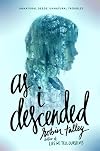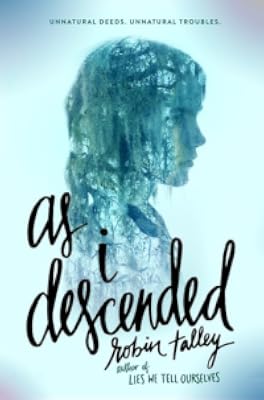
As I Descended
by Robin Talley
On This Page
Description
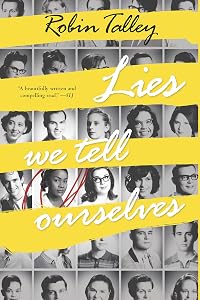
From the acclaimed author of Lies We Tell Ourselves, Robin Talley, comes a Shakespeare-inspired story of revenge and redemption, where fair is foul, and foul is fair.Maria Lyon and Lily Boiten are their school's ultimate power couple—but one thing stands between them and their perfect future: campus superstar Delilah Dufrey. Golden child Delilah is a legend at exclusive Acheron Academy, and the presumptive winner of the distinguished Cawdor Kingsley Prize. But Delilah doesn't know that show more Lily and Maria are willing to do anything—absolutely anything—to unseat Delilah for the scholarship. After all, it would lock in Maria's attendance at Stanford—and assure her and Lily four more years in a shared dorm room.
Together, Maria and Lily harness the dark power long rumored to be present on the former plantation that houses their school. But when feuds turn to fatalities, and madness begins to blur the distinction between what's real and what's imagined, the girls must attempt to put a stop to the chilling series of events they've accidentally set in motion.
. show less
Tags
Recommendations

Member Reviews
"LA SANGRE QUIERE SANGRE.
Blood will have blood."
What a fun little ghost/horror story. A retelling of Macbeth - which is wonderful because it's such a fun twist. I really liked Lily and Maria and how we are torn because you learn them and get to know them so it's hard to like or hate them. I also loved Brandon and Mateo. Again, they are stuck in a rough situation and it's hard to take sides here.
But most of all was Delilah. She's a character it's easy to hate but for more vague reasons than anyone else. The twists and turns in the story were well done and I loved that, when the characters became more confused and sleep deprived, the story got really jumbled and tough for the reader to follow - just as it was for the narrator. I loved show more this one! show less
Blood will have blood."
What a fun little ghost/horror story. A retelling of Macbeth - which is wonderful because it's such a fun twist. I really liked Lily and Maria and how we are torn because you learn them and get to know them so it's hard to like or hate them. I also loved Brandon and Mateo. Again, they are stuck in a rough situation and it's hard to take sides here.
But most of all was Delilah. She's a character it's easy to hate but for more vague reasons than anyone else. The twists and turns in the story were well done and I loved that, when the characters became more confused and sleep deprived, the story got really jumbled and tough for the reader to follow - just as it was for the narrator. I loved show more this one! show less
This book was provided to me as an uncorrected digital proof by the publisher, via Edelweiss.
Maria Lyon and Lily Boiten are their school’s ultimate power couple—but one thing stands between them and their perfect future: campus superstar Delilah Dufrey. Golden child Delilah is a legend at exclusive Acheron Academy, and the presumptive winner of the distinguished Cawdor Kingsley Prize. But Delilah doesn’t know that Lily and Maria are willing to do anything—absolutely anything—to unseat Delilah for the scholarship. After all, it would lock in Maria’s attendance at Stanford—and assure her and Lily four more years in a shared dorm room.
Together, Maria and Lily harness the dark power long rumored to be present on the former show more plantation that houses their school. But when feuds turn to fatalities, and madness begins to blur the distinction between what’s real and what’s imagined, the girls must attempt to put a stop to the chilling series of events they’ve accidentally set in motion.
Let me share a little something about myself. I love the horror genre: movies, books, short stories, poetry, songs, you name it, I dig it. I’m not a big fan of gore, but promise me a good jump scare, and I’m there. That being said, I did not go into As I Descended expecting a scary story. In my experience, I have never come across true horror in the YA genre. This book though, was truly creepy. I even cheered at one point, because I got scared, and it’s been such a long time since that has happened. The main character, Maria, is a kid with a spooky background and a strong belief in the spirit realm and its ability to affect the real world. Maria is well-developed, and goes through major personality changes through the course of the book; from being a kid who won’t consider breaking the rules to someone who is willing to kill to get what she feels she deserves. Her secret girlfriend, Lily, is a complex character. She says she loves Maria, but, despite her own atheistic beliefs, she insists on purchasing a Ouija board in order to perform a séance. Her purpose being to use Maria’s spiritual beliefs to manipulate her into taking active steps toward taking down the school’s Queen, Delilah. However, when she gets what she wants, she refuses to accept the fact that spirits are involved. This leads to her own undoing. As I Descended is a story about how ambition and a sense of entitlement can lead otherwise good people to do things they wouldn’t normally do. The reader goes from seeing Maria and Lily as victims, to seeing them as monsters, and their depiction of Delilah as a vicious bully gets hit with a strong dose of reality as well. Two things bother me. First of all, Lily’s true reasoning for having a séance feels contrived. How did she come to the conclusion that using a Ouija board would result in Maria ending Delilah’s reign? Secondly, the blurb on the book describes Maria and Lily as the school’s power couple. Their relationship was a secret from most of their classmates, which to me, nullifies the power they could have had as an out couple. It puts them in the weak position of always having to be careful and lie to their friends.
This book has scary moments, diverse characters, and a setting well-suited for the narrative. I enjoyed reading it, and would recommend it for readers 14 and older who like to be creeped out. show less
Maria Lyon and Lily Boiten are their school’s ultimate power couple—but one thing stands between them and their perfect future: campus superstar Delilah Dufrey. Golden child Delilah is a legend at exclusive Acheron Academy, and the presumptive winner of the distinguished Cawdor Kingsley Prize. But Delilah doesn’t know that Lily and Maria are willing to do anything—absolutely anything—to unseat Delilah for the scholarship. After all, it would lock in Maria’s attendance at Stanford—and assure her and Lily four more years in a shared dorm room.
Together, Maria and Lily harness the dark power long rumored to be present on the former show more plantation that houses their school. But when feuds turn to fatalities, and madness begins to blur the distinction between what’s real and what’s imagined, the girls must attempt to put a stop to the chilling series of events they’ve accidentally set in motion.
Let me share a little something about myself. I love the horror genre: movies, books, short stories, poetry, songs, you name it, I dig it. I’m not a big fan of gore, but promise me a good jump scare, and I’m there. That being said, I did not go into As I Descended expecting a scary story. In my experience, I have never come across true horror in the YA genre. This book though, was truly creepy. I even cheered at one point, because I got scared, and it’s been such a long time since that has happened. The main character, Maria, is a kid with a spooky background and a strong belief in the spirit realm and its ability to affect the real world. Maria is well-developed, and goes through major personality changes through the course of the book; from being a kid who won’t consider breaking the rules to someone who is willing to kill to get what she feels she deserves. Her secret girlfriend, Lily, is a complex character. She says she loves Maria, but, despite her own atheistic beliefs, she insists on purchasing a Ouija board in order to perform a séance. Her purpose being to use Maria’s spiritual beliefs to manipulate her into taking active steps toward taking down the school’s Queen, Delilah. However, when she gets what she wants, she refuses to accept the fact that spirits are involved. This leads to her own undoing. As I Descended is a story about how ambition and a sense of entitlement can lead otherwise good people to do things they wouldn’t normally do. The reader goes from seeing Maria and Lily as victims, to seeing them as monsters, and their depiction of Delilah as a vicious bully gets hit with a strong dose of reality as well. Two things bother me. First of all, Lily’s true reasoning for having a séance feels contrived. How did she come to the conclusion that using a Ouija board would result in Maria ending Delilah’s reign? Secondly, the blurb on the book describes Maria and Lily as the school’s power couple. Their relationship was a secret from most of their classmates, which to me, nullifies the power they could have had as an out couple. It puts them in the weak position of always having to be careful and lie to their friends.
This book has scary moments, diverse characters, and a setting well-suited for the narrative. I enjoyed reading it, and would recommend it for readers 14 and older who like to be creeped out. show less
I received an ARC of this book from the publisher in exchange for an honest review. This did not affect my opinion of the book or my review itself.
Maria and Lily are a couple on the rise, but Delilah is always one step ahead of them. At their boarding school, Delilah seems a shoo-in for the prestigious Kingsley Prize, an award Maria and Lily desperately want so they can attend the same college and stay together.
So Maria and Lily decide to do something to take back what they see as rightfully theirs. But they stir up spirits that would have been better left alone, and set in motion tragic events that will lead to death and madness.
I just really, really liked this book. First, the Shakespeare retelling was brilliant. As an English major show more and Shakespeare fan, I had so much fun seeing how Talley took the classic tale of Macbeth and rewrote it with a modern setting and a lesbian Macbeth and Lady Macbeth. Talley really made the story her own, while still paying a brilliant homage to the original source material.
The characters are all so complex and multilayered, and the relationships feel painfully real. Every teenage emotion is heightened, but not in a way that reads as hysterical teenage dramatics. Rather, these characters read as truly human, caught up in forces within and without that they are unable to control.
This is a very creepy book too. The spirits, whatever you believe about their actual presence (depending on your personal beliefs and how reliable you find certain characters), haunt and meddle in insidious, frightening, and deadly ways that carry throughout the entire story.
I didn't feel like the epilogue was necessarily needed. It's always nice to have a bit of a concluding wrap up to tie things together (and I'm one of those people who craves resolution), but I feel like the book would have been even more haunting if it had ended with the last chapter before the epilogue.
Read this book. I strongly recommend it, and I couldn't put it down. It was so unique, so well-written, and so, so creepy. This is how a young adult novel should be done. show less
Maria and Lily are a couple on the rise, but Delilah is always one step ahead of them. At their boarding school, Delilah seems a shoo-in for the prestigious Kingsley Prize, an award Maria and Lily desperately want so they can attend the same college and stay together.
So Maria and Lily decide to do something to take back what they see as rightfully theirs. But they stir up spirits that would have been better left alone, and set in motion tragic events that will lead to death and madness.
I just really, really liked this book. First, the Shakespeare retelling was brilliant. As an English major show more and Shakespeare fan, I had so much fun seeing how Talley took the classic tale of Macbeth and rewrote it with a modern setting and a lesbian Macbeth and Lady Macbeth. Talley really made the story her own, while still paying a brilliant homage to the original source material.
The characters are all so complex and multilayered, and the relationships feel painfully real. Every teenage emotion is heightened, but not in a way that reads as hysterical teenage dramatics. Rather, these characters read as truly human, caught up in forces within and without that they are unable to control.
This is a very creepy book too. The spirits, whatever you believe about their actual presence (depending on your personal beliefs and how reliable you find certain characters), haunt and meddle in insidious, frightening, and deadly ways that carry throughout the entire story.
I didn't feel like the epilogue was necessarily needed. It's always nice to have a bit of a concluding wrap up to tie things together (and I'm one of those people who craves resolution), but I feel like the book would have been even more haunting if it had ended with the last chapter before the epilogue.
Read this book. I strongly recommend it, and I couldn't put it down. It was so unique, so well-written, and so, so creepy. This is how a young adult novel should be done. show less
I wanted to like this book. Even after my friend tried it and dnf’d it, I wanted to like it. I gave it a good fair shake, made it all the way through, and I still don’t see why everyone loves it so much.
Lesbian Macbeth with ghosts sounds like so much fun, doesn’t it? But, at least for me, it wasn’t. Now I will freely admit I’m not familiar with Macbeth except for general knowledge. I’ve never read it and I can’t comment on this novel as an adaptation of that source material, how faithful it is or isn’t. I came at it like any other YA book, with the same open heart I receive all queer lit with. And I was greeted with flat characters and flimsy motivation and clichéd, melodramatic ghosts.
Maria, who fills the Macbeth show more role, is motivated entirely by wanting to win some high-profile scholarship that will give her a free ride to any college of her choice. This is sold as the only way she’d be able to stay together with her girlfriend Lily once they graduate high school. Except...they go to a prestigious (expensive) boarding school already. Maria’s mother is a state senator and she is clearly not one of the characters hurting for money (the way Mateo is, for instance). So she can pay her way through college no problem, plus all the extracurriculars and excellent grades she maintains for the sake of that scholarship she’s pouring all her expectations into. So...why would she not be able to go to whatever college she wanted anyway? Remember, this is her primary motivation for the front half of the book, before it becomes “oh shit people have died and I don’t want anyone to find out I was involved” and continues on through to the end as Maria’s obsession when things go to hell, a la “this will all be worth it if I win.” So her entire arc feels contrived. I don't believe her actions are a direct result of any logical internal decision-making. A hole this big in the main plot so early into the book casts a shadow over the rest of it that's incredibly hard to shake.
I never felt connected to any of the characters. They felt like machinery to move the plot along and, keeping in mind this is an adaptation, I wonder if that’s not too far off the mark. It feels like instead of making Maria and Lily their own people, with personalities and motivations of their own, they’re marionettes being tugged along to the tune of Macbeth's characters and Macbeth's plot. Whenever a character did something that didn’t make sense to me, I couldn't help but be suspicious that they only did it because that’s what they were supposed to do, and the integrity of the story as it's own self-contained narrative kept falling down around me. Weirdly, Mateo and Delilah (who’s in a coma for the vast majority of the book’s action) felt more like real people and I don’t know why that is when the main two fell so flat for me. I don’t know what was done differently with them or why it couldn’t have been extended to the rest of the cast.
As an extrapolation of my not caring about the characters, the book’s relationships, the ones I was so excited about going in, also felt completely lifeless to me. I don’t know why Maria and Lily are ~in love~ and I never felt any genuine connection between them aside from their incongruously intense desperation to stay together. I recognize that they’re high school students and relationships this shallow exist everywhere in reality, but I don’t think that while reading a YA book I’m supposed to be thinking “ah yes, this is a relationship between children that will never survive in the real world.”
I see other reviews here bill the book as “spooky” and my god is it ever not. Maybe if you have a very low threshold for horror, this could get you here and there with some of it’s scares, but that’s probably because people with low horror thresholds don’t watch horror movies. If you’ve ever seen a movie about a haunting, almost every “scare” in the book is going to feel stale. It doesn’t succeed at building a sense of dread (though I do believe it tries) and instead relies on spooky imagery and characters hallucinating/dreaming to try and force a sense of unreality. There are a few moments that I think could have been successful, like Maria in the cellar of the old church, but unfortunately they came late enough in the book that I was pretty checked out by that point. And the ghosts themselves are the most generic, boring sort of spirit.It’s apparently a bunch of people, mostly slaves, that died in a fire during the boarding school’s days as a plantation. They have no motivation beyond the fact that they died violently and are targeting the school children for...giggles? They’re vengeful ghosts that torment and kill teens for no reason except it’s fun, I guess. It makes for a very bland antagonist and a disappointing reveal.
The most I can say in this book’s favor is that it is very diverse, with Latinx, queer, fat, and disabled characters. It isn’t terribly written and I did finish it, it’s not the worst thing I’ve ever read. It’s just I really, really wanted to like it and I really, really didn’t and it makes me sad. show less
Lesbian Macbeth with ghosts sounds like so much fun, doesn’t it? But, at least for me, it wasn’t. Now I will freely admit I’m not familiar with Macbeth except for general knowledge. I’ve never read it and I can’t comment on this novel as an adaptation of that source material, how faithful it is or isn’t. I came at it like any other YA book, with the same open heart I receive all queer lit with. And I was greeted with flat characters and flimsy motivation and clichéd, melodramatic ghosts.
Maria, who fills the Macbeth show more role, is motivated entirely by wanting to win some high-profile scholarship that will give her a free ride to any college of her choice. This is sold as the only way she’d be able to stay together with her girlfriend Lily once they graduate high school. Except...they go to a prestigious (expensive) boarding school already. Maria’s mother is a state senator and she is clearly not one of the characters hurting for money (the way Mateo is, for instance). So she can pay her way through college no problem, plus all the extracurriculars and excellent grades she maintains for the sake of that scholarship she’s pouring all her expectations into. So...why would she not be able to go to whatever college she wanted anyway? Remember, this is her primary motivation for the front half of the book, before it becomes “oh shit people have died and I don’t want anyone to find out I was involved” and continues on through to the end as Maria’s obsession when things go to hell, a la “this will all be worth it if I win.” So her entire arc feels contrived. I don't believe her actions are a direct result of any logical internal decision-making. A hole this big in the main plot so early into the book casts a shadow over the rest of it that's incredibly hard to shake.
I never felt connected to any of the characters. They felt like machinery to move the plot along and, keeping in mind this is an adaptation, I wonder if that’s not too far off the mark. It feels like instead of making Maria and Lily their own people, with personalities and motivations of their own, they’re marionettes being tugged along to the tune of Macbeth's characters and Macbeth's plot. Whenever a character did something that didn’t make sense to me, I couldn't help but be suspicious that they only did it because that’s what they were supposed to do, and the integrity of the story as it's own self-contained narrative kept falling down around me. Weirdly, Mateo and Delilah (who’s in a coma for the vast majority of the book’s action) felt more like real people and I don’t know why that is when the main two fell so flat for me. I don’t know what was done differently with them or why it couldn’t have been extended to the rest of the cast.
As an extrapolation of my not caring about the characters, the book’s relationships, the ones I was so excited about going in, also felt completely lifeless to me. I don’t know why Maria and Lily are ~in love~ and I never felt any genuine connection between them aside from their incongruously intense desperation to stay together. I recognize that they’re high school students and relationships this shallow exist everywhere in reality, but I don’t think that while reading a YA book I’m supposed to be thinking “ah yes, this is a relationship between children that will never survive in the real world.”
I see other reviews here bill the book as “spooky” and my god is it ever not. Maybe if you have a very low threshold for horror, this could get you here and there with some of it’s scares, but that’s probably because people with low horror thresholds don’t watch horror movies. If you’ve ever seen a movie about a haunting, almost every “scare” in the book is going to feel stale. It doesn’t succeed at building a sense of dread (though I do believe it tries) and instead relies on spooky imagery and characters hallucinating/dreaming to try and force a sense of unreality. There are a few moments that I think could have been successful, like Maria in the cellar of the old church, but unfortunately they came late enough in the book that I was pretty checked out by that point. And the ghosts themselves are the most generic, boring sort of spirit.
The most I can say in this book’s favor is that it is very diverse, with Latinx, queer, fat, and disabled characters. It isn’t terribly written and I did finish it, it’s not the worst thing I’ve ever read. It’s just I really, really wanted to like it and I really, really didn’t and it makes me sad. show less
DNF @ 20%
I was already hanging on by a thread, but when the main characters planned on drugging their classmate so she would fail a drug test and be out of the way to win the scholarship prize Maria coveted, I was out. Maria only wanted this prize to stay with her girlfriend and so she could look good for her mother, who's in politics.
And okay, so I admit I've long forgotten the details of MacBeth, but none of the characters are likable or relatable. They're all rich and cruel to each other, with the protagonist saying, a certain character was the only one who mattered or was worth her time, despite having a best friend. The protagonist's girlfriend makes fun of her old roommate having nightmares because she was never bothered by them. show more
The author seems very disconnected from reality. Lily, the disabled character, is practically waited on hand and foot by the staff of her high school. This Does Not Happen in any reality I've lived in. Maybe it's different now, but I've personally only faced obstacles, not privileges, unless it's people trying to help open doors or hold things for me. At least the character doesn't like all the babying. But she also receives a controlled medication for her pain, which she gives away. This is baffling. Do you know how much I'm interrogated every doctor's appointment on the use of my medication, which isn't even a TRUE controlled substance? If Lily is in enough pain to need a controlled substance, she wouldn't be "well enough" to go without it, to hand it off to someone else. Sure, this probably happens to someone in real life. But they must be a pretty darn good actor, and have to be going into their appointments with the intention to scam medication out of their doctor. It is incredibly difficult to get strong pain medication, even when you're in incredibly strong pain. Without my pain meds, I'm basically just lying on the floor in too much pain to get up. I just can't get over the fact that some of the major plot points happen because Lily is just able to go without her oxycontin.
The author is also white, and she adds these lines about slavery that just make me grit my teeth; for example, "Meanwhile, Maria and Mateo both had the Spanish names, dark eyes, and brown skin that would've kept them off those Old South plantations--unless they'd come with a price tag." Sure, that could've been just the PoV of the white character, but I'm not reading an entire novel of this.
And THEN there's the whole plot line where one of the people in a same-sex relationship wants to keep their relationship a secret and the other doesn't - and it's a big source of tension between them. It's been over done, and it's not a great trope in general.
When all these factors add up, it's just not a novel I want to continue reading. show less
I was already hanging on by a thread, but when the main characters planned on drugging their classmate so she would fail a drug test and be out of the way to win the scholarship prize Maria coveted, I was out. Maria only wanted this prize to stay with her girlfriend and so she could look good for her mother, who's in politics.
And okay, so I admit I've long forgotten the details of MacBeth, but none of the characters are likable or relatable. They're all rich and cruel to each other, with the protagonist saying, a certain character was the only one who mattered or was worth her time, despite having a best friend. The protagonist's girlfriend makes fun of her old roommate having nightmares because she was never bothered by them. show more
The author seems very disconnected from reality. Lily, the disabled character, is practically waited on hand and foot by the staff of her high school. This Does Not Happen in any reality I've lived in. Maybe it's different now, but I've personally only faced obstacles, not privileges, unless it's people trying to help open doors or hold things for me. At least the character doesn't like all the babying. But she also receives a controlled medication for her pain, which she gives away. This is baffling. Do you know how much I'm interrogated every doctor's appointment on the use of my medication, which isn't even a TRUE controlled substance? If Lily is in enough pain to need a controlled substance, she wouldn't be "well enough" to go without it, to hand it off to someone else. Sure, this probably happens to someone in real life. But they must be a pretty darn good actor, and have to be going into their appointments with the intention to scam medication out of their doctor. It is incredibly difficult to get strong pain medication, even when you're in incredibly strong pain. Without my pain meds, I'm basically just lying on the floor in too much pain to get up. I just can't get over the fact that some of the major plot points happen because Lily is just able to go without her oxycontin.
The author is also white, and she adds these lines about slavery that just make me grit my teeth; for example, "Meanwhile, Maria and Mateo both had the Spanish names, dark eyes, and brown skin that would've kept them off those Old South plantations--unless they'd come with a price tag." Sure, that could've been just the PoV of the white character, but I'm not reading an entire novel of this.
And THEN there's the whole plot line where one of the people in a same-sex relationship wants to keep their relationship a secret and the other doesn't - and it's a big source of tension between them. It's been over done, and it's not a great trope in general.
When all these factors add up, it's just not a novel I want to continue reading. show less
This book was provided to me as an uncorrected digital proof by the publisher, via Edelweiss.
Maria Lyon and Lily Boiten are their school’s ultimate power couple—but one thing stands between them and their perfect future: campus superstar Delilah Dufrey. Golden child Delilah is a legend at exclusive Acheron Academy, and the presumptive winner of the distinguished Cawdor Kingsley Prize. But Delilah doesn’t know that Lily and Maria are willing to do anything—absolutely anything—to unseat Delilah for the scholarship. After all, it would lock in Maria’s attendance at Stanford—and assure her and Lily four more years in a shared dorm room.
Together, Maria and Lily harness the dark power long rumored to be present on the former show more plantation that houses their school. But when feuds turn to fatalities, and madness begins to blur the distinction between what’s real and what’s imagined, the girls must attempt to put a stop to the chilling series of events they’ve accidentally set in motion.
Let me share a little something about myself. I love the horror genre: movies, books, short stories, poetry, songs, you name it, I dig it. I’m not a big fan of gore, but promise me a good jump scare, and I’m there. That being said, I did not go into As I Descended expecting a scary story. In my experience, I have never come across true horror in the YA genre. This book though, was truly creepy. I even cheered at one point, because I got scared, and it’s been such a long time since that has happened. The main character, Maria, is a kid with a spooky background and a strong belief in the spirit realm and its ability to affect the real world. Maria is well-developed, and goes through major personality changes through the course of the book; from being a kid who won’t consider breaking the rules to someone who is willing to kill to get what she feels she deserves. Her secret girlfriend, Lily, is a complex character. She says she loves Maria, but, despite her own atheistic beliefs, she insists on purchasing a Ouija board in order to perform a séance. Her purpose being to use Maria’s spiritual beliefs to manipulate her into taking active steps toward taking down the school’s Queen, Delilah. However, when she gets what she wants, she refuses to accept the fact that spirits are involved. This leads to her own undoing. As I Descended is a story about how ambition and a sense of entitlement can lead otherwise good people to do things they wouldn’t normally do. The reader goes from seeing Maria and Lily as victims, to seeing them as monsters, and their depiction of Delilah as a vicious bully gets hit with a strong dose of reality as well. Two things bother me. First of all, Lily’s true reasoning for having a séance feels contrived. How did she come to the conclusion that using a Ouija board would result in Maria ending Delilah’s reign? Secondly, the blurb on the book describes Maria and Lily as the school’s power couple. Their relationship was a secret from most of their classmates, which to me, nullifies the power they could have had as an out couple. It puts them in the weak position of always having to be careful and lie to their friends.
This book has scary moments, diverse characters, and a setting well-suited for the narrative. I enjoyed reading it, and would recommend it for readers 14 and older who like to be creeped out. show less
Maria Lyon and Lily Boiten are their school’s ultimate power couple—but one thing stands between them and their perfect future: campus superstar Delilah Dufrey. Golden child Delilah is a legend at exclusive Acheron Academy, and the presumptive winner of the distinguished Cawdor Kingsley Prize. But Delilah doesn’t know that Lily and Maria are willing to do anything—absolutely anything—to unseat Delilah for the scholarship. After all, it would lock in Maria’s attendance at Stanford—and assure her and Lily four more years in a shared dorm room.
Together, Maria and Lily harness the dark power long rumored to be present on the former show more plantation that houses their school. But when feuds turn to fatalities, and madness begins to blur the distinction between what’s real and what’s imagined, the girls must attempt to put a stop to the chilling series of events they’ve accidentally set in motion.
Let me share a little something about myself. I love the horror genre: movies, books, short stories, poetry, songs, you name it, I dig it. I’m not a big fan of gore, but promise me a good jump scare, and I’m there. That being said, I did not go into As I Descended expecting a scary story. In my experience, I have never come across true horror in the YA genre. This book though, was truly creepy. I even cheered at one point, because I got scared, and it’s been such a long time since that has happened. The main character, Maria, is a kid with a spooky background and a strong belief in the spirit realm and its ability to affect the real world. Maria is well-developed, and goes through major personality changes through the course of the book; from being a kid who won’t consider breaking the rules to someone who is willing to kill to get what she feels she deserves. Her secret girlfriend, Lily, is a complex character. She says she loves Maria, but, despite her own atheistic beliefs, she insists on purchasing a Ouija board in order to perform a séance. Her purpose being to use Maria’s spiritual beliefs to manipulate her into taking active steps toward taking down the school’s Queen, Delilah. However, when she gets what she wants, she refuses to accept the fact that spirits are involved. This leads to her own undoing. As I Descended is a story about how ambition and a sense of entitlement can lead otherwise good people to do things they wouldn’t normally do. The reader goes from seeing Maria and Lily as victims, to seeing them as monsters, and their depiction of Delilah as a vicious bully gets hit with a strong dose of reality as well. Two things bother me. First of all, Lily’s true reasoning for having a séance feels contrived. How did she come to the conclusion that using a Ouija board would result in Maria ending Delilah’s reign? Secondly, the blurb on the book describes Maria and Lily as the school’s power couple. Their relationship was a secret from most of their classmates, which to me, nullifies the power they could have had as an out couple. It puts them in the weak position of always having to be careful and lie to their friends.
This book has scary moments, diverse characters, and a setting well-suited for the narrative. I enjoyed reading it, and would recommend it for readers 14 and older who like to be creeped out. show less
Some people have likened As I Descended to a lesbian retelling of Macbeth. While Ms. Talley has already confirmed that it is indeed a retelling of this famous Shakespeare play, to call it a lesbian version of it seems odd and misleading. Yes, the two main characters happen to be in a lesbian relationship, but the diversity does not stop there. Included among the cast of characters are several LGBTQA students, students of different race and religion, and students with special needs. To generalize it to just one small subgenre misses the point of the novel.
As it is a faithful retelling of Macbeth, anyone who remembers the play’s plot will know how the story ends. The use of an old slaveholding plantation as the setting of the school show more adds to the story’s atmosphere as it allows Ms. Talley to draw upon the unhappy history of the plantation as an appropriate guise for the later hauntings. It is easy to match the modern-day character with their Shakespearean counterpart, and the tale stays true to the original in as much as a school scholarship can stand in the stead of a kingdom and a boarding school is a substitute for various castles.
The story itself is eerie in all the right places and intense in others. Maria’s descent into madness is particularly important not so much as it is what happens to Macbeth but more because the pressure to be the very best at any school these days is higher than most adults realize. Those scenes show just how easy that pressure can cause someone to cross the fine line between brilliance and insanity even without resorting to violence.
The one major quibble within As I Descended is the fact that while this is a novel that celebrates diversity by including so many diverse characters in its plot, these same diverse characters are not the ones who obtain happy endings to their story arcs. In point of fact, Maria’s nemesis is a blond-haired, blue-eyed wealthy white girl. While this may not have been deliberate on Ms. Talley’s part, it is still a deflating oversight as it changes her message from one of inclusivity to one of traditional racial norms.
As I Descended is a fast read not only because the story is familiar but also because the tension makes this a novel you do not want to stop reading. There is no character development and very little in the way of extraneous set building, so the characters and the setting remain one-dimensional. Given that it is a retelling of one of Shakespeare’s most famous plays, it is likely that this lack of development is purposeful; there is no need for extraneous descriptions or the fleshing out of characters when one already knows what is going to happen to them. While the inclusion of a very diverse group of students is a welcome addition to any novel, one wishes that this same group of students could have had happier endings if only to provide more examples of strong POC or LGBQTA characters. The targeted audience will enjoy a glimpse into the lives of privileged students as well as the apparent supernatural happenings at the school. Adults are better served sticking with the original; after all, it is difficult to do better than the Bard. show less
As it is a faithful retelling of Macbeth, anyone who remembers the play’s plot will know how the story ends. The use of an old slaveholding plantation as the setting of the school show more adds to the story’s atmosphere as it allows Ms. Talley to draw upon the unhappy history of the plantation as an appropriate guise for the later hauntings. It is easy to match the modern-day character with their Shakespearean counterpart, and the tale stays true to the original in as much as a school scholarship can stand in the stead of a kingdom and a boarding school is a substitute for various castles.
The story itself is eerie in all the right places and intense in others. Maria’s descent into madness is particularly important not so much as it is what happens to Macbeth but more because the pressure to be the very best at any school these days is higher than most adults realize. Those scenes show just how easy that pressure can cause someone to cross the fine line between brilliance and insanity even without resorting to violence.
The one major quibble within As I Descended is the fact that while this is a novel that celebrates diversity by including so many diverse characters in its plot, these same diverse characters are not the ones who obtain happy endings to their story arcs. In point of fact, Maria’s nemesis is a blond-haired, blue-eyed wealthy white girl. While this may not have been deliberate on Ms. Talley’s part, it is still a deflating oversight as it changes her message from one of inclusivity to one of traditional racial norms.
As I Descended is a fast read not only because the story is familiar but also because the tension makes this a novel you do not want to stop reading. There is no character development and very little in the way of extraneous set building, so the characters and the setting remain one-dimensional. Given that it is a retelling of one of Shakespeare’s most famous plays, it is likely that this lack of development is purposeful; there is no need for extraneous descriptions or the fleshing out of characters when one already knows what is going to happen to them. While the inclusion of a very diverse group of students is a welcome addition to any novel, one wishes that this same group of students could have had happier endings if only to provide more examples of strong POC or LGBQTA characters. The targeted audience will enjoy a glimpse into the lives of privileged students as well as the apparent supernatural happenings at the school. Adults are better served sticking with the original; after all, it is difficult to do better than the Bard. show less
Members
- Recently Added By
Lists

Relationships: LGTBQ
40 works; 2 members

2017 Hugo Eligible Novels
145 works; 14 members

School library books removed after TX state legislator inquiry
429 works; 6 members
Author Information

10+ Works 1,899 Members
Robin Talley is the New York Times-bestselling author of four novels for teen readers: Our Own Private Universe, As I Descended, What We Left Behind, and Lies We Tell Ourselves. Her first book, Lies We Tell Ourselves, was the winner of the inaugural Amnesty CILIP Honour. Robin was a Lambda Literary Foundation fellow, and has contributed short show more stories to the young adult anthologies A Tyranny of Petticoats: 15 Stories of Belles, Bank Robbers and Other Badass Girls, All Out, and Feral Youth. (Bowker Author Biography) show less
Awards and Honors
Common Knowledge
- Original publication date
- 2016-09
Classifications
- Genres
- LGBTQ+, Teen, Fiction and Literature, Young Adult, Horror
- DDC/MDS
- 813.6 — Literature & rhetoric American literature in English American fiction in English 2000-
- LCC
- PZ7.1 .T35 .A — Language and Literature Fiction and juvenile belles lettres Fiction and juvenile belles lettres Juvenile belles lettres
- BISAC
Statistics
- Members
- 320
- Popularity
- 99,804
- Reviews
- 18
- Rating
- (3.27)
- Languages
- English
- Media
- Paper, Audiobook, Ebook
- ISBNs
- 12
- ASINs
- 2