On This Page
Description
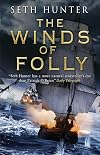
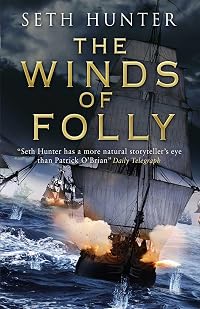
A compelling new historical naval adventure from a master of maritime storytelling. 1796: Nathan Peake, captain of the frigate Unicorn is sent with a small squadron into the Adriatic to help bring Venice into an Italian alliance with Britain against the French. He establishes a British naval presence, harrying the French corsairs that swarm out of Ancona in Italy and confronts the politics of "intrigue, poison and the stiletto" in Venice, but learns that Bonaparte is negotiating a peace deal show more with the Austrians-Britain's only remaining ally. Worse, the Spanish are about to ally with the French. Nathan returns to the Unicorn and rejoins Nelson for the decisive Battle of St. Vincent against the entire Spanish fleet. show lessTags
Recommendations



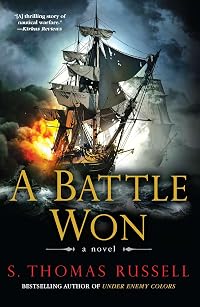
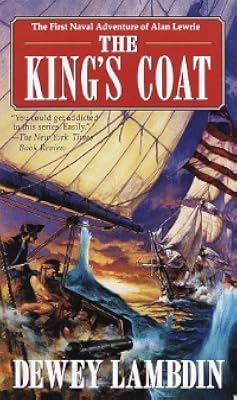
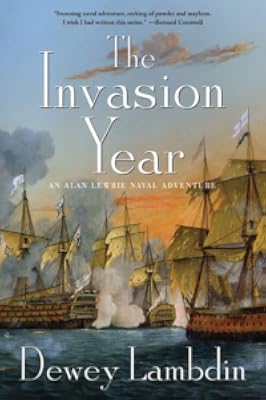
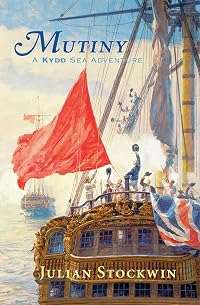











Member Reviews
Had to take a couple of run-ups - and library renewals - before I could get into the fourth novel of the series, but Nathan Peake never disappoints! I have a bit of a literary crush on Seth Hunter's Aubrey/Hornblower revamp, so even when the naval terminology and warfare go over my head (which is often), I keep reading for the heroic captain-turned-secret agent. Historical cameos from Emma Hamilton, Napoleon and the magical city of Venice are a bonus.
In fact, the best chapter for me occurs in Venice - I won't say more, but my heart was in my mouth, and suddenly the pages were flying by! The 'landlubbing' scenes make up for the abundance of blokey sea battles, in my opinion, and I wasn't disappointed here. Also, on a bit of a tangent, I show more love how Nathan suddenly starts talking about watching the stars and exploring space in 'a conveyance of his own imagining which he called a starship'. Gene Roddenberry was said to have based the character of Captain Kirk on Horatio Hornblower, and here we seem to have come full circle, in that Peake reminds me a lot of Kirk. Seriously - both captains are romantic, introspective, and intrepid to the point of foolhardiness. I love them both. show less
In fact, the best chapter for me occurs in Venice - I won't say more, but my heart was in my mouth, and suddenly the pages were flying by! The 'landlubbing' scenes make up for the abundance of blokey sea battles, in my opinion, and I wasn't disappointed here. Also, on a bit of a tangent, I show more love how Nathan suddenly starts talking about watching the stars and exploring space in 'a conveyance of his own imagining which he called a starship'. Gene Roddenberry was said to have based the character of Captain Kirk on Horatio Hornblower, and here we seem to have come full circle, in that Peake reminds me a lot of Kirk. Seriously - both captains are romantic, introspective, and intrepid to the point of foolhardiness. I love them both. show less
I received The Winds of Folly through the LibraryThing Early Reviewer program.
Historical fiction varies from the "Forrest Gump" style, in which the lead character bounces from one chance encounter with greatness to another,
to the "War and Peace" form, in which the smallest thoughts and deeds of simple individuals add up to great social movements. The Winds of Folly is a Gump: Captain Peake visits Emma Hamilton, Napoleon Bonaparte, and plenty of others. This is fun, but it requires a little extra suspension of disbelief.
Fair warning: relatively little of this naval adventure takes place at sea. There's an amusing sidebar, in which the protagonist gets stuck with some unwanted guests, but the greater part of the action is on land.
I found show more the prologue unpleasantly purple, but once the story got properly started, I enjoyed the action well enough. show less
Historical fiction varies from the "Forrest Gump" style, in which the lead character bounces from one chance encounter with greatness to another,
to the "War and Peace" form, in which the smallest thoughts and deeds of simple individuals add up to great social movements. The Winds of Folly is a Gump: Captain Peake visits Emma Hamilton, Napoleon Bonaparte, and plenty of others. This is fun, but it requires a little extra suspension of disbelief.
Fair warning: relatively little of this naval adventure takes place at sea. There's an amusing sidebar, in which the protagonist gets stuck with some unwanted guests, but the greater part of the action is on land.
I found show more the prologue unpleasantly purple, but once the story got properly started, I enjoyed the action well enough. show less
 This review was written for LibraryThing Early Reviewers.
Summary: Nathan Peake, captain of the Unicorn, is under orders to sail to Venice. He and his crew are to aid in the evacuation civilians from Leghorn ahead of Bonaparte's armies, and to limit the spread of piracy in the Adriatic. However, his real mission is to make for Venice, to convince the Venetians to stand with Britain against the spreading French forces. But Venice is unlike anything Nathan has ever encountered before, full of intrigue, corruption, and spies, and Nathan will have to keep his wits about him if he hopes to get himself - and his ship - out in one piece.
Review: Okay, this is it. I am finally giving up on this series. I probably should have done so three books ago, but I kept convincing myself that it was the Age of show more Sail! The British Navy! Those are all things I like! And in theory, they are, but in practice, these books just aren't doing it for me. The writing itself is good, smooth and easy to read, but unfortunately I never found anything in either the plot or the characters that drew me in and made me want to read more. I don't particularly care about Nathan Peake as a character. It's not that he's unlikeable, just that there's nothing about him that grabs me. His tumultuous relationship with Sara does its best to try to flesh him out, but I just don't find him particularly compelling. There also wasn't enough adventuring in this book to really be satisfying. Nathan spends a fair bit of the book ashore, so there are not enough sea battles, but despite all the build-up, there's not really that much spy drama either, leaving me at a bit of a loss of what the point of this novel was. Part of the problem, I think, is that Hunter is taking a fictional person and trying to interweave him into real historical events, so it's difficult to have Nathan do anything of consequence one way or another. It's not an impossible problem - plenty of other historical fiction has managed to insinuate its fictional characters behind the scenes of real events in interesting ways - but The Winds of Folly never seems to manage it. 2.5 out of 5 stars.
Recommendation: This series does delve into some aspects of the post-Revolutionary-France/pre-Napoleonic-War era that I haven't seen tackled in other books, so there's that. But if your primary interest in them is for some Age of Sail high seas adventuring, there are plenty of other books that do it better. show less
Review: Okay, this is it. I am finally giving up on this series. I probably should have done so three books ago, but I kept convincing myself that it was the Age of show more Sail! The British Navy! Those are all things I like! And in theory, they are, but in practice, these books just aren't doing it for me. The writing itself is good, smooth and easy to read, but unfortunately I never found anything in either the plot or the characters that drew me in and made me want to read more. I don't particularly care about Nathan Peake as a character. It's not that he's unlikeable, just that there's nothing about him that grabs me. His tumultuous relationship with Sara does its best to try to flesh him out, but I just don't find him particularly compelling. There also wasn't enough adventuring in this book to really be satisfying. Nathan spends a fair bit of the book ashore, so there are not enough sea battles, but despite all the build-up, there's not really that much spy drama either, leaving me at a bit of a loss of what the point of this novel was. Part of the problem, I think, is that Hunter is taking a fictional person and trying to interweave him into real historical events, so it's difficult to have Nathan do anything of consequence one way or another. It's not an impossible problem - plenty of other historical fiction has managed to insinuate its fictional characters behind the scenes of real events in interesting ways - but The Winds of Folly never seems to manage it. 2.5 out of 5 stars.
Recommendation: This series does delve into some aspects of the post-Revolutionary-France/pre-Napoleonic-War era that I haven't seen tackled in other books, so there's that. But if your primary interest in them is for some Age of Sail high seas adventuring, there are plenty of other books that do it better. show less
This review was written for LibraryThing Early Reviewers.This novel stars Nathan Peake who is a spy for Britain and the captain of the frigate Unicorn, and Hunter gives the reader a great tale of adventure, sea battles, and on land political intrigue and murder, as Peake works to keep Venice and all of Italy from joining France in Bonaparte’s fight against England. Bonaparte is in this novel as a young man, as is Admiral Nelson. Set in 1797 Peake faces death in battle and on the dangerous streets of Venice. Peake is captured by the French and taken to Bonaparte who remembers him fondly from Paris years ago, and Peake is shot by the Austrians as they battle the French. In Venice Peake meets a dangerous nun and an evil man aptly nicknamed The Devil. The nun runs a nunnery that caters to show more depraved sexual tastes and she craves political power. This is book 4 in the series, book one is “Time of Terror”, set in Paris during the French revolution and the time of the bloody guillotine. show less
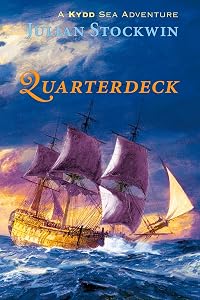
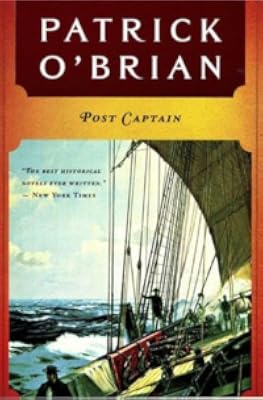
This review was written for LibraryThing Early Reviewers.The Napoleonic Era is a popular setting for historical naval fiction, it seems; this is the fourth such series I have encountered — following Forester's accounts of Horatio Hornblower, O'Brian's Aubrey-Maturin books, and Naomi Novik's Temeraire series — and I'm sure there are other works set during the same period. So there's plenty of competition. I get the impression that O'Brian's novels tend to be the most highly regarded among the company, but I've always preferred Hornblower myself. It's difficult to consider _The Winds of Folly_ (fourth in the Nathan Peake series, but the first one I've read) in isolation, so the big question is how it fares alongside its distinguished competitors. (I'll leave the Temeraire books out of the show more comparison, as they contain rather more dragons than the others.)
To cut to the chase, I'd place it in the middle of the pack: more fun than O'Brian but less compelling than Forester. As a character, Nathan Peake is vaguely reminiscent of Horatio Hornblower, prone to the same self-reflection, nagging doubts, and occasional awkward situations. However, I found that the story dragged and occasionally plodded through the first half of the book — perhaps because I found the political maneuverings to be somewhat confusing. Despite the occasional naval engagement or official encounter, it takes a while to get to the heart of the action.
When we do get there, the action picks up and the immediate situation and threats become more concrete. Unfortunately, once in the heart of the action, Peake becomes largely passive, carried by chance and circumstance through several layers of scheming and action without having much, if any, influence over their outcome — let alone over his own fate. This is undoubtedly a frustrating situation for a ship's captain to find himself in, but it's also a bit disappointing for the reader who expects a story's protagonist to be more proactive.
On a more positive note, I was pleased to find a story from this subgenre set before Napoleon's real rise to power. By chance, I've just finished listening to Mike Duncan's excellent _Revolutions_ podcast series on the French Revolution, and I was happy that I could recognize a number of names and events from the real history scattered throughout _Winds_.
I wouldn't mind trying one of the other books in Peake's story at some point ... but I'd be more inclined to reread the Hornblower saga first. show less
To cut to the chase, I'd place it in the middle of the pack: more fun than O'Brian but less compelling than Forester. As a character, Nathan Peake is vaguely reminiscent of Horatio Hornblower, prone to the same self-reflection, nagging doubts, and occasional awkward situations. However, I found that the story dragged and occasionally plodded through the first half of the book — perhaps because I found the political maneuverings to be somewhat confusing. Despite the occasional naval engagement or official encounter, it takes a while to get to the heart of the action.
When we do get there, the action picks up and the immediate situation and threats become more concrete. Unfortunately, once in the heart of the action, Peake becomes largely passive, carried by chance and circumstance through several layers of scheming and action without having much, if any, influence over their outcome — let alone over his own fate. This is undoubtedly a frustrating situation for a ship's captain to find himself in, but it's also a bit disappointing for the reader who expects a story's protagonist to be more proactive.
On a more positive note, I was pleased to find a story from this subgenre set before Napoleon's real rise to power. By chance, I've just finished listening to Mike Duncan's excellent _Revolutions_ podcast series on the French Revolution, and I was happy that I could recognize a number of names and events from the real history scattered throughout _Winds_.
I wouldn't mind trying one of the other books in Peake's story at some point ... but I'd be more inclined to reread the Hornblower saga first. show less
This review was written for LibraryThing Early Reviewers.Seth Hunter’s The Winds of Folly is a prime example of naval fiction during the War of the First Coalition and Napoleonic Wars in the tradition of Patrick O’Brian’s Aubrey-Maturin series, or Dudley Pope’s Lord Ramage novels, or C.S. Forester’s Horatio Hornblower’s novels, or the novels of Frederick Marryat, all of whom took some inspiration from the life of Thomas Cochrane, 10th Earl of Dundonald. Now that the comparisons are out of the way, I will review Hunter’s novel on its own merits. A bit of background on the author: Seth Hunter is a pseudonym for Paul Bryers, a film director, screenwriter, and author with a keen interest in history. In this review, I will use his chosen nom de plume.
Hunter’s protagonist, Nathan show more Peake, is a more introspective and somber captain than I am used to in these types of stories; moody, at times. Peake operates during the War of the First Coalition and, as the son of an American woman who is friends with Mary Wollstonecraft and a retired English naval officer and landowner, he possesses a certain worldliness not seen in other, similar characters. This novel takes place fourth in Hunter’s Nathan Peake series and, while Hunter provides most of the necessary backstory for his audiences’ benefit, there are certain plot threads that seem to require prior reading of the first three novels in order for them not to stretch the bounds of plausibility. For example, Peake spends time with both Captain Horatio Nelson and General Napoleon Bonaparte over the course of this story. The main plot of the story focuses on Peake’s mission to Venice to discover the city-state’s loyalties in the current war. The “winds” in Hunter’s title are the Tramontana, the Sirocco, and the Levanter, all of which have metaphorical significance for the events of the story.
Hunter’s writing, though enjoyable and well paced, more closely resembles modern prose than other authors writing on similar topics. This will not alienate most readers, but it does draw some attention to itself when he switches between dialogue and prose. At one point, an imprisoned Peake performs a memory exercise in which he envisions the constellations as seen from the deck of his ship before imagining travel to those stars aboard a starship. Hunter explains this memory exercise, writing, “The craft, which was conical in shape, was propelled according to the principles discovered by the late Sir Isaac Newton, after whom it was named. It was projected into the heavens by a number of rockets, each of which ignited its neighbour before reaching the limit of its trajectory and falling away” (p. 271). This concept, while enjoyable, stretches the limits of plausibility. It strikes the modern reader as highly unlikely that an English sea captain should describe modern space travel 68 years before Jules Verne’s From the Earth to the Moon and 90 years before the birth of Robert Goddard. That said, this is likely to occur only to a minority of readers.
Hunter’s use of real history, including people, places, and events, lends his work a certain authenticity that will appeal to fans of the genre. His work is capable of standing on its own amid a figurative sea of similar novels and will particularly appeal to readers of the aforementioned series. show less
Hunter’s protagonist, Nathan show more Peake, is a more introspective and somber captain than I am used to in these types of stories; moody, at times. Peake operates during the War of the First Coalition and, as the son of an American woman who is friends with Mary Wollstonecraft and a retired English naval officer and landowner, he possesses a certain worldliness not seen in other, similar characters. This novel takes place fourth in Hunter’s Nathan Peake series and, while Hunter provides most of the necessary backstory for his audiences’ benefit, there are certain plot threads that seem to require prior reading of the first three novels in order for them not to stretch the bounds of plausibility. For example, Peake spends time with both Captain Horatio Nelson and General Napoleon Bonaparte over the course of this story. The main plot of the story focuses on Peake’s mission to Venice to discover the city-state’s loyalties in the current war. The “winds” in Hunter’s title are the Tramontana, the Sirocco, and the Levanter, all of which have metaphorical significance for the events of the story.
Hunter’s writing, though enjoyable and well paced, more closely resembles modern prose than other authors writing on similar topics. This will not alienate most readers, but it does draw some attention to itself when he switches between dialogue and prose. At one point, an imprisoned Peake performs a memory exercise in which he envisions the constellations as seen from the deck of his ship before imagining travel to those stars aboard a starship. Hunter explains this memory exercise, writing, “The craft, which was conical in shape, was propelled according to the principles discovered by the late Sir Isaac Newton, after whom it was named. It was projected into the heavens by a number of rockets, each of which ignited its neighbour before reaching the limit of its trajectory and falling away” (p. 271). This concept, while enjoyable, stretches the limits of plausibility. It strikes the modern reader as highly unlikely that an English sea captain should describe modern space travel 68 years before Jules Verne’s From the Earth to the Moon and 90 years before the birth of Robert Goddard. That said, this is likely to occur only to a minority of readers.
Hunter’s use of real history, including people, places, and events, lends his work a certain authenticity that will appeal to fans of the genre. His work is capable of standing on its own amid a figurative sea of similar novels and will particularly appeal to readers of the aforementioned series. show less
This review was written for LibraryThing Early Reviewers.Readers looking for a seafaring adventure full of ship maneuvers, narrow battle escapes, and tactical strategy will be disappointed with "Winds of Folly" by Seth Hunter. The protagonist, Nathan Peake, is actually rarely on his own ship, and when he is, he generally leaves it up to his crew to run it. The only ship battle scenes seem included just so that there are some in the book.
That being said, this is not a bad book, it just isn't a Hornblower style novel. Hunter instead delves into the intrigues of the Napoleonic conquest of Italy and Venice focusing on the deteriorating conditions of the Venetian State. The seamy side of Venice is well portrayed and the characters interesting. However I found it a bit of a stretch that Peake would show more be rescued from execution by Napoleon and all the lucky coincidences that led to his return to a British ship.
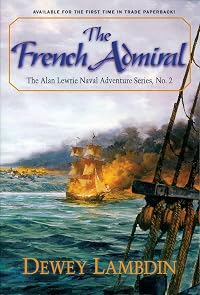
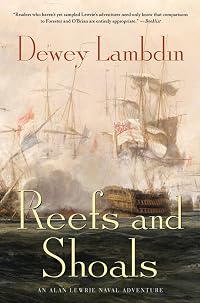
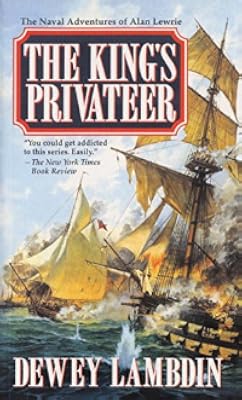
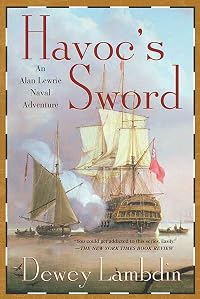
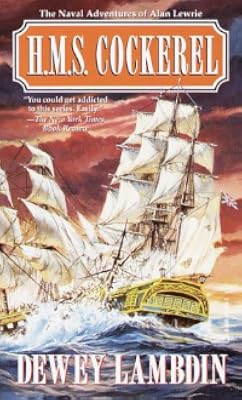
I think that Dewey Lambdin and his character Alan Lewrie did the Adriatic, and for that matter Lady Emma Hamilton, better. show less
That being said, this is not a bad book, it just isn't a Hornblower style novel. Hunter instead delves into the intrigues of the Napoleonic conquest of Italy and Venice focusing on the deteriorating conditions of the Venetian State. The seamy side of Venice is well portrayed and the characters interesting. However I found it a bit of a stretch that Peake would show more be rescued from execution by Napoleon and all the lucky coincidences that led to his return to a British ship.
I think that Dewey Lambdin and his character Alan Lewrie did the Adriatic, and for that matter Lady Emma Hamilton, better. show less
This review was written for LibraryThing Early Reviewers.Members
- Recently Added By
Author Information

25 Works 548 Members
Series

Common Knowledge
- Canonical title
- The Winds of Folly
- Original publication date
- 2016
- People/Characters
- Nathan Peake; Adelaide Correglia; Horatio Nelson, 1st Viscount Nelson; William Hamilton; Emma Hamilton; Caterina Caresini (show all 11); Spiridion Foresti; Cristolfi; Thomas Fremantle; Jean-Andoche Junot; Napoleon Bonaparte
- Important places
- Corsica, France; Venice, Veneto, Italy; Castiglion Fiorentino, Toscane, Italië
- Epigraph
- I am but mad north-north-west: when the wind is southerly I know a hawk from a handsaw. Hamlet, II. 2. 405.
- Dedication
- For Pat
- First words
- The man known to his associates as Cristolfi, and to the rest of Venice as the Devil, passed unnoticed through the crowds on the Piazza San Marco.
- Last words
- (Click to show. Warning: May contain spoilers.)'They are the Guillaume Tell and the Tennant, both of eighty guns, the Aquillon and the Généraux, of seventy-four guns, and three frigates — the Junon, the Justice, and a captured British ship — the Unicorn.'
- Original language
- English
Classifications
Statistics
- Members
- 39
- Popularity
- 745,040
- Reviews
- 19
- Rating
- (3.62)
- Languages
- English
- Media
- Paper, Audiobook, Ebook
- ISBNs
- 10
- ASINs
- 1