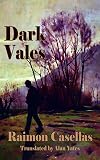
Dark vales
by Raimon Casellas
On This Page
Description
The protagonist, Father Llatzer, a priest banished for doctrinal heresy to an isolated, backward mountain parish, struggles to achieve personal redemption by bringing salvation to his primitive, taciturn, rural flock. Their mute atavism is disturbed only by the local whore, Footloose, embodying all the forces against which the priestâe(tm)s reforming mission is directed. Ambiguity surrounds the denouement of that conflict.Dark Vales is as as compelling today as when it was first written.Tags
Recommendations


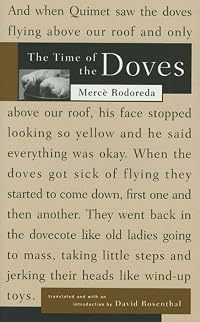
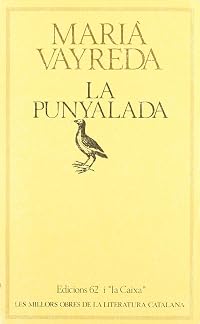


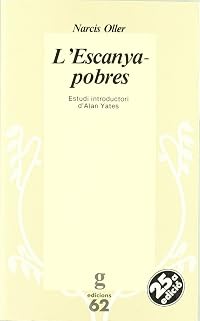


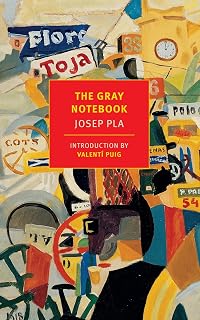








Member Recommendations
bluepiano Both books are dark accounts of unpleasant inhabitants of isolated and poverty-ridden mountain villages in the Iberian peninsula. Torga's stories aren't the nightmare that Cassellas' novel is but still, they were banned in Portugal for their bleakness.
Member Reviews
It's hard to imagine a novel bleaker than this. The setting is harsh and claustrophobic; the weather is oppressive and destructive; the peasants are unreasoning and brutish; the central character finds himself falling from brisk optimism into anguish and thence into despair.
Father Llatzar has offended his superiors and is transferred to an isolated parish in the Pyrenees, where he does his utmost to bring to its inhabitants spiritual sustenance but is thwarted repeatedly by nearly mute stubbornness and a numb indifference relieved only occasionally by flashes of greed, envy, and malevolence.
My thoughts about the novel are scattered ones, most likely because I'm still rather overpowered by its atmosphere. In any case, restoring life is show more a recurring theme in it--the revival of the teachings of an unnamed philosopher, the restoration of the dilapidated church, the various attempts to bring the peasants back to the true church. In the end there is indeed a sort of resurrection but it's a ghastly one. Something that disturbed me less and in an altogether jdifferent way, was that in portraying his characters Casellas stacked the deck a bit too much for my taste; I doubt it was his intention to lend them great depth--given that the book was written at the turn of the last century it's quite possible that they were symbols only--but the peasants' surly silence, their joylessness, their complete lack of fellow-feeling were almost unrelieved and demand a less taut than usual suspension of disbelief. As indeed does the prostitute who settles in the parish and who seems as much Pied Piper as femme fatale. (Fr Llatzar and his servants are a bit less one-dimensional though, and that a reader can't determine the extent to which the former's efforts are the result of vanity rather than spirituality is a nice touch.)
Ever since reading The Yellow Rain and, especially, C.-F. Ramuz I've been on the lookout for fiction dealing with isolated mountain settlements. I'm terribly pleased that I learned about this one and I certainly recommend it but be warned that it's a sojourn in Hell and not a visit to Heidi. show less
Father Llatzar has offended his superiors and is transferred to an isolated parish in the Pyrenees, where he does his utmost to bring to its inhabitants spiritual sustenance but is thwarted repeatedly by nearly mute stubbornness and a numb indifference relieved only occasionally by flashes of greed, envy, and malevolence.
My thoughts about the novel are scattered ones, most likely because I'm still rather overpowered by its atmosphere. In any case, restoring life is show more a recurring theme in it--the revival of the teachings of an unnamed philosopher, the restoration of the dilapidated church, the various attempts to bring the peasants back to the true church. In the end there is indeed a sort of resurrection but it's a ghastly one. Something that disturbed me less and in an altogether jdifferent way, was that in portraying his characters Casellas stacked the deck a bit too much for my taste; I doubt it was his intention to lend them great depth--given that the book was written at the turn of the last century it's quite possible that they were symbols only--but the peasants' surly silence, their joylessness, their complete lack of fellow-feeling were almost unrelieved and demand a less taut than usual suspension of disbelief. As indeed does the prostitute who settles in the parish and who seems as much Pied Piper as femme fatale. (Fr Llatzar and his servants are a bit less one-dimensional though, and that a reader can't determine the extent to which the former's efforts are the result of vanity rather than spirituality is a nice touch.)
Ever since reading The Yellow Rain and, especially, C.-F. Ramuz I've been on the lookout for fiction dealing with isolated mountain settlements. I'm terribly pleased that I learned about this one and I certainly recommend it but be warned that it's a sojourn in Hell and not a visit to Heidi. show less
EN-1
Sep 18, 2020Catalan
Català
Dec 30, 2015Catalan
Ratings
Members
- Recently Added By
Lists

Las 100 Mejores Novelas en Castellano del Siglo XX
105 works; 13 members

Seldom seen & worth considering
43 works; 2 members
Author Information
13 Works 150 Members
Series
Belongs to Publisher Series
Work Relationships
Is contained in
Common Knowledge
- Canonical title
- Dark vales
- Original title
- Els sots feréstecs
- Original publication date
- 1901
- Original language
- Catalan
Classifications
Statistics
- Members
- 73
- Popularity
- 432,754
- Reviews
- 3
- Rating
- (3.93)
- Languages
- Catalan, English
- Media
- Paper, Ebook
- ISBNs
- 16
- ASINs
- 3