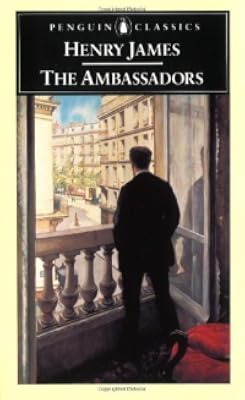
The Ambassadors
by Henry James
On This Page
Description
Lambert Strether, a mild middle-aged American of no particular achievements, is dispatched to Paris from the manufacturing empire of Woollett, Massachusetts. The mission conferred on him by his august patron, Mrs Newsome, is to discover what, or who, is keeping her son Chad in the notorious city of pleasure, and to bring him home. But Strether finds Chad transformed by the influence of a remarkable woman; and as the Parisian spring advances, he himself succumbs to the allure of the 'vast show more bright Babylon' and to the mysterious charm of Madame de Vionnet. show lessTags
Recommendations



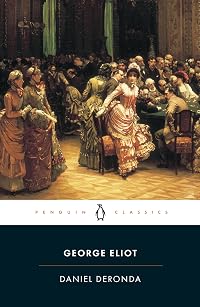
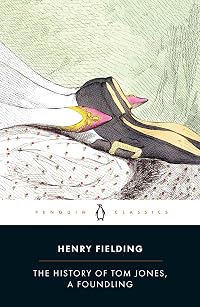
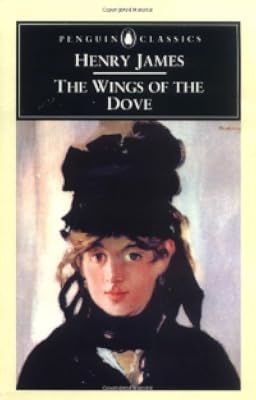

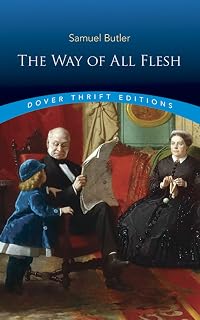

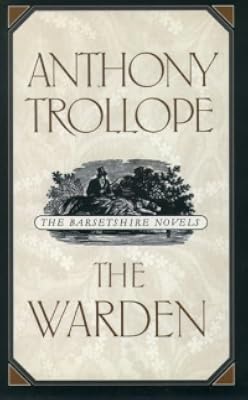
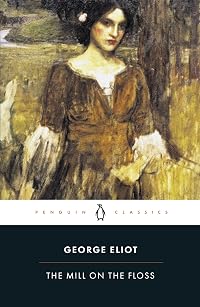
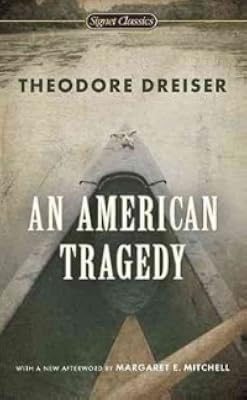
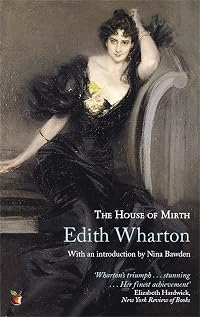



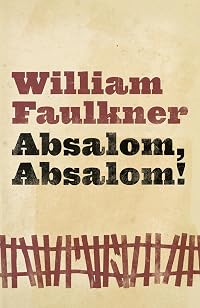
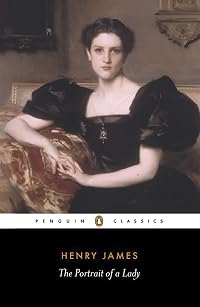

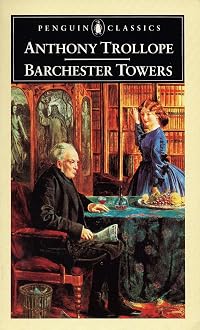
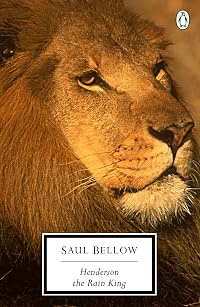

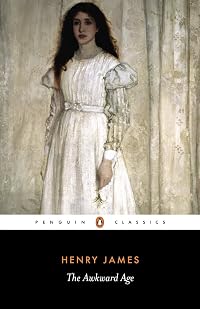
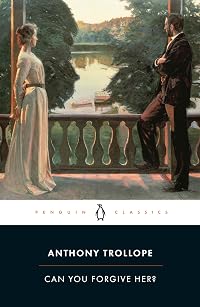
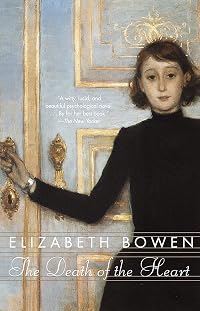
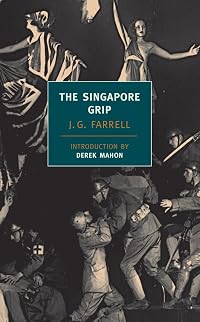
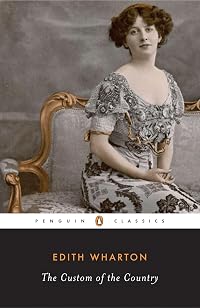
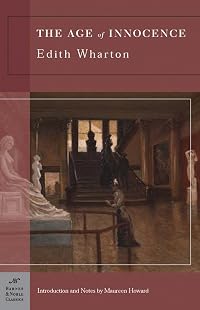
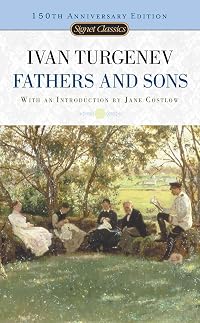

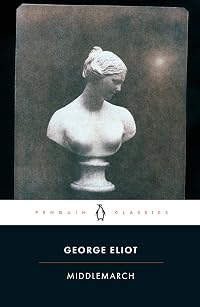
Member Recommendations
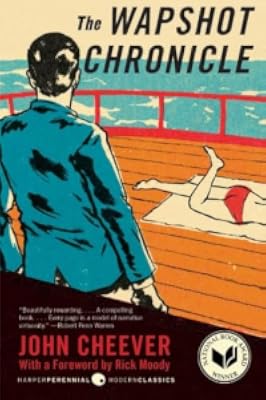
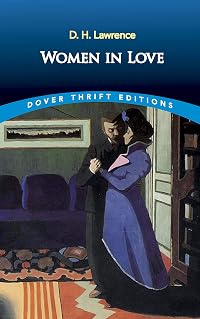
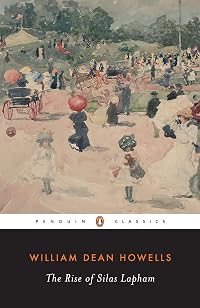
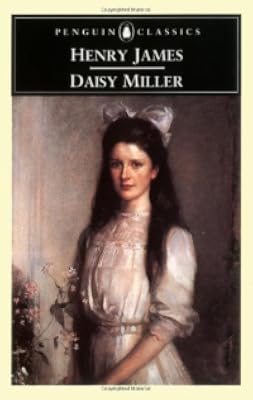
Morryman84 Both somewhat highlight the difference in American and old European thought process
Member Reviews
This book is a wall of sentences, meandering, self-negating, seemingly endless sentences that require extraordinary patience from contemporary readers; yet at a certain point a persevering reader may just fall in step with the unnatural rhythm of the discourse, may find its torturous indirectness appealing, may start looking forward to another unexpected turn the story takes in the mind of the protagonist on the road to a belated self-discovery.
I was pointed towards Henry James by those who had read my own interminable contributions to a half-forgotten creative writing collaboration on LibraryThing, so I feel obliged to let it be known that I consider my prose, however long-winded and polysyllabic, as nevertheless infinitely more comprehensible than James's experiments in syntax so convoluted that it might be called non-Euclidean, and managing to be simultaneously over- and under-punctuated.
I find it hard to understand or articulate why I enjoyed reading this book, but I did. Two particular moments stand out, of a kind of euphoria. One, inevitably, was when I finally reached the climax (on page 349) and the rapidly following conclusion (on page 393). The other, earlier, was show more when I realized, about halfway through the book, that my sense of bafflement as a reader, floundering about in James's labyrinthine sentences, precisely mirrored that of the narrator and focalizer, Lambert Strether, completely befogged among the sophisticated young men of the world and femmes du monde who dance arabesques around him as he bumbles stolidly around Paris, ruminating obsessively as he goes. Was this, then, deliberate on the part of the author? None of his characters ever seems to say anything directly, but utters little allusions to things unsaid or half-said, skirting delicately around all actual topics of conversation, just as the author frequently steps delicately around the events of the plot, passing on only Strether's subsequent contemplations of them. Confronted with the most opaque prose I have ever encountered, I eventually gave up trying to parse James's sentences, decode his arcane idioms, or unpack the extended metaphors which seemed to go underground like twining roots and emerge unexpectedly some paragraphs later. I resorted to a kind of impressionistic reading in which I let words and paragraphs wash over me, leaving a blurred image of a narrative like a smudged painting. A happy decision: since finishing the book, I have discovered that James is, indeed, regarded as an Impressionist writer; so trying to read his prose like that of a conventional novel is like trying to find the outlines of objects in a pointillist landscape.
MB 22-i-2018 show less
I find it hard to understand or articulate why I enjoyed reading this book, but I did. Two particular moments stand out, of a kind of euphoria. One, inevitably, was when I finally reached the climax (on page 349) and the rapidly following conclusion (on page 393). The other, earlier, was show more when I realized, about halfway through the book, that my sense of bafflement as a reader, floundering about in James's labyrinthine sentences, precisely mirrored that of the narrator and focalizer, Lambert Strether, completely befogged among the sophisticated young men of the world and femmes du monde who dance arabesques around him as he bumbles stolidly around Paris, ruminating obsessively as he goes. Was this, then, deliberate on the part of the author? None of his characters ever seems to say anything directly, but utters little allusions to things unsaid or half-said, skirting delicately around all actual topics of conversation, just as the author frequently steps delicately around the events of the plot, passing on only Strether's subsequent contemplations of them. Confronted with the most opaque prose I have ever encountered, I eventually gave up trying to parse James's sentences, decode his arcane idioms, or unpack the extended metaphors which seemed to go underground like twining roots and emerge unexpectedly some paragraphs later. I resorted to a kind of impressionistic reading in which I let words and paragraphs wash over me, leaving a blurred image of a narrative like a smudged painting. A happy decision: since finishing the book, I have discovered that James is, indeed, regarded as an Impressionist writer; so trying to read his prose like that of a conventional novel is like trying to find the outlines of objects in a pointillist landscape.
MB 22-i-2018 show less
An image began to emerge of James as I read this that never quite gelled, but was something like "a man in a dickey, stirring an invisible pot of oatmeal in a dimly lit room, staring at the wall through too-weak bifocals and telling a story about people you never knew in a summerhouse you never visited, perpetually unable to decide whether it was Old Jim or Young Frank that made of Miss Sedgwick or the widow Daintry a comment of which the motive and significance were unclear,but who keeps insisting 'come on, you remember'." And there's spaghetti on his shirt.
It should surprise nobody that HG Wells was more succinct, comparing James to a hippopotamus trying to pick up a pea that has rolled into a corner of the room. But I flatter myself show more that I was a bit more accurate, captured a few more of the intricate vicissitudes of trying to read this book--and then I think "ah, but look where intricate vicissitudes got this book". The Ambassadors is dull. It is ponderous, turgid, pedantic, almost autistic in place, terrified of sex. And alongside that terror, obsessed with the hidden and imagined meanings behind every lightly or significantly dropped little flirt or flurry, in the manner of two sensitive fourteen-year-old boys writing each other mannered letters in chemistry class, to discuss what Sharon and Alexis said that day when they know they'll never, ever get the courage up to ask them. I think James' audience in the oatmeal-stirring story above is probably being told to those two boys. I think that would be his idea of heaven.
The basic idea is all right--"small-town American, upright because timid, goes on a mission of small-town American moral rectitude to Paris, where his mind is opened and he realizes he has wasted his life. He tries to intervene in the affair to the benefit of his charges--as he never really ceases to think of them, even as they try to provide for him like a eunuch uncle--does a certain amount of good, but doesn't manage to seize the day for himself because it is too late and he is too old and timid. He goes home." Pathos, (the good kind of) bathos, the clash of worlds, turn-of-the-last-century drawing-room manners, &c.
And Strether is a decent sort, if immensely frustrating and ultimately pusillanimous (James loves this word, and while I'm not comfortable with the across-the-board dismissal of Latinate vocabulary when an Anglo-Saxon alternative presents itself, allow me to suggest that "pusillanimous" instead of "weak" or "timid" probably has potential as a sort of litmus test for smalling out when you're attaining an exquisite realm of semantic subtleties and when you're just being a pompous git: if it doesn't add more than "pusillanimous", you're the latter. On the subject of language let me also say that much as I hate James' style, it is a pleasure to find, amidst the cloud of adjectives and prepositional phrases that he spews out onto the paper, the occasional pithy Americanism, in a context and a mode you'd never expect. I really like it when Strether settles his own hash).
But OH GOD this guy can't write for shit. By anyone's standard. I hope I can justifiably call myself a fairly well-read and open-minded fellow who can make allowances for the complex-composite octopusing of the 19th-century realist sentence, and understand its potential for evoking the "complicated vagueness" of a real-life psychological state, and acknowledge James' deep insights into human nature, although he only seems to know how to draw them from a certain kind of human, and even see how the flaws of the prose are analogous to the flaws of the protagonist, and how that's kind of neat. I can cut James slack for all of that and still not have enough slack left to excuse this:
"His most frequent form of words was that he knew himself, and they were applied on this occasion to his certainty of not sleeping. He knew himself well enough to know that he should have a night of prowling unless he should succeed, as a preliminary, in getting as tired as he wanted."
"She knew her theatre, she knew the play, as she had known, triumphantly, for three days, everything else, and the moment filled to the brim, for her companion, that apprehension of the interesting which, whether or no the interesting happened to filter through his guide, strained now to its limits his brief opportunity."
Vocab over style, like the letters of those fourteen-year-olds, like an intelligent and bookish kid in a backwater town or a backwater country--or most accurate of all for James, I think, a backwater bourgeois family, superficially "of the world" but never really interested in excising their inner Woollett--who nobody ever told he couldn't write, but instead indulged and called "our little professor". Only the guy was 60 when this was published. But you can still hear him smugging smugly to himself with each of those superfluous commas: "Mumsy wouldn't, perhaps, it must, and will, be acknowledged, put a comma there, but I must take more care, in my very serious work, for it, unlike her very charming occasional letters to Auntie Isadora, on the subject of her garden, and sundry similar topics, is for the ages."
I have a phone call to make, and I am tired of thinking or writing about this book, and so I will just also note that it is way gross how ultimately the self-satisfaction of Woollett wins out on so many levels, and the narration takes so seriously the assbuttoned Waymouth with his Old Knickerbocker-style rectitude, and Chad (Chad!) with his flared nostrils and impeccable pedigree, and makes snide "Jewess"-type remarks about the French aristocrats, because the only good bloodline is a US American Protestant bloodline, and all the worries in this are US American protestant worries, like about keeping yourself pure vs. having the enjoyment incumbent on your class and stature, and ohhhhhhhhhhh, I'm tired of that stuff. One of the most (only) enjoyable bits is toward the end, when Strether goes for a walk in the country and finally gets away from all those dull fucking awfuls, and your heart leaps, and then sinks again when Chad and Mme. de Vionnet show up, but you're still like "Strether has a plan! Maybe he will bring all their problems to a soothing catharsis and I will never have to think about them again!"
And he sort of does, I guess. Anyway, I'm done with this crapulence. show less
It should surprise nobody that HG Wells was more succinct, comparing James to a hippopotamus trying to pick up a pea that has rolled into a corner of the room. But I flatter myself show more that I was a bit more accurate, captured a few more of the intricate vicissitudes of trying to read this book--and then I think "ah, but look where intricate vicissitudes got this book". The Ambassadors is dull. It is ponderous, turgid, pedantic, almost autistic in place, terrified of sex. And alongside that terror, obsessed with the hidden and imagined meanings behind every lightly or significantly dropped little flirt or flurry, in the manner of two sensitive fourteen-year-old boys writing each other mannered letters in chemistry class, to discuss what Sharon and Alexis said that day when they know they'll never, ever get the courage up to ask them. I think James' audience in the oatmeal-stirring story above is probably being told to those two boys. I think that would be his idea of heaven.
The basic idea is all right--"small-town American, upright because timid, goes on a mission of small-town American moral rectitude to Paris, where his mind is opened and he realizes he has wasted his life. He tries to intervene in the affair to the benefit of his charges--as he never really ceases to think of them, even as they try to provide for him like a eunuch uncle--does a certain amount of good, but doesn't manage to seize the day for himself because it is too late and he is too old and timid. He goes home." Pathos, (the good kind of) bathos, the clash of worlds, turn-of-the-last-century drawing-room manners, &c.
And Strether is a decent sort, if immensely frustrating and ultimately pusillanimous (James loves this word, and while I'm not comfortable with the across-the-board dismissal of Latinate vocabulary when an Anglo-Saxon alternative presents itself, allow me to suggest that "pusillanimous" instead of "weak" or "timid" probably has potential as a sort of litmus test for smalling out when you're attaining an exquisite realm of semantic subtleties and when you're just being a pompous git: if it doesn't add more than "pusillanimous", you're the latter. On the subject of language let me also say that much as I hate James' style, it is a pleasure to find, amidst the cloud of adjectives and prepositional phrases that he spews out onto the paper, the occasional pithy Americanism, in a context and a mode you'd never expect. I really like it when Strether settles his own hash).
But OH GOD this guy can't write for shit. By anyone's standard. I hope I can justifiably call myself a fairly well-read and open-minded fellow who can make allowances for the complex-composite octopusing of the 19th-century realist sentence, and understand its potential for evoking the "complicated vagueness" of a real-life psychological state, and acknowledge James' deep insights into human nature, although he only seems to know how to draw them from a certain kind of human, and even see how the flaws of the prose are analogous to the flaws of the protagonist, and how that's kind of neat. I can cut James slack for all of that and still not have enough slack left to excuse this:
"His most frequent form of words was that he knew himself, and they were applied on this occasion to his certainty of not sleeping. He knew himself well enough to know that he should have a night of prowling unless he should succeed, as a preliminary, in getting as tired as he wanted."
"She knew her theatre, she knew the play, as she had known, triumphantly, for three days, everything else, and the moment filled to the brim, for her companion, that apprehension of the interesting which, whether or no the interesting happened to filter through his guide, strained now to its limits his brief opportunity."
Vocab over style, like the letters of those fourteen-year-olds, like an intelligent and bookish kid in a backwater town or a backwater country--or most accurate of all for James, I think, a backwater bourgeois family, superficially "of the world" but never really interested in excising their inner Woollett--who nobody ever told he couldn't write, but instead indulged and called "our little professor". Only the guy was 60 when this was published. But you can still hear him smugging smugly to himself with each of those superfluous commas: "Mumsy wouldn't, perhaps, it must, and will, be acknowledged, put a comma there, but I must take more care, in my very serious work, for it, unlike her very charming occasional letters to Auntie Isadora, on the subject of her garden, and sundry similar topics, is for the ages."
I have a phone call to make, and I am tired of thinking or writing about this book, and so I will just also note that it is way gross how ultimately the self-satisfaction of Woollett wins out on so many levels, and the narration takes so seriously the assbuttoned Waymouth with his Old Knickerbocker-style rectitude, and Chad (Chad!) with his flared nostrils and impeccable pedigree, and makes snide "Jewess"-type remarks about the French aristocrats, because the only good bloodline is a US American Protestant bloodline, and all the worries in this are US American protestant worries, like about keeping yourself pure vs. having the enjoyment incumbent on your class and stature, and ohhhhhhhhhhh, I'm tired of that stuff. One of the most (only) enjoyable bits is toward the end, when Strether goes for a walk in the country and finally gets away from all those dull fucking awfuls, and your heart leaps, and then sinks again when Chad and Mme. de Vionnet show up, but you're still like "Strether has a plan! Maybe he will bring all their problems to a soothing catharsis and I will never have to think about them again!"
And he sort of does, I guess. Anyway, I'm done with this crapulence. show less
I am nearly now at the end of the marathon Henry James readathon that a I began two years ago. Only two books of tales and two novels to go.
The Ambassadors marks the halfway point of James’s final great trilogy of novels, bookended by Wings of a Dove and The Golden Bowl. It tells the tale of Lambert Strether, a middle-aged Bostonian of unclear means (but probably meagre ones) who is despatched to Paris to bring back the son of Mrs. Newsome, his sort-of fiancée - it is never quite clear whether a betrothal has taken place, but then it’s never quite clear with Strether what has taken place. He’s one of James’s great late portraits of middle age - insecure, unhappy, uncertain, finding contentment at part in Paris, its streets and show more its art but most of all its sensibilities. In this he is like Mrs Newsome’s errant son Chad, who he finds an apparently more likeable and more grounded and rounded person than he remembered, made rich by the example of Paris and more specifically of Madame de Vionnet, an exquisite woman with a grown daughter, whose marital status is uncertain.
And that’s the point of the project for James, I think. Everything in this book is uncertain, contingent, ambiguous. Every single character is unreliable - or at least their motives are murky. It’s actually a triumph of sustained control but it does make it hard to relate, to anyone - at least until towards the end, when Strether decides to return to America and give up all he has gained. I feel the ending is meant to be tragic - but I’m not even sure about that. show less
The Ambassadors marks the halfway point of James’s final great trilogy of novels, bookended by Wings of a Dove and The Golden Bowl. It tells the tale of Lambert Strether, a middle-aged Bostonian of unclear means (but probably meagre ones) who is despatched to Paris to bring back the son of Mrs. Newsome, his sort-of fiancée - it is never quite clear whether a betrothal has taken place, but then it’s never quite clear with Strether what has taken place. He’s one of James’s great late portraits of middle age - insecure, unhappy, uncertain, finding contentment at part in Paris, its streets and show more its art but most of all its sensibilities. In this he is like Mrs Newsome’s errant son Chad, who he finds an apparently more likeable and more grounded and rounded person than he remembered, made rich by the example of Paris and more specifically of Madame de Vionnet, an exquisite woman with a grown daughter, whose marital status is uncertain.
And that’s the point of the project for James, I think. Everything in this book is uncertain, contingent, ambiguous. Every single character is unreliable - or at least their motives are murky. It’s actually a triumph of sustained control but it does make it hard to relate, to anyone - at least until towards the end, when Strether decides to return to America and give up all he has gained. I feel the ending is meant to be tragic - but I’m not even sure about that. show less
I have a love/hate relationship with Henry James, in that I like his characters and the situations he puts them in, but his writing style can really turn me off. Way too much work to figure out all the odd syntax and dozens of commas in really long sentences. Despite this, [The Ambassadors] really worked for me.
The story is fairly simple. An American, Strether, travels to Europe to attempt to convince a young man, Chad Newsome, to give up his European lifestyle and return to America to run his family's business. Strether is involved with Chad's mother, probably going to marry her. When he gets to Europe he meets the wonderful Miss Gostrey who sort of takes him on as a project and tries to help him along the way. He also discovers that show more Chad is involved with an older woman, Madame de Vionnet, who is married. The thing is that once Strether sees Chad in Europe, he realizes that his lifestyle really suits him and sees a marked improvement in Chad's style and personality. So he's not so sure he wants to convince Chad to go back to Woollett, MA, even for all the money the business would bring. He also thinks Madame de Vionnet is pretty awesome. So he waffles. This leads Mrs. Newsome to send her formidable daughter, Sarah Pocock, to bring Chad back herself.
The whole thing is very clever and subtle. There is a lot of dialogue where the characters sort of talk around what they mean and things are left very vague, but I thought that was sort of true to life. I think often people have "conversations" where they are really just putting forward their own point of view and not necessarily listening, and certainly not being influenced by, the other person. I thought the dialogue was fantastic.
There were certainly long descriptive passages where my eyes were glazing over, but all in all, I really enjoyed this. It must have caught me at just the right time because it does take quite a bit of concentration to read Henry James. Definitely recommended to "classics-lovers". show less
The story is fairly simple. An American, Strether, travels to Europe to attempt to convince a young man, Chad Newsome, to give up his European lifestyle and return to America to run his family's business. Strether is involved with Chad's mother, probably going to marry her. When he gets to Europe he meets the wonderful Miss Gostrey who sort of takes him on as a project and tries to help him along the way. He also discovers that show more Chad is involved with an older woman, Madame de Vionnet, who is married. The thing is that once Strether sees Chad in Europe, he realizes that his lifestyle really suits him and sees a marked improvement in Chad's style and personality. So he's not so sure he wants to convince Chad to go back to Woollett, MA, even for all the money the business would bring. He also thinks Madame de Vionnet is pretty awesome. So he waffles. This leads Mrs. Newsome to send her formidable daughter, Sarah Pocock, to bring Chad back herself.
The whole thing is very clever and subtle. There is a lot of dialogue where the characters sort of talk around what they mean and things are left very vague, but I thought that was sort of true to life. I think often people have "conversations" where they are really just putting forward their own point of view and not necessarily listening, and certainly not being influenced by, the other person. I thought the dialogue was fantastic.
There were certainly long descriptive passages where my eyes were glazing over, but all in all, I really enjoyed this. It must have caught me at just the right time because it does take quite a bit of concentration to read Henry James. Definitely recommended to "classics-lovers". show less
At the beginning, I really felt like I was wading through an impenetrable sea. But gradually I started to make sense of what was going on (on a literal level) and what was at stake for the characters and what kind of things might be being left deliberately obscure. Everything is hidden and obscured and circuitously hinted at -- SO elliptical and abstract that I felt almost like I was reading a book in a foreign language. But it's kind of entertaining, once you get into it, in the manner of a crossword puzzle.
https://donut-donut.dreamwidth.org/921430.html
https://donut-donut.dreamwidth.org/921430.html
Note: This book is the first of my quest to read 20 "significant" (as defined by me) books, not counting those for class and re-reads, this semester (spring 2010)
Actual Review:
I don't think I've fallen for an author this much since I started reading Jane Austen - which is quite ironic, since James disliked Austen!
James' writing is intricate and playful, his command of the english language is astounding, and you can tell he's enjoying his own powers - for example, when he described Mrs. Barrace as "The unobscured Mrs. Barrace", or when we are introduced to Maria Gostrey as "Not freshly young, not markedly fine, but (whose features) were on happy terms with one another"
The story itself is neither freshly young, nor markedly fine, but show more exceed all expectations. James excells in slowly revealing the complexity of people and their relationships with one another; one discovers people as one would solve a mystery, and that, indeed, is the inherant interest in the book, and what kept me flipping pages. His characters - even Lambert Strether - seem not to grow, but rather simply to reveal more of themselves, as one reveals the inner layers of an onion. It is impossible to characterize them in a single sentence - indeed, it seems almost impossible to describe them without re-writing the book! Nor can the theme of the book be so easily dissected - I've read that it's "about a man's late awakening to the importance of morality founded...on it's value per se", and it is, I suppose, but it's about so much more than that. I would argue that it's about life, and the value of living, and experiencing all you can - quite as Strether would say - and about being true to yourself (although in a much less trite fashion than usual. The book leaves us with no easy conclusions; and with that, it reminds me of Austen - entertaining and fun and gripping, but, at the same time, deep and probing. show less
Actual Review:
I don't think I've fallen for an author this much since I started reading Jane Austen - which is quite ironic, since James disliked Austen!
James' writing is intricate and playful, his command of the english language is astounding, and you can tell he's enjoying his own powers - for example, when he described Mrs. Barrace as "The unobscured Mrs. Barrace", or when we are introduced to Maria Gostrey as "Not freshly young, not markedly fine, but (whose features) were on happy terms with one another"
The story itself is neither freshly young, nor markedly fine, but show more exceed all expectations. James excells in slowly revealing the complexity of people and their relationships with one another; one discovers people as one would solve a mystery, and that, indeed, is the inherant interest in the book, and what kept me flipping pages. His characters - even Lambert Strether - seem not to grow, but rather simply to reveal more of themselves, as one reveals the inner layers of an onion. It is impossible to characterize them in a single sentence - indeed, it seems almost impossible to describe them without re-writing the book! Nor can the theme of the book be so easily dissected - I've read that it's "about a man's late awakening to the importance of morality founded...on it's value per se", and it is, I suppose, but it's about so much more than that. I would argue that it's about life, and the value of living, and experiencing all you can - quite as Strether would say - and about being true to yourself (although in a much less trite fashion than usual. The book leaves us with no easy conclusions; and with that, it reminds me of Austen - entertaining and fun and gripping, but, at the same time, deep and probing. show less
Members
- Recently Added By
Lists

1001 Books You Must Read Before You Die
1,448 works; 1,134 members

The Guardian's 1000 Novels Everyone Must Read
1,005 works; 549 members

Unread books
1,063 works; 87 members
20th Century Literature
1,161 works; 55 members

1900s (Decade, not century)
73 works; 17 members

Larry McCaffery's 20th Century Greatest Hits: 100 English-Language Books
103 works; 12 members

The Top Ten: Writers Pick Their Favorite Books
240 works; 31 members

Favorite Long Books
330 works; 42 members

Favourite Books
1,819 works; 308 members

Canon de la narrativa universal del siglo XX
254 works; 6 members

Western World's Greatest Books - Project Gutenberg
295 works; 15 members
Folio Society
831 works; 53 members
1,001 BYMRBYD Concensus
723 works; 27 members
The Modern Library's 100 Best Novels: The Board's List
85 works; 6 members

Paris, City of Lights
103 works; 17 members

SHOULD Read Books!
354 works; 9 members
American Lit for Eng 11 Research Project
368 works; 6 members

Recommended Reading : 600 Classics Reviewed, Editors of Salem Press, 2015
634 works; 6 members
Modern Library's 100 Best Novels
100 works; 2 members
.
396 works; 1 member

DigitalDreamDoor top 300
300 works; 4 members
Canon de la narrativa universal del s. XX (cicutadry)
499 works; 3 members

The 150 Greatest Novels of All Time
150 works; 6 members

Harold Bloom - The Western Canon: C. The Democratic Age
336 works; 15 members

New Lifetime Reading Plan by Fadiman and Major
225 works; 5 members

Art of Reading
188 works; 5 members

Greatest Books, allegedly
484 works; 9 members
How to Read a Book's Recommended Reading List
309 works; 10 members

Edward Gorey Covers
150 works; 8 members

Trinity College Booklist (1951): Class Ten, English Literature
358 works; 5 members

Authors' Favourites
18 works; 5 members
W. S. Maugham's Reading Suggestions for Spiritual Enrichment: American
13 works; 4 members
Author Information

1,061+ Works 87,953 Members
All Editions
Some Editions
Awards and Honors
Distinctions
Notable Lists
Daniel S. Burt's Novel 100 (018 – 18)
Series
Belongs to Publisher Series
The Bodley Head Henry James (Volume VIII)
Limited Editions Club (S:32.01)
Airmont Classics (95)
Everyman's Library (987)
Work Relationships
Is contained in
Is abridged in
Inspired
Has as a study
Has as a commentary on the text
Has as a student's study guide
Common Knowledge
- Canonical title
- The Ambassadors
- Original title
- The Ambassadors
- Original publication date
- 1903
- People/Characters
- Lambert Strether; Chadwick Newsome; Maria Gostrey; Marie de Vionnet; Waymarsh
- Important places
- Paris, France
- First words
- Strether's first question, when he reached the hotel, was about his friend; yet on his learning that Waymarsh was apparently not to arrive till evening he was not wholly disconcerted.
- Last words
- (Click to show. Warning: May contain spoilers.)“Then there we are!” said Strether.
- Original language
- English
Classifications
Statistics
- Members
- 4,437
- Popularity
- 3,351
- Reviews
- 50
- Rating
- (3.73)
- Languages
- 11 — Czech, English, French, German, Italian, Polish, Portuguese, Romanian, Russian, Spanish, Swedish
- Media
- Paper, Audiobook, Ebook
- ISBNs
- 226
- UPCs
- 1
- ASINs
- 126