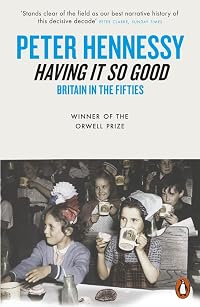
Having It So Good: Britain in the Fifties
by Peter Hennessy
On This Page
Description
Winner of the Orwell Prize for Political Writing, Peter Hennessy's Having it So Good: Britain in the Fifties captures Britain in an extraordinary decade, emerging from the shadow of war into growing affluence. The 1950s was the decade in which Roger Bannister ran the four-minute mile, Bill Haley released 'Rock Around the Clock', rationing ended and Britain embarked on the traumatic, disastrous Suez War. In this highly enjoyable, original book, Peter Hennessy takes his readers into front show more rooms, classrooms, cabinet rooms and the new high-street coffee bars of Britain to recapture, as no previous history has, the feel, the flavour and the politics of this extraordinary time of change. 'Utterly engaging ... a treat. It breathes exhilaration' Libby Purves, The Times 'If the Gods gossip, this is how it would sound' Philip Ziegler, Spectator Books of the Year 'A particular treat ... fine, wise and meticulously researched' Andrew Marr 'Stands clear of the field as our best narrative history of this decisive decade' Peter Clarke, Sunday Times 'A compelling narrative ... Hennessy's love of the flesh and blood of politics breathes on every page' Tim Gardam, Observer 'The late Ben Pimlott once described Hennessy as "something of a national institution". You can forget the first two of those five words' Guardian Peter Hennessy is Attlee Professor of History at Queen Mary College, London, and the Director of the Mile End Institute of Contemporary British Government, Intelligence and Society. He is the author of Never Again: Britain 1945-51 (winner of the NCR and Duff Cooper Prizes), Having it So Good: Britain in the Fifties (winner of the Orwell Prize); the bestselling The Prime Minister and The Secret State. show lessTags
Recommendations






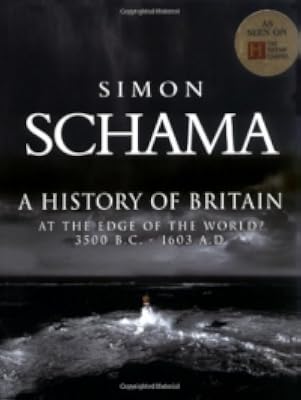


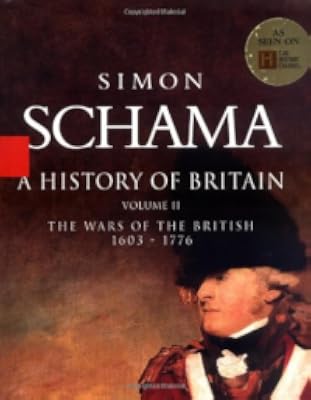

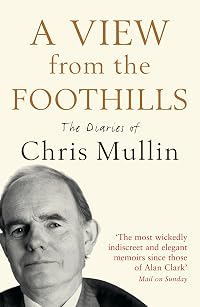
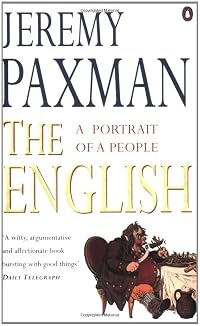


Member Reviews
A great thing about Hennessy's research is that he keeps an open mind while using his first class access to political figures and exhaustively reading cabinet minutes, diaries and essentially collating everything that could be of relevance. The result is a remarkable portrait of the decade.
The book full of surprises. He shows for example that the fast exit from empire had as much to do with removing financial burdens as accepting independence movements, or the way that successive Conservative governments carried the crushingly expensive "British New Deal" welfare state and Keynesian big government spending as a "modern" understanding of the economy (uncomfortable but we can't do anything about it). Almost nowhere do 1950's British show more government ministers examine the positive aspects or German and European economic success (Eden did slightly but didn't act) and the first stages of the European Community were treated with disdain as governments followed the chimera of a Commonwealth economic community.
To greatly generalize, he shows a group of British aristocrats, Churchill, Eden and Macmillan who were formed by, and reached power, within an unchanged imperially structured education and governmental system. Had the pre WW1 British empire still existed then maybe they could have completed the work they wished to do through a bureaucracy that was finely adapted to carry it out, but in the event the withdrawal of American financial and political support in the Suez crisis made the real position plain for the world to see.
Its fascinating to observe how 60 years later, Great Britain is still struggling with its imperial class system and the "Europe" question. show less
The book full of surprises. He shows for example that the fast exit from empire had as much to do with removing financial burdens as accepting independence movements, or the way that successive Conservative governments carried the crushingly expensive "British New Deal" welfare state and Keynesian big government spending as a "modern" understanding of the economy (uncomfortable but we can't do anything about it). Almost nowhere do 1950's British show more government ministers examine the positive aspects or German and European economic success (Eden did slightly but didn't act) and the first stages of the European Community were treated with disdain as governments followed the chimera of a Commonwealth economic community.
To greatly generalize, he shows a group of British aristocrats, Churchill, Eden and Macmillan who were formed by, and reached power, within an unchanged imperially structured education and governmental system. Had the pre WW1 British empire still existed then maybe they could have completed the work they wished to do through a bureaucracy that was finely adapted to carry it out, but in the event the withdrawal of American financial and political support in the Suez crisis made the real position plain for the world to see.
Its fascinating to observe how 60 years later, Great Britain is still struggling with its imperial class system and the "Europe" question. show less
Great mixture of history and personal experieces bringing alive the wonder of the 1950s
Ratings
Members
- Recently Added By
Author Information

30 Works 1,195 Members
Peter Hennessy is Attlee Professor of Contemporary British History at Queen Mary, University of London.
Awards and Honors
Awards
Common Knowledge
- Canonical title
- Having It So Good: Britain in the Fifties
- Original publication date
- 2006
- Important places
- United Kingdom
- Dedication
- For Chelly Halsey, Richard Hoggart, the late Anthony Sampson and the late Michael Young with gratitude for making me think about the years encompassed herein.
- Blurbers
- Purves, Libby; Marr, Andrew; Ziegler, Philip; Young, Hugo; Aitken, Ian; Sisman, Adam
Classifications
- Genres
- History, Nonfiction, General Nonfiction, Politics and Government
- DDC/MDS
- 900 — History & geography History History, geography, and auxiliary disciplines
- LCC
- DA589 .H36 — History of Europe, Asia, Africa and Oceania Great Britain History of Great Britain England History By period Modern, 1485- 20th century
- BISAC
Statistics
- Members
- 179
- Popularity
- 182,866
- Reviews
- 2
- Rating
- (4.13)
- Languages
- English
- Media
- Paper, Ebook
- ISBNs
- 3
- ASINs
- 2