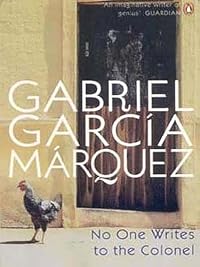
No One Writes to the Colonel {novella}
by Gabriel Garcia Marquez
On This Page
Description
Fridays are different. Every other day of the week, the Colonel and his ailing wife fight a constant battle against poverty and monotony, scraping together the dregs of their savings for the food and medicine that keeps them alive. But on Fridays the postman comes - and that sets a fleeting wave of hope rushing through the Colonel's ageing heart.Tags
Recommendations


















Member Reviews
Reason read: I read this because it is one of the 1001 books to read before I die and it fit the word challenge for the month of October 2025. I enjoyed it. The author thought it was his best book and he is quoted as saying that he had to write One Hundred Years of Solitude so that people would read No One Writes to the Colonel. I know that for me, One Hundred Years is probably my least favorite by Gabriel Garcia Marquez. This is a story of an old couple decaying away as the Colonel has been waiting 15 years for his pension. the story explores themes of hope, despair, dignity, and the absurdities of life through the colonel's weekly trip to the post office and his family's struggle to survive. He and his asthmatic wife must choose show more between selling their prize rooster, a symbol of hope and defiance, for immediate cash or keeping it in the hopes of it winning at the cockfights.
The central conflict: The novella centers on the colonel's persistent but futile hope for a pension he was promised after fighting in a war.
Political context: The story is set against the backdrop of a turbulent period in Colombian history known as "la violencia," where martial law and oppression are a reality.
Symbolism: The rooster is a key symbol, representing hope and pride in a bleak world. show less
The central conflict: The novella centers on the colonel's persistent but futile hope for a pension he was promised after fighting in a war.
Political context: The story is set against the backdrop of a turbulent period in Colombian history known as "la violencia," where martial law and oppression are a reality.
Symbolism: The rooster is a key symbol, representing hope and pride in a bleak world. show less
I don’t relish the role of literary iconoclast, but I found this novella decidedly underwhelming. If this is representative of the writer’s oeuvre, then once again I have to question how the Nobel committee arrive at their decisions – perhaps in years gone by, they have modelled themselves on FIFA. The only virtue I have identified for this book so far is that it was very short.
The basic premise is simple. A retired colonel and his wife are living in deep poverty, waiting patiently (but in vain) for the delivery of a letter confirming the colonel’s pension. They struggle through each day, with their meagre savings diminished further, barely stretching to cover the basic staples for survival. Their neighbour, a doctor, tries to show more help as far as his own limited means allow, and shares his newspapers with them. The colonel pores over these, reading every word of every article, partially as a means of filling in time, but also scanning them for news of when his pension, now some fifteen years overdue, might be conferred. We gradually learn that there is a harsh regime governing the country, and that the colonel had served faithfully many years in the past. Details are sparse, however.
Basically nothing happens. Of course, I appreciate that the lack of action is deliberate, designed to help the reader feel some semblance of the lethargy and despair that the colonel and his ageing wife felt. Well it worked. With each new page I felt a further dose of taedium vitae, and it was only through an unusual effort of will that I managed to persevere through to the end show less
The basic premise is simple. A retired colonel and his wife are living in deep poverty, waiting patiently (but in vain) for the delivery of a letter confirming the colonel’s pension. They struggle through each day, with their meagre savings diminished further, barely stretching to cover the basic staples for survival. Their neighbour, a doctor, tries to show more help as far as his own limited means allow, and shares his newspapers with them. The colonel pores over these, reading every word of every article, partially as a means of filling in time, but also scanning them for news of when his pension, now some fifteen years overdue, might be conferred. We gradually learn that there is a harsh regime governing the country, and that the colonel had served faithfully many years in the past. Details are sparse, however.
Basically nothing happens. Of course, I appreciate that the lack of action is deliberate, designed to help the reader feel some semblance of the lethargy and despair that the colonel and his ageing wife felt. Well it worked. With each new page I felt a further dose of taedium vitae, and it was only through an unusual effort of will that I managed to persevere through to the end show less
More a novella than a novel, but again a brilliant work of Gabriel Garcia Marquez. From the first page the heavy tragic atmosphere is expressed. The colonel and his wife are poor and only have one rooster, a fighting rooster. It soon becomes apparent that their son is dead. It was his rooster. Will this rooster save them?
Little by little it becomes clear how the situation has become this sad. Did the stubbornness of the Colonel helped to get into this situation? Or was he just terribly unlucky?
This book shows once again the power of the writing of Marquez. The story is visual, the story is easy to read, but there is depth as well and the story is touching deeply. One Hundred Years of Solitude, remain his best work for what I read this show more far, but this comes close.
http://boekenwijs.blogspot.com/2011/02/de-kolonel-krijgt-nooit-post.html show less
Little by little it becomes clear how the situation has become this sad. Did the stubbornness of the Colonel helped to get into this situation? Or was he just terribly unlucky?
This book shows once again the power of the writing of Marquez. The story is visual, the story is easy to read, but there is depth as well and the story is touching deeply. One Hundred Years of Solitude, remain his best work for what I read this show more far, but this comes close.
http://boekenwijs.blogspot.com/2011/02/de-kolonel-krijgt-nooit-post.html show less
A former colonel and his wife languish in poverty in a small Colombian village. They have lost their only son. They sell their possessions, juggle multiple lines of credit, and rest their only hopes on a rooster that will surely bring in money if it wins in the cockfighting ring a few months from now. Every Friday, the colonel goes to the post office to see if the new government, which he helped install decades ago, have remembered him and have finally sent him his pension.
This was a nicely told story of characters stuck in a rut, choosing to stick with ideals, hopes and dreams that only through a miracle can ever again comport with reality. I liked it, and am looking forward to reading more of García Márquez’ short works.
This was a nicely told story of characters stuck in a rut, choosing to stick with ideals, hopes and dreams that only through a miracle can ever again comport with reality. I liked it, and am looking forward to reading more of García Márquez’ short works.
Irgendwo in Kolumbien, in einem kleinen Dorf fernab der Welt, wartet der 75jährige Oberst seit Jahrzehnten darauf, dass ihm seine rechtmässige Pension zuerkannt wird. Seine Frau und er haben mittlerweile ihre gesamten Besitztümer verkauft, nur ein Kampfhahn ist noch ihr Eigen, der ihrem vor kurzem erschossenen Sohn gehörte. Mühsam füttern sie den Hahn durch, obwohl sie praktisch selbst nichts mehr zu essen haben, in der Hoffnung, dass er in der nächsten Kampfsaison gewinnt.
Mich ließ diese Lektüre unzufrieden zurück. Gut, Marquez' beeindruckender Sprachstil ist auch in dieser frühen Erzählung (Roman mag ich dieses schmale Büchlein nicht nennen) bereits zu erkennen. Doch ausser der Beschreibung einer völlig trostlosen Welt, show more die gerade mal so viel Hoffnung zu spenden vermag, dass der Protagonist am Ende zum Schei**efressen bereit ist, vermag ich dieser Geschichte nichts zu entnehmen. In älteren Kritiken wird darauf verwiesen, dass es hier um den Konflikt von Geist und Macht geht, wobei der Hahn für den Geist steht, die Illusion, die Utopie. Doch die Trostlosigkeit war für mich so stark, dass sie Alles überstrahlte. Eine meiner Meinung nach so deprimierende Lektüre, die man sich trotz des Nobelpreisautors sparen kann. show less
Mich ließ diese Lektüre unzufrieden zurück. Gut, Marquez' beeindruckender Sprachstil ist auch in dieser frühen Erzählung (Roman mag ich dieses schmale Büchlein nicht nennen) bereits zu erkennen. Doch ausser der Beschreibung einer völlig trostlosen Welt, show more die gerade mal so viel Hoffnung zu spenden vermag, dass der Protagonist am Ende zum Schei**efressen bereit ist, vermag ich dieser Geschichte nichts zu entnehmen. In älteren Kritiken wird darauf verwiesen, dass es hier um den Konflikt von Geist und Macht geht, wobei der Hahn für den Geist steht, die Illusion, die Utopie. Doch die Trostlosigkeit war für mich so stark, dass sie Alles überstrahlte. Eine meiner Meinung nach so deprimierende Lektüre, die man sich trotz des Nobelpreisautors sparen kann. show less
Esse é o sexto livro que leio do Garcia Marquez e ainda há muito que ler, coloquei esse na frente porque a adaptação para cinema do Ripstein está completando 25 anos e veremos como se deu. Garcia Marquez escreveu o roteiro do primeiro filme do Riptstein nos anos 60, Tempo de morir, ao lado do Carlos Fuentes, um filme de que gosto muito.
Quanto a essa novelinha, Ninguém escreve ao Coronel, há algo de Deserto dos Tártaros ou Esperando Godot nela, essa eterna espera, mas pela via do realismo mágico.
Quanto a essa novelinha, Ninguém escreve ao Coronel, há algo de Deserto dos Tártaros ou Esperando Godot nela, essa eterna espera, mas pela via do realismo mágico.
No One Writes to The Colonol is a short, poignant tale about a retired Colonel and his long suffering wife. They survive in the claws of poverty and mourning yet are in the possession of a desirable fighting cockerel which belonged to their their son who has recently died ‘off screen’ in a nameless war. With both character’s old and practically unemployable, they must spend their days trying to support one another, bickering about how best to profit from the bird and holding out for a long overdue and supposed compensation letter that the colonel believes to have been promised him for his service. It serves for a melancholy novelette that brushes the heart strings but is a little short to have anything more of an impact.
Members
- Recently Added By
Lists

Las 100 Mejores Novelas en Castellano del Siglo XX
105 works; 13 members

Latin America
45 works; 6 members

Libros que todos deberíamos leer al menos una vez en la vida (Librotea)
14 works; 1 member

SHOULD Read Books!
354 works; 9 members

Great Short Books: A Year of Reading-Briefly
59 works; 4 members

To get
3 works; 1 member
Author Information

380+ Works 146,736 Members
Gabriel García Márquez was born in Aracataca, Colombia on March 6, 1927. After studying law and journalism at the National University of Colombia in Bogota, he became a journalist. In 1965, he left journalism, to devote himself to writing. His works included Leaf Storm, No One Writes to the Colonel, The Evil Hour, One Hundred Years of Solitude, show more Love in the Time of Cholera, The Autumn of the Patriarch, Chronicle of a Death Foretold, The General in His Labyrinth, Clandestine in Chile, and the memoir Living to Tell the Tale. He won the Nobel Prize for Literature in 1982. He died on April 17, 2014 at the age of 87. (Bowker Author Biography) show less
Some Editions
Awards and Honors
Awards
Series
Belongs to Publisher Series
dtv (1601)
Work Relationships
Is contained in
Collected Novellas (Leaf Storm, No One Writes to the Colonel, Chronicle of a Death Foretold) by Gabriel García Márquez
Leaf Storm | The Story of a Shipwrecked Sailor | No One Writes to the Colonel | In Evil Hour | One Hundred Years of Solitude by Gabriel Garcia Marquez
One Hundred Years of Solitude | No One Writes to the Colonel | The Autumn of the Patriarch by Габриэль Гарсия Маркес
One Hundred Years of Solitude | Nobody Writes to the Colonel | Jorge Luis Borges, Stories | Julio Cortázar , Stories by Gabriel García Márquez
Has the adaptation
Has as a study
Common Knowledge
- Canonical title
- No One Writes to the Colonel {novella}
- Original title
- El coronel no tiene quien le escriba
- Alternate titles*
- Taisa ni tegami wa konai
- Original publication date
- 1961
- People/Characters*
- De kolonel; Zijn vrouw; Agustín (hun overleden zoon); Don Sabas (peetoom Agustin); Pater Angel; Moisés (kruidenier) (show all 9); Kolonel Aureliano Buendía; Hertog van Marlborough; Germán (vriend Agustin)
- Related movies
- El coronel no tiene quien le escriba (1999 | IMDb)
- First words*
- De kolonel verwijderde het deksel van het koffieblik en merkte dat er nog maar hooguit één schepje in zat.
- Last words*
- (Click to show. Warning: May contain spoilers.)'Stront.'
- Original language*
- Spaans
*Some information comes from Common Knowledge in other languages. Click "Edit" for more information.
Classifications
- Genres
- Fiction and Literature, General Fiction
- DDC/MDS
- 863.64 — Literature & rhetoric Spanish, Portuguese, Galician literatures Spanish fiction 20th Century 1945-2000
- LCC
- PQ8180.17 .A73 .C6 — Language and Literature French, Italian, Spanish and Portuguese literatures Spanish literature Provincial, local, colonial, etc. Spanish America
- BISAC
Statistics
- Members
- 2,077
- Popularity
- 9,871
- Reviews
- 41
- Rating
- (3.52)
- Languages
- 42 — Albanian, Arabic, Armenian, Basque, Bulgarian, Czech, Danish, Dutch, English, Esperanto, Estonian, Finnish, French, Georgian, German, Irish, Greek, Hebrew, Hungarian, Icelandic, Italian, Japanese, Korean, Latvian, Macedonian, Norwegian (Bokmål), Norwegian, Farsi/Persian, Polish, Romanian, Russian, Serbian, Croatian, Slovak, Slovenian, Spanish, Swedish, Turkish, Portuguese (Portugal), Portuguese (Brazil), Chinese, traditional, Chinese, simplified
- Media
- Paper, Audiobook, Ebook
- ISBNs
- 96
- ASINs
- 42