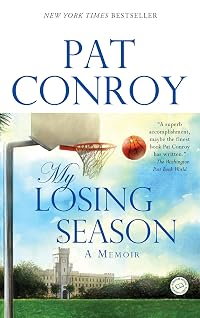
My Losing Season
by Pat Conroy
On This Page
Description
NEW YORK TIMES BESTSELLER • A deeply affecting coming-of-age memoir about family, love, loss, basketball—and life itself—by the beloved author of The Prince of Tides and The Great SantiniDuring one unforgettable season as a Citadel cadet, Pat Conroy becomes part of a basketball team that is ultimately destined to fail. And yet for a military kid who grew up on the move, the Bulldogs provide a sanctuary from the cold, abrasive father who dominates his life—and a crucible for show more becoming his own man.
With all the drama and incandescence of his bestselling fiction, Conroy re-creates his pivotal senior year as captain of the Citadel Bulldogs. He chronicles the highs and lows of that fateful 1966–67 season, his tough disciplinarian coach, the joys of winning, and the hard-won lessons of losing. Most of all, he recounts how a group of boys came together as a team, playing a sport that would become a metaphor for a man whose spirit could never be defeated.
Praise for My Losing Season
“A superb accomplishment, maybe the finest book Pat Conroy has written.”—The Washington Post Book World
“A wonderfully rich memoir that you don’t have to be a sports fan to love.”—Houston Chronicle
“A memoir with all the Conroy trademarks . . . Here’s ample proof that losers always tell the best stories.”—Newsweek
“In My Losing Season, Conroy opens his arms wide to embrace his difficult past and almost everyone in it.”—New York Daily News
“Haunting, bittersweet and as compelling as his bestselling fiction.”—Boston Herald. show less
Tags
Recommendations


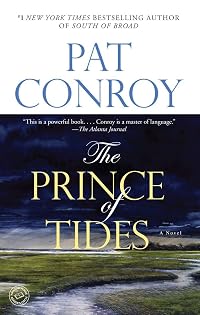








Member Reviews
There are few books that affect me when they are over. Ones that make me sad and depressed because I will no longer be with the characters. Ones that can break my heart so much that when I turn the last page, I end up crying or even sobbing because I have grown to love the characters and/or I wish the book wasn’t done.
This is one of those books. My Losing Season is about Pat’s last year as point guard and captain of The 1966-67 Citadel Bulldogs and about his childhood with a strict and abusive father which defined him as a man.
When I say “Pat Conroy” in my head or out loud, I hear the voice of Jay O. Sanders who read the book. Jay has a slightly southern accent that fits perfectly with the book. While listening, I wondered how show more many times Jay read the book to know when to put feeling and passion into the dialog because he does a fantastic job.
Now granted, some people don’t like sports or some people can take it or leave it. I work in sports and I love sports. I’m not obsessed, but I enjoy a good game of basketball where the players play their hearts out and leave all of it on the court. During the Bulldogs’ losing season, you felt the passion and love of the game; you felt just how hard they fought. I found myself cheering for them even though the games were played back in 1966 and 1967. I cried after Pat had the best game of his life and his Dad still called him a loser and shoved him up against a wall.
I cried and laughed while driving to and from work. I sat in my car in the parking garage before work as I finished listening to the book, surprised by the afterward by the author himself (I should have read the cover closer).
His short speech left me sobbing in the car, tears streaming down my face as I walked into work and got on the elevator.
I’m glad I decided to take a chance on this book. I’m glad I listened to it during March Madness as the Big 12 Men’s Basketball Championship roared into town and I will listen to it every March Madness as Pat reminds me each time that you have to believe in yourself. Not everyone will be affected by Pat’s story as I was, but that’s okay. I’m just glad I got to experience the 1966-67 Citadel basketball team’s losing season and the young man of Pat Conroy. show less
This is one of those books. My Losing Season is about Pat’s last year as point guard and captain of The 1966-67 Citadel Bulldogs and about his childhood with a strict and abusive father which defined him as a man.
When I say “Pat Conroy” in my head or out loud, I hear the voice of Jay O. Sanders who read the book. Jay has a slightly southern accent that fits perfectly with the book. While listening, I wondered how show more many times Jay read the book to know when to put feeling and passion into the dialog because he does a fantastic job.
Now granted, some people don’t like sports or some people can take it or leave it. I work in sports and I love sports. I’m not obsessed, but I enjoy a good game of basketball where the players play their hearts out and leave all of it on the court. During the Bulldogs’ losing season, you felt the passion and love of the game; you felt just how hard they fought. I found myself cheering for them even though the games were played back in 1966 and 1967. I cried after Pat had the best game of his life and his Dad still called him a loser and shoved him up against a wall.
I cried and laughed while driving to and from work. I sat in my car in the parking garage before work as I finished listening to the book, surprised by the afterward by the author himself (I should have read the cover closer).
His short speech left me sobbing in the car, tears streaming down my face as I walked into work and got on the elevator.
I’m glad I decided to take a chance on this book. I’m glad I listened to it during March Madness as the Big 12 Men’s Basketball Championship roared into town and I will listen to it every March Madness as Pat reminds me each time that you have to believe in yourself. Not everyone will be affected by Pat’s story as I was, but that’s okay. I’m just glad I got to experience the 1966-67 Citadel basketball team’s losing season and the young man of Pat Conroy. show less
A memoir of the author's senior year at The Citadel, when he played point guard for the basketball team. A lot will be familiar to Conroy fans, including the occasionally over-wrought prose, but his main theme of learning from setbacks and defeat is worthwhile.
This was a book I put off reading for years. I knew it was about basketball, and I don’t know much about that sport and wasn’t eager to read my favorite novelist writing about it. In addition, since Pat Conroy’s death in 2016, I’ve been putting off reading the last book by him that I’d not yet read (except for Mr. Boo which seems really hard for me to acquire). I didn’t want to never again read something new by this author.
I started reading this book and found it hard going at first. Reading about game after game of basketball was a challenge, but in between the game talk (and I did learn about basketball while reading this memoir), I recognized that luminous prose of Conroy’s. I found it hard to revisit the physical and show more psychological pain Conroy’s father inflicted upon him, but later came to understand (once again), that Conroy’s relationship with his dad mellowed through the years. I found it difficult to read about Coach Mel Thompson who pushed his basketball team hard with never any mercy.
It was at the end of the book, I began to fall apart. It had all the feels as Conroy met with his former teammates and coach after many years. Conroy talked about what his school, The Citadel, his coach, his teammates and his experience of being on a “losing team” meant to him. The writing was beautiful, and the way Conroy expressed himself was deeply moving. I did cry at the end. show less
I started reading this book and found it hard going at first. Reading about game after game of basketball was a challenge, but in between the game talk (and I did learn about basketball while reading this memoir), I recognized that luminous prose of Conroy’s. I found it hard to revisit the physical and show more psychological pain Conroy’s father inflicted upon him, but later came to understand (once again), that Conroy’s relationship with his dad mellowed through the years. I found it difficult to read about Coach Mel Thompson who pushed his basketball team hard with never any mercy.
It was at the end of the book, I began to fall apart. It had all the feels as Conroy met with his former teammates and coach after many years. Conroy talked about what his school, The Citadel, his coach, his teammates and his experience of being on a “losing team” meant to him. The writing was beautiful, and the way Conroy expressed himself was deeply moving. I did cry at the end. show less
Somewhat to my surprise, this is one of my favorite Pat Conroy books, and it's a memoir. Perhaps it's the fact that it's so personal (though I think all his novels are personal on some level) that makes it so immediate. The prose is pure Conroy and his love of the game of basketball practically leaps off the page. Though I've watched basketball my entire life, Conroy gave me new insight and appreciation for the sometimes lowly point guard position. The heartbreak of Conroy's father never watching his son play his beloved game underlies every chapter, but this book rewards the reader with life lessons and appreciations for all that sport can do for a lost boy.
I just finished another book yesterday. It's one I've had for years and put off reading despite its author, Pat Conroy, being one of my favorites. My Losing Season was every wonderful thing I expected it to be, but I know why I put off reading it for so long.
Conroy is a master of language. His words dance, spin and stab like few other authors. I've had to read passages of his books aloud because they're so beautiful. The family knows by now, when I'm reading Conroy, to expect, "Oh, listen to this." His descriptions are poetry, yet I've never felt like he crosses the line into just diddling with beautiful words just because he can. He's also the author who has best given this overly estrogen saturated female a comprehensible glimpse into show more the mysteries of the male psyche. I enjoyed The Prince of Tides as a movie as long as I didn't think too hard or long about the book. The movie became a story for women. Only glimpses of the terror and agony that made this very much a man's tale showed through. The Lords of Discipline, The Great Santini, The Water is Wide, Beach Music and The Boo reek of delectably prime testosterone, and My Losing Season places that aroma right in the heart of a locker room.
What draws me to Conroy though is not just the sheer masculinity of his novels. It's the vulnerability, the secret weapon of the most dangerous men. I've fallen a little bit in love with Ben Meecham, Will McLean, Tom Wingo and Jack McCall. It would be hard not to with those manly, outdoorsy men who can cook, admit to both intentionally and inadvertently seriously hurting the women in their lives, cry and love being daddies. He's also damn good at letting people see what it's like being a white Southerner caught between what's hateful, ridiculous and glorious about our part of this American subculture.
Despite my almost but not quite silly state of Conroy fandom, I still put off reading My Losing Season until I was too sick to get up and find another book. This literal autobiography began with a confession of mediocrity and went on to tell how Conroy ended being a basketball player and how he became a writer. (I got chills at the scene where he was asked to autograph one of his books at the desk where William Faulkner had written Absalom, Absalom!) I loved reading about his growing confidence as a young man, a basketball player and writer. The simplicity he used to show the pains and joys in his life as a military brat, his reconciliation with his father and The Citadel, the reunion of his team and seeing his old coach again made me want to strip every bit of sentimentality from my writing and make it as real as I can.
I loved this book just as I expected to, but I had to be ready to be honest with myself before I could read it. That was why I delayed, and ultimately why Pat Conroy is one of my favorite writers. I cannot avoid being grimly honest about my life and my talents when I read his books, but I always come away with the knowledge that brilliance burned through and past the mediocrities in his characters and the hope that it can do the same with me. show less
Conroy is a master of language. His words dance, spin and stab like few other authors. I've had to read passages of his books aloud because they're so beautiful. The family knows by now, when I'm reading Conroy, to expect, "Oh, listen to this." His descriptions are poetry, yet I've never felt like he crosses the line into just diddling with beautiful words just because he can. He's also the author who has best given this overly estrogen saturated female a comprehensible glimpse into show more the mysteries of the male psyche. I enjoyed The Prince of Tides as a movie as long as I didn't think too hard or long about the book. The movie became a story for women. Only glimpses of the terror and agony that made this very much a man's tale showed through. The Lords of Discipline, The Great Santini, The Water is Wide, Beach Music and The Boo reek of delectably prime testosterone, and My Losing Season places that aroma right in the heart of a locker room.
What draws me to Conroy though is not just the sheer masculinity of his novels. It's the vulnerability, the secret weapon of the most dangerous men. I've fallen a little bit in love with Ben Meecham, Will McLean, Tom Wingo and Jack McCall. It would be hard not to with those manly, outdoorsy men who can cook, admit to both intentionally and inadvertently seriously hurting the women in their lives, cry and love being daddies. He's also damn good at letting people see what it's like being a white Southerner caught between what's hateful, ridiculous and glorious about our part of this American subculture.
Despite my almost but not quite silly state of Conroy fandom, I still put off reading My Losing Season until I was too sick to get up and find another book. This literal autobiography began with a confession of mediocrity and went on to tell how Conroy ended being a basketball player and how he became a writer. (I got chills at the scene where he was asked to autograph one of his books at the desk where William Faulkner had written Absalom, Absalom!) I loved reading about his growing confidence as a young man, a basketball player and writer. The simplicity he used to show the pains and joys in his life as a military brat, his reconciliation with his father and The Citadel, the reunion of his team and seeing his old coach again made me want to strip every bit of sentimentality from my writing and make it as real as I can.
I loved this book just as I expected to, but I had to be ready to be honest with myself before I could read it. That was why I delayed, and ultimately why Pat Conroy is one of my favorite writers. I cannot avoid being grimly honest about my life and my talents when I read his books, but I always come away with the knowledge that brilliance burned through and past the mediocrities in his characters and the hope that it can do the same with me. show less
The one thing that every human being has in common is that we all have failed at something at one point in our lives. Pat Conroy is no different. My Losing Season is a compelling memoir about Pat Conroy's senior year as an undersized point guard playing NCAA Division Basketball at the Citadel, a military college in the South. Throughout the 402 pages, Conroy's narrative is incredibly compelling, as he reflects on the lessons he learned being as he and his team suffered loss after loss and his hopes of a glorious senior year went up in flames. Conroy's writing style is reflective and heart-wrenching, and I was sad to find myself turning the last page, only because I had grown fond of Conroy's memories and the way he artfully communicated show more them to the reader. My Losing Season is a great book not only for basketball fans, but also for anyone who enjoys inspiring stories of defeat, perseverance, and overcoming adversity.
Warning: If this book were a movie, it would be rated R because of the language. show less
Warning: If this book were a movie, it would be rated R because of the language. show less
MY LOSING SEASON. Pat Conroy. 2002. I never thought I’d read a basketball memoir, but when I saw this for a dollar at the Habitat for Humanity Store I couldn’t resist. I have never regretted reading anything by Pat Conroy. I was lost reading the descriptions of basketball games, but in addition to being an account of the Citadel basketball season 1966-1067; this was also an account of Conroy’s teen and college years which is always interesting. The best part of the book is Conroy’s recollections of what happened to the individual players and coaches after they finished the season and what happened to Conroy. The most moving part of the book was at the end when Conroy talks about his classmates who went to Vietnam while he was show more protesting the war: “Now I understand I should have protested the war after my return from Vietnam, after I had done my duty. I have come to a conclusion about my country that I knew in my bones, but lacked the courage to act on: America is a good enough country to die for even when she is wrong.” show less
Members
- Recently Added By
Lists

BEST SPORT WRITING
9 works; 1 member
Author Information

48+ Works 23,886 Members
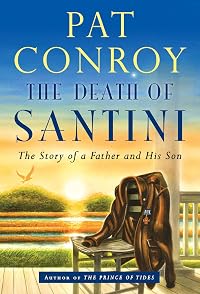
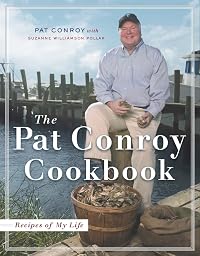
Pat Conroy is the pen name of Donald Patrick Conroy, who was born in Atlanta, Georgia on October 26, 1945. He received a B.A. in English from The Citadel in 1967. After teaching high school at his alma mater, he accepted a job teaching disadvantaged black children in a two-room schoolhouse on Daufuskie Island off the South Carolina coast. Many of show more the children were illiterate, unable even to write their own names. He taught them using oral history and geography lessons. His experience on Daufuskie Island formed the basis for his first successful memoir, The Water Is Wide, which won the Anisfield-Wolf Award from the Cleveland Foundation and was made into the movie Conrack starring Jon Voight in 1976. His novels include Beach Music and South of Broad. Several of his novels were adapted into movies including The Great Santini, The Lords of Discipline, and The Prince of Tides. He also wrote several works of non-fiction including The Pat Conroy Cookbook: Recipes and Stories of My Life, My Reading Life, and The Death of Santini: The Story of a Father and His Son. He died of pancreatic cancer on March 4, 2016 at the age of 70. (Bowker Author Biography) show less
Awards and Honors
Common Knowledge
- Canonical title
- My Losing Season
- People/Characters
- Pat Conroy; Donald Conroy; Mel Thompson
- Important places
- The Citadel, Charleston, South Carolina, USA; Charleston, South Carolina, USA; South Carolina, USA
- Dedication
- This book is dedicated to my teammates on the 1966-67 Citadel basketball team. It was an honor to take to the court with you guys. Dan Mohr Jim Halpin John DeBrosse Doug Bridges Dave Bornhorst Robert Cauthen Bill Zycinsky A... (show all)lan Kroboth Tee Hooper Gregory Connor Brian Kennedy And their lovely wives and children who made me welcome in their homes: Maria, Alexis and Michael Bornhorst; Sandra, Rob, Macon, and Buffy Cauthen; Eileen, James, and Michael Halpin; Cynthia, Micah, and Erin Kennedy; Tina, Doug, and Guy Bridges; Barbara, Gregory, Jeffrey and Jeremy Connor; Cindy, Matthew, and Elizabeth Mohr; Pam, J.J., Scott, and Katie DeBrosse; Sherry, Travis, and Amy Hooper; Patty and George Kroboth. And to my wife, Cassandra King, the light of my life.
- Quotations
- I exulted in the pure physicality of that ceaseless, ever-moving sport, and when I found myself driving the lane beneath the hot lights and the pure electric boisterousness of crowds, humming and screaming as a backdrop to my... (show all) passion, my chosen game, this love of my life, I was the happiest boy who ever lived.
The great teachers fill you up with hope and shower you with a thousand reasons to embrace all aspects of life.
I picked Moates up full court, my last night at my beloved Camp Wahoo, and I stuck to him like a wood tick the entire night.
When Sutherland saw I was guarding him, he looked at me like I was an hors d'oeuvre.
I was strangling on my own laughter as strange noises that sounded like a possum being asphyxiated came from my throat.
I give myself up to the anonymous reporter from the AP who wrote about that game… I do not remember one moment of this game just described…
Again, the sophomores had to contain their snickering. Mel did not allow horseplay or any member of his team to look like he might be having a good time, especially after a defeat. They're buried, covert laughter made a forlo... (show all)rn sound, like the call of barn owls.
I soaked up the glimmer of the disorderly piles of wrapping paper, glittering bulbs, and strung lights, the streaming tinsel weaving silver fingers through the ceiling-high fir tree, and the precious noise of joyous children,... (show all) happy among their gaudy pile of gifts. It seemed so healthy and ordinary, so unlike us, addicts of chaos and angst.
It was close to freezing as I watched the moon fingerpaint the Beaufort River with a long ribbon of silver.
Why do they not teach you that time is a finger snap and an eye blink, and that you should not allow a moment to pass without taking joyous, ecstatic note of it, not wasting a single moment of its swift, breakneck circuit?
“…You know what I've always really hated?” (Mel Thompson)
…”Guards. I've always hated guards.” (Mel Thompson)
Classifications
- Genres
- Sports and Leisure, Biography & Memoir, Nonfiction
- DDC/MDS
- 796.32363092 — Arts & recreation Recreation, sports, and performing arts Athletic and outdoor sports and games Ball sports Ball and net sports Basketball By type or level Collegiate
- LCC
- PS3553 .O5198 .Z465 — Language and Literature American literature American literature Individual authors 1961-
- BISAC
Statistics
- Members
- 1,341
- Popularity
- 17,989
- Reviews
- 24
- Rating
- (3.76)
- Languages
- English, French, Italian, Russian
- Media
- Paper, Audiobook, Ebook
- ISBNs
- 21
- ASINs
- 12