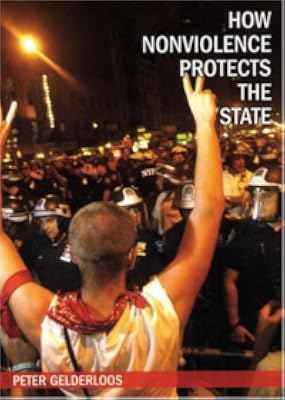
How Nonviolence Protects the State
by Peter Gelderloos
On This Page
Description
Since the civil rights era, the doctrine of nonviolence has enjoyed near-universal acceptance by the US Left. Today protest is often shaped by cooperation with state authorities-even organizers of rallies against police brutality apply for police permits, and anti-imperialists usually stop short of supporting self-defense and armed resistance. How Nonviolence Protects the State challenges the belief that nonviolence is the only way to fight for a better world. In a call bound to stir show more controversy and lively debate, Peter Gelderloos invites activists to consider diverse tactics, passionately arguing that exclusive nonviolence often acts to reinforce the same structures of oppression that activists seek to overthrow. Contemporary movements for social change face plenty of difficult questions, but sometimes matters of strategy and tactics receive low priority. Many North American activists fail to scrutinize the role of nonviolence, never posing essential questions: Is nonviolence effective at ending systems of oppression? Does nonviolence intersect with white privilege and the dominance of North over South? How does pacifism reinforce the same power dynamic as patriarchy? Ultimately, does nonviolence protect the state? Peter Gelderloos is a radical community organizer. He is the author of Consensus: A New Handbook for Grassroots Political, Social, and Environmental Groups and a contributor to Letters From Young Activists. He is the co-facilitator of a workshop on the prison system, and is also involved in independent media, copwatching, anti-oppression work, and anarchist organizing. show lessTags
Recommendations











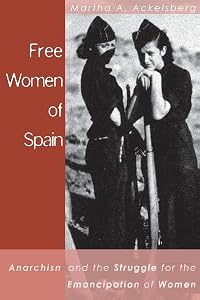


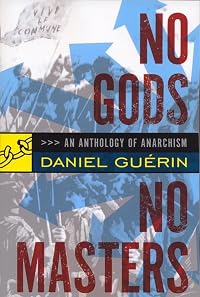
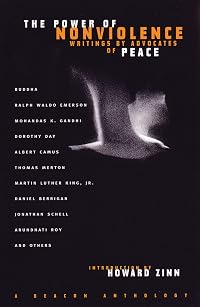
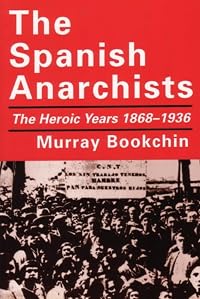
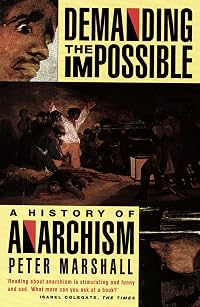





Member Recommendations


by anonymous user
Member Reviews
Though it won’t necessarily cause you to pick up a Molotov cocktail or an AK-47, this little book will cause you to at least question some of your assumptions about past successes from nonviolence movements. From Gandhi to MLK to the anti-Vietnam movement, there have always been more militant groups working at the same time. These more militant groups through either actual violent acts or through the threat of violence may have done as much to change policy as the nonviolent groups that we feel more comfortable focusing on. Plus as an added bonus, we guarantee an FBI file to be created with every purchase!
In his book How Nonviolence Protects the State, anarchist Peter Gelderloos criticizes nonviolence as being ineffective, racist, statist, patriarchal, tactically and strategical inferior to militant activism, and deluded. Gelderloos claims that traditional histories whitewash the impact of nonviolence, ignoring the involvement of militants in such movements as the Indian independence movement and the Civil Rights movement and falsely showing Gandhi and King as being their respective movements' most successful activists. He further argues that nonviolence is generally advocated by privileged white people who expect "oppressed people, many of whom are people of color, to suffer patiently under an inconceivably greater violence, until such show more time as the Great White Father is swayed by the movement's demands or the pacifists achieve that legendary 'critical mass.'" show less
This book helped confirm my nagging feeling that nonviolent activism doesn't really help further any type of real revolutionary agenda. The author does a great job explaining why this is so and what alternatives exist to counter ineffective pacifism.
its a decent collection of argumentative lines, but is so poorly composed
gelderloos has this unfortunate style which is simultaneously too polemical to convince any opponents and too pretentious to inspire any allies
gelderloos has this unfortunate style which is simultaneously too polemical to convince any opponents and too pretentious to inspire any allies
"He who writes this book in which hate is not hidden was formerly a pacifist...to him no disilusionment was ever greater or more sudden. it struck him with such violence that he thought himself no longer the same man. And yet, as it seems to him, that in this state of hatred his conciense bceomes diminished, he dedicates these pages, with emotion, to the man he used to be" - Emile Verhaeran, A Belgian writing after witnessing the German invasion and ransacking of his country in August of 1918.
"pacifism simply does not resonate in the reality of peoples everyday lives, unless those people live in some extravagent bubble of tranquility, from which all forms of civilizations pandemic reactive violence have been pushed out by the systematic show more and less visible violence of police and military forces." - Peter Gelderloos. show less
"pacifism simply does not resonate in the reality of peoples everyday lives, unless those people live in some extravagent bubble of tranquility, from which all forms of civilizations pandemic reactive violence have been pushed out by the systematic show more and less visible violence of police and military forces." - Peter Gelderloos. show less
Proposition de Nicolas Casaux.
Nov 5, 2023French
Ratings
Members
- Recently Added By
Lists

South End Press
35 works; 1 member
Author Information

73 Works 790 Members
Common Knowledge
- Original publication date
- 2007
- People/Characters
- Mumia Abu-Jamal; Animal Liberation Front; Paul Avrich; Kuwasi Balagoon; Fulgencio Batista; Yehuda Bauer (show all 47); Philip Berrigan; Osama bin Laden; Michael Bloomberg; Joseph Bowen; George W. Bush; Fidel Castro; Ward Churchill; Crazy Horse; George Armstrong Custer; Leon F. Czolgosz; Dorothy Day; David Dellinger; Howard Ehrlich; Carol Flinders; Erich Fromm; Mohandas Gandhi; David Gilbert; Emma Goldman; Fred Hampton; Sid Hatfield; Adolf Hitler; Ho Chi Minh; J. Edgar Hoover; Saddam Hussein; George Jackson; John F. Kennedy; Martin Luther King, Jr.; Dennis Kucinich; Malcolm X; Nelson Mandela; Mao Zedong; Todd Allin Morman; Darren Parker; Sylvia Rivera; Óscar Romero; Theodore Roosevelt; Ferdinando Nicola Sacco (as Nicola Sacco); John Trudell; Bartolomeo Vanzetti; Kristian Williams; Robert Williams
- Important events
- American Indian Movement; African-American Civil Rights Movement
- Epigraph
- And they say that the beauty's in the streets
but when I look around it seems more like defeat — Defiance Ohio - First words
- In August 2004, at the North American Anarchist Convergence in Athens, Ohio, I participated in a panel discussing the topic of nonviolence versus violence.
- Last words
- (Click to show. Warning: May contain spoilers.)To find one of the right paths, we must observe, assess, criticize, communicate, and, above all, learn by doing.
- Blurbers
- Frankel-Streit, Sue; Jensen, Derrick; Hansen, Ann; Churchill, Ward; Lydon, Jason
Classifications
- Genres
- Nonfiction, General Nonfiction, Philosophy, Politics and Government
- DDC/MDS
- 303.6 — Society, government, & culture Social sciences, sociology & anthropology Social processes Conflict and conflict resolution ; Violence
- LCC
- HM1281 .G45 — Social sciences Sociology (General) Sociology Social psychology Social influence. Social pressure
- BISAC
Statistics
- Members
- 294
- Popularity
- 109,392
- Reviews
- 6
- Rating
- (3.93)
- Languages
- English, French, Portuguese, Croatian
- Media
- Paper
- ISBNs
- 6
- ASINs
- 2