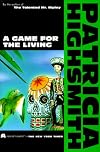
A Game for the Living
by Patricia Highsmith
On This Page
Description
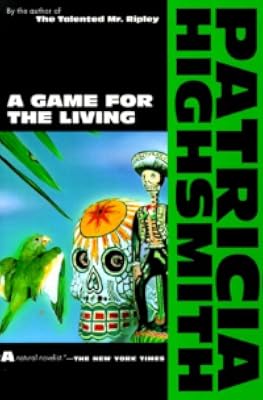
Ramo?n, a devout Catholic, fixes furniture in Mexico City, not far from where he was born into poverty. Theodore, a rich German expatriate and painter, believes in nothing at all. You'd think the two had nothing in common. Except, of course, that both had slept with Lelia. Two form an unlikely friendship, until Lelia is found brutally murdered. Both are suspects and each suspects the other. Twisting in a limbo of tension and doubt, Ramo?n and Theodore seize on a third man, a thief seen at show more Lelia's apartment, and their hunt takes them from Mexico City to sun-drenched Acapulco, and to a small colonial mountain town. A thrilling, psychologically complex novel, rich with setting, A Game for the Living is Highsmith at her best. show lessTags
Recommendations
















Member Recommendations

Member Reviews
"Theodore thought he was as happy as anyone logically could be in an age when atomic bombs and annihilation hung over everybody's head, though the world 'logically' troubled him in this context. Could one be logically happy?"
I don't know, but I do know that this A Game for the Living certainly did not contribute to my happiness.
I am still confused as to what the story of this book was: was it a murder mystery, or an attempt to create an atmosphere of haunting guilt and haunting surveillance, while two of the main characters, Teo and Ramon, are trying to hunt down the killer of their ex-lover Lelia, while trying to decide whether the other is involved in her death.
This book just didn't work for me. There are rudimentary philosophical show more musings but Highsmith's atheist character, Theodore ("Teo"), was not well placed to discuss Ramon's Catholicism, and Teo's own attitude towards life is so detached that it is hard to empathise with him. There are, and I am probably biased from having read Sartre's Nausea only recently, some similarities between Highsmith's Teo and Sartre's Antoine, who both are outsiders and like to observe the people around them, never feeling part of the lives around them, and never really wanting to be.
As for Teo's Catholic counterpart Ramon, he was so guilt-ridden that he confesses to a murder he didn't commit, but instead of giving us an insight into why he feels this way, Highsmith doesn't go into much detail of Ramon's belief or frame of mind. There was a point in the story when I thought Highsmith might attempt a novel like Greene's The Power and the Glory (she was a fan of Greene's), exploring the different depths of the human condition, but this fizzled out into nothing as the murder mystery part of the plot took over.
It was all very unsatisfying.
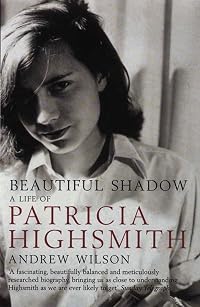
At least, I am comforted by the fact that Highsmith knew this herself. When I took to Andrew Wilson's excellent biography of Highsmith to read up a little bit about the background to the book, I found this:
Later, Highsmith came to regard A Game for the Living, published in November 1958, as one of her worst novels. ‘The murderer is off-scene, mostly,’ she said, ‘so the book became a “mystery who-dunnit,” in a way – definitely not my forte.’46 She concluded that the book, which she said was ‘the only really dull book I have written’,47 lacked the elements which she thought were vital in her novels – ‘surprise, speed of action, the stretching of the reader’s credulity, and above all that intimacy with the murderer himself . . . The result was mediocrity.’
From Andrew Wilson's Beautiful Shadow: A Life of Patricia Highsmith (Bloomsbury Lives of Women)
In summary, this was probably the weakest Highsmith novel I have ever read (followed by Strangers on a Train) but I am glad I've read it, even if it is just to remind me how high a bar she set for her books and what high expectations I have come to approach her books with. show less
I don't know, but I do know that this A Game for the Living certainly did not contribute to my happiness.
I am still confused as to what the story of this book was: was it a murder mystery, or an attempt to create an atmosphere of haunting guilt and haunting surveillance, while two of the main characters, Teo and Ramon, are trying to hunt down the killer of their ex-lover Lelia, while trying to decide whether the other is involved in her death.
This book just didn't work for me. There are rudimentary philosophical show more musings but Highsmith's atheist character, Theodore ("Teo"), was not well placed to discuss Ramon's Catholicism, and Teo's own attitude towards life is so detached that it is hard to empathise with him. There are, and I am probably biased from having read Sartre's Nausea only recently, some similarities between Highsmith's Teo and Sartre's Antoine, who both are outsiders and like to observe the people around them, never feeling part of the lives around them, and never really wanting to be.
As for Teo's Catholic counterpart Ramon, he was so guilt-ridden that he confesses to a murder he didn't commit, but instead of giving us an insight into why he feels this way, Highsmith doesn't go into much detail of Ramon's belief or frame of mind. There was a point in the story when I thought Highsmith might attempt a novel like Greene's The Power and the Glory (she was a fan of Greene's), exploring the different depths of the human condition, but this fizzled out into nothing as the murder mystery part of the plot took over.
It was all very unsatisfying.
At least, I am comforted by the fact that Highsmith knew this herself. When I took to Andrew Wilson's excellent biography of Highsmith to read up a little bit about the background to the book, I found this:
Later, Highsmith came to regard A Game for the Living, published in November 1958, as one of her worst novels. ‘The murderer is off-scene, mostly,’ she said, ‘so the book became a “mystery who-dunnit,” in a way – definitely not my forte.’46 She concluded that the book, which she said was ‘the only really dull book I have written’,47 lacked the elements which she thought were vital in her novels – ‘surprise, speed of action, the stretching of the reader’s credulity, and above all that intimacy with the murderer himself . . . The result was mediocrity.’
From Andrew Wilson's Beautiful Shadow: A Life of Patricia Highsmith (Bloomsbury Lives of Women)
In summary, this was probably the weakest Highsmith novel I have ever read (followed by Strangers on a Train) but I am glad I've read it, even if it is just to remind me how high a bar she set for her books and what high expectations I have come to approach her books with. show less
Theodore returns from a month away to find his mistress has been murdered and raped. Since he found her body, he is a suspect, as is her other lover, Ramón. Eventually the two pair up to find out who did it and they travel to Acapulco for the big show down! It's an entertaining read, though sometimes I got confused about who was talking or confessing or just fiddling about. Definitely happy to have read another Highsmith book!
Chapter 20 - the mummies of Guanajuato! Like the short story by Ray Bradbury - “The Next in Line”!
A game for the living, but...
“It’s like a game in which nobody wins, isn’t it, Teo?”
Chapter 20 - the mummies of Guanajuato! Like the short story by Ray Bradbury - “The Next in Line”!
A game for the living, but...
“It’s like a game in which nobody wins, isn’t it, Teo?”
Freundschaft, Eifersucht und Trauer sind die Themen dieses frühen Highsmith-Romans, in dem zwei Männer dieselbe Frau lieben und sich gegenseitig des Mordes verdächtigen, als Lelia entstellt und blutüberströmt in ihrem Haus in Mexiko liegt. Keiner der ungleichen Freunde will’s gewesen sein, und keiner will, daß der andere es war: Theodore, reicher deutscher Künstler, zurückhaltend, gelassen; Ramón, armer mexikanischer Tischler, temperamentvoll, aufbrausend.
I read more than half of the book and then skimmed the rest. It just wasn't appealing to me. Maybe at a different time, I would like it better.
Theodore returns from Oaxaca, where he has been painting, to Mexico City to find his friend and sometime lover murdered and mutilated.
Ratings
Members
- Recently Added By
Author Information

302+ Works 33,094 Members
Patricia Highsmith wrote twenty-one novels including "Strangers on a Train" & the "Ripley" series. She died in 1995 in Switzerland, where she resided much of her life. (Publisher Provided) Patricia Highsmith (January 19, 1921 -- February 4, 1995) was an American novelist and short story writer, most widely known for her psychological thrillers, show more which led to more than two dozen film adaptations. She was born in Fort Worth, Texas. Highsmith grew up with her maternal grandmother in Astoria, Queens, and attended Barnard College. Her first novel, Strangers on a Train (1950), was adapted for stage and screen numerous times, notably by Alfred Hitchcock in 1951. In addition to her acclaimed series about murderer Tom Ripley, which was made into a film in 1955, she wrote many short stories, often macabre, satirical or tinged with black humor. Highsmith liked to examine the ways in which people can get to the point where they are capable of murder, as well as who they become after they have committed a crime. In carefully constructed stories and novels, she integrated this scrutiny of the human psyche into complex plots that often took unexpected twists. In Strangers on a Train, architect Guy Haines meets Charles Bruno on a train. Bruno conceives a plan to have Haines kill Bruno's father, while Bruno will kill Haines's wife. The effect that this plan has on Haines is the focus of the story. Highsmith's awards include: O. Henry Award for best publication of first story, for "The Heroine" in Harper's Bazaar (1946), Grand Prix de Littérature Policière, for The Talented Mr. Ripley (1957), and the Dagger Award -- Category Best Foreign Novel, for The Two Faces of January from the Crime Writers' Association of Great Britain (1964). Highsmith died of aplastic anemia and cancer in Locarno, Switzerland, at age 74. Her last novel, Small G: A Summer Idyll, was published one month after her death in 1995. (Bowker Author Biography) show less
Some Editions
Series
Belongs to Publisher Series
Common Knowledge
- Canonical title*
- Ein Spiel für die Lebenden
- Original title
- A Game For the Living
- Original publication date
- 1958
- Important places
- Mexico City, Mexico
- Epigraph
- Faith has taken all chances into account...
if you are willing to understand that you must
love, then is your love eternally secure.
- S. KIERKEGAARD - Dedication
- To my friend and teacher, Ethel Sturtevant, Assitant Professor of English at Barnard College from 1911 to 1948, I affectionately dedicate this book, with a hope that it may add diversion to a very long and happy retirement.
And my gratitude to Dorothy Hargreaves and Mary McCurdy for their empathy and for their house. - First words*
- Theodore sah, dass er recht gehabt hatte mit seiner Annahme: die Hidalgos gaben eine Party.
- Last words*
- (Click to show. Warning: May contain spoilers.)Keiner rührte sich, und Isabel sass da wie eine lächelnde Statue, ohne Leben und ohne Atemzug.
- Blurbers
- Vidal, Gore
- Original language*
- Amerikanisch
*Some information comes from Common Knowledge in other languages. Click "Edit" for more information.
Classifications
Statistics
- Members
- 269
- Popularity
- 120,823
- Reviews
- 5
- Rating
- (3.23)
- Languages
- 8 — Dutch, English, Finnish, French, German, Italian, Portuguese, Spanish
- Media
- Paper, Ebook
- ISBNs
- 29
- ASINs
- 8