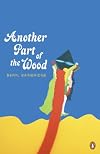
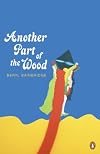
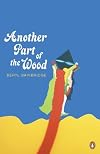
Another Part of the Wood
by Beryl Bainbridge
On This Page
Description
Social dysfunction meets dangerous perversion in this black comedy about two misfit families camping in the Welsh woods. George McFarley, a six-foot-eight hulk of a man obsessed with the Holocaust, and his assistant, Balfour, an unbearably shy stutterer, are the unconventional hosts of a weekend camping retreat in Wales. Their guests include Joseph, a divorced college administrator from London; Dotty, his pretty but resentful girlfriend; Roland, his young son; and Kidney, his overweight and show more emotionally disturbed apprentice. Also staying on for the weekend are dysfunctional couple, Lionel and May-and a Welsh groundskeeper with a creepy fondness for cattle . . . and little girls. Dotty has brought along the board game Monopoly, which she cannot live without, and which will serve as a microcosm for the roles and dramas played out by this motley crew. While the adults are caught up in petty bickering, power struggles, love triangles, and other bourgeois scandals, tragedy will befall one of the children and turn the bucolic setting into a twisted nightmare. With award-winning author Beryl Bainbridge's signature dark humor and sophisticated irony, Another Part of the Wood takes to task 1960s British cultural mores. As the plot twists and characters remove their masks, Bainbridge reveals the absurdity and danger of what is commonly considered "normal." show lessTags
Recommendations








































Member Reviews
As Lynn Barber notes in the introduction, the camp used in this novel is based on one Bainbridge visited as a child, built by a philanthropist as a place for slum families to get fresh air. It is meant to be idyllic but I can't help thinking that the families it was intended for must have regarded the bunkhouses with no electricity, scratchy blankets, straw-filled mattresses, and chemical toilet, with as much horror as Bainbridge's characters. The story, with spare narrative is set in the 1960s, and is more about emotional forces than action or plot. The author's style is not to spell everything out but to leave much to the reader's intelligence. The intensely unlikeable characters grouse and find fault with each other until the show more catastrophic conclusion is inevitable. show less
Bainbridge's second novel is short and fairly fast-paced. Most of the characters are fish-out-of-water urbanites who are "slumming it" in a cabin in a forest in Wales. There are genuine Who's-Afraid-of-Virginia-Woolfesque moments of tension, with a nerve-racking build-up that calls to mind Ravel's orchestral piece Boléro.
Beryl Bainbridge writes in an inaccessible style, with a lot of dialogue and very little description. That is why it is difficult to get a grip on the story, which only develops through the interactions of the characters. Only late into the story, as the reader becomes more acquainted with the main characters, we may get glimpses of what Bainbridge may have intended to share.
In the autumn of 2011, Penguin Books reissued Another part of the wood in their Penguin Decades series, as a novel representative of the 1960s.
The title obviously refers to Shakespeare, where magic usually happens in the wood. Throughout the 60s and 70s novelists set stories to take place in (artists') communities in forests, as an ideal setting away from ordinary show more life, a place where a transformation might take place. In that sense, the forest retreat is often the time or place where something unusual might happen.
Not so in Bainbridge's Another part of the wood. The families spending their time in this holiday camp, are very ordinary people, who carry their ordinary lives with them. There is no magic, and no happenings. They have taken with them, and play the same games as at home, with the same quibbles and irritations. Playing Monopoly does not bring out the best in them, and in their selfish concentration they lose eye for what is around them. The death, at the end of the story, is the result of this neglect. show less
In the autumn of 2011, Penguin Books reissued Another part of the wood in their Penguin Decades series, as a novel representative of the 1960s.
The title obviously refers to Shakespeare, where magic usually happens in the wood. Throughout the 60s and 70s novelists set stories to take place in (artists') communities in forests, as an ideal setting away from ordinary show more life, a place where a transformation might take place. In that sense, the forest retreat is often the time or place where something unusual might happen.
Not so in Bainbridge's Another part of the wood. The families spending their time in this holiday camp, are very ordinary people, who carry their ordinary lives with them. There is no magic, and no happenings. They have taken with them, and play the same games as at home, with the same quibbles and irritations. Playing Monopoly does not bring out the best in them, and in their selfish concentration they lose eye for what is around them. The death, at the end of the story, is the result of this neglect. show less
K started reading it on 5 July 2010 (noting that the author died last week :-( )K finished it on 14 July 2010 - most of the characters were unlikable, but maybe that was the point...3 stars David.
Ratings
Members
- Recently Added By
Published Reviews
ThingScore 75
The setting is a holiday camp somewhere in Wales. It's a strange location, populated by characters who harbour varying degrees of antipathy towards each other.
added by camlee
Author Information

41+ Works 6,749 Members
Beryl Bainbridge was born on November 21, 1934, in Liverpool, England. She became an actress at a young age and worked in English repertory theatres and on the radio. Her work contains dark, somber subject matter, deftly mixed with humor. Her writing acts as an outlet for her childhood frustrations, and frequently deals with family relations. In show more her novels, she recalls memories of disappointment and of a bad-tempered, brooding father. During her lifetime, she wrote 18 novels including A Weekend with Claude, Another Part of the Wood, The Bottle Factory Outing, The Birthday Boys, According to Queeney, and Young Adolf. She adapted many of her novels, such as An Awfully Big Adventure, Sweet William, and The Dressmaker, for film. She has received numerous awards and honors including the Whitbread Award in 1977 for Injury Time and in 1996 for Every Man for Himself; the James Tait Black Memorial Prize for fiction in 1998 for Master Georgie; a Guardian Fiction Award, and the David Cohen Prize for Literature in 2003. She was made a dame by Queen Elizabeth II in 2000. She died from cancer on July 2, 2010 at the age of 77. (Bowker Author Biography) show less
Some Editions
Series
Belongs to Publisher Series
Penguin Decades (1960s)
Common Knowledge
- Canonical title
- Another Part of the Wood
- Original publication date
- 1968
- Dedication
- For Lilly and Cecil Todes
- First words
- Balfour, unbearably shy, was waiting for them.
- Last words
- (Click to show. Warning: May contain spoilers.)'No,' Balfour said. His head ached. 'He's d-dead.'
Classifications
Statistics
- Members
- 195
- Popularity
- 167,109
- Reviews
- 4
- Rating
- (3.37)
- Languages
- English, Spanish
- Media
- Paper, Audiobook, Ebook
- ISBNs
- 13
- ASINs
- 5