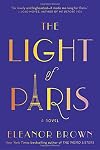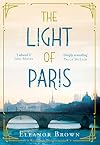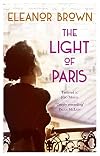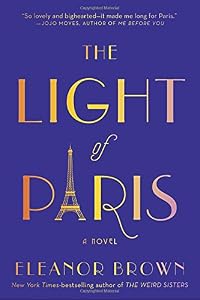
The Light of Paris
by Eleanor Brown 
On This Page
Description
"The miraculous new novel from New York Times-bestselling author Eleanor Brown, whose debut, The Weird Sisters, was a sensation beloved by critics and readers alike. Madeleine is trapped--by her family's expectations, by her controlling husband, and by her own fears--in an unhappy marriage and a life she never wanted. From the outside, it looks like she has everything, but on the inside, she fears she has nothing that matters. In Madeleine's memories, her grandmother Margie is the kind of show more woman she should have been--elegant, reserved, perfect. But when Madeleine finds a diary detailing Margie's bold, romantic trip to Jazz Age Paris, she meets the grandmother she never knew: a dreamer who defied her strict, staid family and spent an exhilarating summer writing in cafes, living on her own, and falling for a charismatic artist. Despite her unhappiness, when Madeleine's marriage is threatened, she panics, escaping to her hometown and staying with her critical, disapproving mother. In that unlikely place, shaken by the revelation of a long-hidden family secret and inspired by her grandmother's bravery, Madeleine creates her own Parisian summer--reconnecting to her love of painting, cultivating a vibrant circle of creative friends, and finding a kindred spirit in a down-to-earth chef who reminds her to feed both her body and her heart. Margie and Madeleine's stories intertwine to explore the joys and risks of living life on our own terms, of defying the rules that hold us back from our dreams, and of becoming the people we are meant to be"-- show lessTags
Recommendations





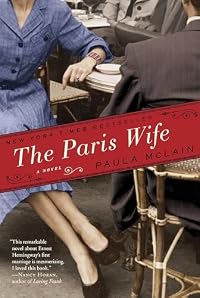
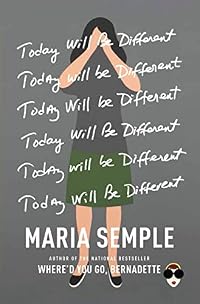
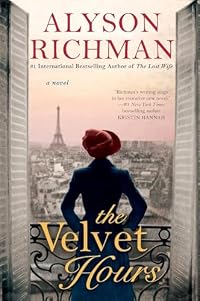
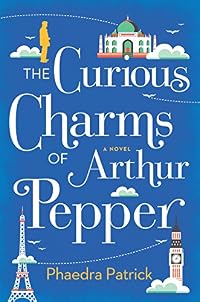












Member Recommendations

Member Reviews
I really enjoyed this book, which I picked up on the recommendation of a work colleague. Many reviews have argued that in 1999 when the main events take place, women could do anything, and yet Madeleine just follows a path which she thinks her parents want her to follow. I'm not so sure that's true. I reckon many people fall into a pattern of life without really thinking about it, and it's only later that they realise they have sacrificed many options and are living a sad and unfulfilling life, Sure, this story is a little too romantic at times, but I found that it was told in such an interesting and engaging was that I was prepared to dismiss the romanticism. I will certainly read Brown's other novel, The Weird Sisters, which seems to show more be regarded as superior work. show less
I didn't dislike this but I didn't love it.
There are a few lines from the book that best summed up the story to me.
"Stories about people who were broken and then had to make themselves whole again"
"The children were nothing but pawns....so it had always been, and so if no one had stopped it, it would always be"
There are two generations of women in this story.
Madeline is an unhappily married woman, in her 30's, in 1999.
Margie is in her twenties in the 1930's,she is at her parents' mercy and wanting more out of life than what she expects she'll get.
Madeline is visiting her mother and she finds Margie's diaries. They tell a very interesting story about Margie living in Paris. It's everything Margie dreamed of and Madeline wonders how show more Margie wound up the grandmother she had actually know instead of the vibrant young woman in the diary.
Sometimes in a story I wonder how the author can write a husband/boyfriend/etc who is a big jerk but his their always super intelligent wife has never realized it until recently. I give the author credit here because Madeline knows what she's gotten herself into. She married Phillip knowing he was a bit of a jerk and she kept her expectations low.
Now, the reason for that is what a lot of the story deals with.
Madeline has really low self esteem because her mom always tried to change her. She wasn't thin enough, pretty enough, hadn't found a husband young enough, had the wrong passion in life (art), etc. So Madeline is pretty broken. She doesn't find it that hard to put up with Phillip because her mom treated her the same way.
When she begins reading her grandmother's diary, she starts focusing on what she really wants and how she can be happy herself.
The book was pretty heavy a lot of the time. I was hoping for magical Paris in the story. show less
There are a few lines from the book that best summed up the story to me.
"Stories about people who were broken and then had to make themselves whole again"
"The children were nothing but pawns....so it had always been, and so if no one had stopped it, it would always be"
There are two generations of women in this story.
Madeline is an unhappily married woman, in her 30's, in 1999.
Margie is in her twenties in the 1930's,she is at her parents' mercy and wanting more out of life than what she expects she'll get.
Madeline is visiting her mother and she finds Margie's diaries. They tell a very interesting story about Margie living in Paris. It's everything Margie dreamed of and Madeline wonders how show more Margie wound up the grandmother she had actually know instead of the vibrant young woman in the diary.
Sometimes in a story I wonder how the author can write a husband/boyfriend/etc who is a big jerk but his their always super intelligent wife has never realized it until recently. I give the author credit here because Madeline knows what she's gotten herself into. She married Phillip knowing he was a bit of a jerk and she kept her expectations low.
Now, the reason for that is what a lot of the story deals with.
Madeline has really low self esteem because her mom always tried to change her. She wasn't thin enough, pretty enough, hadn't found a husband young enough, had the wrong passion in life (art), etc. So Madeline is pretty broken. She doesn't find it that hard to put up with Phillip because her mom treated her the same way.
When she begins reading her grandmother's diary, she starts focusing on what she really wants and how she can be happy herself.
The book was pretty heavy a lot of the time. I was hoping for magical Paris in the story. show less
Long-time readers know I struggle with women’s fiction. This is through no fault of the authors. I just have issues with the stories in general. Knowing how everyone raved about Ms. Brown’s first novel, I had high hopes for The Light of Paris. Unfortunately for me, it contains everything I do not enjoy in women’s fiction.
This is not to say I did not enjoy the novel. There are parts of it that are enjoyable. The descriptions are Paris are entrancing; Ms. Brown makes even the most mundane experiences sound like an adventure. Watching Margie grow her wings and experience life for the first time is a true pleasure. Margie has a joie de vivre while there that only adds to the city’s charm. Oh to have been alive and young and in Paris show more during the 1920s!
The vibrancy of the Paris scenes contrast so severely from the modern scenes and the joy and sense of freedom you experience while reading about Paris disappear once the narration switches back to Madeleine. There is something about Madeleine’s constant inner monologue of excuses and justifications that quickly grows old, as does the nonstop questioning of her purpose in life. She is so defeatist; at one point in time, her mother accuses her of standing in her own way of happiness. The truth of this statement never really dawns on Madeleine. She interprets it as her mother means it – that she never gave her current life a chance. However, the opposite is true. She let others steamroll her into a box of a life that fit her no better than the proverbial square peg in a round hole and was conscious of it happening to her the entire time.
Therein lies my greatest problem with The Light of Paris and novels like it. I like my heroines to have a little more backbone and fight in them. Margie has some when she makes the decision to stay in Paris against her parents’ wishes but quickly loses that backbone when life takes an ill turn. Madeleine only gets a backbone upon reading her grandmother’s notebooks. One is left to wonder if she would have done anything different in her life had she never discovered them.
I know this is an unfair assessment. I do not like the happily ever after endings in such novels, but neither do I like characters – especially female ones – who are weak and easily controlled by others. The former is not realistic, but the latter is too realistic. Still, I like what I like, and I dislike what I dislike. In this case, the two things that bother me in fiction ended up in one book.
The Light of Paris is going to be one of those books that will encourage a love of Paris and help readers reassess their own lives. This is an important point. In Margie and Madeleine, readers can easily see themselves. Moreover, the two characters provide the inspiration for anyone to reflect on one’s dreams and passions and evaluate whether they can incorporate those dreams back into their lives. I really struggled to get past the somewhat formulaic plot and the annoying (to me) characters, but I just know that The Light of Paris is going to be a hot book this summer. show less
This is not to say I did not enjoy the novel. There are parts of it that are enjoyable. The descriptions are Paris are entrancing; Ms. Brown makes even the most mundane experiences sound like an adventure. Watching Margie grow her wings and experience life for the first time is a true pleasure. Margie has a joie de vivre while there that only adds to the city’s charm. Oh to have been alive and young and in Paris show more during the 1920s!
The vibrancy of the Paris scenes contrast so severely from the modern scenes and the joy and sense of freedom you experience while reading about Paris disappear once the narration switches back to Madeleine. There is something about Madeleine’s constant inner monologue of excuses and justifications that quickly grows old, as does the nonstop questioning of her purpose in life. She is so defeatist; at one point in time, her mother accuses her of standing in her own way of happiness. The truth of this statement never really dawns on Madeleine. She interprets it as her mother means it – that she never gave her current life a chance. However, the opposite is true. She let others steamroll her into a box of a life that fit her no better than the proverbial square peg in a round hole and was conscious of it happening to her the entire time.
Therein lies my greatest problem with The Light of Paris and novels like it. I like my heroines to have a little more backbone and fight in them. Margie has some when she makes the decision to stay in Paris against her parents’ wishes but quickly loses that backbone when life takes an ill turn. Madeleine only gets a backbone upon reading her grandmother’s notebooks. One is left to wonder if she would have done anything different in her life had she never discovered them.
I know this is an unfair assessment. I do not like the happily ever after endings in such novels, but neither do I like characters – especially female ones – who are weak and easily controlled by others. The former is not realistic, but the latter is too realistic. Still, I like what I like, and I dislike what I dislike. In this case, the two things that bother me in fiction ended up in one book.
The Light of Paris is going to be one of those books that will encourage a love of Paris and help readers reassess their own lives. This is an important point. In Margie and Madeleine, readers can easily see themselves. Moreover, the two characters provide the inspiration for anyone to reflect on one’s dreams and passions and evaluate whether they can incorporate those dreams back into their lives. I really struggled to get past the somewhat formulaic plot and the annoying (to me) characters, but I just know that The Light of Paris is going to be a hot book this summer. show less
I enjoyed her Weird Sisters book so picked this one up as well. A jazzy trip through Paris, linking the protagonist's experience with that of her grandmother. My main complaint is that the two stories were a bit uneven, that of the grandmother was more interesting, and I would have preferred more time consecrated to it. But still a good read.
The Light of Paris by Eleanor Brown is one of the most delicious novels I've read in a long time. The two main characters, one a married women from the present day and her grandmother who spent time in Paris in the early 1920's, gave a wonderful contrast between living safely and living fully, between choosing security versus choosing happiness. The stories were expertly interwoven and each served as the perfect counterpoint to the other. The writing was lovely, the characters well-drawn. I wanted to live in both worlds and shout my support at times for each of the characters. Wonderful book. I recommend it highly. (And The Weird Sisters was wonderful, too.)
When you strip away all the inner dialogue and rhetoric this is basically a story about emotional abuse. How to survive and ultimately thrive when you are constantly being told that you are too fat,too plain, not a good conversationalist and probably never going to find a husband. Such is the ugly situation that Margie and Madeline must confront over and over and over and over ad nauseum. This story could have been effectively told in half the pages and save the reader endless repetition as grandmother and granddaughter attempt to escape the emotional morass of what is expected vis-a-vis what they desire of life. The third star was simply to acknowledge the quality of writing.
Two intertwining stories, one set in 1999 and the other in 1920s Paris, make up this novel about balancing finding oneself with responsibilities to family. In 1999 Chicago, Madeline struggles with her loveless marriage and her repressed passion for painting. Decades previous, her grandmother Margie found herself alone in Paris, feeding her passion for writing, and in love with a handsome man. Madeline and Margie aren't the same, but they do grapple with different versions of the same problem: how to find happiness while also fulfilling familial duties. The answer turns out to be simpler for the more modern Madeline, but each woman finds a certain kind of peace in the end.
Members
- Recently Added By
Lists

Books Read in 2016
4,666 works; 199 members

To Read
617 works; 7 members
Author Information

4+ Works 3,636 Members
Eleanor Brown was born and raised in the Washington, D.C. area. She has lived in St. Paul, San Francisco, Philadelphia, South Florida, and Oxford, London, and Brighton, England. Eleanor's writing has appeared in anthologies, journals, magazines, and newspapers. The Weird Sisters, her first novel, hit the New York Times, Publishers Weekly, and show more national Indie best seller lists, and is available now from Amy Einhorn Books. Eleanor lives in Colorado with her partner writer J.C. Hutchins. (Bowker Author Biography) show less
Eleanor Brown is a LibraryThing Author, an author who lists their personal library on LibraryThing.
Common Knowledge
- Canonical title
- The Light of Paris
- Original title
- The Light of Paris
- Original publication date
- 2016
- People/Characters
- Madeleine Bowers Spencer; Margaret "Margie" Brooke Pearce Walsh; Phillip Spencer; Robert Walsh; Simone Bowers; Evelyn (show all 11); Henry Hamilton; Sharon Baker; Sebastien; Mary Parsons; Dorothy
- Important places
- Paris, France; Chicago, Illinois, USA; Washington, D.C., USA; Magnolia
- Epigraph
- Paris in the rain is still Paris. ---Catherine Remine McReynolds, November 18, 1923
- Dedication
- For my parents and my grandparents, especially my grandmothers: Madeline Mercier Brown and Catherine McReynolds Barnes
- First words
- I didn't set out to lose myself.
- Quotations
- Never be caught without something to read...
- Last words
- (Click to show. Warning: May contain spoilers.)This life with the endless, terrifying, happiness of possibility before me, and the light of Paris guiding me home.
- Blurbers
- McLain, Paula; Andrews, Mary Kay; Moyes, Jojo
Classifications
Statistics
- Members
- 426
- Popularity
- 72,115
- Reviews
- 27
- Rating
- (3.48)
- Languages
- Dutch, English, German
- Media
- Paper, Audiobook, Ebook
- ISBNs
- 22
- ASINs
- 2