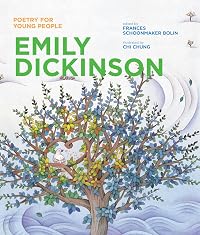
Poetry for Young People: Emily Dickinson
by Emily Dickinson  , Francis Schoonmaker Bolin
Poetry for Young People
On This Page
Description
Collection of poetry for children, focusing on delight in the hidden secrets of the everyday world.Tags
Recommendations











Member Reviews
⭐ Poetry | Classics | Life
Thank you to Gemini Books Group for this ARC in exchange for my honest review!
Emily Dickinson: Over 100 Poems on Life and Love was my first real introduction to Dickinson beyond simply knowing her name as a famous poet. This collection not only presents her poetry, but also offers insight into who she was as a person, something I truly appreciated as a first-time reader of her work.
Through this book, I learned that Emily Dickinson was a recluse who largely ignored the social conventions of her time, just as she ignored traditional poetic rules. Her poems are often short and concise, with the longest spanning only about two pages, yet they manage to hold immense emotional and philosophical weight. Despite show more remaining single her entire life, she wrote extensively about love, longing, and intimacy. She also wrote poignantly about loss, drawing from the many deaths and hardships she experienced within her family.
One poem that stood out to me in particular was:
“There is no frigate like a book
To take us lands away,
Nor any coursers like a page
Of prancing poetry-
this traverse may the poorest take
without oppress of toll-
how frugal is the chariot
that bears the human soul”
Learning the meaning behind her word choices deepened my appreciation of the poem. A frigate, being a ship, reminds us that no vessel can take us farther than imagination, and coursers, horses, cannot move as swiftly as the thoughts sparked by words on a page. Dickinson’s message feels timeless: imagination is accessible to everyone, and books are humble, frugal vehicles that carry the human soul without restriction.
Overall, this collection is a way to experience Emily Dickinson’s poetry while also learning about her life, beliefs, and quiet rebellion against societal norms. It’s a meaningful read for poetry lovers, students, or anyone curious about how deeply words can move us, even centuries later. show less
Thank you to Gemini Books Group for this ARC in exchange for my honest review!
Emily Dickinson: Over 100 Poems on Life and Love was my first real introduction to Dickinson beyond simply knowing her name as a famous poet. This collection not only presents her poetry, but also offers insight into who she was as a person, something I truly appreciated as a first-time reader of her work.
Through this book, I learned that Emily Dickinson was a recluse who largely ignored the social conventions of her time, just as she ignored traditional poetic rules. Her poems are often short and concise, with the longest spanning only about two pages, yet they manage to hold immense emotional and philosophical weight. Despite show more remaining single her entire life, she wrote extensively about love, longing, and intimacy. She also wrote poignantly about loss, drawing from the many deaths and hardships she experienced within her family.
One poem that stood out to me in particular was:
“There is no frigate like a book
To take us lands away,
Nor any coursers like a page
Of prancing poetry-
this traverse may the poorest take
without oppress of toll-
how frugal is the chariot
that bears the human soul”
Learning the meaning behind her word choices deepened my appreciation of the poem. A frigate, being a ship, reminds us that no vessel can take us farther than imagination, and coursers, horses, cannot move as swiftly as the thoughts sparked by words on a page. Dickinson’s message feels timeless: imagination is accessible to everyone, and books are humble, frugal vehicles that carry the human soul without restriction.
Overall, this collection is a way to experience Emily Dickinson’s poetry while also learning about her life, beliefs, and quiet rebellion against societal norms. It’s a meaningful read for poetry lovers, students, or anyone curious about how deeply words can move us, even centuries later. show less
Minha poeta brasileira favorita é a Hilda Hilst, mas eu tenho um bode tremendo dos poemas de amor dela porque são heteronormativos e não acho que dê para encontrar beleza num amor hetero desigual dentro do patriarcado. Por isso só consigo encontrar beleza no amor entre iguais que colocam o mesmo peso de si na relação.
Não por acaso as minhas três poetas norte-americanas favoritas são lésbicas: Audre Lorde, Adrienne Rich e Emily Dickinson, das quais a última não era assumida. Há historiadores ainda com a conversinha de "roommates" em relação à Dickson, clamando que seus poemas de amor eram sobre amizade, pois teoricamente as amizades no séculos XIX estimulavam tal passionalidade. Sei.
A verdade é que os poemas de amor show more escolhidos para essa edição da Caligari são puro demonstrativo de paixão homoafetiva, platônica ou não, é inegável que havia a paixão dessa mulher por Sue, negar isso é negar a própria essência dos poemas.
Belíssima curadoria, belíssimos poemas, belíssimo amor. show less
Não por acaso as minhas três poetas norte-americanas favoritas são lésbicas: Audre Lorde, Adrienne Rich e Emily Dickinson, das quais a última não era assumida. Há historiadores ainda com a conversinha de "roommates" em relação à Dickson, clamando que seus poemas de amor eram sobre amizade, pois teoricamente as amizades no séculos XIX estimulavam tal passionalidade. Sei.
A verdade é que os poemas de amor show more escolhidos para essa edição da Caligari são puro demonstrativo de paixão homoafetiva, platônica ou não, é inegável que havia a paixão dessa mulher por Sue, negar isso é negar a própria essência dos poemas.
Belíssima curadoria, belíssimos poemas, belíssimo amor. show less
Esta seleção de poemas da Emily Dickinson (deusa!) denota seu apreço pela comunhão à natureza e pelo divino, me indagando se o panteísmo não seria seu objeto de escolha, já que se revoltara com a religião protestante em outros momentos. Não podemos saber a qual eu lírico Dickinson levava no seu real modo de pensar, mas podemos sim apreciar o modo dela utilizar as palavras em toda sua glória.
I very much enjoy this series which features the poetry of well-known poetic writers. This book, in particular focuses on Emily Dickinson. By far my favorite poet, and therefore, I was drawn to this book when I found it on the shelf of the library.
The beginning of the book focuses on her life, her reclusiveness and her life-long calling to work with words.
Painfully shy, with a vivid imagination, she wrote of emotions which many wonder how such a shy, inward-focused woman could write in such a knowledgeable manner.
As she grew older, Emily became more and more reclusive. Quite fond of her brother Austin, and his wife Susan, the path was worn from her parents house to theirs. Choosing to see only those she best loved, her circle was show more small.
Townspeople were very curious and would leave small gifts in the hope of seeing her. Fond of children, she dispensed ginger bread cookies and other treats via a basket tethered to a cord slowly brought down from the upper window. Children loved Emily and did not mind her guarded ways. In particular, she had a wonderful nephew whom she loved dearly. She also had a close relationship with her sister Lavinia, whom she called Vinnie.
Like many artists, she did not become well known for her work until after she died. During Emily's time, poems written by women were to be flowery. Increasingly, Emily wrote of heavy subjects, and with sparsity of words.
She carefully checked the dictionary to find one word that fit what she felt. Only six of her poems were published while she was alive. She died when she was fifty-four. Her sister Vinnie was quite astounded to find a box of little hand sewn books. in all, 879 precious poems.
The collection of poems featured in this book focus on those written of nature. Few in this collection are somber. Most have an airy feel of spring breezes. I did not know she wrote so many poems of nature, and it was refreshing to read the quick, witty, delightful passages such as this:
Bee, I'm expecting you!
Was saying yesterday
To somebody you know
That you were due.
The frogs got home last week,
Are settled and at work,
Birds mostly back,
The clover warm and thick.
You'll get my letter by
The seventeenth; reply,
Or better, be with me.
Yours,
Fly.
-----------------------------------------
Further in the book, there is one poem of Emily's thoughts of her death:
I have not told my garden yet,
Lest that should conquer me,
I have not quite the strength now
To break it to the bee.
I will not name it in the street
For shops would stare, that I,
So shy, so very ignorant
Should have the face to die.
The hillsides must not know it,
Where I have rambled so,
Nor tell the loving forests
The day that I shall go,
Nor lisp it at the table,
Nor heedless by the way
Hint that within the riddle
One will walk to day!
-------------------------------------------------
Highly recommended 4.5 stars! show less
The beginning of the book focuses on her life, her reclusiveness and her life-long calling to work with words.
Painfully shy, with a vivid imagination, she wrote of emotions which many wonder how such a shy, inward-focused woman could write in such a knowledgeable manner.
As she grew older, Emily became more and more reclusive. Quite fond of her brother Austin, and his wife Susan, the path was worn from her parents house to theirs. Choosing to see only those she best loved, her circle was show more small.
Townspeople were very curious and would leave small gifts in the hope of seeing her. Fond of children, she dispensed ginger bread cookies and other treats via a basket tethered to a cord slowly brought down from the upper window. Children loved Emily and did not mind her guarded ways. In particular, she had a wonderful nephew whom she loved dearly. She also had a close relationship with her sister Lavinia, whom she called Vinnie.
Like many artists, she did not become well known for her work until after she died. During Emily's time, poems written by women were to be flowery. Increasingly, Emily wrote of heavy subjects, and with sparsity of words.
She carefully checked the dictionary to find one word that fit what she felt. Only six of her poems were published while she was alive. She died when she was fifty-four. Her sister Vinnie was quite astounded to find a box of little hand sewn books. in all, 879 precious poems.
The collection of poems featured in this book focus on those written of nature. Few in this collection are somber. Most have an airy feel of spring breezes. I did not know she wrote so many poems of nature, and it was refreshing to read the quick, witty, delightful passages such as this:
Bee, I'm expecting you!
Was saying yesterday
To somebody you know
That you were due.
The frogs got home last week,
Are settled and at work,
Birds mostly back,
The clover warm and thick.
You'll get my letter by
The seventeenth; reply,
Or better, be with me.
Yours,
Fly.
-----------------------------------------
Further in the book, there is one poem of Emily's thoughts of her death:
I have not told my garden yet,
Lest that should conquer me,
I have not quite the strength now
To break it to the bee.
I will not name it in the street
For shops would stare, that I,
So shy, so very ignorant
Should have the face to die.
The hillsides must not know it,
Where I have rambled so,
Nor tell the loving forests
The day that I shall go,
Nor lisp it at the table,
Nor heedless by the way
Hint that within the riddle
One will walk to day!
-------------------------------------------------
Highly recommended 4.5 stars! show less
I am usually quite skeptical when it comes to reading poetry out of books, especially when all of the poetry is from the same poet. I am very happy to say that I loved this book though. I found it very interesting how the illustrations interacted with the poems that were written in a completely different time period. I also enjoyed how the language that she used throughout each of her poems was very direct and to the point. The illustrations were very impressive to start out with. From the get go, the very first poem was one of inspiration and hope and the illustrations only enhanced the feeling that the poet established. On page 8, the poem was presented at the top while the almost whimsical painting of a tree took up a massive amount show more of space. I really liked that the words did not make the illustrations take a back seat but only enhanced the feeling that was being evoked. The second reason that I liked this poetry book was because of the direct language used. In her poem, I started early, took my dog on page 11, she used the phrase, “The mermaids in the basement came out to look at me.” The extremely direct imagery that this presents is astounding. I could almost see the mermaids swimming from the depths of the ocean to meet this character.
The main message of this book was to show the audience that there is so much around us in nature that we can sometimes find ourselves finding hidden delights in unexpected places. I love the depth that this book reaches with poetry telling different stories each and every page. I found myself being able to relate more than not. show less
The main message of this book was to show the audience that there is so much around us in nature that we can sometimes find ourselves finding hidden delights in unexpected places. I love the depth that this book reaches with poetry telling different stories each and every page. I found myself being able to relate more than not. show less
Summary- A delightful nature theme ties this collection of poems together. The pictures go perfectly with each poem. Two poems that stood out to me were "The Pedigree of Honey" and "The Moon was but a Chin of Gold."
Personal Reaction: This is a great advanced poetry book for kids, perhaps around nine years old. There is a great introduction in the beginning of the book telling the reader a little background information on Emily Dickinson and her life. Also, I really liked that in each poem, any difficult words are written at the bottom of the page, along with their definitions. This is a great book for any young readers that are up for challenging themselves a bit.
Classroom Extension-Have kids pick out their favorite poem from this book show more and do their own illustration. What does this poem mean to you and how do you relate? show less
Personal Reaction: This is a great advanced poetry book for kids, perhaps around nine years old. There is a great introduction in the beginning of the book telling the reader a little background information on Emily Dickinson and her life. Also, I really liked that in each poem, any difficult words are written at the bottom of the page, along with their definitions. This is a great book for any young readers that are up for challenging themselves a bit.
Classroom Extension-Have kids pick out their favorite poem from this book show more and do their own illustration. What does this poem mean to you and how do you relate? show less
Valuable, as is the entire series. The pictures are unfortunately, imo, *too* pretty: suitable for nursery decor, they trivialize the poetry.
Also unfortunate is that the poems described as riddles are illustrated by the answers....
No mention is made of her (supposed?) reluctance to publish the poems. The dash at the end of each line is omitted, making for a smoother read, no explanation given for why it sometimes included.
In this volume the introduction serves; each poem stands alone except for the illustrations.
Not my favorite Dickinson collection, nor my favorite of this series, by far.
Also unfortunate is that the poems described as riddles are illustrated by the answers....
No mention is made of her (supposed?) reluctance to publish the poems. The dash at the end of each line is omitted, making for a smoother read, no explanation given for why it sometimes included.
In this volume the introduction serves; each poem stands alone except for the illustrations.
Not my favorite Dickinson collection, nor my favorite of this series, by far.
Members
- Recently Added By
Lists

Hughes' Children's Library-Some still need to be vetted
19 works; 1 member
Author Information

538+ Works 30,065 Members
Emily Dickinson was born in Amherst, Massachusetts on December 10, 1830. Although one of America's most acclaimed poets, the bulk of her work was not published until well after her death on May 15, 1886. The few poems published in her lifetime were not received with any great fanfare. After her death, Dickinson's sister Lavinia found over 1,700 show more poems Emily had written and stashed away in a drawer -- the accumulation of a life's obsession with words. Critics have agreed that Dickinson's poetry was well ahead of its time. Today she is considered one of the best poets of the English language. Except for a year spent at Mount Holyoke Female Seminary in South Hadley, Dickinson spent her entire life in the family home in Amherst, Massachusetts. She never married and began to withdraw from society, eventually becoming a recluse. Dickinson's poetry engages the reader and requires his or her participation. Full of highly charged metaphors, her free verse and choice of words are best understood when read aloud. Dickinson's punctuation and capitalization, not orthodox by Victorian standards and called "spasmodic" by her critics, give greater emphasis to her meanings. (Bowker Author Biography) show less
Emily Dickinson has a Legacy Library. Legacy libraries are the personal libraries of famous readers, entered by LibraryThing members from the Legacy Libraries group.

13+ Works 2,926 Members
Awards and Honors
Series

Common Knowledge
- Canonical title
- Poetry for Young People: Emily Dickinson
- Original publication date
- 1890
- First words
- Hope is the thing with feathers
That perches in the soul,
And sings the tune without the words,
And never stops at all,
And sweetest in the gale is heard;
And sore must be the storm
That could abash the ... (show all)little bird
That kept so many warm. - Last words
- (Click to show. Warning: May contain spoilers.)In this short life
That only lasts an hour,
How much, how little,
Is within our power! - Original language
- English
- Disambiguation notice
- Edited by Francis Schoonmaker Bolin. Do not combine with other collections containing different poems
Classifications
Statistics
- Members
- 2,646
- Popularity
- 7,069
- Reviews
- 34
- Rating
- (4.15)
- Languages
- English, Portuguese
- Media
- Paper, Audiobook, Ebook
- ISBNs
- 14
- ASINs
- 6