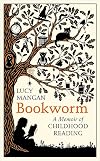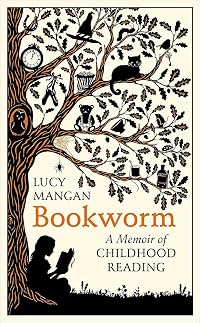
Bookworm: A Memoir of Childhood Reading
by Lucy Mangan
On This Page
Description
In Bookworm, Lucy revisits her childhood reading with wit, love and gratitude. She relives our best-beloved books, their extraordinary creators, and looks at the thousand subtle ways they shape our lives. She also disinters a few forgotten treasures to inspire the next generation of bookworms and set them on their way.Tags
Recommendations

















Member Reviews
It is easy to spot a bookworm at a party, they are looking for the first opportunity to slide off to a quiet room or a comfortable seat and fish their book out of their bag where they can immerse themselves in the latest fictional creations. It is not recommended to disturb them as this could be detrimental to your health, just to leave drinks in the close vicinity. And maybe some snacks.
I took the news and the list to my parents. 'I'm going to need all of these,' I said gently
Lucy Mangan is a complete bookworm and has been for as long as she remembers. For her, the worlds that books opened up were places of adventure and full of magic or a place of safe haven where real life seldom ventured. If she had to go out it was invariably to show more the library or the bookshop to acquire more reading material. They were a source of information too, a way of learning how different people reacted to different situations. The more that she read, the more that she wanted to read further; the discovery of a first book in a series would be a moment of joy as another seam of stories would be mined. As well as books for birthdays, her dad generously provided books on an almost weekly basis, introducing new authors to her. It seems like she hasn't got rid of many of these either as she has 10,000 books, yes TEN THOUSAND books at home!
A reader lives a thousand lives before he dies, said Jojen. The man who never reads lives only one. ― George R.R. Martin
I wasn't a complete bookworm as a child like Lucy was, I read a fair amount as a child, but unlike her, did venture outside to play on bikes and climb trees. However, reading books like this means that I can trawl my memories of the books that formed a part of my formative reading experience. I had some overlap with Lucy's reading, Blyton and CS Lewis to name but two of the authors that we have both have read. I remember being forced to read some dire books at school, but memories of others came like Swallows & Amazons, Stig of the Dump, the Willard Price Adventure books, Adrian Mole and even the Steve Jackson and Ian Livingstone books that began with the Warlock of Firetop Mountain.
All of my reminisces about childhood books aside, if you're a book lover of any form then you will almost certainly get something from this book and that alone makes it worth reading. Do though be warned there are spoilers for some of the books she talks about and hopefully, you will look fondly back on the books of your childhood too. 3.5 stars. show less
I took the news and the list to my parents. 'I'm going to need all of these,' I said gently
Lucy Mangan is a complete bookworm and has been for as long as she remembers. For her, the worlds that books opened up were places of adventure and full of magic or a place of safe haven where real life seldom ventured. If she had to go out it was invariably to show more the library or the bookshop to acquire more reading material. They were a source of information too, a way of learning how different people reacted to different situations. The more that she read, the more that she wanted to read further; the discovery of a first book in a series would be a moment of joy as another seam of stories would be mined. As well as books for birthdays, her dad generously provided books on an almost weekly basis, introducing new authors to her. It seems like she hasn't got rid of many of these either as she has 10,000 books, yes TEN THOUSAND books at home!
A reader lives a thousand lives before he dies, said Jojen. The man who never reads lives only one. ― George R.R. Martin
I wasn't a complete bookworm as a child like Lucy was, I read a fair amount as a child, but unlike her, did venture outside to play on bikes and climb trees. However, reading books like this means that I can trawl my memories of the books that formed a part of my formative reading experience. I had some overlap with Lucy's reading, Blyton and CS Lewis to name but two of the authors that we have both have read. I remember being forced to read some dire books at school, but memories of others came like Swallows & Amazons, Stig of the Dump, the Willard Price Adventure books, Adrian Mole and even the Steve Jackson and Ian Livingstone books that began with the Warlock of Firetop Mountain.
All of my reminisces about childhood books aside, if you're a book lover of any form then you will almost certainly get something from this book and that alone makes it worth reading. Do though be warned there are spoilers for some of the books she talks about and hopefully, you will look fondly back on the books of your childhood too. 3.5 stars. show less
I decided to read [b:Bookworm: A Memoir of Childhood Reading|28501495|Bookworm A Memoir of Childhood Reading|Lucy Mangan|https://i.gr-assets.com/images/S/compressed.photo.goodreads.com/books/1511977501l/28501495._SY75_.jpg|48654576] because someone said that Lucy Managan ‘really got it’ – ‘it’ being the compulsion to read books. That certainly proved to be true, as Mangan writes in a witty and self-deprecating manner about a childhood dominated by reading. Thus it’s similar in style and spirit to Francis Spufford’s [b:The Child That Books Built|358805|The Child That Books Built|Francis Spufford|https://i.gr-assets.com/images/S/compressed.photo.goodreads.com/books/1348231668l/358805._SY75_.jpg|1422235], which I highly show more recommend, while differing in the particulars. Both books made me feel like the author was a kindred spirit, as I too was a voracious reader as a child (and still am).
Mangan goes through her youth chronologically, recounting quite rhapsodically the particular appeal of particular books and series that she loved. Her memories are impressively clear and reminded me of my own, as our tastes overlapped quite a bit. I especially enjoyed her recollections of [b:The Worst Witch|351023|The Worst Witch (Worst Witch, #1)|Jill Murphy|https://i.gr-assets.com/images/S/compressed.photo.goodreads.com/books/1349047328l/351023._SY75_.jpg|341267], [b:Milly-Molly-Mandy Stories|6640703|Milly-Molly-Mandy Stories (Milly-Molly-Mandy)|Joyce Lankester Brisley|https://i.gr-assets.com/images/S/compressed.photo.goodreads.com/books/1327779190l/6640703._SY75_.jpg|6835164], the [b:The Chronicles of Narnia|11127|The Chronicles of Narnia (The Chronicles of Narnia, #1-7)|C.S. Lewis|https://i.gr-assets.com/images/S/compressed.photo.goodreads.com/books/1661032875l/11127._SY75_.jpg|781271] (like Mangan, I was oblivious to the Christian theme therein until [b:The Last Battle|84369|The Last Battle (Chronicles of Narnia, #7)|C.S. Lewis|https://i.gr-assets.com/images/S/compressed.photo.goodreads.com/books/1308814830l/84369._SY75_.jpg|1059917]), [b:Ballet Shoes|10444|Ballet Shoes|Noel Streatfeild|https://i.gr-assets.com/images/S/compressed.photo.goodreads.com/books/1388180362l/10444._SX50_.jpg|1505465], [b:When Hitler Stole Pink Rabbit|54283|When Hitler Stole Pink Rabbit (Out of the Hitler Time, #1)|Judith Kerr|https://i.gr-assets.com/images/S/compressed.photo.goodreads.com/books/1339840922l/54283._SY75_.jpg|1877851], and [b:A Little Princess|3008|A Little Princess|Frances Hodgson Burnett|https://i.gr-assets.com/images/S/compressed.photo.goodreads.com/books/1327868556l/3008._SY75_.jpg|1313599]. It was lovely both to remember the pleasure these novels gave me and learn some contextual information about them.
It was also interesting to notice how Mangan’s and my childhood reading experiences diverge as a result of her being about five years older. A great many of the books we read were the same, but those years made the difference between learning to read during the Cold War and just after the Berlin War fell. Thus she learned to fear nuclear annihilation, whereas I grew up terrified of environmental breakdown instead. I also noticed that children’s books go out of fashion much more slowly than teen books, as there was a lot less overlap with her high school years. I read the ubiquitous Sweet Valley High books when there was nothing else available, and some [a:Judy Blume|12942|Judy Blume|https://images.gr-assets.com/authors/1430843076p2/12942.jpg], but new authors who wrote for teens like [a:Jacqueline Wilson|22602|Jacqueline Wilson|https://images.gr-assets.com/authors/1373964706p2/22602.jpg] and [a:Louise Rennison|65189|Louise Rennison|https://images.gr-assets.com/authors/1217261779p2/65189.jpg] had arrived by the late 1990s. Moreover, I got into sci-fi during primary school via the Animorphs series and that remains my favourite genre, whereas Mangan isn’t into sci-fi or fantasy. (In this respect I found more common ground with [b:The Child That Books Built|358805|The Child That Books Built|Francis Spufford|https://i.gr-assets.com/images/S/compressed.photo.goodreads.com/books/1348231668l/358805._SY75_.jpg|1422235].) That said, I recently came across a 2001 diary which mentioned I was reading Virginia Woolf’s [b:The Waves|46114|The Waves|Virginia Woolf|https://i.gr-assets.com/images/S/compressed.photo.goodreads.com/books/1645526068l/46114._SY75_.jpg|6057263] at the age of 15. I didn’t get very far with it, as I then discovered the Discworld series in the library and read about twenty of them in a fortnight.
I recommend this memoir to any keen reader as it’s enjoyable in its own right and will bring back your own happy memories of childhood reading. The familiarity of the books mentioned, all of which Mangan helpfully lists in an appendix, will depend on the similarity of your upbringing to hers, as a girl in a stable white British family during the late 1970s and 80s. Her childhood experience of trying to read while adults periodically interrupted with meals, socialising, lessons, etc, etc will resonate with any bookworm, though. My parents probably still have a primary school report of mine that said: ‘It’s so nice to see Anna reading when children these days all seem to prefer television. It seems a pity to disturb her sometimes.’ show less
Mangan goes through her youth chronologically, recounting quite rhapsodically the particular appeal of particular books and series that she loved. Her memories are impressively clear and reminded me of my own, as our tastes overlapped quite a bit. I especially enjoyed her recollections of [b:The Worst Witch|351023|The Worst Witch (Worst Witch, #1)|Jill Murphy|https://i.gr-assets.com/images/S/compressed.photo.goodreads.com/books/1349047328l/351023._SY75_.jpg|341267], [b:Milly-Molly-Mandy Stories|6640703|Milly-Molly-Mandy Stories (Milly-Molly-Mandy)|Joyce Lankester Brisley|https://i.gr-assets.com/images/S/compressed.photo.goodreads.com/books/1327779190l/6640703._SY75_.jpg|6835164], the [b:The Chronicles of Narnia|11127|The Chronicles of Narnia (The Chronicles of Narnia, #1-7)|C.S. Lewis|https://i.gr-assets.com/images/S/compressed.photo.goodreads.com/books/1661032875l/11127._SY75_.jpg|781271] (like Mangan, I was oblivious to the Christian theme therein until [b:The Last Battle|84369|The Last Battle (Chronicles of Narnia, #7)|C.S. Lewis|https://i.gr-assets.com/images/S/compressed.photo.goodreads.com/books/1308814830l/84369._SY75_.jpg|1059917]), [b:Ballet Shoes|10444|Ballet Shoes|Noel Streatfeild|https://i.gr-assets.com/images/S/compressed.photo.goodreads.com/books/1388180362l/10444._SX50_.jpg|1505465], [b:When Hitler Stole Pink Rabbit|54283|When Hitler Stole Pink Rabbit (Out of the Hitler Time, #1)|Judith Kerr|https://i.gr-assets.com/images/S/compressed.photo.goodreads.com/books/1339840922l/54283._SY75_.jpg|1877851], and [b:A Little Princess|3008|A Little Princess|Frances Hodgson Burnett|https://i.gr-assets.com/images/S/compressed.photo.goodreads.com/books/1327868556l/3008._SY75_.jpg|1313599]. It was lovely both to remember the pleasure these novels gave me and learn some contextual information about them.
It was also interesting to notice how Mangan’s and my childhood reading experiences diverge as a result of her being about five years older. A great many of the books we read were the same, but those years made the difference between learning to read during the Cold War and just after the Berlin War fell. Thus she learned to fear nuclear annihilation, whereas I grew up terrified of environmental breakdown instead. I also noticed that children’s books go out of fashion much more slowly than teen books, as there was a lot less overlap with her high school years. I read the ubiquitous Sweet Valley High books when there was nothing else available, and some [a:Judy Blume|12942|Judy Blume|https://images.gr-assets.com/authors/1430843076p2/12942.jpg], but new authors who wrote for teens like [a:Jacqueline Wilson|22602|Jacqueline Wilson|https://images.gr-assets.com/authors/1373964706p2/22602.jpg] and [a:Louise Rennison|65189|Louise Rennison|https://images.gr-assets.com/authors/1217261779p2/65189.jpg] had arrived by the late 1990s. Moreover, I got into sci-fi during primary school via the Animorphs series and that remains my favourite genre, whereas Mangan isn’t into sci-fi or fantasy. (In this respect I found more common ground with [b:The Child That Books Built|358805|The Child That Books Built|Francis Spufford|https://i.gr-assets.com/images/S/compressed.photo.goodreads.com/books/1348231668l/358805._SY75_.jpg|1422235].) That said, I recently came across a 2001 diary which mentioned I was reading Virginia Woolf’s [b:The Waves|46114|The Waves|Virginia Woolf|https://i.gr-assets.com/images/S/compressed.photo.goodreads.com/books/1645526068l/46114._SY75_.jpg|6057263] at the age of 15. I didn’t get very far with it, as I then discovered the Discworld series in the library and read about twenty of them in a fortnight.
I recommend this memoir to any keen reader as it’s enjoyable in its own right and will bring back your own happy memories of childhood reading. The familiarity of the books mentioned, all of which Mangan helpfully lists in an appendix, will depend on the similarity of your upbringing to hers, as a girl in a stable white British family during the late 1970s and 80s. Her childhood experience of trying to read while adults periodically interrupted with meals, socialising, lessons, etc, etc will resonate with any bookworm, though. My parents probably still have a primary school report of mine that said: ‘It’s so nice to see Anna reading when children these days all seem to prefer television. It seems a pity to disturb her sometimes.’ show less
I can't actually review this book dispassionately. Obviously Lucy Mangan wrote it for me. This particular bookworm is only a little older than my eldest child. Her mother is only a little older than me. As a child, her reading choices were my reading choices (apart from Enid Blyton. I wasn't allowed to read her books, and on odd occasions that I came across one, I saw no reason to disobey my mother's wishes. What bilge). And as she was a child of the 80s, her reading choices were my children's reading choices: or mine, in their early years, obviously. And what riches there were to mine!
This book is quite simply a nostalgic memory fest of all the books, so many of them now classics, that enriched both our childhoods - and in my case, the show more early motherhood years as well. The true friends and teachers that books become for the bookish child is so well celebrated here. They give the lie to a certain grandson's infamous exclamation last year - 'Books? They're so 1950s!' You're wrong Alex. A well-loved book is a friend forever. show less
This book is quite simply a nostalgic memory fest of all the books, so many of them now classics, that enriched both our childhoods - and in my case, the show more early motherhood years as well. The true friends and teachers that books become for the bookish child is so well celebrated here. They give the lie to a certain grandson's infamous exclamation last year - 'Books? They're so 1950s!' You're wrong Alex. A well-loved book is a friend forever. show less
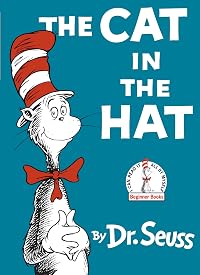
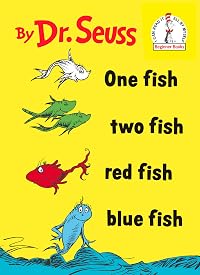
I guess this is a biblio-memoir. I enjoyed a trip down memory lane as many of the books the author read and loved (or in some cases didn't) as a child mirrored my own childhood reading. There were authors I disagreed on (Dr Seuss) and those I agreed on (Blyton) but overall it was fun to be reminded of them. I was probably less interested in the authors own family story, and in the bits about books I wasn't familiar with.
I think you need to have been a childhood reader, or now love children’s literature to enjoy this book. Luckily for me I tick both boxes and as such found this a delight to read.
Mangan takes a chronological approach, starting pretty much at birth and finishing in her teenage years. Her style is informal and witty – it feels as though a good friend is talking to you. Whilst she shares a fair amount of family history, often in a way that had me laughing out loud the star of the show here are the books she escaped into. On the books themselves she provides a careful mix of nostalgic recollections, analysis and in some instances historical context so that each chapter is more than a retelling of the story.
I found the back stories to show more some of my favourites fascinating (for example the who and wherefore of the writing of the Secret Garden) and mentally cheered when I found references to books I had forgotten I loved (Topsy & Tim for example, although I was shaken to find this is now a children’s tv show!) or opinions I shared (Mangan’s thoughts on Laurie in Little Women, the occasionally problematic nature of some of Blyton’s work).
I think this will most appeal to people who have a significant overlap with Mangan’s chosen favourites but even where I did not (never really understood the fascination with pony books for example) there is still plenty to enjoy. The inclusion of a detailed book list at the end is both inspired and likely to be expensive. show less
Mangan takes a chronological approach, starting pretty much at birth and finishing in her teenage years. Her style is informal and witty – it feels as though a good friend is talking to you. Whilst she shares a fair amount of family history, often in a way that had me laughing out loud the star of the show here are the books she escaped into. On the books themselves she provides a careful mix of nostalgic recollections, analysis and in some instances historical context so that each chapter is more than a retelling of the story.
I found the back stories to show more some of my favourites fascinating (for example the who and wherefore of the writing of the Secret Garden) and mentally cheered when I found references to books I had forgotten I loved (Topsy & Tim for example, although I was shaken to find this is now a children’s tv show!) or opinions I shared (Mangan’s thoughts on Laurie in Little Women, the occasionally problematic nature of some of Blyton’s work).
I think this will most appeal to people who have a significant overlap with Mangan’s chosen favourites but even where I did not (never really understood the fascination with pony books for example) there is still plenty to enjoy. The inclusion of a detailed book list at the end is both inspired and likely to be expensive. show less
Were you a bookworm as a kid? I was. I was even voted "Class Bookworm" in 7th grade - a category they made up just for me. I was the kid with the book inside the text book during school lectures. So when I saw this a few years ago, I thought ... maybe. As much as I enjoy most books about books, I figured the title was likely to be an overstatement and I'd be reading a sedate, literary criticism of childhood books. The front flap reinforced this suspicion. Which is why it sat on my shelves for so long.
Oh, how wrong - and kinda right - I was. Lucy Mangan is a true bookworm; back in the day, she'd have given me a run for the title and the award. She was also way better read than I was, so there is some lit criticism here, but it's fabulous show more lit criticism; she's hilarious and she's rational and she's so very real.
On Enid Blyton:
I can barely bring myself to talk about my Enid Blyton.
Like generations of children before me,
and like generations since (she still sells over 8 million
copies a year around the world) I fell head over heels in
love. No, not love - it was an obsession, an addiction. It
was wonderful.
It was an older girl that got me into the stuff. Becky-
next- door lent me her copy of something called Five on a
Secret Trail. It was a floppy, late 1970s Knight Books
edition with, I believe, the original 1950’s illustrations
inside. I read it. It was good. Very good. I enjoyed it. I
enjoyed it very much. I asked Becky if she had any more.
She did. It was called Five Run Away Together. I read it. It
was good. Very good. Possibly even better than Five on
a Secret Trail. I enjoyed it. I enjoyed it very much. I
noticed it had a number '3' on the spine. Five on a Secret
Trail had a '15’. What did that mean? I decided to look for
clues. Even without a loyal canine companion to help me,
it didn't take long. The endpapers carried a
list. Apparently Enid Blyton had written twenty-one
books! What excellent news! What riches! What vital.
absolutely essential riches!
I took the news and the list to my parents. I'm going
to need all of these,' I said, gently.
And so it began.
And on C.S. Lewis' Narnia series being a Christian allegory:
The tale of Lucy Pevensie discovering the secret
world beyond the wardrobe door is a story about
courage, loyalty, generosity, sacrifice and nobility versus
greed, conceit, arrogance and betrayal. You can call the
former Christian virtues, or you can just call them
virtues, let the kids concentrate on the self-renewing
Turkish delight, magically unerring bows and hybrid
man-beasts and relax.
Reading this, I feel like I missed out on something amazing by not living down the road from Lucy. I suspect we'd have had a lot of fun swapping books and comparing notes. But it was a joy to read her memoirs now and in so doing take a trip down the memory lane of my own reading.
Mangan primarily recounts her childhood reading in a fun and often funny style, but she also dips lightly into the historical aspects of Children's literature here and there, when the subject matter seems to call for it - a specific genre, or the roots of illustrations. These bits are less engaging, more straightforward, and in context with the whole, makes the pace drag a tiny bit when you get to them. They're interesting, but they're not entertaining.
Because Mangan's writing style is very conversational, the sentences that include many clauses and often long parentheticals can sometimes be hard to follow. This was probably my only criticism - not that I didn't enjoy the style, because I absolutely did - it's just once or twice, by the time the sentence ended, I had forgotten how it began.
Admittedly, a large number of the books that Lucy Mangan covers are books unknown to me. I expected this because she was growing up in London, and I was growing up in tiny town Florida. But I was delighted at how often our book titles did converge, and how many titles that, even if I didn't read them, I was familiar enough with to easily follow along.
The author has written a few other books, and I enjoyed this one so much, that I'm interested to discover what they're about and see about getting my hands on one or two. show less
Oh, how wrong - and kinda right - I was. Lucy Mangan is a true bookworm; back in the day, she'd have given me a run for the title and the award. She was also way better read than I was, so there is some lit criticism here, but it's fabulous show more lit criticism; she's hilarious and she's rational and she's so very real.
On Enid Blyton:
I can barely bring myself to talk about my Enid Blyton.
Like generations of children before me,
and like generations since (she still sells over 8 million
copies a year around the world) I fell head over heels in
love. No, not love - it was an obsession, an addiction. It
was wonderful.
It was an older girl that got me into the stuff. Becky-
next- door lent me her copy of something called Five on a
Secret Trail. It was a floppy, late 1970s Knight Books
edition with, I believe, the original 1950’s illustrations
inside. I read it. It was good. Very good. I enjoyed it. I
enjoyed it very much. I asked Becky if she had any more.
She did. It was called Five Run Away Together. I read it. It
was good. Very good. Possibly even better than Five on
a Secret Trail. I enjoyed it. I enjoyed it very much. I
noticed it had a number '3' on the spine. Five on a Secret
Trail had a '15’. What did that mean? I decided to look for
clues. Even without a loyal canine companion to help me,
it didn't take long. The endpapers carried a
list. Apparently Enid Blyton had written twenty-one
books! What excellent news! What riches! What vital.
absolutely essential riches!
I took the news and the list to my parents. I'm going
to need all of these,' I said, gently.
And so it began.
And on C.S. Lewis' Narnia series being a Christian allegory:
The tale of Lucy Pevensie discovering the secret
world beyond the wardrobe door is a story about
courage, loyalty, generosity, sacrifice and nobility versus
greed, conceit, arrogance and betrayal. You can call the
former Christian virtues, or you can just call them
virtues, let the kids concentrate on the self-renewing
Turkish delight, magically unerring bows and hybrid
man-beasts and relax.
Reading this, I feel like I missed out on something amazing by not living down the road from Lucy. I suspect we'd have had a lot of fun swapping books and comparing notes. But it was a joy to read her memoirs now and in so doing take a trip down the memory lane of my own reading.
Mangan primarily recounts her childhood reading in a fun and often funny style, but she also dips lightly into the historical aspects of Children's literature here and there, when the subject matter seems to call for it - a specific genre, or the roots of illustrations. These bits are less engaging, more straightforward, and in context with the whole, makes the pace drag a tiny bit when you get to them. They're interesting, but they're not entertaining.
Because Mangan's writing style is very conversational, the sentences that include many clauses and often long parentheticals can sometimes be hard to follow. This was probably my only criticism - not that I didn't enjoy the style, because I absolutely did - it's just once or twice, by the time the sentence ended, I had forgotten how it began.
Admittedly, a large number of the books that Lucy Mangan covers are books unknown to me. I expected this because she was growing up in London, and I was growing up in tiny town Florida. But I was delighted at how often our book titles did converge, and how many titles that, even if I didn't read them, I was familiar enough with to easily follow along.
The author has written a few other books, and I enjoyed this one so much, that I'm interested to discover what they're about and see about getting my hands on one or two. show less
An ARC from netgalley.
One of those books about books that involved a lot of head nodding, both about the books and about growing up a reader in a house with siblings who Did Not Get It! Fun. Mangan talks about the finegrain detail of book memories, from which teacher read which book aloud in school to the books stocked in the local library. She also includes detail about children's book origins, although I suspect most of this will not be news to those professionally involved, was interesting to me.
Mangan has spent years writing (very funny) columns and I think in places it shows here - she goes for the joke at a pace, when perhaps it isn't always needed when reading chapter by chapter instead of week by week. But I would look for my show more own copy of this, as it's a lovely trip down memory lane. She even includes The Summer of My German Soldier a book that broke my heart when I was about 12.
I really like that she includes a list of all the books referenced at the end, very handy. show less
One of those books about books that involved a lot of head nodding, both about the books and about growing up a reader in a house with siblings who Did Not Get It! Fun. Mangan talks about the finegrain detail of book memories, from which teacher read which book aloud in school to the books stocked in the local library. She also includes detail about children's book origins, although I suspect most of this will not be news to those professionally involved, was interesting to me.
Mangan has spent years writing (very funny) columns and I think in places it shows here - she goes for the joke at a pace, when perhaps it isn't always needed when reading chapter by chapter instead of week by week. But I would look for my show more own copy of this, as it's a lovely trip down memory lane. She even includes The Summer of My German Soldier a book that broke my heart when I was about 12.
I really like that she includes a list of all the books referenced at the end, very handy. show less
Members
- Recently Added By
Published Reviews
ThingScore 100
... It's this ability to capture the powerful effect of certain books on a young reader's psyche that makes Bookworm so effective, whether Mangan is writing about the terror of reading dystopian fiction during the last years of the Cold War, or making a qualified case for Enid Blyton as a potential reader's gateway drug. What could easily have been the literary equivalent of one of those 'I show more love the 1980s' programmes in which comedians trigger our nostalgia buttons by merely mentioning the name of forgotten favourites is instead an insightful exploration of what books can do for us, written in a way that retrospectively illuminates our reading lives. I hadn't realised that the first time I encountered the German concept of Sehnsucht, or an aching yearning, was not, as I had thought, in Edgar Reitz's 1993 epic Die Zweite Heimat, but in Philippa Pearce's beautifully melancholy Tom’s Midnight Garden.
And Mangan perfectly captures a crucial element of Richmal Crompton's untouchable William books – not only are they incredibly funny, but the language in which they're written makes no concessions to the youth of her readers. Without our knowing it, William was our introduction to sophisticated adult writing. As Mangan writes, "I was on a great polysyllabic spree, a grand tour around the glories of the subordinate clause. William was my guide, my inspiration and the gatekeeper to a new and better world. The suburbs suddenly expanded to infinity." ... show less
And Mangan perfectly captures a crucial element of Richmal Crompton's untouchable William books – not only are they incredibly funny, but the language in which they're written makes no concessions to the youth of her readers. Without our knowing it, William was our introduction to sophisticated adult writing. As Mangan writes, "I was on a great polysyllabic spree, a grand tour around the glories of the subordinate clause. William was my guide, my inspiration and the gatekeeper to a new and better world. The suburbs suddenly expanded to infinity." ... show less
added by Cynfelyn
Lists

Best books about books
209 works; 106 members

Bibliomemoirs
46 works; 8 members

Best Biographies, Autobiographies and Memoirs
465 works; 160 members

Books Read in 2018
4,360 works; 110 members

Litsy Awards 2018
248 works; 9 members

Books Read in 2019
4,052 works; 108 members

Books Read in 2020
4,379 works; 124 members

Netgalley Reads
460 works; 3 members

Best Books about Readers
23 works; 14 members

Non-Fiction Worth Reading
1,015 works; 261 members
Club Read's Recommended Nonfiction Written by Women
618 works; 30 members

Books Read in 2026
1,910 works; 66 members
Author Information

9+ Works 860 Members
Awards and Honors
Common Knowledge
- Original publication date
- 2018
- Important places
- Catford, London, England, UK
- Dedication
- For Alexander, whom I love more than books.
- First words
- "People say that life is the thing but I prefer reading. (American essayist and entirely correct person Logan Pearsall Smith.)
- Last words
- (Click to show. Warning: May contain spoilers.)Reading's our thing.
- Blurbers
- Jacqueline Wilson
Classifications
- Genres
- Nonfiction, Biography & Memoir
- DDC/MDS
- 028.55092 — Computer science, information & general works Library & information sciences Reading and use of other information media Reading of young; Juveniles For Specific Interests
- LCC
- Z1037 .A1 .M36 — Bibliography, Library Science and Information Resources General bibliography Books for special classes of persons, institutions, etc.
- BISAC
Statistics
- Members
- 425
- Popularity
- 72,519
- Reviews
- 16
- Rating
- (4.12)
- Languages
- English
- Media
- Paper, Audiobook, Ebook
- ISBNs
- 7
- ASINs
- 3