On This Page
Description
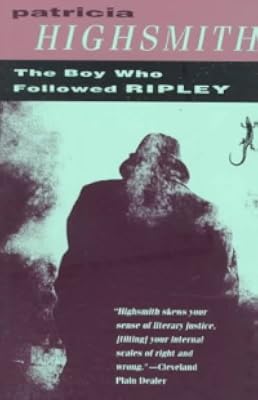
The Boy Who Followed Ripley, the fourth novel in the Ripley series, is one of Patricia Highsmith's darkest and most twisted creations. Tom Ripley meets a young American runaway who has a dark secret that he is desperate to hide. Soon this unlikely pair is drawn into the seamy underworld of Berlin and a shocking kidnapping. In this masterful thriller, Highsmith shatters our perceptions of her most famous creation by letting us glimpse a more compassionate side of this amoral charmer.Tags
Recommendations






Member Reviews
It's gotten to the point for me where Highsmith 'can do no wrong' - meaning that I read each fresh bk in full expectation that she'll have thoughtfully explored the subject at hand in ways that avoid clichés & that show her ever-shifting skill as a crime fiction / psychological thriller writer. &, as usual, this bk is not a disappointment. I don't want this review to have too many 'spoilers' so I'll resist outlining the whole plot. Suffice it to say that where most mediocre writers wd end the bk on a particular type of climax Highsmith continues to forge on into the deeper territory at hand.
Highsmith takes a perverse pleasure in presenting her main character, Ripley, as more complex & multi-faceted than just yr ordinary 'bad guy'. show more He's an archetypal 'anti-hero' in that respect. Yes, he's capable of murdering people w/o much or any conscience.. but he's also an appreciator of the 'finer' things in life & he's capable of being very caring & very subtle & very non-judgmental. & these are the characteristics that Highsmith admires. But she also admires his ability to be decisive under difficult circumstances - even psychopathically so.
I don't know anything about Highsmith's personal life but she was probably bisexual - & many of her novels delve into bisexual, lesbian, & gay subcultures. Additionally, her novels tend to take place in sometimes radically different locales - in this case, part of it is in Berlin. Given that it was copyrighted in 1980, it's fun for me that Highsmith has the characters playing Lou Reed's "Transformer" record, a classic of gay/bisexual/transvestite rock, & that some important parts of the action center around dressing in drag & a gay disco. Highsmith wd've been in her late 50s when she wrote this & it's pretty obvious that she hadn't dulled her zest for life yet. show less
Highsmith takes a perverse pleasure in presenting her main character, Ripley, as more complex & multi-faceted than just yr ordinary 'bad guy'. show more He's an archetypal 'anti-hero' in that respect. Yes, he's capable of murdering people w/o much or any conscience.. but he's also an appreciator of the 'finer' things in life & he's capable of being very caring & very subtle & very non-judgmental. & these are the characteristics that Highsmith admires. But she also admires his ability to be decisive under difficult circumstances - even psychopathically so.
I don't know anything about Highsmith's personal life but she was probably bisexual - & many of her novels delve into bisexual, lesbian, & gay subcultures. Additionally, her novels tend to take place in sometimes radically different locales - in this case, part of it is in Berlin. Given that it was copyrighted in 1980, it's fun for me that Highsmith has the characters playing Lou Reed's "Transformer" record, a classic of gay/bisexual/transvestite rock, & that some important parts of the action center around dressing in drag & a gay disco. Highsmith wd've been in her late 50s when she wrote this & it's pretty obvious that she hadn't dulled her zest for life yet. show less
I'm pretty sure that Highsmith was really tired of people asking her if Tom Ripley was gay. So she wrote this book.
Her answer? No, not in practice. She's a wonderful author and took an entire book to say it.
I loved this book. It's quite different than the other Ripley books. It shows a different side of Tom. It's his mid-life crisis and his longing for passion in his life. He's reflective and a marvelously unreliable narrator.
Her answer? No, not in practice. She's a wonderful author and took an entire book to say it.
I loved this book. It's quite different than the other Ripley books. It shows a different side of Tom. It's his mid-life crisis and his longing for passion in his life. He's reflective and a marvelously unreliable narrator.
A gentle return to the soothing chaos that is Ripley's world. All the classic comforts of his idyllic wealthy life are still there: harp lessons, gardening, and a wife who loves him enough but not too much. Then even amidst the criminal activities that arise, we are treated to a travel interlude, a sojourn Hamburg and Berlin.
Ripley's sudden interest and participation in queer culture was a nice welcome. I prefer to read into it as personal growth on his part from the earlier books. Most of the psychological tension for me stemmed from Frank and his inevitable trajectory. At this point in the series, there's no critical reading on my part anymore. I don't ask how it why. I'm just here to be rocked gently to a pleasant lull.
Ripley's sudden interest and participation in queer culture was a nice welcome. I prefer to read into it as personal growth on his part from the earlier books. Most of the psychological tension for me stemmed from Frank and his inevitable trajectory. At this point in the series, there's no critical reading on my part anymore. I don't ask how it why. I'm just here to be rocked gently to a pleasant lull.
From the book - In this quietly terrifying exploration of trust and friendship, a troubled young runaway arrives in Villeperce. And when, on the boy's behalf, Tom Ripley is drawn from his lovely estate in the French countryside to Berlin's seamy underworld and into a kidnapping plot that requires the most bizarre methods--and sinister acumen--for intervention, the icily amoral Ripley is transformed into a generous and compassionate projector.
I find that Patricia Highsmith is the master of unease. I get a slightly queasy feeling in my stomache as I make my way through her novels.
The plot, while not exactly exciting, still displays Tom Ripley at his finest. An almost completely amoral character with a very twisted sense of justice. I show more find myself rooting for him to not get caught in his schemes - and that is probably disturbing in itself. show less
I find that Patricia Highsmith is the master of unease. I get a slightly queasy feeling in my stomache as I make my way through her novels.
The plot, while not exactly exciting, still displays Tom Ripley at his finest. An almost completely amoral character with a very twisted sense of justice. I show more find myself rooting for him to not get caught in his schemes - and that is probably disturbing in itself. show less
The Boy Who Followed Ripley, by Patricia Highsmith, is the fourth in her five-book series about Tom Ripley, the amoral psychopath who has so captured readers' (and viewers') hearts over the years. Here, Tom is living a quiet life in suburban France, with a wealthy yet accommodatingly incurious wife, when a young American boy comes into his life. "Billy," or "Frank" as he is more properly called, is the younger son of a very wealthy family, the father of which has recently died, apparently by his own hand after a decade in a wheelchair. Billy wants to stay out of sight, despite his high social profile, and Tom is happy to help him out. But Billy has a dark secret that may lead to more complications than Tom is prepared to handle.... I show more have not read the second and third books in this series, so I'm a bit in the dark as to how Tom comes to be living the life he is in this book; however, that didn't prevent me from enjoying this volume quite a lot. Although we spend a lot of the story inside Tom's head, his motivations remain as obscure as ever; as nearly as I can determine, he seems to do things simply because it occurs to him to do them, or because it might be amusing to see what happens next. A complicated character, indeed! Recommended. show less
I found this one way too focused on domestic issues to be anything like taut. Gardening, sleeping and bathroom arrangements, ant problems, car repair, door keys - it was crazy. Also I think Lou Reed is almost the only 'rock and roll' she knew. Into this homeliness we have Tom fulfilling his fatherhood longings with the wayward Frank. While I didn't see quite what came at the end until it was inevitable, I thought it was fitting. Interesting how Highsmith kept Tom's reactions low and almost non-existent. For such a cold and amoral guy, with all he did for Frank I thought it might have been less restrained.
The Boy Who Followed Ripley, published in 1980, is the 4th book in the Tom Ripley series, and seems to be quite different to the other installments.
In this one, Tom is sought out in his home in France by an American teenage runaway who asks him for a job. Tom agrees to hire him as a help in the garden. As they get to know each other, Tom learns more about the reasons why Billy/Frank ran away from home and sees some similarities between himself and the boy.
Then the story takes a turn that leads us to follow the two to Berlin where Billy/Frank is kidnapped.......
This book seriously had me scratching my head - I don't even know where to start taking this apart: Should I start with the obvious flaw? Yes? OK - plot holes. So, so, many of show more them and they start right at the beginning. Why did Billy/Frank seek out Tom? Why does he tell him his motivations? Why do they need to go to Berlin? How do they end up in the gay bar scene? (I mean, I get why, so the question is really how?) Why the kidnapping? And here I'm really puzzled as to how this would even be practicable....... I have so, so many questions. Very little of this book made sense. Least of all the Frank's letter.
Did Highsmith write this one purely for the money? I mean, there are a lot of details about the French tax authorities in this book that sound similar to what Highsmith was dealing with. Her relations with the French tax authorities were, erm, "strained", so maybe that was one of the motivations for the book.
However, there was also something rather mellow in the way that Tom looked after Frank and in that Tom seemed to have a lot more patience for other people than in the first book. (I have not yet read books 2 and 3.) And something about this more personable side seemed to reflect something of the author. At least, it seemed to reflect some of what my impression is about the author after reading a few of her books, and this made The Boy Who Followed Ripley still somewhat intriguing.
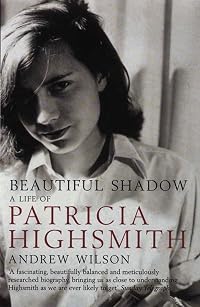
Andrew Wilson (in Beautiful Shadow: A Life of Patricia Highsmith) notes that Highsmith conceived the idea of this book after she had to deal with inheritance issues, and that she wrote to her editor that she wanted to explore the theme of legacy. I do believe this does indeed come across in the book - on one hand we have Frank and his father and brother, who are one line of legacy and on the other we have the similar personae of Tom and Frank. The central point of issue being that The Boy Who Followed Ripley actually rejects Tom's motivations as strongly as he rejects the motivations of his own family - both of them being financial gain.
I honestly don't know what to make of the book. On one hand, there are certainly some interesting themes - Ripley's morals, questions about gender/sexuality, the topic of legacy - but on the other hand, the lack of flow of the book and the rocky plot make it bit of a chore to read. show less
In this one, Tom is sought out in his home in France by an American teenage runaway who asks him for a job. Tom agrees to hire him as a help in the garden. As they get to know each other, Tom learns more about the reasons why Billy/Frank ran away from home and sees some similarities between himself and the boy.
Then the story takes a turn that leads us to follow the two to Berlin where Billy/Frank is kidnapped.......
This book seriously had me scratching my head - I don't even know where to start taking this apart: Should I start with the obvious flaw? Yes? OK - plot holes. So, so, many of show more them and they start right at the beginning. Why did Billy/Frank seek out Tom? Why does he tell him his motivations? Why do they need to go to Berlin? How do they end up in the gay bar scene? (I mean, I get why, so the question is really how?) Why the kidnapping? And here I'm really puzzled as to how this would even be practicable....... I have so, so many questions. Very little of this book made sense. Least of all the Frank's letter.
Did Highsmith write this one purely for the money? I mean, there are a lot of details about the French tax authorities in this book that sound similar to what Highsmith was dealing with. Her relations with the French tax authorities were, erm, "strained", so maybe that was one of the motivations for the book.
However, there was also something rather mellow in the way that Tom looked after Frank and in that Tom seemed to have a lot more patience for other people than in the first book. (I have not yet read books 2 and 3.) And something about this more personable side seemed to reflect something of the author. At least, it seemed to reflect some of what my impression is about the author after reading a few of her books, and this made The Boy Who Followed Ripley still somewhat intriguing.
Andrew Wilson (in Beautiful Shadow: A Life of Patricia Highsmith) notes that Highsmith conceived the idea of this book after she had to deal with inheritance issues, and that she wrote to her editor that she wanted to explore the theme of legacy. I do believe this does indeed come across in the book - on one hand we have Frank and his father and brother, who are one line of legacy and on the other we have the similar personae of Tom and Frank. The central point of issue being that The Boy Who Followed Ripley actually rejects Tom's motivations as strongly as he rejects the motivations of his own family - both of them being financial gain.
I honestly don't know what to make of the book. On one hand, there are certainly some interesting themes - Ripley's morals, questions about gender/sexuality, the topic of legacy - but on the other hand, the lack of flow of the book and the rocky plot make it bit of a chore to read. show less
Members
- Recently Added By
Lists

Books Read in 2017
4,249 works; 130 members

1980 great books
63 works; 1 member
Author Information

302+ Works 32,997 Members
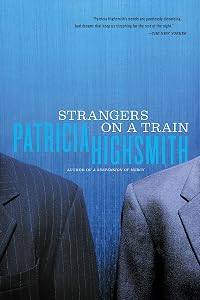
Patricia Highsmith wrote twenty-one novels including "Strangers on a Train" & the "Ripley" series. She died in 1995 in Switzerland, where she resided much of her life. (Publisher Provided) Patricia Highsmith (January 19, 1921 -- February 4, 1995) was an American novelist and short story writer, most widely known for her psychological thrillers, show more which led to more than two dozen film adaptations. She was born in Fort Worth, Texas. Highsmith grew up with her maternal grandmother in Astoria, Queens, and attended Barnard College. Her first novel, Strangers on a Train (1950), was adapted for stage and screen numerous times, notably by Alfred Hitchcock in 1951. In addition to her acclaimed series about murderer Tom Ripley, which was made into a film in 1955, she wrote many short stories, often macabre, satirical or tinged with black humor. Highsmith liked to examine the ways in which people can get to the point where they are capable of murder, as well as who they become after they have committed a crime. In carefully constructed stories and novels, she integrated this scrutiny of the human psyche into complex plots that often took unexpected twists. In Strangers on a Train, architect Guy Haines meets Charles Bruno on a train. Bruno conceives a plan to have Haines kill Bruno's father, while Bruno will kill Haines's wife. The effect that this plan has on Haines is the focus of the story. Highsmith's awards include: O. Henry Award for best publication of first story, for "The Heroine" in Harper's Bazaar (1946), Grand Prix de Littérature Policière, for The Talented Mr. Ripley (1957), and the Dagger Award -- Category Best Foreign Novel, for The Two Faces of January from the Crime Writers' Association of Great Britain (1964). Highsmith died of aplastic anemia and cancer in Locarno, Switzerland, at age 74. Her last novel, Small G: A Summer Idyll, was published one month after her death in 1995. (Bowker Author Biography) show less
Some Editions
Series

Belongs to Publisher Series
Jännityksen mestarit (86)
detebe (20649)
Work Relationships
Common Knowledge
- Canonical title*
- Den forfulgte mr. Ripley
- Original title
- The Boy Who Followed Ripley
- Original publication date
- 1980
- People/Characters
- Tom Ripley; Frank Pierson (Billy); Reeves Minot; Heloise Ripley
- Important places
- Berlin Zoological Garden, Berlin, Germany; Germany; France
- Dedication
- To Monique Buffet
- First words
- Tom crept forward as silently as possible on his parquet floor, crossed the threshold of his bathroom, and paused and listened.
- Last words
- (Click to show. Warning: May contain spoilers.)Frank would be lowered into a grave today, Tom felt sure, and he didn't care to figure out just when it might be, because for Frank time had ceased to matter.
- Original language
- English
*Some information comes from Common Knowledge in other languages. Click "Edit" for more information.
Classifications
Statistics
- Members
- 1,131
- Popularity
- 22,373
- Reviews
- 28
- Rating
- (3.49)
- Languages
- 16 — Catalan, Chinese, Danish, Dutch, English, Estonian, Finnish, French, German, Italian, Norwegian (Bokmål), Norwegian, Russian, Spanish, Swedish, Portuguese (Portugal)
- Media
- Paper, Audiobook, Ebook
- ISBNs
- 57
- ASINs
- 19