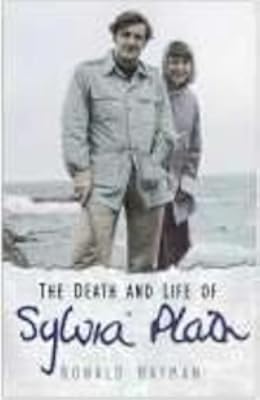
The Death and Life of Sylvia Plath
by Ronald Hayman
On This Page
Description
Not a conventional biograpy, this book offers an explanation of Sylvia Plaths death in 1963. The author looks back on Plaths life in an attempt to offer an objective account of why she killed herself and discusses her life with her husband Ted Hughes.Tags
Recommendations














Member Reviews
The book opens with an account of her death which the reviewers at the Sunday Times’ blurb say will drive you to tears, it made me feel uncomfortable, why was I reading a detailed account of someone’s suicide which made me question myself why do I read accounts of Jack the Ripper Murders when I wouldn’t dream of reading books on the Yorkshire Ripper or Myra Hindley or pick up a so called ‘misery-memoir.’ What this book highlighted was the myth that is created by death and the question of public ownership. I think the author’s intention was to stay, as objective as possible and I liked the way he linked Plath’s life to her poetry though sometimes these links felt a little tenuous as this made it feel less of a biography of show more a suicide and more of a biography of a poet.
Initially as a biographer Plath’s mental health problems were clearly explained and in a balanced way, the biographer didn’t blame her mother, just explained how Plath herself blamed her mother, her father and her upbringing after all Warren her brother never suffered the same issues as his sister. Her childhood and adolescence are explained in reference to her poetry.
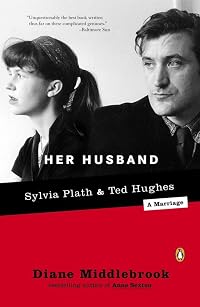
When Plath meets Hughes is where the biographer gets confused initially he blames Plath for her encouragement of Hughes’ violence almost accuses her of making him do it. This is one of them most shocking passages I have read as he describes Plath as sitting in front of her mirror proud of her bruises, whether or not this is how Plath expresses it in her journals this does not excuse the violence (if it indeed happened) or any excuse behind it, the author seems to think it was justified because Plath was so demanding and difficult firmly puts the blame on her and excuses Hughes. It seems rather than take the objective route that he had with Plath and her relationship with her mother, he now veers between blaming Plath then Hughes, placing the blame finally at the door of Hughes.
The reason for his animosity to Hughes seems to be criticising Hughes for his lack cooperation with Plath (and Hughes) biographers, which as a biographer must be frustrating, no poetry is directly quoted just alluded to. The responsibility for Plath’s suicide is squarely placed on Hughes and his family, and the portrait of Hughes following Plath’s and then Assia’s deaths is subsequently a grim one.
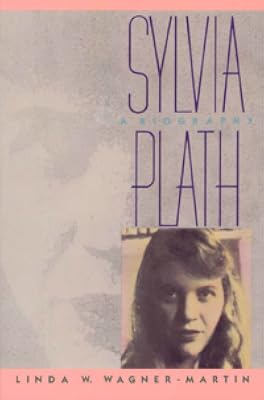
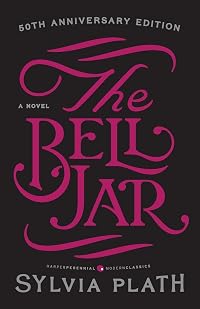
What this book did which I liked was make me reassess why I was reading it? It’s been years since I read the Bell Jar as a moody teenager obsessed with death and now as a 30 year old I just find it incredibly sad especially looking at pictures of a girl, my age who chose not to carry on. It also made me think as why I was reading this and I am as guilty as those who following Plath’s death mythologized her because of the way she died, not because of her poetry which to be honest I have never really enjoyed.
The book is called the life and death of Sylvia Plath there wasn’t an equal balance between the life and death, I think I would have liked the author to have gone more into the mythology and ‘cult’ that emerged after her death and how people’s opinions grew subsequently rather than a rather detailed description of her suicide where he threw up a number of questions which he then didn’t address and a harsh critique of Hughes in his following marriages, poetry and dealing of the Plath estate, it often feels that the notion that Hughes wanted to protect his children is an alien idea to biographers, there view seems along with the public that once Plath put her poetry and prose out there it and her life and death became public property not that of Hughes and his family. show less
Initially as a biographer Plath’s mental health problems were clearly explained and in a balanced way, the biographer didn’t blame her mother, just explained how Plath herself blamed her mother, her father and her upbringing after all Warren her brother never suffered the same issues as his sister. Her childhood and adolescence are explained in reference to her poetry.
When Plath meets Hughes is where the biographer gets confused initially he blames Plath for her encouragement of Hughes’ violence almost accuses her of making him do it. This is one of them most shocking passages I have read as he describes Plath as sitting in front of her mirror proud of her bruises, whether or not this is how Plath expresses it in her journals this does not excuse the violence (if it indeed happened) or any excuse behind it, the author seems to think it was justified because Plath was so demanding and difficult firmly puts the blame on her and excuses Hughes. It seems rather than take the objective route that he had with Plath and her relationship with her mother, he now veers between blaming Plath then Hughes, placing the blame finally at the door of Hughes.
The reason for his animosity to Hughes seems to be criticising Hughes for his lack cooperation with Plath (and Hughes) biographers, which as a biographer must be frustrating, no poetry is directly quoted just alluded to. The responsibility for Plath’s suicide is squarely placed on Hughes and his family, and the portrait of Hughes following Plath’s and then Assia’s deaths is subsequently a grim one.
What this book did which I liked was make me reassess why I was reading it? It’s been years since I read the Bell Jar as a moody teenager obsessed with death and now as a 30 year old I just find it incredibly sad especially looking at pictures of a girl, my age who chose not to carry on. It also made me think as why I was reading this and I am as guilty as those who following Plath’s death mythologized her because of the way she died, not because of her poetry which to be honest I have never really enjoyed.
The book is called the life and death of Sylvia Plath there wasn’t an equal balance between the life and death, I think I would have liked the author to have gone more into the mythology and ‘cult’ that emerged after her death and how people’s opinions grew subsequently rather than a rather detailed description of her suicide where he threw up a number of questions which he then didn’t address and a harsh critique of Hughes in his following marriages, poetry and dealing of the Plath estate, it often feels that the notion that Hughes wanted to protect his children is an alien idea to biographers, there view seems along with the public that once Plath put her poetry and prose out there it and her life and death became public property not that of Hughes and his family. show less
Maybe you have to experience get pain to produce great literary works, but I think Plath self-inflicted most of her pains. She decided to make the loss of her father the central event of her life. How sad.
Ratings
Members
- Recently Added By
Author Information

49 Works 1,486 Members
Ronald Hayman was born in Bournemouth and grew up in a hotel there. After studying English at St Paul's and Trinity Hall in Cambridge, Hayman went to drama school in London. While there, he began working as an actor in repertory theatre and in television. Hayman's first play, The End of an Uncle, was produced in 1959. In 1967, after directing show more plays by Genet, Goldoni, and Brecht at the Arts Theatre, Stratford East and Welwyn Garden City, Hayman started writing books and broadcasting. Then, in his book Hitler and Geli, Hayman explored the remarkable, yet relatively obscure, story of the affair between Adolf Hitler and his young niece Geli Raubal, who died under mysterious circumstances. Some of Hayman's other works include exposes on Samuel Beckett, Harold Pinter and Arthur Miller, and biographies of Sylvia Plath, Jean-Paul Sartre, the Marquis de Sade, and Tennessee Williams. (Bowker Author Biography) Ronald Hayman is the author of numerous internationally acclaimed biographies, including works on Friedrich Nietzsche, Jean-Paul Sartre, Marcel Proust, Sylvia Plath, & Thomas Mann. He lives in London. (Bowker Author Biography) show less
Series
Belongs to Publisher Series
Heyne Biographien (223)
Common Knowledge
- Canonical title*
- Sylvia Plath: Liebe, Traum and Tod
- Original title
- The Death and Life of Sylvia Plath
- Original publication date
- 1991
- People/Characters
- Sylvia Plath
- Dedication
- For Anne
- First words
- At about eigth o'clock in the evening on Sunday, 27 January 1963, Sylvia Plath went downstairs to ring the doorbell of the ground floor flat.
- Last words
- (Click to show. Warning: May contain spoilers.)Inevitably drawn into making connections between the words on the page and the texture of her daily life, readers need more help than they have been given.
*Some information comes from Common Knowledge in other languages. Click "Edit" for more information.
Classifications
Statistics
- Members
- 201
- Popularity
- 162,669
- Reviews
- 2
- Rating
- (3.58)
- Languages
- English, German
- Media
- Paper
- ISBNs
- 5
- ASINs
- 2