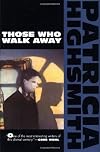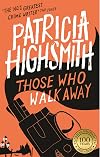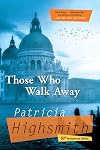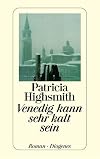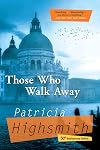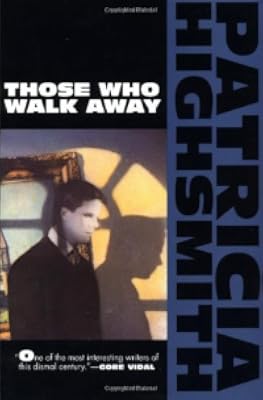
Those Who Walk Away
by Patricia Highsmith
On This Page
Description
Ray Garrett, a wealthy young American living in Europe, is grieving over the death of his wife. Ray is at a loss for why she would take her own life, but Peggy's father Ed Coleman, has no such uncertainty-he blames Ray completely. Late one night in Rome, Coleman shoots Ray at point-blank range. He thinks he's had his revenge, but Ray survives, and follows Coleman and his wealthy girlfriend to Venice. In Venice, it happens again: Coleman attacks his loathed son-in-law, dumping him into the show more cold waters of the laguna. Ray survives with the help of a boatman-and this time he goes into hiding, living in a privately rented room under a fake name. So begins an eerie game of cat and mouse. Coleman wants vengeance, Ray wants a clear conscience, and the police want to solve the mystery of what happened to the missing American. As Ray and Coleman stalk each other through the narrow streets and canals, the hotels and bars of the beguiling city, Those Who Walk Away becomes a literary thriller that simmers with violence and unease from the acclaimed author of such classics as Strangers on a Train and The Talented Mr. Ripley. show lessTags
Recommendations













Member Reviews
“My father-in-law is in Venice and he wants to kill me. My wife died a month ago.” “She was a suicide,” Ray said, “and her father thinks I am to blame.”
So, the father-in-law shoots the poor guy and when that fails, he pushes him off a boat into the cold Venice canal!
But Ray was still alive and on the loose! And up to something! And thus begins their game of cat and mouse! And even though I can't understand why Ray would keep giving Coleman repeated chances to kill him, it's a really interesting game to follow! Revenge, forgiveness, and grief all wrapped weaving through the streets and canals of Venice, Italy. I felt a dream-like quality fall over me every time I picked this up to read. It was hard to 'walk away' from it when show more it was done!
“ The boat gathered speed. The lights of Venice twinkled, burned steadily, rose and fell with the boat’s progress through the windblown water.”
“The world is not enough, therefore I leave it to find something bigger.” show less
So, the father-in-law shoots the poor guy and when that fails, he pushes him off a boat into the cold Venice canal!
But Ray was still alive and on the loose! And up to something! And thus begins their game of cat and mouse! And even though I can't understand why Ray would keep giving Coleman repeated chances to kill him, it's a really interesting game to follow! Revenge, forgiveness, and grief all wrapped weaving through the streets and canals of Venice, Italy. I felt a dream-like quality fall over me every time I picked this up to read. It was hard to 'walk away' from it when show more it was done!
“ The boat gathered speed. The lights of Venice twinkled, burned steadily, rose and fell with the boat’s progress through the windblown water.”
“The world is not enough, therefore I leave it to find something bigger.” show less
Peggy Garrett has committed suicide. Her husband, Ray, and her father, Coleman, are both grieving, but in different ways. Ray mourns the loss of the life they had together and the loss of her development as a painter. Coleman blames Ray for driving his daughter to suicide and goes so far as to shoot Ray one night. Fortunately, Ray survives and follows Coleman to Venice. But Coleman still wishes Ray dead and makes a second attempt to kill him. Ray takes the opportunity to hide out and attempt to set things straight somehow with Coleman.
This was a bit of a WTF book for me, as in “WTF, Coleman! Stop trying to kill your son-in-law!” It’s a strange scenario, probably not the most plausible, but I couldn’t help but read on to find out show more what bizarre behaviour Coleman would display next, and how Ray would deal with it. Ray displayed great resourcefulness—is he sure he doesn’t want to be a spy? I found it interesting, too, that Highsmith set the story in Venice. It reminded me a bit of Daphne du Maurier’s “Don’t Look Now” in that regard. This combination of books inspired me to look up some maps, read up on the vaporetti (the water buses), and re-request the Michael Dibdin book Dead Lagoon to get some more of that Venetian atmosphere. show less
This was a bit of a WTF book for me, as in “WTF, Coleman! Stop trying to kill your son-in-law!” It’s a strange scenario, probably not the most plausible, but I couldn’t help but read on to find out show more what bizarre behaviour Coleman would display next, and how Ray would deal with it. Ray displayed great resourcefulness—is he sure he doesn’t want to be a spy? I found it interesting, too, that Highsmith set the story in Venice. It reminded me a bit of Daphne du Maurier’s “Don’t Look Now” in that regard. This combination of books inspired me to look up some maps, read up on the vaporetti (the water buses), and re-request the Michael Dibdin book Dead Lagoon to get some more of that Venetian atmosphere. show less
This was one of my favorite of the Highsmith novels I've read. The back-and-forth between the main character, a bereaved husband, and his father-and-law, was absolutely priceless. As was the strange detachment and blind eye that their mutual friends turned towards the obvious conflict between the two. It was refreshing that the main character was always in the right (Highsmith has a way with turning the main characters into villains that you can sympathize with), but it was also interesting to see him possibly turned into a criminal by the end of the book.
I also loved the Venetian setting. Perfect for sneaking around in, drowning people, springing out of back allies, et cetera.
I was a little disappointed by the conclusion. As much as I show more was really rooting for the main character to stay on the side of the law, the father-in-law really did have it coming by the end of the book. I was also disappointed the main character didn't try harder to... press charges, or call attention to the father-in-law's repeated attempts at murder. But overall I loved this book. I think only The Talented Mr. Ripley really topped it in my mind among all the Highsmith novels I've read. show less
I also loved the Venetian setting. Perfect for sneaking around in, drowning people, springing out of back allies, et cetera.
I was a little disappointed by the conclusion. As much as I show more was really rooting for the main character to stay on the side of the law, the father-in-law really did have it coming by the end of the book. I was also disappointed the main character didn't try harder to... press charges, or call attention to the father-in-law's repeated attempts at murder. But overall I loved this book. I think only The Talented Mr. Ripley really topped it in my mind among all the Highsmith novels I've read. show less
Another classic in the same vein as Highsmith's Ripley series. The setting is Venice during the winter. It's dreary. Ray, whose wife committed suicide some weeks before, has followed his father-in-law, Ed Coleman, from Rome where Ed tried to shoot him. Ed thinks his son-in-law didn't do enough to prevent the suicide. There follows a bizarre pas-de-deux between the two as each circles the other, Ed, distraught over the death of his daughter, and Ray trying to make amends. Ed makes other attempts on Ray's life. Ray survives each attempt and follows Ed Coleman, in an attempt to seek forgiveness, only to be dragged back to reality.
The book has the same dream-like (nightmarish?) quality made famous by Highsmith's Ripley series. Ray and Ed show more both live in a world of opaque amorality. The settings (mostly Venice) are well-described and we see into the minds of both men as Highsmith switches back and forth between the two perspectives. Not your usual thriller.
Having read the Ripley series I kept "assuming" that Ray had had a hand in his wife's suicide. No one is innocent in her novels, nor does the the question of what is "right" ever come up. Self-interest is paramount. All actions are judged from that perspective. show less
The book has the same dream-like (nightmarish?) quality made famous by Highsmith's Ripley series. Ray and Ed show more both live in a world of opaque amorality. The settings (mostly Venice) are well-described and we see into the minds of both men as Highsmith switches back and forth between the two perspectives. Not your usual thriller.
Having read the Ripley series I kept "assuming" that Ray had had a hand in his wife's suicide. No one is innocent in her novels, nor does the the question of what is "right" ever come up. Self-interest is paramount. All actions are judged from that perspective. show less
This was a fine way to while away some sick time, but I would not say it was her best. Fortunately a less than superior offering by Highsmith is so very much better than most people's pinnacle of achievement. I found myself unconvinced by the motivation/character of Ray, the main character, or Coleman's, his adversary. Not once did either of them - or anybody in the story - feel real to me.
Rest here.
https://alittleteaalittlechat.wordpress.com/2015/01/11/those-who-walk-away-by-pa...
Rest here.
https://alittleteaalittlechat.wordpress.com/2015/01/11/those-who-walk-away-by-pa...
There was something psychologically amiss from the beginning, as Ray never particularly appeared to be in mourning for his wife. But we follow his story for a good portion of the book, and then all of a sudden we shift to Coleman’s perspective. Maybe it was narratively necessary, to tell the parts of the story that Ray was not around to see, but it felt jarring. There were some very gripping sequences and I never really found myself bored, but I did wonder at the end, ultimately, what was the point of the story?
Members
- Recently Added By
Lists

Books mentioned in Julian Symons’ Bloody Murder
438 works; 6 members

Books Read in 2019
4,052 works; 110 members

Books With the Most Memorable Titles
478 works; 158 members
Author Information

302+ Works 32,974 Members
Patricia Highsmith wrote twenty-one novels including "Strangers on a Train" & the "Ripley" series. She died in 1995 in Switzerland, where she resided much of her life. (Publisher Provided) Patricia Highsmith (January 19, 1921 -- February 4, 1995) was an American novelist and short story writer, most widely known for her psychological thrillers, show more which led to more than two dozen film adaptations. She was born in Fort Worth, Texas. Highsmith grew up with her maternal grandmother in Astoria, Queens, and attended Barnard College. Her first novel, Strangers on a Train (1950), was adapted for stage and screen numerous times, notably by Alfred Hitchcock in 1951. In addition to her acclaimed series about murderer Tom Ripley, which was made into a film in 1955, she wrote many short stories, often macabre, satirical or tinged with black humor. Highsmith liked to examine the ways in which people can get to the point where they are capable of murder, as well as who they become after they have committed a crime. In carefully constructed stories and novels, she integrated this scrutiny of the human psyche into complex plots that often took unexpected twists. In Strangers on a Train, architect Guy Haines meets Charles Bruno on a train. Bruno conceives a plan to have Haines kill Bruno's father, while Bruno will kill Haines's wife. The effect that this plan has on Haines is the focus of the story. Highsmith's awards include: O. Henry Award for best publication of first story, for "The Heroine" in Harper's Bazaar (1946), Grand Prix de Littérature Policière, for The Talented Mr. Ripley (1957), and the Dagger Award -- Category Best Foreign Novel, for The Two Faces of January from the Crime Writers' Association of Great Britain (1964). Highsmith died of aplastic anemia and cancer in Locarno, Switzerland, at age 74. Her last novel, Small G: A Summer Idyll, was published one month after her death in 1995. (Bowker Author Biography) show less
Some Editions
Awards and Honors
Awards
Series
Belongs to Publisher Series
Common Knowledge
- Original title
- Those Who Walk Away
- Original publication date
- 1967
- First words
- Coleman was saying, "She had no brothers or sisters. Makes things a little easier, I suppose."
Classifications
Statistics
- Members
- 529
- Popularity
- 56,525
- Reviews
- 12
- Rating
- (3.50)
- Languages
- 10 — Catalan, Dutch, English, Finnish, French, German, Greek, Italian, Portuguese, Spanish
- Media
- Paper, Audiobook, Ebook
- ISBNs
- 37
- ASINs
- 13