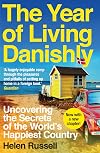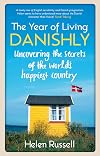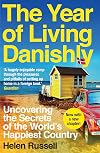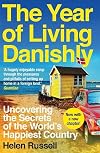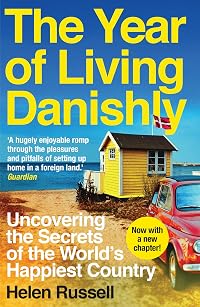
The Year of Living Danishly: Uncovering the Secrets of the World's Happiest Country
by Helen Russell
On This Page
Description
* NOW WITH A NEW CHAPTER *'A hugely enjoyable romp through the pleasures and pitfalls of setting up home in a foreign land.'- Guardian
Given the opportunity of a new life in rural Jutland, Helen Russell discovered a startling statistic: Denmark, land of long dark winters, cured herring, Lego and pastries, was the happiest place on earth.
Keen to know their secrets, Helen gave herself a year to uncover the formula for Danish happiness.
From childcare, education, food and interior design show more to SAD and taxes, The Year of Living Danishly records a funny, poignant journey, showing us what the Danes get right, what they get wrong, and how we might all live a little more Danishly ourselves.
In this new edition, six years on Helen reveals how her life and family have changed, and explores how Denmark, too – or her understanding of it – has shifted. It's a messy and flawed place, she concludes – but can still be a model for a better way of living.
. show less
Tags
Recommendations



























Member Reviews
One British woman moves to Denmark for a year when her husband is hired by LEGO and she researches their claim to be the happiest nation on earth. She delves into a fascinating mix of unemployment rates, government provided childcare and maternity leave, a nationwide month-long holiday, shorter work days, more hobbies, alcohol, and rules, holiday traditions, and trust. I appreciated her skepticism and research and each of the claims as she uncovered “the Danish way” and revealed a whole different culture than what I am accustomed to. It was written with such wit and humor and is such a fun read.
“It’s as though the trust allows the welfare state to exist and not the other way around Danes accept that they must pay high taxes show more because they trust that the government will use their money wisely and do the right thing.”
“It is a truth universally acknowledged that being told to relax makes the action itself impossible.”
“Yes, even wishes have rules in Denmark.”
“But once I got the role I’ve been striving towards, I realized I wasn’t actually any happier – just busier.”
“One of the benefits of being a journalist is that I get to be nosy for a living.” show less
“It’s as though the trust allows the welfare state to exist and not the other way around Danes accept that they must pay high taxes show more because they trust that the government will use their money wisely and do the right thing.”
“It is a truth universally acknowledged that being told to relax makes the action itself impossible.”
“Yes, even wishes have rules in Denmark.”
“But once I got the role I’ve been striving towards, I realized I wasn’t actually any happier – just busier.”
“One of the benefits of being a journalist is that I get to be nosy for a living.” show less
Helen Russell is a London-based journalist working long hours to further her career, but finding herself feeling more stressed than satisfied. When her husband is offered a job working for a Danish company, they decide to take a leap into the unknown for a year and see how it works out. Helen turns to freelance journalism focused largely on Danish culture and lifestyle, seeking to understand what is behind the studies showing Danes to be the happiest people on earth. Each chapter of this memoir looks at one aspect of Danish living, from home life and weather to government, from traditions and food to gender roles and parenting. The insights to Danish culture and happiness are interesting and thought-provoking.
In parallel to her show more cultural analysis, Russell candidly shares their immigrant/expat experience, which goes well beyond the obvious language issues to very real differences in mindset and social norms which are not obvious and can easily be violated. Russell’s writing style is breezy, with plenty of humor even when writing about hard times. It’s clear the experience changed Russell and her husband for the better, and the book ends on a positive and hopeful note. show less
In parallel to her show more cultural analysis, Russell candidly shares their immigrant/expat experience, which goes well beyond the obvious language issues to very real differences in mindset and social norms which are not obvious and can easily be violated. Russell’s writing style is breezy, with plenty of humor even when writing about hard times. It’s clear the experience changed Russell and her husband for the better, and the book ends on a positive and hopeful note. show less
8 years ago, I was working in the American office of a Danish company, waiting for the paperwork to go through on my transfer to Denmark, when I met my (now) husband and ended up moving to Australia instead. I have a fair few friends there in Denmark and that decision was the sliding doors moment of my life in very significant ways. No regrets, just a nagging suspicion that I'd like living in Europe a lot.
Dashing through the bookstore the other day (I was playing roulette with the parking meter) this book caught my eye from the bottom shelf of the recessed nook it was relegated to and I snatched it up - this might be a great way of finding out what it might have been like for me (from a cultural perspective) had I continued on through show more door #1.
The book is told from the perspective of a UK journalist who agreed to move to Denmark for one year so her husband could take a job with Lego and is split into 13 chapters, one for each month and one for Christmas. Knowing nothing about the culture or the language, they transplant themselves to the wilds of Jutland (Billund, to be exact - I'd have lived in Aalborg, about 2 hours north) and the author decides to view the whole thing as an experiment: could living "Danishly" help her find a more centered, balanced, and less stressful lifestyle? Help her re-arrange her priorities?
A funny, sometimes laugh-out-loud read that includes a deceptive amount of research and statistics - I enjoyed the whole thing. It's longer than one might expect from a humorous memoir, but it's never boring. Overall, the author is fair, relying on stats to make her comparisons, although she often makes Denmark sound rather cultish, with her numerous references to "The Danish Way" and there's a touch or two of demonising the good old USA but I'm coming to expect that anyway, and there's a lot less of it than there could be.
Entertaining and informative, at the end, I was left with the certainty that I could live there (they "overheat" their houses, so I'd actually stand a chance of being comfortable!) but I'd struggle with their level of faith and trust in their government (it's not wrong!, just dramatically different than the "challenge everything" ethos I was raised with). But then again, I'd have 5 weeks of paid holiday to get over it... show less
Dashing through the bookstore the other day (I was playing roulette with the parking meter) this book caught my eye from the bottom shelf of the recessed nook it was relegated to and I snatched it up - this might be a great way of finding out what it might have been like for me (from a cultural perspective) had I continued on through show more door #1.
The book is told from the perspective of a UK journalist who agreed to move to Denmark for one year so her husband could take a job with Lego and is split into 13 chapters, one for each month and one for Christmas. Knowing nothing about the culture or the language, they transplant themselves to the wilds of Jutland (Billund, to be exact - I'd have lived in Aalborg, about 2 hours north) and the author decides to view the whole thing as an experiment: could living "Danishly" help her find a more centered, balanced, and less stressful lifestyle? Help her re-arrange her priorities?
A funny, sometimes laugh-out-loud read that includes a deceptive amount of research and statistics - I enjoyed the whole thing. It's longer than one might expect from a humorous memoir, but it's never boring. Overall, the author is fair, relying on stats to make her comparisons, although she often makes Denmark sound rather cultish, with her numerous references to "The Danish Way" and there's a touch or two of demonising the good old USA but I'm coming to expect that anyway, and there's a lot less of it than there could be.
Entertaining and informative, at the end, I was left with the certainty that I could live there (they "overheat" their houses, so I'd actually stand a chance of being comfortable!) but I'd struggle with their level of faith and trust in their government (it's not wrong!, just dramatically different than the "challenge everything" ethos I was raised with). But then again, I'd have 5 weeks of paid holiday to get over it... show less
Read: May 2017
Helen Russell's account of her year of living abroad in Denmark was a wonderfully entertaining, funny read. I have always had a longing to live in one of the Scandinavian countries and now for me Denmark has overtaken Iceland as the place I really want to live and work in one day. Russell talks frankly about the ups and downs of being an immigrant in Denmark, the language and culture shock, incredibly high taxes, high divorce rates and the fact the Denmark has the highest number of female lung cancer sufferers in the world (on account of the fact that smoking is still incredibly popular there). But there are also so many positives to the Danish way of life; one of the best healthcare systems in the world, free education, show more heavily subsidised childcare fees, low rate of unemployment and a welfare system that puts every other country to shame.
Russell tells her immigration story in a funny, self-depreciating way that reminds me a little of Bridget Jones' Diary. For me this wasn't necessarily a bad thing, but there were times when it felt a little forced. This didn't put me off reading in any way and overall I very much enjoyed this book.
Rating: 4/5 stars show less
Helen Russell's account of her year of living abroad in Denmark was a wonderfully entertaining, funny read. I have always had a longing to live in one of the Scandinavian countries and now for me Denmark has overtaken Iceland as the place I really want to live and work in one day. Russell talks frankly about the ups and downs of being an immigrant in Denmark, the language and culture shock, incredibly high taxes, high divorce rates and the fact the Denmark has the highest number of female lung cancer sufferers in the world (on account of the fact that smoking is still incredibly popular there). But there are also so many positives to the Danish way of life; one of the best healthcare systems in the world, free education, show more heavily subsidised childcare fees, low rate of unemployment and a welfare system that puts every other country to shame.
Russell tells her immigration story in a funny, self-depreciating way that reminds me a little of Bridget Jones' Diary. For me this wasn't necessarily a bad thing, but there were times when it felt a little forced. This didn't put me off reading in any way and overall I very much enjoyed this book.
Rating: 4/5 stars show less
Very enjoyable read. Russell’s experience was easy to buy into, and the lessons learned from her time in Denmark can be applied without leaving your home town. The book is very well written, something you don’t always see with books like this. Highly recommend.
Living under President Trump, wondering if I'm going to have to move to some other country, I think about how nice it would be if we lived under Birgitte Nyborg of Borgen (Danish TV series) instead.
(And in addition to Borgen, I also enjoyed Forbrydelsen, Rita, The Legacy, etc.) Didn't Bernie Sanders say his platform was to make America more like Democratic Socialist Denmark?
And with the cute title (I assume a pun on Living Dangerously, but it is never made explicit), I had to give it a try. Though I now know many factoids about Danish life, I feel like I really don't know much more than I did going in. This is because it is really more of a very long magazine article about the author's not that typical experiences instead of Unearthed show more Secrets as the subtitle suggests.
It didn't take long (a few chapters) for me to suspect that the reason Danes in these surveys rate themselves as happy tells us less about happiness and more about how Danes report on their happiness. A look at some of the other reviews shows that Danes rated this book higher than average. We're not talking about anything objective in these ratings. Donald Trump himself would rate himself a 10 out of 10, I'm sure but the expressions on his face in pictures suggest something definitely below 5, and this is while being president.
I still think Bernie is right to want to emulate the Dane's social welfare system, but I remember the right wing party in Borgen and their fear of immigrants and realize that it's not that easy to get away from that point of view. Helen Russel seemed to not meet any Muslims or even any Jews during her year there.
Maybe Iceland, where the bankers did actual jail time, would be better? Thing is, I hate cold weather and the Denmark described in this book is more than cold enough to keep me away.
Imagine how difficult it would be to learn what living in America was like by reading a memoir of a Dane who lived in, say, Redmond with a job at Microsoft. In the end, what I learned is that culture is culture, and be it British or Danish, from the inside it looks normal to you. show less
(And in addition to Borgen, I also enjoyed Forbrydelsen, Rita, The Legacy, etc.) Didn't Bernie Sanders say his platform was to make America more like Democratic Socialist Denmark?
And with the cute title (I assume a pun on Living Dangerously, but it is never made explicit), I had to give it a try. Though I now know many factoids about Danish life, I feel like I really don't know much more than I did going in. This is because it is really more of a very long magazine article about the author's not that typical experiences instead of Unearthed show more Secrets as the subtitle suggests.
It didn't take long (a few chapters) for me to suspect that the reason Danes in these surveys rate themselves as happy tells us less about happiness and more about how Danes report on their happiness. A look at some of the other reviews shows that Danes rated this book higher than average. We're not talking about anything objective in these ratings. Donald Trump himself would rate himself a 10 out of 10, I'm sure but the expressions on his face in pictures suggest something definitely below 5, and this is while being president.
I still think Bernie is right to want to emulate the Dane's social welfare system, but I remember the right wing party in Borgen and their fear of immigrants and realize that it's not that easy to get away from that point of view. Helen Russel seemed to not meet any Muslims or even any Jews during her year there.
Maybe Iceland, where the bankers did actual jail time, would be better? Thing is, I hate cold weather and the Denmark described in this book is more than cold enough to keep me away.
Imagine how difficult it would be to learn what living in America was like by reading a memoir of a Dane who lived in, say, Redmond with a job at Microsoft. In the end, what I learned is that culture is culture, and be it British or Danish, from the inside it looks normal to you. show less
The "secrets" of the world's (formerly) happiest country (having been edged out by other Nordic countries since the writing of this book, including Finland, which has held the title for the past 5 years) include:
*genetic superiority (apparently Danes are genetically predisposed to being happy)
*traditions, traditions, and more traditions
*being able to trust their government to:
(a) provide childcare and high-quality comprehensive education;
(b) not only provide free higher education, but even pay students a stipend;
(c) cover retraining if they decide to switch careers;
(d) provide health care, leaving them free to drink, smoke, or otherwise abuse their bodies;
(e) cover baby leave for both parents;
(f) regulate gender-equality in pay;
show more (g) allow them to vacation for most of a month every year.
In light of all that, it's kind of amazing that Americans manage to rank in the teens most years (16th out of 146 in 2022), but I suppose that depends on who you're asking, as does much of Ms. Russell's "research" in this book. She sprinkles a lot of facts and "facts" in amongst her narrative of living in Denmark for a year, when her husband (known in these pages as "Lego Man") gets a chance to work for Lego. (According to my own extensive internet research, they still live in Denmark.) She mostly interviews academics and other professionals about various aspects of Danish culture, although she does try to ask her "refuse man" about his level of happiness. The mail carrier has to step in to translate. Garbageman says he's an 8 out of 10 for happiness & likes his job, and that's about the extent of her interactions with blue collar workers.
Jumping back and forth between her personal experiences with locals such as "Friendly Neighbor," "The Viking," and "Mr. Beards I, II, & III," and her research and interviews with various "experts," the whole book is a little jarring. I'm not entirely sure what I expected from this title, but this wasn't necessarily it. Overall, it was a decent read, which made me jealous of the entire Danish system. (When I summarized some of her points at dinner one night, my 13 y.o. said he might want to move there -- not the first time he's expressed interest in living in a Nordic nation.) Will the information in this book increase my happiness? Eh, probably not. show less
*genetic superiority (apparently Danes are genetically predisposed to being happy)
*traditions, traditions, and more traditions
*being able to trust their government to:
(a) provide childcare and high-quality comprehensive education;
(b) not only provide free higher education, but even pay students a stipend;
(c) cover retraining if they decide to switch careers;
(d) provide health care, leaving them free to drink, smoke, or otherwise abuse their bodies;
(e) cover baby leave for both parents;
(f) regulate gender-equality in pay;
show more (g) allow them to vacation for most of a month every year.
In light of all that, it's kind of amazing that Americans manage to rank in the teens most years (16th out of 146 in 2022), but I suppose that depends on who you're asking, as does much of Ms. Russell's "research" in this book. She sprinkles a lot of facts and "facts" in amongst her narrative of living in Denmark for a year, when her husband (known in these pages as "Lego Man") gets a chance to work for Lego. (According to my own extensive internet research, they still live in Denmark.) She mostly interviews academics and other professionals about various aspects of Danish culture, although she does try to ask her "refuse man" about his level of happiness. The mail carrier has to step in to translate. Garbageman says he's an 8 out of 10 for happiness & likes his job, and that's about the extent of her interactions with blue collar workers.
Jumping back and forth between her personal experiences with locals such as "Friendly Neighbor," "The Viking," and "Mr. Beards I, II, & III," and her research and interviews with various "experts," the whole book is a little jarring. I'm not entirely sure what I expected from this title, but this wasn't necessarily it. Overall, it was a decent read, which made me jealous of the entire Danish system. (When I summarized some of her points at dinner one night, my 13 y.o. said he might want to move there -- not the first time he's expressed interest in living in a Nordic nation.) Will the information in this book increase my happiness? Eh, probably not. show less
Members
- Recently Added By
Lists

Books Read in 2019
4,052 works; 108 members
Author Information
6 Works 1,063 Members
Awards and Honors
Distinctions
Common Knowledge
- Dedication
- For Little Red, Lego Man and the woman in the salopettes-'n'-beret combo.
Classifications
- Genres
- Travel, General Nonfiction, Nonfiction, Biography & Memoir
- DDC/MDS
- 948.950612 — History & geography History of Europe Northern Europe: Norway, Sweden, Denmark, Finland, Iceland Denmark and Finland Jutland
- LCC
- DL131 — History of Europe, Asia, Africa and Oceania Northern Europe. Scandinavia History of Northern Europe. Scandinavia Denmark Antiquities. Social life and customs. Ethnography
- BISAC
Statistics
- Members
- 889
- Popularity
- 30,241
- Reviews
- 36
- Rating
- (3.74)
- Languages
- 5 — Danish, English, German, Hungarian, Portuguese (Portugal)
- Media
- Paper, Audiobook, Ebook
- ISBNs
- 11
- ASINs
- 10