On This Page
Description
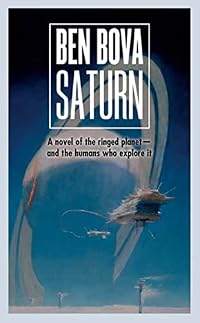
On a future Earth where fundamentalist politicians rule, the planet's dissidents are boarded on a space ark destined for Saturn, a journey that is further challenged by the schemes of corrupt individuals.Tags
Recommendations


































Member Reviews
[b:Saturn|64703|Saturn (The Grand Tour, #13)|Ben Bova|https://i.gr-assets.com/images/S/compressed.photo.goodreads.com/books/1316130751l/64703._SY75_.jpg|2566821] was something of a bummer, especially coming off [b:Jupiter|267334|Jupiter (The Grand Tour, #9)|Ben Bova|https://i.gr-assets.com/images/S/compressed.photo.goodreads.com/books/1442052818l/267334._SY75_.jpg|293541] and the Asteroid Wars, [b:The Aftermath|768917|The Aftermath (The Grand Tour, #12; The Asteroid Wars, #4)|Ben Bova|https://i.gr-assets.com/images/S/compressed.photo.goodreads.com/books/1442426245l/768917._SY75_.jpg|754977] in particular. It might as well have been called 'adventures of a colony ship', since it's only in the last fraction of the book that we actually show more make it to Saturn. The rest of the book is spent by power hungry religious zealots trying to take over a ship ostensibly populated by ten thousand people trying to escape exactly that sort of behavior.
On top of that, I don't really care about any of the characters. They're all either cartoonishly evil or inept or scientists that need concepts they should know cold explained to them. It's kind of a bummer also that the main character went through the cryogenic freeze/thaw that we've seen discussed in other books, leaving her having to rebuild her life from scratch. But it really doesn't actually go anywhere. A missed opportunity.
About the only really cool things that redeem this book were the discovery of life and the set up for even grander future books.
For the former, it's sort of Bova's / The Grand Tour's thing that life is found absolutely everywhere, so it's no surprise that Saturn is no exception, but the way it's done was pretty cool. I would much rather have read a book about life inin the rings of Saturn ... And they didn't even make it to Titan. I guess that's why [b:Titan|267281|Titan (The Grand Tour, #15)|Ben Bova|https://i.gr-assets.com/images/S/compressed.photo.goodreads.com/books/1316727959l/267281._SY75_.jpg|259134] is a thing.
For the latter, I fully expect a generation ship to show up at some point. With Saturn, it's within the realm of technically possible. Really, if Saturn had taken place on such a generation ship, I think it would have made a much stronger story. So it goes.
Overall, another skippable book in the Grand Tour, unless you really want the full set.
Onwards (and backwards?) to [b:Leviathans of Jupiter|8730311|Leviathans of Jupiter (The Grand Tour, #14)|Ben Bova|https://i.gr-assets.com/images/S/compressed.photo.goodreads.com/books/1316130496l/8730311._SY75_.jpg|13574702]! show less
On top of that, I don't really care about any of the characters. They're all either cartoonishly evil or inept or scientists that need concepts they should know cold explained to them. It's kind of a bummer also that the main character went through the cryogenic freeze/thaw that we've seen discussed in other books, leaving her having to rebuild her life from scratch. But it really doesn't actually go anywhere. A missed opportunity.
About the only really cool things that redeem this book were the discovery of life and the set up for even grander future books.
For the former, it's sort of Bova's / The Grand Tour's thing that life is found absolutely everywhere, so it's no surprise that Saturn is no exception, but the way it's done was pretty cool. I would much rather have read a book about life in
For the latter, I fully expect a generation ship to show up at some point. With Saturn, it's within the realm of technically possible. Really, if Saturn had taken place on such a generation ship, I think it would have made a much stronger story. So it goes.
Overall, another skippable book in the Grand Tour, unless you really want the full set.
Onwards (and backwards?) to [b:Leviathans of Jupiter|8730311|Leviathans of Jupiter (The Grand Tour, #14)|Ben Bova|https://i.gr-assets.com/images/S/compressed.photo.goodreads.com/books/1316130496l/8730311._SY75_.jpg|13574702]! show less
Bova's forte is human interactions and this book is chock full of them. In fact, it's about creation of a political system among various and disparate groups. Unfortunately, the folks who were aboard consisted mostly of misfits and malcontents...like the Brits sent to Australia? At the end, when the habitat reaches Saturn, the reader must wonder what comes next...
(Alistair) Sorry, Mr. Bova, but this book, not to put too fine a point on it, sucked.
Why? Well, part of it may well have been me, seeing as world-backgrounds that have Earth dominated by fundamentalist, anti-science, anti-reason governments are little to my taste at the best of times. (This is part of the Grand Tour series, and apparently they all share this background. Looks like Mars has just slipped right down my reading list.)
And, well, it's not one thing or the other. Lots of characters - in the 10,000 assorted scientists and freethinkers being shipped off on this one-way mission to Saturn, while one of the governments treats them as a social experiment - without nearly enough personality between them. A mostly unsympathetic show more manipulator being manipulated by other unsympathetic manipulator. And while I don't normally go to Bova for character, but rather for decent science, we don't even get that - just a very small taste of new ideas, not significantly explored, near the very end of the book; that, and half the routine space science is wrong.
Readable enough, but thoroughly unsatisfying. Not recommended. ( http://weblog.siliconcerebrate.com/cerebrate/2008/11/saturn_ben_bova.html ) show less
Why? Well, part of it may well have been me, seeing as world-backgrounds that have Earth dominated by fundamentalist, anti-science, anti-reason governments are little to my taste at the best of times. (This is part of the Grand Tour series, and apparently they all share this background. Looks like Mars has just slipped right down my reading list.)
And, well, it's not one thing or the other. Lots of characters - in the 10,000 assorted scientists and freethinkers being shipped off on this one-way mission to Saturn, while one of the governments treats them as a social experiment - without nearly enough personality between them. A mostly unsympathetic show more manipulator being manipulated by other unsympathetic manipulator. And while I don't normally go to Bova for character, but rather for decent science, we don't even get that - just a very small taste of new ideas, not significantly explored, near the very end of the book; that, and half the routine space science is wrong.
Readable enough, but thoroughly unsatisfying. Not recommended. ( http://weblog.siliconcerebrate.com/cerebrate/2008/11/saturn_ben_bova.html ) show less
The space habitat Goddard, filled with political exiles, social misfits, scientists, and engineers, is on its way to orbit around Saturn. There, the habitat will become mankind's first offworld colony.
If it can survive the turmoil and drama inherent in the human condition.
Malcolm Eberly had a choice, either spend the rest of his life in a Viennese prison or become the New Morality's watchdog aboard Goddard. Hired on as the manager of human resources, Eberly entertains his own agenda, ignoring the edict of the insidious religious zealots who also happen to be funding the expedition.
Eberly wants control of the habitat and everyone in it. Joining forces with other unsavory types, he suddenly finds himself embroiled in conspiracy, murder, show more and lies. Eberly has all living quarters and offices bugged, he uses the habitat's chief of security to threaten and coerce, and manipulates everyone and anyone on his way to the top.
Holly Lane is blind too all of this--at first. Joining the habitat project mostly due to her naieve crush on Eberly, Holly soon finds herself the target of Eberly's treachery after she discovers a murder committed by someone in his clique.
Suspicious of Eberly, Holly's older sister Pancho requests the aid of interplanetary stuntman Manuel Gaeta to watch over her. After becoming a media sensation for his stunts on Mars and elsewhere, Gaeta's next objective is to be the first human on Titan. However, the habitat's science director will not have the surface of Saturn's largest moon contaminated.
Enter nanotech expert, Dr. Kris Cardenas. Her very presence on the station rankles the religious types, especially since nanotech is banned on Earth. Dr. Cardenas proposes the use of nanobugs to decontaminate Gaeta's customized space suit before it leaves the airlock. Of course, it isn't long before she's sleeping with the hunky stuntman.
Meanwhile, habitat administrator James Wilmot observes all of this with clinical detachment and reports back to the New Morality HQ in Atlanta. No one but he and his superiors know the true purpose of the habitat.
Unlike the other novels in Ben Bova's Grand Tour series, Saturn is less about science fiction than human relations and political intrigue. About the only SF aspect of the story comes near the end when Gaeta has a change of plans and ends up traversing the rings of Saturn, thereby discovering something completely unexpected about the particles that comprise the rings. We are never treated to an exploration of Titan.
I was not as satisfied with this story as I'd ben with Jupiter, Mercury, and the multiple Mars books which dealt more with exploration of the planets than with the dark side of humanity. I found the characters' ambitions to be too obvious, too cliche'. Eberly and his cohorts may as well have been mustache twirling villains.
Dr. Bova's books always contain a measure of background political intrigue as the New Morality has infiltrated even the top ranks of the Federal Government. Though when an entire SF novel is dedicated to this, it feels like a cheat. It's almost as if Dr. Bova could not devise a better storyline that actually deals with science and exploration. Nevertheless, I will continue on with the Grand Tour series, hoping for better efforts. show less
If it can survive the turmoil and drama inherent in the human condition.
Malcolm Eberly had a choice, either spend the rest of his life in a Viennese prison or become the New Morality's watchdog aboard Goddard. Hired on as the manager of human resources, Eberly entertains his own agenda, ignoring the edict of the insidious religious zealots who also happen to be funding the expedition.
Eberly wants control of the habitat and everyone in it. Joining forces with other unsavory types, he suddenly finds himself embroiled in conspiracy, murder, show more and lies. Eberly has all living quarters and offices bugged, he uses the habitat's chief of security to threaten and coerce, and manipulates everyone and anyone on his way to the top.
Holly Lane is blind too all of this--at first. Joining the habitat project mostly due to her naieve crush on Eberly, Holly soon finds herself the target of Eberly's treachery after she discovers a murder committed by someone in his clique.
Suspicious of Eberly, Holly's older sister Pancho requests the aid of interplanetary stuntman Manuel Gaeta to watch over her. After becoming a media sensation for his stunts on Mars and elsewhere, Gaeta's next objective is to be the first human on Titan. However, the habitat's science director will not have the surface of Saturn's largest moon contaminated.
Enter nanotech expert, Dr. Kris Cardenas. Her very presence on the station rankles the religious types, especially since nanotech is banned on Earth. Dr. Cardenas proposes the use of nanobugs to decontaminate Gaeta's customized space suit before it leaves the airlock. Of course, it isn't long before she's sleeping with the hunky stuntman.
Meanwhile, habitat administrator James Wilmot observes all of this with clinical detachment and reports back to the New Morality HQ in Atlanta. No one but he and his superiors know the true purpose of the habitat.
Unlike the other novels in Ben Bova's Grand Tour series, Saturn is less about science fiction than human relations and political intrigue. About the only SF aspect of the story comes near the end when Gaeta has a change of plans and ends up traversing the rings of Saturn, thereby discovering something completely unexpected about the particles that comprise the rings. We are never treated to an exploration of Titan.
I was not as satisfied with this story as I'd ben with Jupiter, Mercury, and the multiple Mars books which dealt more with exploration of the planets than with the dark side of humanity. I found the characters' ambitions to be too obvious, too cliche'. Eberly and his cohorts may as well have been mustache twirling villains.
Dr. Bova's books always contain a measure of background political intrigue as the New Morality has infiltrated even the top ranks of the Federal Government. Though when an entire SF novel is dedicated to this, it feels like a cheat. It's almost as if Dr. Bova could not devise a better storyline that actually deals with science and exploration. Nevertheless, I will continue on with the Grand Tour series, hoping for better efforts. show less
Bova's recurring theme of fundamentalist anti-scienctific government is very present in this novel about a space based colony around saturn.
The characters are real enough that you find yourself worrying about the fate of those you like and plotting the demise of those you don't. However, the plot seems a little too predictable...I didn't feel fully engrossed in the story itself, just in the characters.
If you like scientists vs. society as a theme I'd recommend this book. If you're looking for "human ingenuity and technology vs. the challeges of exploration", look elsewhere.
The characters are real enough that you find yourself worrying about the fate of those you like and plotting the demise of those you don't. However, the plot seems a little too predictable...I didn't feel fully engrossed in the story itself, just in the characters.
If you like scientists vs. society as a theme I'd recommend this book. If you're looking for "human ingenuity and technology vs. the challeges of exploration", look elsewhere.
412 pages. Get this one from your Library . Yet worth reading if you are a Bova fan. The last 12 pages sum up the whole book. But the story is worth reading. Bova's bias agaaint religion is less prominent in this story than his others. In this story he examines how one comes to power in a closed habitat. Eberly the anatognist is fleshed out with a good solid motive for wanting to take power. His methods are a reminder of what could happen in the US if we are not careful.
A quick read and not as enjoyable as other Bova books I've read. Characters were a little one-dimensional and I felt more could have been made of exploring the boundaries of the habitat further.
Members
- Recently Added By
Author Information

467+ Works 34,219 Members
Ben Bova, Ben Bova was born in Philadelphia, Pennsylvania. He began writing fiction in the late 1940's and continued to pursue his careers in journalism, aerospace, education and publishing. Bova received a bachelor's degree in journalism from Temple University, 1954, a master of arts degree in communications from the State University of New York, show more 1987, and a doctorate in education from California Coast University, 1996. Dr. Bova worked as a newspaper reporter for several years and then joined Project Vanguard, the first American satellite program, as a technical editor. He was manager of marketing for Avco Everett Research Laboratory and worked with scientists in the fields of high-power lasers, artificial hearts and advanced electrical power generators. Dr. Bova has taught science fiction at Harvard University and at the Hayden Planetarium in New York City, where he also directed film courses. He has written scripts for teaching films with the Physical Sciences Study Committee in association with Nobel Laureates from many universities. Dr. Bova has served on the advisory board of Post College and the Editorial Boards of the World Future Society. He is President Emeritus of the National Space Society and a Fellow of the British Interplanetary Society. He is also a charter member of the Planetary Society and a member of the American Association for the Advancement of Science, the Nature Conservancy, the New York Academy of Sciences and the National Space Club. He is a former President and a charter member of Science Fiction and Fantasy Writers of America. He was honored by Temple University as a Distinguished Alumnus in 1981 and in 1982 was made an Alumni Fellow. In 1994, his short story "Inspiration" was nominated for the Nebula Award. "The Beauty of Light" was voted one of the best science books of the year in 1988 by the American Librarians' Association and they hailed "Moonrise" as best science fiction novel in 1996. Other titles include "Moonwar," "Mars," and "Brothers," which all combine romance and adventure with the scientific aspect of exploring the future of technology and its effect on individuals and society. "Immortality" and "Assured Survival" deal with technology being used to solve economic, social and political problems. "Immortality" goes further in examining biomedical breakthroughs that could extend a person's life by hundreds of years while being able to always remain physically young. His works include The Aftermath, Mars Life, and Leviathans of Jupiter. Ben Bova was a prolific science fiction author. He wrote over a hundred books and short stories. He also was an editor who worked on some of science fiction's best-known publications. He died on November 29, 2020 at the age of 88. (Bowker Author Biography) show less
Some Editions
Series


Common Knowledge
- Canonical title
- Saturn
- Original publication date
- 2003
- People/Characters
- Malcolm Eberly; Holly Lane; Manuel Gaeta
- Important places
- Saturn Orbit; space; Colony Ship Goddard
- Publisher's editor
- Nielsen Hayden, Patrick
Classifications
Statistics
- Members
- 528
- Popularity
- 56,334
- Reviews
- 10
- Rating
- (3.14)
- Languages
- English, German, Polish
- Media
- Paper, Audiobook, Ebook
- ISBNs
- 12
- ASINs
- 10