A Good Month for Murder: The Inside Story of a Homicide Squad
by Del Quentin Wilber
On This Page
Description
"Twelve homicides, three police-involved shootings and a furious hunt for an especially brutal killer--February 2013 was a good month for murder in suburban Washington, D.C. After gaining unparalleled access to the homicide unit in Prince George's County, which borders the nation's capital, Del Quentin Wilber begins shadowing the talented, often quirky detectives who get the call when a body falls. He rides with a hard-charging investigator who pops diet pills while devouring cheeseburgers; show more he stands over a corpse with a hulking investigator who works security at a cemetery to earn extra money; he spends hours in the interrogation room--a.k.a. "the box"--with a chain-smoking vegan determined to solve the most difficult case of his career. And then, after a quiet couple of months, all hell breaks loose: suddenly every detective in the squad is working day and night to solve one shooting and stabbing after another. In particular, the entire unit becomes obsessed with a "red ball," a high-profile case involving a 17-year-old honor student attacked by a gunman who kicked down the door to her house and murdered her in her bed. Murder is the police investigator's ultimate crucible: to solve a killing, a detective must speak for the dead. More than any recent book, A Good Month for Murder shows what it takes to succeed when the stakes couldn't possibly be higher"-- show lessTags
Recommendations





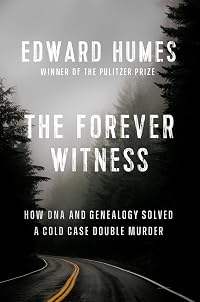
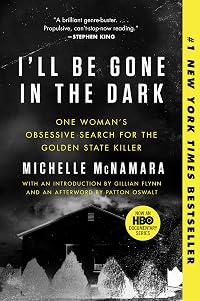


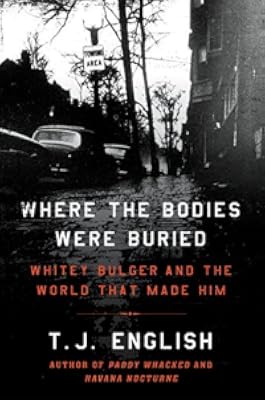


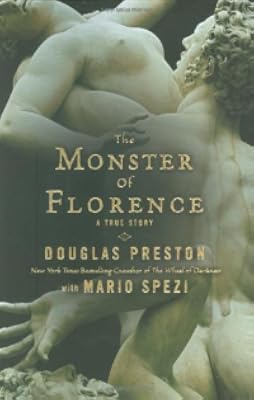






Member Recommendations
Member Reviews
In February 2013, journalist Del Quentin Wilbur spent a month with the Homicide Squad in Prince George’s County, which borders Washington DC. PG County (as it is referred to in the book) is in a fairly deprived area with a high crime rate, especially gun crime.
Wilbur gives details of the cases that the detectives investigate during the month of February, with maybe extra focus on the particularly heinous and apparently unmotivated murder of a young female in her own home.
I loved this book. The descriptions of the crime scenes, and how they affected the detectives was so well described, and more than just giving details of the work that these incredible people do, it also demonstrated how it affected them personally. I did feel that it show more must have clearly been influenced by David Simon’s ‘Homicide: Life on the Street’ (which for my money is one of the best non-fiction books ever written), and indeed, Wilbur does reference this book and explains that he wanted to see how the job of homicide detective had changed since Homicide was written in the late 80s.
This book made me thankful that I live in a country where gun crime is not prevalent – in PG County it’s basically part of life, and many innocent people get caught up in it – and made me wonder what it must be like to live your life constantly in fear.
Anyway, my review cannot do this book justice, but I do highly recommend it, especially for fans of true crime. There is no sensationalism here, just an interesting narrative of the facts, showing how the detectives go about their jobs, while trying to keep their own lives and minds intact. show less
Wilbur gives details of the cases that the detectives investigate during the month of February, with maybe extra focus on the particularly heinous and apparently unmotivated murder of a young female in her own home.
I loved this book. The descriptions of the crime scenes, and how they affected the detectives was so well described, and more than just giving details of the work that these incredible people do, it also demonstrated how it affected them personally. I did feel that it show more must have clearly been influenced by David Simon’s ‘Homicide: Life on the Street’ (which for my money is one of the best non-fiction books ever written), and indeed, Wilbur does reference this book and explains that he wanted to see how the job of homicide detective had changed since Homicide was written in the late 80s.
This book made me thankful that I live in a country where gun crime is not prevalent – in PG County it’s basically part of life, and many innocent people get caught up in it – and made me wonder what it must be like to live your life constantly in fear.
Anyway, my review cannot do this book justice, but I do highly recommend it, especially for fans of true crime. There is no sensationalism here, just an interesting narrative of the facts, showing how the detectives go about their jobs, while trying to keep their own lives and minds intact. show less
A complete 180 from my usual cozy mystery. This has the fast-paced, in-depth feel of journalistic writing, no doubt because of the author's years as a newspaper reporter, and really does make you feel like you're right there on the scene of the crime or in the interrogation 'box' with the detectives. The author makes it clear he couldn't be with every detective on every case (a physical impossibility) but I wish he'd included more time with the female detectives in his coverage. Other than the one minor complaint, this is hands down a winner.
This is a compelling read for anyone interested in the life of a homicide cop and/or how homicide investigations are handled. This is not CSI or Law and Order, where homicides are solved quickly and suspects almost always confess at the end. The cases we read about here are real and messy, giving us a clear understanding of how difficult a homicide detective's job can be.
In a time when we're seeing lots of negative press coverage about cops, this book offers us insight into some of the more dedicated cops on the force. We see the toll the job takes on them, both emotionally and physically. We also see how difficult it can be for them to have any sort of personal life, when their work is almost always time-sensitive and murders don't show more stop occurring simply because they're busy.
The content here is brutally honest. The author doesn't try to make the cops look better or worse. He shows us things as they happen, the way they happen. At times this made me sympathize with the detectives, and at times it made me uncomfortable. For instance, some of the interrogations were brutal. While I knew this intellectually, reading an actual account brings the reality into sharp focus. I'm not talking about physical brutality, but emotional and psychological. It's easy to understand how and why people confess to crimes they did not commit, and that is a disturbing fact. But, at the same time, I also saw, perhaps for the first time, why the detectives sometimes push harder than they should. They are frustrated, angry, desperate to get a killer off the streets and provide answers to a grieving family.
Despite the dark content, the writing style makes this an easy read. The narrative is engaging, with no interference from the author. It's like we're right there as everything happens. We're provided with details along the way, such as little quirks a detective might have, which help bring the people involved to life.
This book does not go beyond the scope of the daily trials and tribulations of the Prince George's County homicide detectives. If you're looking for a book that explores social factors and digs deep into the sociological and psychological issues of crime, this is not that book. But if you're looking to better understand the truth of solving a homicide, this is definitely that book. show less
In a time when we're seeing lots of negative press coverage about cops, this book offers us insight into some of the more dedicated cops on the force. We see the toll the job takes on them, both emotionally and physically. We also see how difficult it can be for them to have any sort of personal life, when their work is almost always time-sensitive and murders don't show more stop occurring simply because they're busy.
The content here is brutally honest. The author doesn't try to make the cops look better or worse. He shows us things as they happen, the way they happen. At times this made me sympathize with the detectives, and at times it made me uncomfortable. For instance, some of the interrogations were brutal. While I knew this intellectually, reading an actual account brings the reality into sharp focus. I'm not talking about physical brutality, but emotional and psychological. It's easy to understand how and why people confess to crimes they did not commit, and that is a disturbing fact. But, at the same time, I also saw, perhaps for the first time, why the detectives sometimes push harder than they should. They are frustrated, angry, desperate to get a killer off the streets and provide answers to a grieving family.
Despite the dark content, the writing style makes this an easy read. The narrative is engaging, with no interference from the author. It's like we're right there as everything happens. We're provided with details along the way, such as little quirks a detective might have, which help bring the people involved to life.
This book does not go beyond the scope of the daily trials and tribulations of the Prince George's County homicide detectives. If you're looking for a book that explores social factors and digs deep into the sociological and psychological issues of crime, this is not that book. But if you're looking to better understand the truth of solving a homicide, this is definitely that book. show less
This is a fabulous entry to the true crime genre. Rather than focusing on a specific crime, this book focuses on several teams of homicide detectives in Prince George County, Maryland. All of the cases are ones that occurred in the month of February 2013. For people who enjoy some of the shows on Discovery ID and A&E, like and The Detectives and The First 48, then this book is for you.
The front of the book provides a map of the area that is covered by the homicide squads in question and maps where each individual was murdered and their name and age. Prince George County is located in Maryland very close to the Washington D.C. Line. The chapters initially introduce the date, time and which detectives are assigned to the case.
From there, show more the facts of the case unfold. In a very few instances, the case is already underway but there were developments in February 2013 that prompted a greater focus on a case that may have gone somewhat cold. There are a few details provided about the detectives private lives and how they became involved in having a career in law enforcement and how many years they have worked as an officer and in the homicide squad specifically.
The victim is then identified and the process of investigating the murder begins. From surveying the initial crime scene, witness interviews, forensic tech collections, notifying the family of the victim all the way through tracking down suspects, narrowing the field and then honing in on the actual perpetrator.
An easily solved murder is called a “smoker”. A high profile case is called a “redball express.” High profile cases are those defined by being particularly heinous in nature or involving a vulnerable member of the public – the elderly, the very young, perhaps having fame or notoriety on the part of the victim or the murderer or any case that the media chooses to focus on in a sensational manner.
There are certain things that become noticeable right away about the homicide unit. One is that it is populated by very eccentric and quirky personalities. Another is the dearth of women
in the unit. There are only two or three female detectives and they get very little focus in the book. The humor expressed by the detectives is very much in the gallows humor vein and is used as a coping mechanism by those who spend long hours immersed in the unpleasant business of murder. An interesting thing the author did was not to pull punches – if a detective was annoying, obnoxious or narcissistic, that was shown rather than painting a picture of these cops as being overly heroic or idealizing them.
Included in the stories as well, were a cop shooting which is investigated by the homicide detectives as murder; a case where they were called in to investigate deaths that occurred during the course of a house fire and a stabbing that walks a very fine line between involuntary manslaughter and self-defense. In other words, there are times when murder is not murder and vice versa. As for solving every case within the first forty eight hours....well, unless it is a smoker, not so much.
I would recommend this book whole heartedly and give it a very strong four stars. There is one thing that I would like to draw attention to, more for the sake of the editorial and publishing staff and on behalf of readers. This does not occur too often in the book but it occurs enough to be noticeable to me as a reader and therefore it will be noticeable to other readers.
There is an over-reliance on machinery to pick up spelling and grammatical errors. For the most part, it works. What doesn't work however is when a word is spelled correctly but it is the incorrect word – for example, past for passed. Computer aided editing cannot discern context either. People need to be brought back into the copy reading and editing realm. As books become more and more expensive, it becomes harder for readers to accept the dip in quality control of the printed word.
The correct use and context is extremely important to readers. While we have progressed as a society in our use of machines in an effort to save money in business, it is important to remember that readers are why books are written. If the errors become noticeable to readers, they begin to impact the reading experience and it becomes detrimental to sales of books and it may deter readers from picking up books by that author or publishing house in the future.
A small thing but the one thing that affected my overall enjoyment of what is otherwise a very strong book and a great read. This one is a keeper! show less
The front of the book provides a map of the area that is covered by the homicide squads in question and maps where each individual was murdered and their name and age. Prince George County is located in Maryland very close to the Washington D.C. Line. The chapters initially introduce the date, time and which detectives are assigned to the case.
From there, show more the facts of the case unfold. In a very few instances, the case is already underway but there were developments in February 2013 that prompted a greater focus on a case that may have gone somewhat cold. There are a few details provided about the detectives private lives and how they became involved in having a career in law enforcement and how many years they have worked as an officer and in the homicide squad specifically.
The victim is then identified and the process of investigating the murder begins. From surveying the initial crime scene, witness interviews, forensic tech collections, notifying the family of the victim all the way through tracking down suspects, narrowing the field and then honing in on the actual perpetrator.
An easily solved murder is called a “smoker”. A high profile case is called a “redball express.” High profile cases are those defined by being particularly heinous in nature or involving a vulnerable member of the public – the elderly, the very young, perhaps having fame or notoriety on the part of the victim or the murderer or any case that the media chooses to focus on in a sensational manner.
There are certain things that become noticeable right away about the homicide unit. One is that it is populated by very eccentric and quirky personalities. Another is the dearth of women
in the unit. There are only two or three female detectives and they get very little focus in the book. The humor expressed by the detectives is very much in the gallows humor vein and is used as a coping mechanism by those who spend long hours immersed in the unpleasant business of murder. An interesting thing the author did was not to pull punches – if a detective was annoying, obnoxious or narcissistic, that was shown rather than painting a picture of these cops as being overly heroic or idealizing them.
Included in the stories as well, were a cop shooting which is investigated by the homicide detectives as murder; a case where they were called in to investigate deaths that occurred during the course of a house fire and a stabbing that walks a very fine line between involuntary manslaughter and self-defense. In other words, there are times when murder is not murder and vice versa. As for solving every case within the first forty eight hours....well, unless it is a smoker, not so much.
I would recommend this book whole heartedly and give it a very strong four stars. There is one thing that I would like to draw attention to, more for the sake of the editorial and publishing staff and on behalf of readers. This does not occur too often in the book but it occurs enough to be noticeable to me as a reader and therefore it will be noticeable to other readers.
There is an over-reliance on machinery to pick up spelling and grammatical errors. For the most part, it works. What doesn't work however is when a word is spelled correctly but it is the incorrect word – for example, past for passed. Computer aided editing cannot discern context either. People need to be brought back into the copy reading and editing realm. As books become more and more expensive, it becomes harder for readers to accept the dip in quality control of the printed word.
The correct use and context is extremely important to readers. While we have progressed as a society in our use of machines in an effort to save money in business, it is important to remember that readers are why books are written. If the errors become noticeable to readers, they begin to impact the reading experience and it becomes detrimental to sales of books and it may deter readers from picking up books by that author or publishing house in the future.
A small thing but the one thing that affected my overall enjoyment of what is otherwise a very strong book and a great read. This one is a keeper! show less
This is a compelling look on how homicide investigators go about the business of dealing with the investigation of violent deaths of all types. It clearly, vividly demonstrates the toll violent death takes on everyone touched by it in a variety of ways - from the victims, their families, the suspects, the perpetrators, witnesses, police officers, crime scene techs, and especially the investigators and their families upon whom the burden is especially stressful because it is relentless. This is an excellent view of how life really is, not how it is made to appear by the media. It is messy, often muddled, confused, and stressful. It is rarely clear cut, always ambiguous and often lacking in finality and/or closure. Handled with great show more insight and the right touch by Del Quentin Wilber. show less
Wilber has reported for several big newspapers, and here, he shadows several homicide squads in the Washington D.C. area, one of the most violent areas in the country. He reports on the investigations into many local murders, some made more difficult by the fact that both suspects and victims were drug dealers, making it even harder to find witnesses who will talk in neighborhoods where residents already don't want to speak to the police. A couple of the murders, however, become high-profile because the victims had nothing at all to do with crime, such as an honor roll teen who was killed by home intruders, or an elderly woman who was killed for her tv.
Wilber shows detectives who are run ragged investigating too many crimes on too show more little sleep. He provides the reader with an inside look at how the detectives have to be in multiple places at once, working days at a time with little rest. It's a hard life. Halfway through, we've met yet another detective described as "stocky" or "having a generous stomach", or another having to work while they're sick. Wilber is present for long interviews with witnesses and murder suspects, showing how certain interview techniques work on one detainee but not another. It's a rare insight into the job. show less
Wilber shows detectives who are run ragged investigating too many crimes on too show more little sleep. He provides the reader with an inside look at how the detectives have to be in multiple places at once, working days at a time with little rest. It's a hard life. Halfway through, we've met yet another detective described as "stocky" or "having a generous stomach", or another having to work while they're sick. Wilber is present for long interviews with witnesses and murder suspects, showing how certain interview techniques work on one detainee but not another. It's a rare insight into the job. show less
A really nice glimpse into the inside of a homicide unit. There's not a ton of detail about any one case or person, but the book provides a nice overview.
Wilber takes us inside the Prince George's County police department's homicide group, visiting many of the crime scenes and following the detectives' investigations during the grueling month of February 2013, when there were 14 murders in those mere 28 days. The book gives a bit of a feel for what those investigators deal with, day in day out, sometimes for multiple days at a stretch with virtually no sleep. We often focus on the crimes/criminals without very much thought for the officers working tirelessly to solve them, and Wilber does a solid job of showcasing them, as humans, show more quirks and all. show less
Wilber takes us inside the Prince George's County police department's homicide group, visiting many of the crime scenes and following the detectives' investigations during the grueling month of February 2013, when there were 14 murders in those mere 28 days. The book gives a bit of a feel for what those investigators deal with, day in day out, sometimes for multiple days at a stretch with virtually no sleep. We often focus on the crimes/criminals without very much thought for the officers working tirelessly to solve them, and Wilber does a solid job of showcasing them, as humans, show more quirks and all. show less
 This review was written for LibraryThing Early Reviewers.
Members
- Recently Added By
Published Reviews
Propulsive account of a hard-charging homicide unit in a high-crime Washington, D.C., suburb.
Wilber (Rawhide Down: The Near Assassination of Ronald Reagan, 2011), who covers the Justice Department for the Los Angeles Times, develops a vivid sense of place alongside gritty workaday realities, resulting in a fresh take on the familiar topic of killers and their pursuers. He focuses on Prince show more George’s County, a sprawling “microcosm of the new America” that conceals startling murder rates, even during the chilly February of 2013, when the detectives he shadowed felt “there was simply too much pent-up violence on the streets, and it needed an outlet.” show less
Wilber (Rawhide Down: The Near Assassination of Ronald Reagan, 2011), who covers the Justice Department for the Los Angeles Times, develops a vivid sense of place alongside gritty workaday realities, resulting in a fresh take on the familiar topic of killers and their pursuers. He focuses on Prince show more George’s County, a sprawling “microcosm of the new America” that conceals startling murder rates, even during the chilly February of 2013, when the detectives he shadowed felt “there was simply too much pent-up violence on the streets, and it needed an outlet.” show less
added by mysterymax
Author Information
2 Works 455 Members
Common Knowledge
- Important places
- Maryland, USA; Prince George's County, Maryland, USA
- Canonical DDC/MDS
- 363.2595230975251
- Canonical LCC
- HV6534.W18
Classifications
- Genres
- Nonfiction, General Nonfiction, Biography & Memoir, Politics and Government
- DDC/MDS
- 363.2595230975251 — Society, government, & culture Social problems and social services Public Safety - Police, Crime Investigation Police services Criminal investigation & forensics Investigation of specific types of offenses
- LCC
- HV6534 .W18 — Social sciences Social pathology. Social and public welfare. Criminology Social pathology. Social and public welfare. Criminology Crimes and offenses
- BISAC
Statistics
- Members
- 111
- Popularity
- 290,967
- Reviews
- 25
- Rating
- (3.86)
- Languages
- English
- Media
- Paper, Audiobook, Ebook
- ISBNs
- 11
- ASINs
- 1