On This Page
Description
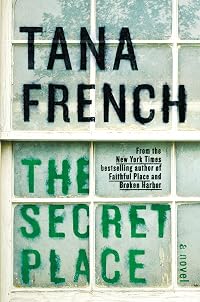
"The photo on the card shows a boy who was found murdered, a year ago, on the grounds of a girls' boarding school in the leafy suburbs of Dublin. The caption says I KNOW WHO KILLED HIM. Detective Stephen Moran has been waiting for his chance to get a foot in the door of Dublin's Murder Squad--and one morning, sixteen-year-old Holly Mackey brings him this photo. "The Secret Place," a board where the girls at St. Kilda's School can pin up their secrets anonymously, is normally a mishmash of show more gossip and covert cruelty, but today someone has used it to reignite the stalled investigation into the murder of handsome, popular Chris Harper. Stephen joins forces with the abrasive Detective Antoinette Conway to find out who and why. But everything they discover leads them back to Holly's close-knit group of friends and their fierce enemies, a rival clique--and to the tangled web of relationships that bound all the girls to Chris Harper. Every step in their direction turns up the pressure. Antoinette Conway is already suspicious of Stephen's links to the Mackey family. St. Kilda's will go a long way to keep murder outside their walls. Holly's father, Detective Frank Mackey, is circling, ready to pounce if any of the new evidence points toward his daughter. And the private underworld of teenage girls can be more mysterious and more dangerous than either of the detectives imagined." -- show lessTags
Recommendations
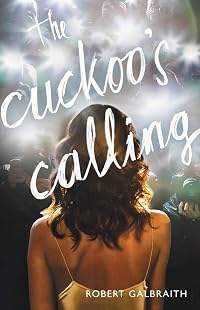
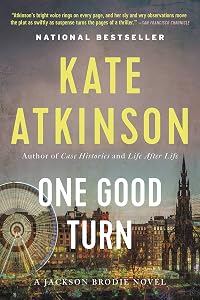
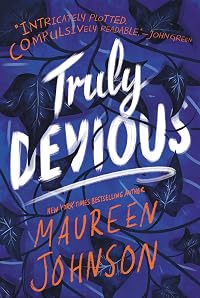
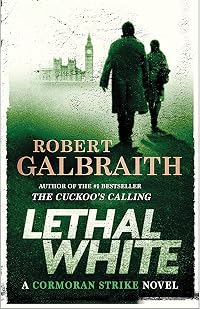

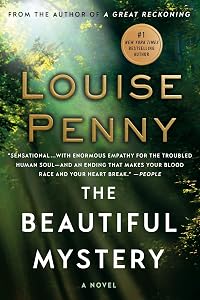
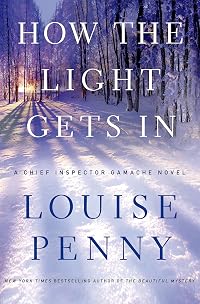
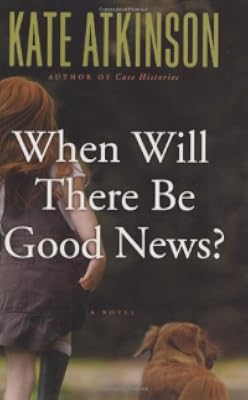
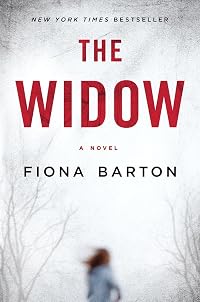

Member Recommendations
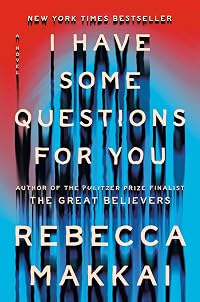
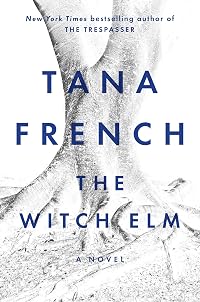
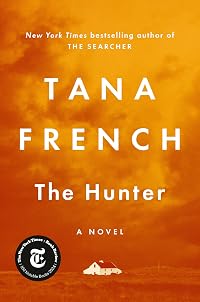
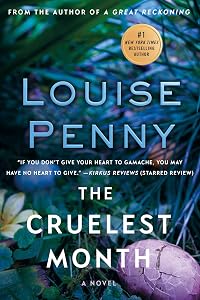
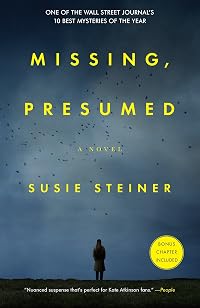
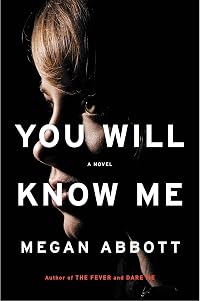
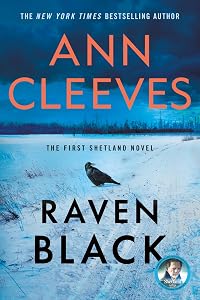
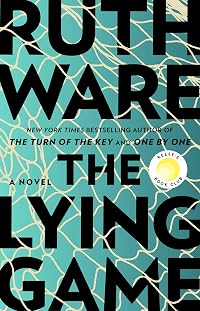
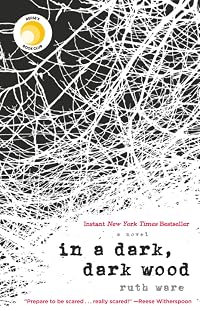
RidgewayGirl Both books deal with the death of a teenage boy and private boarding schools in Ireland.
RidgewayGirl Teenage girls are more dangerous than you think.
sarahx2012 Similar elements of mystery, plus a focus on what teenage girls are capable of.
Member Reviews
Oh, good lord.
Up to this point, I held the first two books by Tana French as serious rivals to Denise Mina in terms of literary quality in detective/crime fiction. In the Woods and The Likeness were just so good, almost too good, and their minor flaws were just reminders of how petty I was being in finding fault.
I dutifully made my way through the remaining novels in the series (not really a series, so much, as a fictional Dublin squad whose characters enter and exit each others' respective novels), and enjoyed them. The fourth, however (Broken Harbor), was a bit disappointing. Still a four-star read, but I thought maybe Ms. French had started feeling sorry for other writers of her genre, or perhaps had just reached her limit for show more consistently outstanding books.
The Secret Place is, if not better than her first two, a strong equal in quality and emotional resonance. That was the thing that went missing in Broken Harbor, or rather was present and felt forced. Secret Place has it in spades, naturally occurring, and dull-chest-achy in its persistence. It's a book about, simultaneously, the memory of friendships that are gone forever, and the forging of friendships that will last forever. Its about wanting to stand out just like everyone else, seeing no irony in that, and then falling victim to the patterns the emerge from the utter predictability of human behavior.
French does some really interesting things here, narratively. She is telling two stories, one in the past that moves briskly to the future (and told in present tense), one in the closer-to-present that is the detectives piecing together the story of a murder (and told in the past tense), with each of the two narratives moving toward each other as the book moves to its conclusion. And I realize how hard it is to avoid sounding like a twit talking about this. But I won't revise!
I practically begged a colleague to read this book, in part because I want someone to talk to about it, but also to see if I'm not some idiot who's desperate for validation in a genre that has historically been viewed as non-literary. Ultimately I don't care because I love them, and Secret Place more than most.. show less
Up to this point, I held the first two books by Tana French as serious rivals to Denise Mina in terms of literary quality in detective/crime fiction. In the Woods and The Likeness were just so good, almost too good, and their minor flaws were just reminders of how petty I was being in finding fault.
I dutifully made my way through the remaining novels in the series (not really a series, so much, as a fictional Dublin squad whose characters enter and exit each others' respective novels), and enjoyed them. The fourth, however (Broken Harbor), was a bit disappointing. Still a four-star read, but I thought maybe Ms. French had started feeling sorry for other writers of her genre, or perhaps had just reached her limit for show more consistently outstanding books.
The Secret Place is, if not better than her first two, a strong equal in quality and emotional resonance. That was the thing that went missing in Broken Harbor, or rather was present and felt forced. Secret Place has it in spades, naturally occurring, and dull-chest-achy in its persistence. It's a book about, simultaneously, the memory of friendships that are gone forever, and the forging of friendships that will last forever. Its about wanting to stand out just like everyone else, seeing no irony in that, and then falling victim to the patterns the emerge from the utter predictability of human behavior.
French does some really interesting things here, narratively. She is telling two stories, one in the past that moves briskly to the future (and told in present tense), one in the closer-to-present that is the detectives piecing together the story of a murder (and told in the past tense), with each of the two narratives moving toward each other as the book moves to its conclusion. And I realize how hard it is to avoid sounding like a twit talking about this. But I won't revise!
I practically begged a colleague to read this book, in part because I want someone to talk to about it, but also to see if I'm not some idiot who's desperate for validation in a genre that has historically been viewed as non-literary. Ultimately I don't care because I love them, and Secret Place more than most.. show less
I have read each of Tana French's books and I feel that all were excellent and that"The Secret Place" (SP) is the best of a uniformally excellent collection. With SP, French has created a number of challenges for herself. Virtually all of the 518 page story takes place at one location, St. Kilda's, a boarding school for girls in Dublin's suburbs. The focus is solving a one year old murder of a student from a nearby boys' school, a case that has been dormant for many months. The protagonist is a young cold case detective, Stephen, who elbows his way into partnering with the original lead investigator, Antionette Conway, following up on a new, somewhat dubious clue. The two detectives are unfamiliar with each other, but both are attuned show more to the other's non-favorable reputation. As they begin their round of interviews on the St. Kilda's campus where the victim's body was found, their attention becomes directed toward eight girls, two cliques of four, each headed by a brash, bossy, take-no-prisoners leader; the two groups despise each other passionately. Conway instructs Stephen to take the lead, as she burned a number of bridges with the girls during the initial investigation. But he is warned that if he messes up, he will be gone quickly.
Chapters are interspersed; there are first person narratives from Stephen alternating with third person descriptions of critical events leading up to the murder in which we are frequently reminded how long victim Chris has left to live. The reader meets each girl via an initial, detailed one on one interview with Stephen adjusting his approach based on Conway's recollection of each girl's personality. The girls are wary, volunteer little. For the most part, they are very bright. Some pushback, hard; you wouldn't want to get on their bad list. Slowly, little details emerge. Certainly, one of the biggest challenges in such a long story is to maintain a level of tension throughout, and French does this extremely well. This case is solved in 24 hours and the book succeeds despite its length because French has created a large cast of characters that are so well defined through their dialog. She also manages the story line and the tension by introducing supporting characters at just the right moment, e.g, a police detective colleague/parent of one of the eight. But the key characters are the girls, each blessed by an incredibly right-on portrait by French. Think you know teen-age girls?......read this. show less
Chapters are interspersed; there are first person narratives from Stephen alternating with third person descriptions of critical events leading up to the murder in which we are frequently reminded how long victim Chris has left to live. The reader meets each girl via an initial, detailed one on one interview with Stephen adjusting his approach based on Conway's recollection of each girl's personality. The girls are wary, volunteer little. For the most part, they are very bright. Some pushback, hard; you wouldn't want to get on their bad list. Slowly, little details emerge. Certainly, one of the biggest challenges in such a long story is to maintain a level of tension throughout, and French does this extremely well. This case is solved in 24 hours and the book succeeds despite its length because French has created a large cast of characters that are so well defined through their dialog. She also manages the story line and the tension by introducing supporting characters at just the right moment, e.g, a police detective colleague/parent of one of the eight. But the key characters are the girls, each blessed by an incredibly right-on portrait by French. Think you know teen-age girls?......read this. show less
Having read Faithful Place already (titles similar on purpose?) I was wary of Holly from the start. She is a Mackey after all and it’s a good thing since I think it makes her strong, smart and heartless enough to survive. Teenagers today are 10X the asshole they were when I was one. It was almost too much to bear. So glad the teenager narrative was interspersed with Stephen’s. I mean, we were jerks back then, but reached nowhere near the level of manipulation and humiliation these kids attain. Yeah, sometimes French makes them just the tiniest bit human so they get some sympathy, but mostly I hated them. The vibe reminded me a lot of Skippy Dies in that sense. Just what happened to make everyone a vicious douchebag? Something in the show more water? Can’t we develop a vaccine against narcissistic personality disorder? Damn, we need one.
The language stopped me in my tracks sometimes, it’s that good. Some say the wording is overblown, but considering a lot of the story is about teenagers, and girls specifically, I think it works because a lot of what they do, say and feel is intense. It struck me as pretty dead on and made me thankful I can never be a teenager again. Joanna’s comment about how Holly and her lot weren’t special was really telling. The insecurity and doubt combined with arrogance and power make for a really unattractive person. That made me glad I’m not a parent and I feel really bad for those who have to navigate the shark-like feeding frenzy that is teenage life these days. Yeah, sure it’s fiction, but damn if it doesn’t feel like the kind of young adults running around these days.
The density of the time frame combined with the flashbacks made the narrative feel closed in which echoed the circumstances of both the students and the investigators. Thrown together in the first place and then put into that cauldron of cover-up, Stephen and Conway were amazingly successful, even if they had to lie and manipulate in order to get their solve. I guess one good turn deserves another. Stephen played every situation really well even when Frank tried to mess with their heads. So sad that Frank’s pathological manipulation claims Holly as a victim in the end. Not that she’s entirely innocent of the same thing, again, she is a Mackey.
Unlike in In the Woods and Broken Harbor, there’s no direct back-story for Stephen, which considering the restrictions on the investigation, was appropriate. We do get some idea of who he is as a person through reflections on what’s coming at him. Surrounded by women he does his best to thread Scylla and Charybdis and I thought he did really well with those little Sirens at the end. I hope he makes it on the squad though this book was less about the detective(s) and more about the lives of young women in boarding school and what they have to cope with and inflict on each other.
I know French likes to throw in a bit of the uncanny in her novels. Ryan’s boyhood incident from the first novel, the unknown home invader in Broken Harbor, stuff like that but the girls’ telekinesis wasn’t necessary here; there didn’t seem to be a definite point to it. The ghost stuff, too, was a bit strange given that these weren’t little kids. I guess maybe to play up that some of them weren’t much emotionally older than children, and that most of them tried like hell to keep that secret. That could have been it, but it still seemed strange.
I wonder how much of Holly’s mother’s reminiscing at the end of the book drove Holly’s actions about what to do with her knowledge and situation with her classmates; the realization that no matter how closely bonded you think you are at that age, it probably won’t last. The interleaved timelines made this difficult to figure because we see the possible influence at the end of the novel, but it’s such a twisted story that it’s hard to remember her actions at that point in the timeline. Actually, that’s the novel’s biggest flaw - the shifting time-frame and the countdown to Chris’s death. It kept me from being able to clearly see each girl, her actions and the repercussions of those actions. It was much harder to parse any clues and maybe that was the point. That and the fact that I had to spend so much time with kids makes it my least favorite of the Dublin Murder Squad series so far.
Conway is a good candidate for the next novel and I’m sort of dreading it because she’s already boxed herself into a problem with the rest of the squad. Sure there are probably good reasons for it (the one Mackey drops is enough, but he’s right about the way she handled it), but I couldn’t stop thinking about Cassie who got along fine with the same people. Maybe it was because of her partnership, but I don’t know. Conway’s story is sure to be more fraught with tension and conflict and depending on how French handles it, or shades it with something positive, it could be a slog. That’s if she’s next. Given how this book backtracked a couple of titles to get to Stephen, almost anyone could pop out of the woodwork. show less
The language stopped me in my tracks sometimes, it’s that good. Some say the wording is overblown, but considering a lot of the story is about teenagers, and girls specifically, I think it works because a lot of what they do, say and feel is intense. It struck me as pretty dead on and made me thankful I can never be a teenager again. Joanna’s comment about how Holly and her lot weren’t special was really telling. The insecurity and doubt combined with arrogance and power make for a really unattractive person. That made me glad I’m not a parent and I feel really bad for those who have to navigate the shark-like feeding frenzy that is teenage life these days. Yeah, sure it’s fiction, but damn if it doesn’t feel like the kind of young adults running around these days.
The density of the time frame combined with the flashbacks made the narrative feel closed in which echoed the circumstances of both the students and the investigators. Thrown together in the first place and then put into that cauldron of cover-up, Stephen and Conway were amazingly successful, even if they had to lie and manipulate in order to get their solve. I guess one good turn deserves another. Stephen played every situation really well even when Frank tried to mess with their heads. So sad that Frank’s pathological manipulation claims Holly as a victim in the end. Not that she’s entirely innocent of the same thing, again, she is a Mackey.
Unlike in In the Woods and Broken Harbor, there’s no direct back-story for Stephen, which considering the restrictions on the investigation, was appropriate. We do get some idea of who he is as a person through reflections on what’s coming at him. Surrounded by women he does his best to thread Scylla and Charybdis and I thought he did really well with those little Sirens at the end. I hope he makes it on the squad though this book was less about the detective(s) and more about the lives of young women in boarding school and what they have to cope with and inflict on each other.
I know French likes to throw in a bit of the uncanny in her novels. Ryan’s boyhood incident from the first novel, the unknown home invader in Broken Harbor, stuff like that but the girls’ telekinesis wasn’t necessary here; there didn’t seem to be a definite point to it. The ghost stuff, too, was a bit strange given that these weren’t little kids. I guess maybe to play up that some of them weren’t much emotionally older than children, and that most of them tried like hell to keep that secret. That could have been it, but it still seemed strange.
I wonder how much of Holly’s mother’s reminiscing at the end of the book drove Holly’s actions about what to do with her knowledge and situation with her classmates; the realization that no matter how closely bonded you think you are at that age, it probably won’t last. The interleaved timelines made this difficult to figure because we see the possible influence at the end of the novel, but it’s such a twisted story that it’s hard to remember her actions at that point in the timeline. Actually, that’s the novel’s biggest flaw - the shifting time-frame and the countdown to Chris’s death. It kept me from being able to clearly see each girl, her actions and the repercussions of those actions. It was much harder to parse any clues and maybe that was the point. That and the fact that I had to spend so much time with kids makes it my least favorite of the Dublin Murder Squad series so far.
Conway is a good candidate for the next novel and I’m sort of dreading it because she’s already boxed herself into a problem with the rest of the squad. Sure there are probably good reasons for it (the one Mackey drops is enough, but he’s right about the way she handled it), but I couldn’t stop thinking about Cassie who got along fine with the same people. Maybe it was because of her partnership, but I don’t know. Conway’s story is sure to be more fraught with tension and conflict and depending on how French handles it, or shades it with something positive, it could be a slog. That’s if she’s next. Given how this book backtracked a couple of titles to get to Stephen, almost anyone could pop out of the woodwork. show less
I almost gave up on this book when I realized that there was magic . It seemed like cheating -- I loved Broken Harbor for its grittiness and realness and I was worried that would be lost in The Secret Place. But it turned out that for me, the key to really getting Tana French books was embracing the magical realism here. The mental gymnastics I had to do to reach a place where magical realism was okay for me in her books led me to realize that there's a flavor of magical realism in all her books. Not literally, of course, but her books are to traditional murder mysteries the way that magical realism is to traditional fantasy: they aren't about murder, they use crimes as a lens to reflect upon the traits in real life that are difficult to show more explore in pure "literary" fiction.
And in that context, French is a genius. The Secret Place uses its central mystery to explore the tight friendships of teenage years, and how empowering and close they can be. The four main characters are depicted perfectly, achingly nuanced -- almost like someone that I've known and drifted away from myself. The overall effect was one of extreme, almost overwhelming nostalgia, so much so that the show less
And in that context, French is a genius. The Secret Place uses its central mystery to explore the tight friendships of teenage years, and how empowering and close they can be. The four main characters are depicted perfectly, achingly nuanced -- almost like someone that I've known and drifted away from myself. The overall effect was one of extreme, almost overwhelming nostalgia, so much so that the show less
A tour de force, this one. French goes inside a Catholic girls' school in Ireland, and inside the heads of the teenaged women coming of age there, a a student from the brother school across the way is found murdered in the grounds. Back and forth in time and perspective, from the revival of the cold investigation a year after the murder, to the events leading up to and immediately following the death; from the detectives trying to work out the crime to the young women trying to work out Life itself, it takes close attention from the reader, and must have been the divil to plot and present, but it's beautifully done. The exploration of friendship, loyalty, deviousness, and deception is brilliant. If you're not dead in your soul, it's show more likely to wreck you, especially if you were once a teen-aged girl.
Review written in March 2015 show less
Review written in March 2015 show less
I am beginning to realize that one of the fascinations of Tana French is the woman-man cop duo. The opportunity to investigate possibilities for real partnership between men and women--by investigating crime--is a central theme. But I was particularly impressed by her characterization of teen girls in this novel-perhaps one of the most difficult topics to take on. Who else has the courage and insight to take on teen girlhood? And I don't mean Twilight bullshit.
In French's first book, [In the Woods], she layered the police procedural and mystery with an element of the supernatural, and never makes it clear whether something otherworldly is going on or whether it's just in the narrators heads. She returns to that kind of story with this novel, focusing on four girls who dedicate themselves to each other so wholly as friends that something special starts to happen around them. The book isn't as good as the previous ones, and there is some surprisingly and unfortunate negative female stuff - not what I'd expect from a female author. But I still like the series enough to keep reading.
Members
- Recently Added By
Lists

Dark Academia Novels
59 works; 11 members

Recommend the 20 best books you've read in the last five years
2,168 works; 606 members

Best 21st Century Books (So Far)
670 works; 85 members

Top Five Books of 2020
982 works; 350 members

Titoli bestiali
67 works; 1 member

Books Read in 2015
3,299 works; 126 members

Fiction (Non-Fantasy) by Irish Authors Set in Ireland
87 works; 3 members

Favorite Books from the 2010s
75 works; 3 members

Books Read in 2014
2,343 works; 89 members

Kirkus Reviews Best Fiction of 2014
100 works; 7 members

Top Five Books of 2017
757 works; 231 members

Top Five Books of 2016
795 works; 229 members
Books Read in 2016
4,666 works; 199 members

Top Five Books of 2015
811 works; 241 members

Most Frequently Tagged "Read in 2015"
70 works; 1 member
Top Five Books of 2014
1,064 works; 398 members

Kindle Mystery/Thriller
317 works; 2 members
Author Information

27+ Works 41,250 Members
Tana French grew up in Ireland, Italy, the US and Malawi. She trained as a professional actress at Trinity College, Dublin, and has worked in theatre, film and voiceover. Her first novel, In the Woods, won the 2007 Edgar Award for Best First Novel. Her other books include The Likeness, Faithful Place, Broken Harbor, and The Secret Place. The show more Trespasser and The Witch Elm made the New York Times bestseller list. (Bowker Author Biography) show less
Some Editions
Awards and Honors
Awards
Distinctions
Series

Belongs to Publisher Series
Fischer Taschenbuch (19614)
Work Relationships
Is contained in
Common Knowledge
- Canonical title
- The Secret Place
- Original title
- The Secret Place
- Original publication date
- 2014
- People/Characters
- Stephen Moran; Holly Mackey; Frank Mackey; Antoinette Conway; Selena Wynne; Julia Harte (show all 14); Rebecca O'Mara; Joanne Heffernan; Orla Burgess; Gemma Harding; Alison Muldoon; Eileen McKenna; Christopher Harper; Finn Carroll
- Important places
- St Kilda's Girls School, Dublin, Ireland
- Dedication
- For Dana, Elana, Marianne and Quynh Giao,
Who luckily were nothing like this. - First words
- There's this song that keeps coming on the radio, but Holly can only ever catch bits of it.
- Quotations
- If I've learned one thing today, it's that teenage girls make Moriarty look like a babe in the woods.
- Last words
- (Click to show. Warning: May contain spoilers.)It spirals out in front of her like a golden thread, it leads her nimble and dance-footed between rushing suits and lampposts and long-skirted beggarwomen, up the street towards Stephen.
- Blurbers
- Flynn, Gillian; King, Stephen
- Original language
- English
Classifications
Statistics
- Members
- 3,224
- Popularity
- 5,320
- Reviews
- 190
- Rating
- (3.82)
- Languages
- 7 — English, French, German, Italian, Spanish, Swedish, Portuguese (Portugal)
- Media
- Paper, Audiobook, Ebook
- ISBNs
- 46
- ASINs
- 14