On This Page
Description
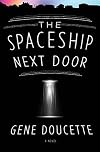
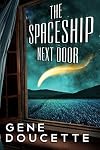
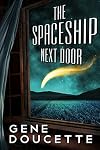
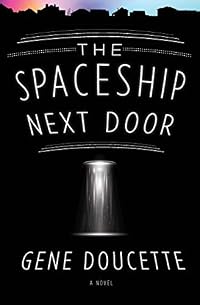
Three years after a spaceship landed in Sorrow Falls, Massachusetts, a government operative comes to investigate and finds that Annie Collins, sixteen, might have the answers he seeks.Tags
Recommendations



























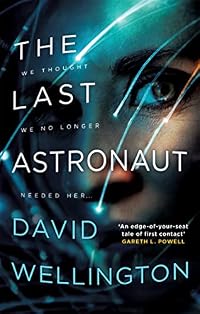


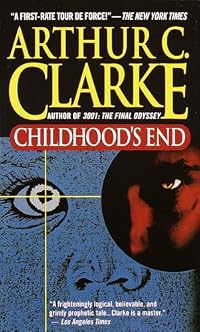
Member Recommendations
Member Reviews
"The Spaceship Next Door" is a fun book: witty, fast moving, great dialogue, original ideas, a twisty plot, aliens, zombies and a whole bunch of in-jokes for those of us who live and breathe SciFi and horror.
It's told in a raconteur third person style that heightens the amusement, keeps things from getting too serious and allows the parts of the puzzle to be nudged into sight at just the right pace.
The basic premise is that a spaceship lands in the small mill town of Sorrow Falls, Massachusetts in the middle of the night and then,,, nothing much happens... for three years. Long enough for the good folks of Sorrow Falls to get used to having a spaceship next door and even to take for granted the strong Army presence that is guarding the show more ship.
Then things do start to change and it seems the end of the world is at hand. At least, it will be if sassy sixteen year old Annie Collins doesn't help the thirty something government agent who absolutely no-one believes is the reporter he claims to be, to solve the mystery of what the ship wants and what it will do if it doesn't get it.
Annie Collins is the heart of this book. If you don't like her, then the book will just pass you by. Fortunately, she's very likeable. She's open, friendly, preternaturally smart, always has a clever question to ask and is hiding a hugely important secret from just about everyone.
I was smiling almost all the way through this book. I listened to the audiobook version and felt entertained the whole way through. In addition to being witty, "The Spaceship Next Door" manages to twist a number of tropes around aliens and zombies and the reaction of the military to a space invasion in very clever ways. It makes constant reference to science fiction movies and books and I could almost see the author's gleeful grin in my mind when he managed to include the line, "Take me to your leader."
If you're a sci fi fan looking for a smile and a few surprises, come and spend a few hours in Sorrow Falls and let Annie Collins show you around. show less
It's told in a raconteur third person style that heightens the amusement, keeps things from getting too serious and allows the parts of the puzzle to be nudged into sight at just the right pace.
The basic premise is that a spaceship lands in the small mill town of Sorrow Falls, Massachusetts in the middle of the night and then,,, nothing much happens... for three years. Long enough for the good folks of Sorrow Falls to get used to having a spaceship next door and even to take for granted the strong Army presence that is guarding the show more ship.
Then things do start to change and it seems the end of the world is at hand. At least, it will be if sassy sixteen year old Annie Collins doesn't help the thirty something government agent who absolutely no-one believes is the reporter he claims to be, to solve the mystery of what the ship wants and what it will do if it doesn't get it.
Annie Collins is the heart of this book. If you don't like her, then the book will just pass you by. Fortunately, she's very likeable. She's open, friendly, preternaturally smart, always has a clever question to ask and is hiding a hugely important secret from just about everyone.
I was smiling almost all the way through this book. I listened to the audiobook version and felt entertained the whole way through. In addition to being witty, "The Spaceship Next Door" manages to twist a number of tropes around aliens and zombies and the reaction of the military to a space invasion in very clever ways. It makes constant reference to science fiction movies and books and I could almost see the author's gleeful grin in my mind when he managed to include the line, "Take me to your leader."
If you're a sci fi fan looking for a smile and a few surprises, come and spend a few hours in Sorrow Falls and let Annie Collins show you around. show less
This was a book I liked a lot more than I thought I was going to. It sounded like the kind of science fiction I prefer, but once into it I thought it was a little too YA for my tastes. However, I kept getting pulled along and eventually couldn't put it down. In fact, I liked it so much that I just paid for the sequel because my library doesn't have it.
It's been three years since a spaceship landed in the small Massachusetts town of Sorrow Falls. The ship looks like a black box, big enough for only a couple of people; since the day it landed it's never made any noise or movement. The townspeople have gotten used to it, and to the army base which sprang up next to it to keep an eye on it, and life has gone back to normal, albeit augmented show more by a group of campers parked nearby housing UFO believers.
16-year year old Annie is well-known and liked by pretty much everyone in town, including the UFO contingent. Her mother is dying of cancer and her father is absent, so Annie does all the shopping and has a small job at the local diner. This particular summer vacation, a government planner and researcher, Ed, claiming to be a reporter, shows up and is advised by the base general to use Annie as a guide for meeting people and getting local color. He's astonished to discover she really is known and trusted by everyone, so he's able to get information from people who are sick to death of reporters. They in turn figure out that he's not really a reporter and are a bit more cooperative. He begins to find vague corroboration for his conclusion that the ship is waking up.
How Annie really fits into what's happening, and what happens to the townspeople as the ship subtly affects them, makes the story more and more compelling. There's no sex or cursing, something that made one reviewer comment that it read like mid-century Sci Fi. And yes, in that way it's kind of bland for an adult, but after a while it doesn't matter, it's that good. Another reader commented that the author made sure to use 10 words whenever he could have used one or two, but in general I thought that while it was true, it reinforced the feeling of a sleepy little town just getting on with everyday life.
I've been reading a lot of murder mysteries lately, and this was a wonderful palate cleanser. Now I'm off to read the sequel. I want to find out what happens to Annie and Ed next. show less
It's been three years since a spaceship landed in the small Massachusetts town of Sorrow Falls. The ship looks like a black box, big enough for only a couple of people; since the day it landed it's never made any noise or movement. The townspeople have gotten used to it, and to the army base which sprang up next to it to keep an eye on it, and life has gone back to normal, albeit augmented show more by a group of campers parked nearby housing UFO believers.
16-year year old Annie is well-known and liked by pretty much everyone in town, including the UFO contingent. Her mother is dying of cancer and her father is absent, so Annie does all the shopping and has a small job at the local diner. This particular summer vacation, a government planner and researcher, Ed, claiming to be a reporter, shows up and is advised by the base general to use Annie as a guide for meeting people and getting local color. He's astonished to discover she really is known and trusted by everyone, so he's able to get information from people who are sick to death of reporters. They in turn figure out that he's not really a reporter and are a bit more cooperative. He begins to find vague corroboration for his conclusion that the ship is waking up.
How Annie really fits into what's happening, and what happens to the townspeople as the ship subtly affects them, makes the story more and more compelling. There's no sex or cursing, something that made one reviewer comment that it read like mid-century Sci Fi. And yes, in that way it's kind of bland for an adult, but after a while it doesn't matter, it's that good. Another reader commented that the author made sure to use 10 words whenever he could have used one or two, but in general I thought that while it was true, it reinforced the feeling of a sleepy little town just getting on with everyday life.
I've been reading a lot of murder mysteries lately, and this was a wonderful palate cleanser. Now I'm off to read the sequel. I want to find out what happens to Annie and Ed next. show less
This book could have used much stronger (or any) editing at every stage. It reads like a NaNoWriMo project: word count is king. When the author has a choice to leave anything out of the story, or put it in, he always puts it in. If he can show it by way of character-driven dialogue or just tell us about it through narration, he always narrates it. If he can narrate it in 2 words or 200 words, he narrates it in 200 words. If he can add even more words to the narration by contradicting everything he’s just said, he’ll do that too.
I’ll give you an example. It will be painful.
The 2nd chapter (where the actual characters are first introduced) begins: “There were about 17 different ways to get to main street from Annie’s front door show more by bicycle. Annie had tried all of them, and like to brag about it in circumstances where such bragging was appropriate—which wasn’t all that often.” First of all what kid, even a smart or nerdy one, brags about the number of routes to main street?? Why would you remark on the fact that someone liked to brag about it but only under certain circumstances? What exactly are these circumstances where it’s “appropriate” to brag about how many routes there are into town from your house, as if anyone would care?
It goes rapidly downhill from there. The next long, plodding sentence ends “…she never bothered to count them so the real number was likely closer to ten or eleven.” Okaaay but sure, she likes to brag that there are **seventeen**, an oddly specific number that implies she has counted them. But it doesn’t stop! The author then begins describing each of the routes in detail, throwing out street names and landmarks without any reference to anything the reader can have a grasp on. “Two of those ways were over bridges on the south side of main, that were impossible for her to use without having begun on the wrong side of the river.” What am I supposed to imagine here? That “two of those ways” weren’t actually ways at all?
After all of this, the subject of the routes from Annie's house—or even the fact that she uses a bike—never comes up again. It’s completely irrelevant to the story. Also, all of the things you might reasonably infer about Annie from this introduction — that she’s a nerd, a liar, possibly autistic, that she obsesses over transportation — also turn out to be dead ends. The whole opening is just misleading filler, written almost on purpose to baffle your imagination.
The rest of the book is just more of the same.
“What character would you cut from The Spaceship Next Door?”
Without a doubt, the narrator. The ponderous novel would become a highly entertaining half-hour listen. show less
I’ll give you an example. It will be painful.
The 2nd chapter (where the actual characters are first introduced) begins: “There were about 17 different ways to get to main street from Annie’s front door show more by bicycle. Annie had tried all of them, and like to brag about it in circumstances where such bragging was appropriate—which wasn’t all that often.” First of all what kid, even a smart or nerdy one, brags about the number of routes to main street?? Why would you remark on the fact that someone liked to brag about it but only under certain circumstances? What exactly are these circumstances where it’s “appropriate” to brag about how many routes there are into town from your house, as if anyone would care?
It goes rapidly downhill from there. The next long, plodding sentence ends “…she never bothered to count them so the real number was likely closer to ten or eleven.” Okaaay but sure, she likes to brag that there are **seventeen**, an oddly specific number that implies she has counted them. But it doesn’t stop! The author then begins describing each of the routes in detail, throwing out street names and landmarks without any reference to anything the reader can have a grasp on. “Two of those ways were over bridges on the south side of main, that were impossible for her to use without having begun on the wrong side of the river.” What am I supposed to imagine here? That “two of those ways” weren’t actually ways at all?
After all of this, the subject of the routes from Annie's house—or even the fact that she uses a bike—never comes up again. It’s completely irrelevant to the story. Also, all of the things you might reasonably infer about Annie from this introduction — that she’s a nerd, a liar, possibly autistic, that she obsesses over transportation — also turn out to be dead ends. The whole opening is just misleading filler, written almost on purpose to baffle your imagination.
The rest of the book is just more of the same.
“What character would you cut from The Spaceship Next Door?”
Without a doubt, the narrator. The ponderous novel would become a highly entertaining half-hour listen. show less
Actually, the spaceship isn't next door as much as a couple of miles down the road and behind an army roadblock, but yes, there's a spaceship in the town of Sorrow Falls, Massachusetts. The story begins with events surrounding its landing, and as might be guessed, it wasn't immediately recognized as a spaceship. Eventually, however, someone reported it to the local police:
"Sometime around 10:00 a.m., the sheriff got his hands on a bullhorn and started asking if the occupants of the ship could please come out with your hands up. This sparked a minor debate as to the likelihood that anyone inside the spaceship (a) understood English, and (b) had hands."
But the spaceship hasn't done anything in the three years it has been there, so life show more adjusted around it--literally. An army base is set up around around the spaceship, and an encampment of UFO fanatics grows up around them.
"The alien trailer park collective was fueled primarily by pizza delivery and salty snacks, although on weekends in the summer they liked to have a big cookout, combining the forces of all the trailer neighbors."
Events start up when Edgar, a government analyst comes to town, disguised (he thinks) as a journalist. Annie, a sixteen year-old girl who has a bicycle and an eye for people, immediately sees through the journalist disguise.
"People from the city didn’t understand that people living outside of the city didn’t really have a different style, or if they did it wasn’t a style you could arrive at by mimicking the fashion choices from a pickup truck commercial."
The narrative largely centers on Annie, side helping of Edgar, and a dollop of Sam, Army guy extraordinaire.
"There were other times in briefings when it became abundantly clear the real information had been removed and replaced with fake information. Sam and the other men of his squad called these tofu briefings, where the meat was substituted with something that only looked like meat."
The third-person narrative is full of this kind of social commentary. The tone, however, is that of gentle poking fun, not of bitterness. I ended up smiling at it a number of times. Interspersed with the fun commentary are wise notes as well: "so what could have been interpreted as a lessening of interest in reading was maybe actually a change in the way information was obtained."
Eventually, Doucette gets around to moving the plot forward, which was almost a shame. I had the strangest feeling I was reading a book by someone channeling Connie Willis in [b:Bellwether|24985|Bellwether|Connie Willis|https://i.gr-assets.com/images/S/compressed.photo.goodreads.com/books/1431535122l/24985._SY75_.jpg|1194887] or [b:To Say Nothing of the Dog|77773|To Say Nothing of the Dog (Oxford Time Travel, #2)|Connie Willis|https://i.gr-assets.com/images/S/compressed.photo.goodreads.com/books/1469410460l/77773._SY75_.jpg|696]; really, half the fun is easing into this good-natured world playing around with the set-up. About halfway in, it does pick up momentum until it goes off the rails at the end.
At times it feels older in its references and commentary, which a young person may not appreciate (such as 'rats of unusual size'), but at other times, it is very much a young adult book ("Annie was going to run away with him one day, to live on a ranch in the hills of Virginia, and make babies and fresh vegetables. That he didn’t know any of this had surprisingly little impact on her plans.") with commensurate, overly-clear messaging at the conclusion. An engrossing and a fun way to spend a few hours; glad I have a copy to re-read.
Shout-out to Stephen for the rec! Check out his more comprehensive review here. show less
"Sometime around 10:00 a.m., the sheriff got his hands on a bullhorn and started asking if the occupants of the ship could please come out with your hands up. This sparked a minor debate as to the likelihood that anyone inside the spaceship (a) understood English, and (b) had hands."
But the spaceship hasn't done anything in the three years it has been there, so life show more adjusted around it--literally. An army base is set up around around the spaceship, and an encampment of UFO fanatics grows up around them.
"The alien trailer park collective was fueled primarily by pizza delivery and salty snacks, although on weekends in the summer they liked to have a big cookout, combining the forces of all the trailer neighbors."
Events start up when Edgar, a government analyst comes to town, disguised (he thinks) as a journalist. Annie, a sixteen year-old girl who has a bicycle and an eye for people, immediately sees through the journalist disguise.
"People from the city didn’t understand that people living outside of the city didn’t really have a different style, or if they did it wasn’t a style you could arrive at by mimicking the fashion choices from a pickup truck commercial."
The narrative largely centers on Annie, side helping of Edgar, and a dollop of Sam, Army guy extraordinaire.
"There were other times in briefings when it became abundantly clear the real information had been removed and replaced with fake information. Sam and the other men of his squad called these tofu briefings, where the meat was substituted with something that only looked like meat."
The third-person narrative is full of this kind of social commentary. The tone, however, is that of gentle poking fun, not of bitterness. I ended up smiling at it a number of times. Interspersed with the fun commentary are wise notes as well: "so what could have been interpreted as a lessening of interest in reading was maybe actually a change in the way information was obtained."
Eventually, Doucette gets around to moving the plot forward, which was almost a shame. I had the strangest feeling I was reading a book by someone channeling Connie Willis in [b:Bellwether|24985|Bellwether|Connie Willis|https://i.gr-assets.com/images/S/compressed.photo.goodreads.com/books/1431535122l/24985._SY75_.jpg|1194887] or [b:To Say Nothing of the Dog|77773|To Say Nothing of the Dog (Oxford Time Travel, #2)|Connie Willis|https://i.gr-assets.com/images/S/compressed.photo.goodreads.com/books/1469410460l/77773._SY75_.jpg|696]; really, half the fun is easing into this good-natured world playing around with the set-up. About halfway in, it does pick up momentum until it goes off the rails at the end.
At times it feels older in its references and commentary, which a young person may not appreciate (such as 'rats of unusual size'), but at other times, it is very much a young adult book ("Annie was going to run away with him one day, to live on a ranch in the hills of Virginia, and make babies and fresh vegetables. That he didn’t know any of this had surprisingly little impact on her plans.") with commensurate, overly-clear messaging at the conclusion. An engrossing and a fun way to spend a few hours; glad I have a copy to re-read.
Shout-out to Stephen for the rec! Check out his more comprehensive review here. show less
The Spaceship Next Door is a fun story I would never have discovered without Evelina's glowing recommendation, so before I go any deeper into this review, I want to shoutout my thanks! Book bloggers do make a difference. :)
Sorrow Falls, Massachusetts feels very much like where I live - a small New England town with more cows than people. Where everyone knows each other, and there's one small diner, and nothing interesting really ever happens. Except, in the case of Sorrow Falls, a spaceship lands in an empty field.
Just, lands.
Then does nothing.
For years.
The Spaceship Next Door is a delightful twist on a first contact story. Gene Doucette's take on intelligent life from other planets is clever and thought-provoking, but more fun than show more profound. Doucette sets a slow, meandering pace that - while not my personal preference - is so well-suited this this story and the atmosphere. He takes the time to awaken each character slowly and allows each one to speak in their own voice. Lines are blurred, unusual pairings form... it's honestly all a delight?
But this book is also very comfortable. It's a comfy read to tuck into, nothing that will make your heart race or keep you up late at night. No, it's more like something you look forward to settling in with. One for lazy afternoons in a hammock or cozy evening wrapped in a fleece sweater and with a mug of cocoa. The Spaceship Next Door is, simply put, a nice book.
However. Keep in mind that even nice books aren't all happy endings and sunshine and rainbows. In the case of Annie, she has to worry about her mother's cancer, and reminding people that she's sixteen and watching out for some of the creepier men (mentioned in the beginning, not a theme in this book). Also, um zombies. While triggers in this book are minimal, it's still something to watch out for as there are some sad underlying themes in certain aspects of the story.
The Spaceship Next Door took me in all sorts of directions I didn't expect and I had the best fun reading this one and breathing in the little world of Sorrow Falls. It's a book I would read again, and one that I would easily recommend to even the more casual sci-fi fan. show less
Sorrow Falls, Massachusetts feels very much like where I live - a small New England town with more cows than people. Where everyone knows each other, and there's one small diner, and nothing interesting really ever happens. Except, in the case of Sorrow Falls, a spaceship lands in an empty field.
Just, lands.
Then does nothing.
For years.
The Spaceship Next Door is a delightful twist on a first contact story. Gene Doucette's take on intelligent life from other planets is clever and thought-provoking, but more fun than show more profound. Doucette sets a slow, meandering pace that - while not my personal preference - is so well-suited this this story and the atmosphere. He takes the time to awaken each character slowly and allows each one to speak in their own voice. Lines are blurred, unusual pairings form... it's honestly all a delight?
But this book is also very comfortable. It's a comfy read to tuck into, nothing that will make your heart race or keep you up late at night. No, it's more like something you look forward to settling in with. One for lazy afternoons in a hammock or cozy evening wrapped in a fleece sweater and with a mug of cocoa. The Spaceship Next Door is, simply put, a nice book.
However. Keep in mind that even nice books aren't all happy endings and sunshine and rainbows. In the case of Annie, she has to worry about her mother's cancer, and reminding people that she's sixteen and watching out for some of the creepier men (mentioned in the beginning, not a theme in this book). Also, um zombies. While triggers in this book are minimal, it's still something to watch out for as there are some sad underlying themes in certain aspects of the story.
The Spaceship Next Door took me in all sorts of directions I didn't expect and I had the best fun reading this one and breathing in the little world of Sorrow Falls. It's a book I would read again, and one that I would easily recommend to even the more casual sci-fi fan. show less
One of the best things about The Spaceship Next Door is the sarcasm. The author writes like I think. Example: Joanne’s Diner doesn’t have a Joanne (it does, however; have a Beth). Annie Collins’ – teenager, heroine, geek – best friend Violet, lives in a cabin in the remote hills without electricity but with two parents who are, to say it politely, odd.
One August night in Sorrow Falls, MA a spaceship landed in a field. It didn’t do anything else for three years. Then things began to happen. First there were odd noises, then zombies, then Annie figures it out.
This book was GREAT!! I loved the characters, the dialogue, the descriptions, the whole shebang! Take a chance on this one, it was written in 2015 and a sequel is now show more out titled The Frequency of Aliens. I’m picking it up tomorrow. show less
One August night in Sorrow Falls, MA a spaceship landed in a field. It didn’t do anything else for three years. Then things began to happen. First there were odd noises, then zombies, then Annie figures it out.
This book was GREAT!! I loved the characters, the dialogue, the descriptions, the whole shebang! Take a chance on this one, it was written in 2015 and a sequel is now show more out titled The Frequency of Aliens. I’m picking it up tomorrow. show less
My initial thought about this book was that the pacing was slow in the beginning. However, by about 1/3 of the way in, I appreciated the pacing, and by half-way the pacing had gradually picked up while still maintaining the "deliberate" feel it had at the beginning. Something about the pace completely matched the story for me.
There are some spoilery things that may come up in reviews of this book. Here is the one you're most likely to run into (or to have issues with):About half-way through the book, you could be forgiven for thinking this is a book about a zombie invasion. You would be wrong. If you are against zombies, do not let this put you off the book. It's really worth the read. (If you do like zombies, this is close enough to show more zombies that you may continue to think this is about a zombie invasion.
I really enjoyed this book a lot. The 16-year-old main character did often seem older than her years, but given the situation (it's explained early on that she's been taking care of her mom for a few years) and the fact that adults continually acknowledge the fact that she seems old for her age, it doesn't make anything unbelievable. If you can believe the spaceship in the yard, you can believe Annie Collins. show less
There are some spoilery things that may come up in reviews of this book. Here is the one you're most likely to run into (or to have issues with):
I really enjoyed this book a lot. The 16-year-old main character did often seem older than her years, but given the situation (it's explained early on that she's been taking care of her mom for a few years) and the fact that adults continually acknowledge the fact that she seems old for her age, it doesn't make anything unbelievable. If you can believe the spaceship in the yard, you can believe Annie Collins. show less
Members
- Recently Added By
Lists

Amazon best fictional genre picks monthly for 2018
418 works; 9 members

Books Read in 2019
4,052 works; 110 members
Author Information

32+ Works 836 Members
Awards and Honors
Series

Work Relationships
Is abridged in
Common Knowledge
- Original publication date
- 2015-11-26
Classifications
- Genres
- Science Fiction, Fiction and Literature, Teen, Young Adult
- DDC/MDS
- 813.6 — Literature & rhetoric American literature in English American fiction in English 2000-
- LCC
- PZ7.1 .D68 .S — Language and Literature Fiction and juvenile belles lettres Fiction and juvenile belles lettres Juvenile belles lettres
- BISAC
Statistics
- Members
- 240
- Popularity
- 134,945
- Reviews
- 19
- Rating
- (3.75)
- Languages
- English
- Media
- Paper, Audiobook, Ebook
- ISBNs
- 5
- ASINs
- 5