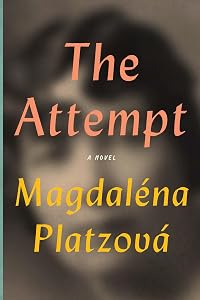
The Attempt
by Magdaléna Platzová
On This Page
Description
"When a Czech historian becomes convinced he's the illegitimate great-grandson of an infamous anarchist who attempted an assassination while living in the United States, he travels to New York to investigate. Arriving in Manhattan during the height of the Occupy Wall Street movement, his research takes him further back into the past--from the Pittsburgh home of a nineteenth-century US industrialist to 1920s Europe, where a celebrated anarchist couple is on the run from the law."--Page 4 of show more cover. show lessTags
Recommendations







Member Reviews
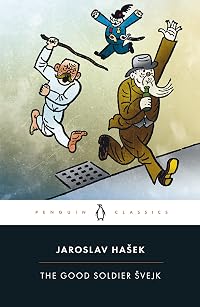
I made a poor start with Stu's Czech Lit Month at Winston's Dad with Jaroslav Hasek's The Good Soldier Svejk (1921, transl. by Cecil Parrott) because — notwithstanding its citation in 1001 Books You Must Read (2006 edition) — I abandoned it. As I said in my brief review at Goodreads, it was just not my kind of book.
But The Attempt (Anarchista) by Czech author Magdaléna Platzová is very much my kind of book.
Now based in Lyon, France, Magdaléna Platzová was born in 1972 Prague under Soviet Occupation, and though educated in the US and UK, she writes in Czech, including two novels available in English: Aaron's Leap, (Aaronův skok, 2006), and The Attempt (Anarchista, 2013). Both these books interrogate the fraught history of the show more 20th century in Europe, canvassing issues of idealism in a real world that suppresses it. The Attempt derives in part from the true story of the Russian anarchist Alexander Berkman and his partner Emma Goldman and the 1892 attempt to kill the industrialist, financier and patron of the arts Henry Clay Frick.
In Platzová's novel, these people are re-named Andrei B, Louise G, and John C Kolman. They become the subject of a Czech historian's quest to complete the book of his dead friend Josef, and he travels to America to finish the research. It turns out to be more difficult than Jan expected because he is denied access to some documents by the descendants of John C Kolman, and — distracted by (a) the Occupy Wall Street movement and (b) his unsuccessful love-life — he undergoes a transformation in his own sense of idealism.
This plot outline enables Platzová to interrogate the trial-and-error processes of political change. At social gatherings amid the Occupy Wall Street crowd Jan hears discussions about whether violence is always necessary for change because wealthy people won't give up what they have, in order to achieve equality. In conversation with Sr Michaela, Kolman's descendant who's become a nun, he hears her argue that people who have amassed obscene wealth can't be forgiven simply by amassing an art collection and then allowing people to view it for free. In Louise's texts, Jan finds her musing on Father Jerome, a French catholic priest in the US, who advocated poverty at a time when Protestant preachers were roaming the country, spreading word that it was man's duty to accumulate wealth.
TO read the rest of my review please visit https://anzlitlovers.com/2023/09/26/the-attempt-2013-by-magdalena-platzova-trans... show less
But The Attempt (Anarchista) by Czech author Magdaléna Platzová is very much my kind of book.
Now based in Lyon, France, Magdaléna Platzová was born in 1972 Prague under Soviet Occupation, and though educated in the US and UK, she writes in Czech, including two novels available in English: Aaron's Leap, (Aaronův skok, 2006), and The Attempt (Anarchista, 2013). Both these books interrogate the fraught history of the show more 20th century in Europe, canvassing issues of idealism in a real world that suppresses it. The Attempt derives in part from the true story of the Russian anarchist Alexander Berkman and his partner Emma Goldman and the 1892 attempt to kill the industrialist, financier and patron of the arts Henry Clay Frick.
In Platzová's novel, these people are re-named Andrei B, Louise G, and John C Kolman. They become the subject of a Czech historian's quest to complete the book of his dead friend Josef, and he travels to America to finish the research. It turns out to be more difficult than Jan expected because he is denied access to some documents by the descendants of John C Kolman, and — distracted by (a) the Occupy Wall Street movement and (b) his unsuccessful love-life — he undergoes a transformation in his own sense of idealism.
This plot outline enables Platzová to interrogate the trial-and-error processes of political change. At social gatherings amid the Occupy Wall Street crowd Jan hears discussions about whether violence is always necessary for change because wealthy people won't give up what they have, in order to achieve equality. In conversation with Sr Michaela, Kolman's descendant who's become a nun, he hears her argue that people who have amassed obscene wealth can't be forgiven simply by amassing an art collection and then allowing people to view it for free. In Louise's texts, Jan finds her musing on Father Jerome, a French catholic priest in the US, who advocated poverty at a time when Protestant preachers were roaming the country, spreading word that it was man's duty to accumulate wealth.
Wealth was a sign of God's blessing, and poverty God's punishment for sins and laziness, they claimed.
'How did money come to be held as the greatest value in the New World?' Louise questioned. 'Where does this greed come from, this urge to accumulate more and more?' (p.87)
TO read the rest of my review please visit https://anzlitlovers.com/2023/09/26/the-attempt-2013-by-magdalena-platzova-trans... show less
This book is so well written in it's English translation, I wish I cold understand The Czech and read the original writing.
The story begins and ends at an Occupy Wall Street Rally in New York City. A Czech historian believes he may be related to an anarchist that lived in the early 20th century and comes to America to look into the actions of his great-great Grandfather who attempted to assassinate a wealthy industrialist in Pittsburgh. The story is based upon the lives of Alexander Berkman and Emma Goldman, and the "legacy" of radical politics and relationships. The Czech historian, Jan, interviews surviving members of he industrialists family and it's apparent to him that two worlds clashed for his alleged great-great Grandfather. The show more world of the rich and famous versus that of the humble world of the anarchist trying to change the world with a senseless act of violence many years before. While the poor anarchist has many issues to deal with, a look behind the veil at the lives of the industrialist's family show problems that are strikingly similar, regardless of class, or wealth.
The reader will be left with many questions on the true nature of political change, social order, religious repression and distribution of wealth. Revolutions have happened in the world because of these issues and were brought about by anarchists, but, it's questionable that these really made conditions more equitable for the people, or, "if one form of power is simply replaced by another." Most revolutions are as well intentioned but man's inherent imperfections, undoubtedly, continue to express themselves in the new social order in some way, if change is achieved. After the revolution "it's original purpose has been forgotten, the fervor is all that lasts."
The novel is somewhat dark, both in characters and plot. Did these people sacrifice their lives for any real change in the nature of man or how he's governed, or were they merely intellectual promoters of a culture of change. Did they raise issues that were relevant to a society that hardly noticed them, and when it did, they were simply deported to another, and then another country. Out of the darkness, Andrei, the anarchist character, says that "it is precisely that need to have an ideal to fight for which every member of the human species shares in common, that I see is our only hope. But, if humanity could get behind an ideal that was good, we could enjoy the greatest prosperity in our history." No words need be added that could make that ideal more impactful to our present times.
The defining moment of the novel, the attempted assassination cost Andrei 14 years of his life, and in the end, prison was the only home he felt secure in during his remaining life. Anarchists have been part of humanity since it's beginning, and if true, Andrei claims that at some point everyone is an anarchist in their heart. It's evident their search for something better, something more congruent with man's free will, is a noble search, particularly during the period covered in the book. In spite of costing him 14 years of his life, and deportation from several countries, no change took place; however, fate has dealt the industrialist's family justice because of their greed. While they seek atonement for the actions of their father, and grandfather, their empty actions simply bring them more unhappiness.
At a time when our rights are so important, so vital to our future, this novel is highly recommended. show less
The story begins and ends at an Occupy Wall Street Rally in New York City. A Czech historian believes he may be related to an anarchist that lived in the early 20th century and comes to America to look into the actions of his great-great Grandfather who attempted to assassinate a wealthy industrialist in Pittsburgh. The story is based upon the lives of Alexander Berkman and Emma Goldman, and the "legacy" of radical politics and relationships. The Czech historian, Jan, interviews surviving members of he industrialists family and it's apparent to him that two worlds clashed for his alleged great-great Grandfather. The show more world of the rich and famous versus that of the humble world of the anarchist trying to change the world with a senseless act of violence many years before. While the poor anarchist has many issues to deal with, a look behind the veil at the lives of the industrialist's family show problems that are strikingly similar, regardless of class, or wealth.
The reader will be left with many questions on the true nature of political change, social order, religious repression and distribution of wealth. Revolutions have happened in the world because of these issues and were brought about by anarchists, but, it's questionable that these really made conditions more equitable for the people, or, "if one form of power is simply replaced by another." Most revolutions are as well intentioned but man's inherent imperfections, undoubtedly, continue to express themselves in the new social order in some way, if change is achieved. After the revolution "it's original purpose has been forgotten, the fervor is all that lasts."
The novel is somewhat dark, both in characters and plot. Did these people sacrifice their lives for any real change in the nature of man or how he's governed, or were they merely intellectual promoters of a culture of change. Did they raise issues that were relevant to a society that hardly noticed them, and when it did, they were simply deported to another, and then another country. Out of the darkness, Andrei, the anarchist character, says that "it is precisely that need to have an ideal to fight for which every member of the human species shares in common, that I see is our only hope. But, if humanity could get behind an ideal that was good, we could enjoy the greatest prosperity in our history." No words need be added that could make that ideal more impactful to our present times.
The defining moment of the novel, the attempted assassination cost Andrei 14 years of his life, and in the end, prison was the only home he felt secure in during his remaining life. Anarchists have been part of humanity since it's beginning, and if true, Andrei claims that at some point everyone is an anarchist in their heart. It's evident their search for something better, something more congruent with man's free will, is a noble search, particularly during the period covered in the book. In spite of costing him 14 years of his life, and deportation from several countries, no change took place; however, fate has dealt the industrialist's family justice because of their greed. While they seek atonement for the actions of their father, and grandfather, their empty actions simply bring them more unhappiness.
At a time when our rights are so important, so vital to our future, this novel is highly recommended. show less
 This review was written for LibraryThing Early Reviewers.
As always, thanks so much to Bellevue Literary Press and to LT.
To me, this is a novel that is less plot driven rather than idea driven. Idealism, anarchy (in different forms), freedom and transformation occupy its pages. It is a book that (in my opinion) is really more for out of the box sort of thinkers rather than those who are heavily dependent on plot lines. But I think aside from a few issues, it's a really good one, encompassing both modern and historical times. And by the way -- the second half of the book is about a thinly-disguised Alexander Berkman and Emma Goldman. John C. Kolman here (the subject of "the attempt") is also a stand-in of sorts for wealthy industrialist Henry Clay Frick, whose disregard for ordinary people not show more of his own class helped to cause the Johnstown Flood disaster of 1889. Parallels abound in this novel.
In this book, the driving force (to me) is a true desire for freedom. What I'm taking away from this is that an anarchist may be more than just someone who is all about bomb throwing, violence, and assassinations. There are also anarchists who can, without violence, refuse to be subjugated, who reject the status quo of the power hierarchy, and who try to affect change to transform the system and themselves. I liked this one, and I liked it a lot. It's very different, which is a good thing. show less
To me, this is a novel that is less plot driven rather than idea driven. Idealism, anarchy (in different forms), freedom and transformation occupy its pages. It is a book that (in my opinion) is really more for out of the box sort of thinkers rather than those who are heavily dependent on plot lines. But I think aside from a few issues, it's a really good one, encompassing both modern and historical times. And by the way -- the second half of the book is about a thinly-disguised Alexander Berkman and Emma Goldman. John C. Kolman here (the subject of "the attempt") is also a stand-in of sorts for wealthy industrialist Henry Clay Frick, whose disregard for ordinary people not show more of his own class helped to cause the Johnstown Flood disaster of 1889. Parallels abound in this novel.
In this book, the driving force (to me) is a true desire for freedom. What I'm taking away from this is that an anarchist may be more than just someone who is all about bomb throwing, violence, and assassinations. There are also anarchists who can, without violence, refuse to be subjugated, who reject the status quo of the power hierarchy, and who try to affect change to transform the system and themselves. I liked this one, and I liked it a lot. It's very different, which is a good thing. show less
This review was written for LibraryThing Early Reviewers.The Attempt by Magdalena Platzova is really 2 stories intertwining. One of a modern day Czech in his late 30's who goes to New York City on a scholarship to study history, at least that is the precept. He really wants to be there to pursue the possibility that he is the great-grandson of a social-anarchist (Andrei B.) who had made some political and social waves in the early 20th century helping workers to unionize. He believed at one point, in order to make real change, a radical action must be taken. With this in mind he intended to assassinate one of the barons of industry (John C. Kolman) in Pennsylvania. He was unsuccessful, the attempt only wounding the man but putting Andrei in prison for 14 years after which he was deported back show more to post WWI Europe. In this thread of narrative, the protagonist investigates the family of the baron, finding fabulous wealth and deep sadness. I found this first thread to be disjointed. I never found the connection between the protagonist and the family.
The second story is going back in time and following bits of the life of Andrei B.; a snippet from the early 1900's in the United States, his attempted assassination and subsequent time in prison, his deportation and the upset of seeing the USSR in the early 1920's - how the revolution had failed, and then his final days in the 1930's in France.
I wanted more of the story of Andrei; the social-anarchism of the time period is so important in understanding modern European history. For me, this was the meat of the book and for this alone I recommend reading. It is a human story with struggles, although almost 100 years ago, parallel political and social struggles we are facing today. show less
The second story is going back in time and following bits of the life of Andrei B.; a snippet from the early 1900's in the United States, his attempted assassination and subsequent time in prison, his deportation and the upset of seeing the USSR in the early 1920's - how the revolution had failed, and then his final days in the 1930's in France.
I wanted more of the story of Andrei; the social-anarchism of the time period is so important in understanding modern European history. For me, this was the meat of the book and for this alone I recommend reading. It is a human story with struggles, although almost 100 years ago, parallel political and social struggles we are facing today. show less
This review was written for LibraryThing Early Reviewers.I received this uncorrected proof from a LibraryThing early reviewers giveaway. The story has an interesting premise: a European historian wants to find out if he is related to an anarchist and goes to America to research the family of which the anarchist made an attempt at assassinating the industrialist head. The story, as all family stories are, is very convoluted, with secrecy and eccentrics adding to the mystery. Unfortunately, the side stories going on tend to crowd out the interesting premise and caused me to lose my interest. It was perfect timing to receive the book as I am learning about 19th and 20th century Europe history, but it just didn't hold together very well for me. I may attempt reading it again. It's possible that show more something was lost in the translation from Czech. show less
This review was written for LibraryThing Early Reviewers.I received this book from Bellevue Literary Press and Library Thing . This was an Early Reviewer copy. I loved the writing in this very atmospheric novel which bounced between Czechoslovakia and New York City. I did find the story a little "disjointed" as it bounced between differing characters, times, and locations and I never did figure out what the plot of the novel was. Everyone in the novel was always on the way to do something, but no one ever seemed to get anything done.
This review was written for LibraryThing Early Reviewers.This is a very intriguing book. It was a little slow to start but has held my attention until the end. This book lets you follow the rise and fall of anarchism. The characters are phenomenal and exciting. A good read.
This review was written for LibraryThing Early Reviewers.Members
- Recently Added By
Author Information
11 Works 121 Members
Some Editions
Awards and Honors
Classifications
- Genres
- General Fiction, Fiction and Literature, Historical Fiction
- DDC/MDS
- 891.8 — Literature & rhetoric Literatures of other languages East Indo-European and Celtic literatures West and South Slavic languages (Bulgarian, Slovene, Polish, Czech, Slovak, Serbo-Croatian, and Macedonian)
- LCC
- PG5040.26 .L38 .A8813 — Language and Literature Slavic languages and literatures. Baltic languages. Albanian language Slavic. Baltic. Albanian Slavic Czech
- BISAC
Statistics
- Members
- 50
- Popularity
- 604,246
- Reviews
- 8
- Rating
- (3.67)
- Languages
- English
- Media
- Paper, Ebook
- ISBNs
- 2
- ASINs
- 1