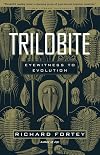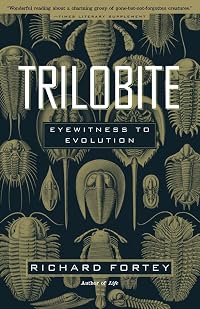
Trilobite! Eyewitness to Evolution
by Richard Fortey
On This Page
Description
From the author of Life comes the fascinating story of the beginnings of life on our planet as seen by its very first creatures, trilobites -- the exotic, crustacean-like animals that dominated the seas for 300 million years. Richard Fortey fell in love with trilobites as a fourteen-year-old when he held his first fossil in his hand. In Trilobite!, he draws on a lifetime of study of these creatures to unravel the history of life on earth from their point of view. Trilobites saw continents show more move, mountain chains grow and erode; they survived ice ages and volcanic eruptions, constantly evolving and exquisitely adapting to their environment -- their own evolution calibrated to geological time itself. With Fortey's expert guidance, we begin to understand how trilobites reveal the pattern and mechanism of evolution through their fossil legacy in the rocks. Through the eyes of trilobites, he allows us glimpses of former worlds as foreign in their geography as in their life forms. Altogether, he provides a unique picture of our geological past, which in turn provides us -- scientist and layperson alike -- with a new grasp of the wonders of scientific discovery. show lessTags
Recommendations

















Member Reviews
Wonderful and entertaining book about one of the humblest but most successful creatures in the long history. Far from just being simple bugs who crawled in the mud of long-gone oceans, trilobites dominated the seas of the planet for more than 200 million years and evolved an astonishing number of forms adapted to every type of sea habitat. Although they have become of the most popular fossils, mainly because of their astonishing proliferation all over the planet, few people know much about the. Simon Fortey rectifies this in a book that is a poem to his deep love affair with this modest creature. He waxes lyrical as he describes how trilobites first came to the attention of science, how their fragile shells were teased out of rock, the show more details of their lives pieced together, and how they continue to reveal new secrets to this day. More science books should be written like this, it is truly captivating stuff. I must admit, although I have always been fascinated by trilobites, I have never taken the time to really get to know their story, thanks to Fortey I have now rectified this and intend to seek out other books. Truly wonderful stuff. show less
Hundreds of millions of years ago, a special creature travelled through the world’s oceans. Covered in an calcite chitin exoskeleton, they were first discovered by Reverend Edward Lhwyd in 1698, and from there the fascination grew. To date, some 17,000 species have been described. Sadly, though, there are no extant species of trilobite and we only have the fossil record to go by. The closest we have is the horseshoe crab. Richard Fortey’s Trilobite takes us through the history, taxonomy, and science of the wondrous trilobite.
The art of finding of trilobites in the wild is equal parts geological prowess, immeasurable patience, and scientific fortitude. Fortey’s early experiences with trilobite investigation left him at the mercy show more of a microscope and thousands of tiny rock-drilling needles. Fortey’s writing is both scholarly and jovial, and he includes a fair number of pictures to show off the anatomy and diversity of trilobite species. Luckily, so many trilobite specimens have been found around the world, there is a great deal of information to be gleaned on how they lived.
Fortey makes you feel like you should rush out to the nearest mountain and starting hammering away (gingerly, though, you don’t want to break them) to find an ancient creature locked in the rocks. He is genuinely excited to share his collected experiences with the reader, and he wisely keeps his erudition at a decent level. If you’re an amateur scientist or simply a natural history nut (like me), then this one from the London Natural History Museum’s foremost paleontologist is well worth it. show less
The art of finding of trilobites in the wild is equal parts geological prowess, immeasurable patience, and scientific fortitude. Fortey’s early experiences with trilobite investigation left him at the mercy show more of a microscope and thousands of tiny rock-drilling needles. Fortey’s writing is both scholarly and jovial, and he includes a fair number of pictures to show off the anatomy and diversity of trilobite species. Luckily, so many trilobite specimens have been found around the world, there is a great deal of information to be gleaned on how they lived.
Fortey makes you feel like you should rush out to the nearest mountain and starting hammering away (gingerly, though, you don’t want to break them) to find an ancient creature locked in the rocks. He is genuinely excited to share his collected experiences with the reader, and he wisely keeps his erudition at a decent level. If you’re an amateur scientist or simply a natural history nut (like me), then this one from the London Natural History Museum’s foremost paleontologist is well worth it. show less
Once I'd read Richard Fortey's Dry Storeroom No. 1 (review) I knew I'd be on the lookout for his earlier works. Trilobite: Eyewitness to Evolution (Vintage, 2001) is the first of those I stumbled across. Fortey, who spent a career studying trilobites, shares his enthusiasm with the fossilized critters, outlining their discovery, biology, habits, geography, you name it. He also offers up a survey of his predecessors in the field of trilobitology (each with their own quirks and foibles, of course), and describes many of the key scientific debates of the 20th century (plate tectonics, punctuated equilibrium, &c.)
Fortey is one of the best active writers of scientific narrative. His sense of humor and obvious enjoyment of his field of study show more are infectious, and although there are many detailed scientific descriptions and explanations, those never overpowered the narrative (and were fascinating to read). Plus, I greatly respect anyone who can use such delightful words as ruckle, beetling, fusty, boffin and sempiternally, and phrases like cobble of knobbles and pong of putrefacation (look them up, I did).
If you can read this book and not get at least a little itch to go out and crack open some slates looking for trilobites, you've got more will power than me.
http://philobiblos.blogspot.com/2009/07/book-review-trilobite.html show less
Fortey is one of the best active writers of scientific narrative. His sense of humor and obvious enjoyment of his field of study show more are infectious, and although there are many detailed scientific descriptions and explanations, those never overpowered the narrative (and were fascinating to read). Plus, I greatly respect anyone who can use such delightful words as ruckle, beetling, fusty, boffin and sempiternally, and phrases like cobble of knobbles and pong of putrefacation (look them up, I did).
If you can read this book and not get at least a little itch to go out and crack open some slates looking for trilobites, you've got more will power than me.
http://philobiblos.blogspot.com/2009/07/book-review-trilobite.html show less
If you’ve ever tried to read a science book, especially one written by a respected expert in a given field, then you know that the books can be a bit…dry. All that material, all of those facts, all of those tables and charts and graphs can be overwhelming to a general reader. But every once in a while, a scientist comes along who is so enthusiastic, so passionate, so giddy in love with his subject that you get swept away in the ensuing rush.
Trilobites are some of the earliest creatures in existence captured in fossil form, and Richard Fortey is gaga over them. This book is ostensibly a study of the trilobite fossil record and what that changing record can tell us about the prehistoric world. But what it really is is Fortey’s love show more letter to the trilobite. He marvels over the fossils; he waxes rhapsodic about the rocks and shales the fossils can be found in; he even dotes on the other scientists, past and present, who have studied trilobites.
And you know what? It works. I found myself totally caught up in Fortey’s world o’ trilobites. I shared his pride in identifying new trilobites. I chuckled as he rolled his eyes and poked fun at some of his huffier scientific brethren. And I even began to understand and share his awe at how much can be learned from these ancient creatures.
Richard Fortey is proof positive that anything can be interesting with the right teacher. show less
Trilobites are some of the earliest creatures in existence captured in fossil form, and Richard Fortey is gaga over them. This book is ostensibly a study of the trilobite fossil record and what that changing record can tell us about the prehistoric world. But what it really is is Fortey’s love show more letter to the trilobite. He marvels over the fossils; he waxes rhapsodic about the rocks and shales the fossils can be found in; he even dotes on the other scientists, past and present, who have studied trilobites.
And you know what? It works. I found myself totally caught up in Fortey’s world o’ trilobites. I shared his pride in identifying new trilobites. I chuckled as he rolled his eyes and poked fun at some of his huffier scientific brethren. And I even began to understand and share his awe at how much can be learned from these ancient creatures.
Richard Fortey is proof positive that anything can be interesting with the right teacher. show less
Before I read this book, I thought of trilobites as a slightly boring group of fossil arthropods, ubiquitous from the Cambrian to Permian periods, useful as index fossils but not exactly scintillating. Who could get excited about hundreds of petrified woodlice? Now I'm converted: they are really quite fascinating. Fortey is hugely enthusiastic, and his enthusiasm comes across well, even when explaining something as arcane as the optical properties of calcite. His style is eminently readable, if you can cope with arabesque flights of fancy, laced with fairly dreadful puns, and a slightly desperate thread of literary allusions. The book is disorganized, baroque, and constantly engaging; the author comes across as one of those mad show more scientists who is really quite sensible underneath.
MB 6-xi-2010 show less
MB 6-xi-2010 show less
This is one of my favourite science books, Richard Fortey has an intimate, witty style of writing which is easy to read and gives you an insight into the way science is actually carried out in the field. It shouldn't be possible to write 250 pages about nothing but trilobites and make it interesting but Fortey certainly can.
Trilobite! (with the exclamation mark) is Richard Fortey's passionate account of trilobites - their physiology, their crystal eyes, legs, development, evolution and history. This book grew out of the author's love of trilobites. His stated aim is to invest the trilobites with all the glamour of the dinosaur and to see the world through the eyes of a trilobites.
This enthusiastic account of trilobites is written in a colourful narrative style that mixes science with personal anecdotes and historical stories. The chapter on trilobite eyes was especially fascinating. There are a few technical terms to be learned, but nothing excessive that would be difficult for the lay reader. The book also includes numerous black/white photographs and show more diagrams.
Trilobites are interesting creatures, but I wanted more focus on the trilobites and fewer anecdotes. I would also have like more information on what may have caused their extinction. However, this book is still fascinating and a joy to read. show less
This enthusiastic account of trilobites is written in a colourful narrative style that mixes science with personal anecdotes and historical stories. The chapter on trilobite eyes was especially fascinating. There are a few technical terms to be learned, but nothing excessive that would be difficult for the lay reader. The book also includes numerous black/white photographs and show more diagrams.
Trilobites are interesting creatures, but I wanted more focus on the trilobites and fewer anecdotes. I would also have like more information on what may have caused their extinction. However, this book is still fascinating and a joy to read. show less
Members
- Recently Added By
Lists

Books Read in 2016
4,666 works; 199 members
Author Information

19+ Works 5,434 Members
Richard Fortey is a senior paleontologist at the Natural History Museum in London. (Bowker Author Biography)
Awards and Honors
Distinctions
Notable Lists
Work Relationships
Is abridged in
Common Knowledge
- Canonical title
- Trilobite! Eyewitness to Evolution
- Original publication date
- 2000
- Important events
- Palaeozoic Era
- Dedication
- FOR MY MOTHER
- First words
- Out of season, the bar of the Cobweb Inn at Boscastle is everything a pub should be.
- Last words
- (Click to show. Warning: May contain spoilers.)Yet I know that there can be nothing better than to pursue such dreams; that the will to know the truth is one of the better parts of human nature; and that trilobites will reward the investigator in a currency more valuable than dollars, and more tangible than fame.
Classifications
Statistics
- Members
- 808
- Popularity
- 34,346
- Reviews
- 18
- Rating
- (4.01)
- Languages
- English, German, Spanish
- Media
- Paper, Ebook
- ISBNs
- 10
- ASINs
- 6