
A World of Love
by Elizabeth Bowen
On This Page
Description
In a writing career that spanned the 1920s to the 1960s, Anglo-Irish author Elizabeth Bowen created a rich and nuanced body of work in which she enlarged the comedy of manners with her own stunning brand of emotional and psychological depth. In A World of Love, an uneasy group of relations are living under one roof at Montefort, a decaying manor in the Irish countryside. When twenty-year-old Jane finds in the attic a packet of love letters written years ago by Guy, her mother’s one-time show more fiance who died in World War I, the discovery has explosive repercussions. It is not clear to whom the letters are addressed, and their appearance begins to lay bare the strange and unspoken connections between the adults now living in the house. Soon, a girl on the brink of womanhood, a mother haunted by love lost, and a ruined matchmaker with her own claim on the dead wage a battle that makes the ghostly Guy as real a presence in Montefort as any of the living. show lessTags
Recommendations






















Member Reviews
There was something special about this book from the very first sentence. What was it? Perhaps it was the way that Bowen wrote - not just in her choice of words, but in her choice of sentence structure, with oddly placed adjective and adverb clusters that made you slow down your reading pace. This is not a book to speed through, you have to take it slowly and let the plot develop at its leisure, and you must give the characters a chance to speak to you, for every single one of them has their own compelling voice - a rare achievement in a book that avoids stereotype and cliche so handsomely.
The story, such as it is, concerns a family living in an old Irish mansion or castle; one day, the eldest daughter discovers a parcel of love show more letters, this event triggering a set of actions that bring up and resolve (or not) buried mysteries and secrets, and threaten to tear everything apart.
In all, a magnificent achievement. show less
The story, such as it is, concerns a family living in an old Irish mansion or castle; one day, the eldest daughter discovers a parcel of love show more letters, this event triggering a set of actions that bring up and resolve (or not) buried mysteries and secrets, and threaten to tear everything apart.
In all, a magnificent achievement. show less
Sometimes I love Bowen, sometimes she bores me to tears. And this is pretty easy to explain: when she's writing about peoples' relationships and the way we're always talking past one another and not saying what needs to be said, she's fabulous. When she's describing landscape or interior decorating she's almost always insufferable. Unfortunately for this short book, there's too much landscape and not enough people not quite relating to each other. Also, the ending is unbearably stupid; I suggest you just don't read the last chapter, which seems to have been added with the hope that someone would turn the book into a Hollywood rom-com. Also, what is with all the Yoda speak? "Cold, the room was now in the afternoon"? (Okay, I made that show more up, but you get the point.) Is that how Irish Protestants speak? Really?
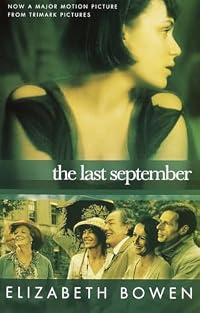
Anyway, read Bowen, but read The Last September or The Heat of the Day instead. show less
Anyway, read Bowen, but read The Last September or The Heat of the Day instead. show less
I picked this one up as Elizabeth Bowen was the author-of-the-month over at the "Monthly Author Reads" LibraryThing group, and I managed to find a second hand copy of this particular title. It's not one I would have chosen if I'd been given a choice, but it was on the "1001" list, and seemed slim so even if I didn't like it, it wouldn't take long.
Being slim wasn't the best aspect of this book, but it was a positive aspect.
In a rundown Irish country house in the 1950s, one very atmospherically hot summer day, a young girl finds a bundle of love letters from Guy, who had died during the Great War. Her mother, Lilia, had been engaged to Guy, and the country house belongs to Guy's cousin, Antonia, who lets Lilia and her husband (another show more cousin of Guy's) and their children live there, while she is off with her career as a photographer. Given the complexities of the surface relationships, you'd be right in thinking that there's going to be a lot of sublimated emotions going on. And there are, and that's not the sort of book I particular enjoy. Especially when the dialogue (which usually gives you insight) is as short and brief as, well, this:
'We were thinking of having supper.'
'Do as you please,' said she.
'What about you?'
'Today, you surpassed yourself.'
'Oh? - sorry.'
Etc. See? I'm not getting insights.
But it wasn't all awful. There were some wonderful thoughts on how the dead are still with us, the living, affecting our lives still through their untimely absence.
...though a generation was mown down his death seemed to her an invented story. Not that it was unlike him to be killed - lightly he had on the whole taken that for granted; they all sooner or later were; why should he not be? - but that it was unlike him to be dead. ... It would be long before Guy was done with life... It was simply that these years she went on living belonged to him, his lease upon them not having run out yet. The living were living his lifetime; and of this his contemporaries never were unaware. They were incomplete.
And, while the fact that the 1001 book describes this as her "funniest" book does fill me with dread when faced with the other Elizabeth Bowen novels on the 1001 list, it does have some amusing black humour with the incredible macabre nature of Maud, Lilia's youngest daughter. And the ending is a rather uplifting affair, suggesting that the next generation may be able to throw off the despair and ennui of the previous generations and find love of their own, and create new happy lives. show less
Being slim wasn't the best aspect of this book, but it was a positive aspect.
In a rundown Irish country house in the 1950s, one very atmospherically hot summer day, a young girl finds a bundle of love letters from Guy, who had died during the Great War. Her mother, Lilia, had been engaged to Guy, and the country house belongs to Guy's cousin, Antonia, who lets Lilia and her husband (another show more cousin of Guy's) and their children live there, while she is off with her career as a photographer. Given the complexities of the surface relationships, you'd be right in thinking that there's going to be a lot of sublimated emotions going on. And there are, and that's not the sort of book I particular enjoy. Especially when the dialogue (which usually gives you insight) is as short and brief as, well, this:
'We were thinking of having supper.'
'Do as you please,' said she.
'What about you?'
'Today, you surpassed yourself.'
'Oh? - sorry.'
Etc. See? I'm not getting insights.
But it wasn't all awful. There were some wonderful thoughts on how the dead are still with us, the living, affecting our lives still through their untimely absence.
...though a generation was mown down his death seemed to her an invented story. Not that it was unlike him to be killed - lightly he had on the whole taken that for granted; they all sooner or later were; why should he not be? - but that it was unlike him to be dead. ... It would be long before Guy was done with life... It was simply that these years she went on living belonged to him, his lease upon them not having run out yet. The living were living his lifetime; and of this his contemporaries never were unaware. They were incomplete.
And, while the fact that the 1001 book describes this as her "funniest" book does fill me with dread when faced with the other Elizabeth Bowen novels on the 1001 list, it does have some amusing black humour with the incredible macabre nature of Maud, Lilia's youngest daughter. And the ending is a rather uplifting affair, suggesting that the next generation may be able to throw off the despair and ennui of the previous generations and find love of their own, and create new happy lives. show less
It's been a few days since I finished the book, sharing others' views that its ending was too abrupt, but on further thought, I have changed my mind. The key to understanding what Bowen was up to here is in the Traherne quote with which she begins "There is in us a world of Love to somewhat, though we know not what in the world that should be.... Do you not feel yourself drawn by the expectations and desire of some Great Thing." The estate in Southern Ireland, Montefort, is this World of Love and it is the first character to which we are introduced. It is "pale" and "expectant." And the country is subject to "late awakenings." (All paragraph 1). The name of the estate suggests an isolated and impregnable fortress. All the love seems to show more have occurred in the past: Lilia and Fred Danby were clearly sexually alive once, but now they are not. The heat is oppressive and the drought is beginning to be dangerous. I wonder if Ireland really ever has droughts?!
In the second scene, Jane Danby, the nubile daughter, emerges wearing the clothing from a previous era, the era in which this love occurred. The mystery about who wrote the love letters she found in the attic is somewhat distracting, because ultimately what matters is that the capacity to love is rediscovered. Lilia and Fred reconcile. Strangely, the younger daughter, Maud, is left out of this and punished for her part in trying to sell the letters, though that was only an afterthought, it was like like Judas betraying Christ for a few pieces of silver, or the Simonaic sin: you must not mix money and love. That was part of the problem with the uncertain relationship between Antonia and the Danbys, which led to the drought and stagnation. Jane finds a new patroness and is able to break out of the twisted relations thus, presto, becoming ready for love. It doesn't, after all, matter who one loves. show less
In the second scene, Jane Danby, the nubile daughter, emerges wearing the clothing from a previous era, the era in which this love occurred. The mystery about who wrote the love letters she found in the attic is somewhat distracting, because ultimately what matters is that the capacity to love is rediscovered. Lilia and Fred reconcile. Strangely, the younger daughter, Maud, is left out of this and punished for her part in trying to sell the letters, though that was only an afterthought, it was like like Judas betraying Christ for a few pieces of silver, or the Simonaic sin: you must not mix money and love. That was part of the problem with the uncertain relationship between Antonia and the Danbys, which led to the drought and stagnation. Jane finds a new patroness and is able to break out of the twisted relations thus, presto, becoming ready for love. It doesn't, after all, matter who one loves. show less
This book is beautifully written and a has very simple plot. It is more of characterization of a family living in a dilapidated estate in Ireland than a story. Descriptions of the land and its people are wonderfully done. Unfortunately, it was sometimes difficult to read through due to too many double negatives. Enjoyable but doesn't stand out.
Another book that I really wanted to like, but didn't. The synopsis sounded good. It had so much potential, but it just didn't go anywhere. It claims to be poetic, but it was just confusing. As another reviewer put it, it felt like I was reading a book by Yoda. Maybe my opinion is tainted, because I recently read Fugitive Pieces by Anne Michaels. That book was beautiful and poetic.
The story stars very unclear and confusing. I had no idea of the time and setting. Had to read half the book and read about an automobile to get a sence of time. No idea on the setting. The story is about these women, all related, who have in some ways been involved with a same man.
Members
- Recently Added By
Author Information

74+ Works 9,059 Members
Elizabeth Bowen, distinguished Anglo-Irish novelist, was born in Dublin in 1899, traveled extensively, lived in London, and inherited the family estate-Bowen's Court, in County Cork. Her account of the house, Bowen's Court (1942), with a detailed fictionalized history of the family in Ireland through three centuries, has charm, warmth, and show more insight. Seven Winters is a fragment of autobiography published in England in 1942. The "Afterthoughts" of the original edition are critical essays in which she discusses and analyzes, among others, such literary figures as Virginia Woolf, E. M. Forster, Katherine Mansfield, Anthony Trollope, and Eudora Welty. Bowen's stories, mostly about people of the British upper middle class, portray relationships that are never simple, except, perhaps, on the surface. Her concern with time and memory is a major theme. Beautifully and delicately written, her stories, with their oblique psychological revelations, are symbolic, subtle, and terrifying. A Time in Rome (1960) is her brilliant evocation of that city and its layered past. In 1948, Bowen was made a Commander of the British Empire. Bowen died in 1973. (Bowker Author Biography) show less
Some Editions
Awards and Honors
Notable Lists
Series
Belongs to Publisher Series
Common Knowledge
- Canonical title
- A World of Love
- Original title
- A World of Love
- Original publication date
- 1955
- People/Characters
- Guy Danby; Jane Danby; Lila Danby
- Important places
- Ireland
- Epigraph
- There is in us a world of Love to somewhat,
though we know not what in the world that
should be ... Do you not feel yourself drawn
by the expectation and desire of some Great
Thing?
Thomas Traher... (show all)ne
Centuries of Meditations - Dedication
- To
Catherine Pomeroy Collins - First words
- The sun rose on a landscape still pale with the heat of the day before.
- Last words
- (Click to show. Warning: May contain spoilers.)They no sooner looked but they loved.
- Blurbers
- Pritchett, V. S.
- Original language
- English
Classifications
Statistics
- Members
- 392
- Popularity
- 79,064
- Reviews
- 7
- Rating
- (3.51)
- Languages
- Dutch, English, French, Italian
- Media
- Paper, Ebook
- ISBNs
- 15
- ASINs
- 9