On This Page
Description
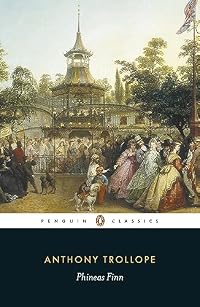
Though he rose to literary fame on the strength of his series of novels set in the fictional rural county of Barsetshire, Anthony Trollope's later works were more concerned with politics and social issues. The novel Phineas Finn is the second in Trollope's series known as the Palliser novels, which focus on political intrigue and relationships among members of Parliament. This volume focuses on Phineas Finn, an immigrant from Ireland who runs for Parliament and, to most everyone's surprise, show more is successful in his bid.. show less
Tags
Recommendations















Member Recommendations

nessreader Phineas Finn, the parliamentary fiction about the struggles of an Irish MP in Westminster, was written before Parnell the member for Meath came to prominence, but Trollope's abiding fascination for politics and society makes it engrossing background reading on the culture Parnell was experiencing. The real Parnell stirred nations before he was destroyed while the fictional Finn sinks into mediocrity, but their situations are parallel in some ways.

thorold Parliament at the time of the 1867 Reform Act: in fact and fiction
Member Reviews
Phineas Finn's father chose to send his son to London to train as a barrister rather than having him train in Ireland. Just as Phineas is ready to launch his career, he allows himself to be talked into standing for Parliament, against the advice of his elders, including his father, his law tutor, and his landlord. Since Phineas has no money, he ought to establish himself in his profession first so that he will have an income to support himself since members of Parliament don't receive a salary. Phineas's agreeable personality and his way with words contribute to his rapid rise, but his position is precarious.
Of all of the young men I have encountered so far in Trollope's novels, I like Phineas best. His occasional impetuousness leads show more him into trouble, as he fails to think through all of the potential consequences before he acts. However, he accepts responsibility for his choices and endures the consequences. Phineas is too scrupulous to make a good politician if that means voting for one's party against one's conscience. Trollope's portrayal of political power and influence seems as relevant to 21st century American politics as to Victorian Britain. show less
Of all of the young men I have encountered so far in Trollope's novels, I like Phineas best. His occasional impetuousness leads show more him into trouble, as he fails to think through all of the potential consequences before he acts. However, he accepts responsibility for his choices and endures the consequences. Phineas is too scrupulous to make a good politician if that means voting for one's party against one's conscience. Trollope's portrayal of political power and influence seems as relevant to 21st century American politics as to Victorian Britain. show less
Phineas Finn is a young Irishman who decides to make his career in politics and takes the unusual step of obtaining a seat in Parliament without first building his career as a barrister. Parliamentary positions did not come with a salary; nevertheless, Phineas sets off for London sure that everything will work out. And because this is Trollope, it does. Phineas starts out rather naive, eventually finds his footing and earns respect by being “useful,” and becomes deeply involved in the central issues facing the British government in the mid-1860s.
At the same time, Phineas is also trying to find his place in society, and because he is such a dashing young man, he has no shortage of marital prospects. There’s “hometown honey” show more Mary Flood-Jones, his beautiful London contemporaries Laura Standish and Violet Effingham, and the wealthy and influential young widow, Madame Max Goesler. Phineas pursues or is pursued by them all, and is fickle as can be all the way to the end. Should one marry for love and stability? Or should one pursue ambitions of wealth or position in society? Is it possible to have both? Trollope explores each of these alternatives, which also provides an opportunity to showcase several quite different women.
The political aspects of this novel were rather dense at times. The women made this book enjoyable for me. For the first time in his career, Trollope gave his female characters more depth and was sympathetic to the difficulties women faced in Victorian society: the need to marry for financial security, the control men had over women’s lives, and the challenge of living independently when circumstances require it. I’m looking forward to continuing with this series. show less
At the same time, Phineas is also trying to find his place in society, and because he is such a dashing young man, he has no shortage of marital prospects. There’s “hometown honey” show more Mary Flood-Jones, his beautiful London contemporaries Laura Standish and Violet Effingham, and the wealthy and influential young widow, Madame Max Goesler. Phineas pursues or is pursued by them all, and is fickle as can be all the way to the end. Should one marry for love and stability? Or should one pursue ambitions of wealth or position in society? Is it possible to have both? Trollope explores each of these alternatives, which also provides an opportunity to showcase several quite different women.
The political aspects of this novel were rather dense at times. The women made this book enjoyable for me. For the first time in his career, Trollope gave his female characters more depth and was sympathetic to the difficulties women faced in Victorian society: the need to marry for financial security, the control men had over women’s lives, and the challenge of living independently when circumstances require it. I’m looking forward to continuing with this series. show less
This is the second book in Trollope's Palliser series and it follow Phineas Finn's entrance into adulthood and simultaneously into politics. There is quite a bit of 1860s British politics, but though I was afraid that would become a bit of a slog, it was all fairly clearly explained and added to the story.
I really loved the character of Phineas Finn. Generally, I think that Trollope writes female characters best, but with Phineas we get an overall good person who has some character flaws, but is genuine and grows throughout the novel. He is lucky and things generally work out for the best for him, but his luck seems to stem from people liking him and being willing to help which makes me not begrudge this lucky streak.
The novel also show more explores the plight of women in the upper classes, with their lack of power and control over their lives. There are four women to contrast here: Lady Laura, who chooses a rich but boring and controlling husband; Violet Effingham, who knows who she loves but holds out on marrying him because she doesn't trust him and is worried about losing her independence; Madame Goesler, a wealthy single woman who is slightly mysterious and seems to have found that her power lies in remaining single; and sweet Mary, Phineas's childhood sweetheart from Ireland. All of these women are either in love with Phineas or he is in love with them at some point in the novel.
Overall, this was another excellent novel as I've come to expect from Trollope. Though I loved Phineas, this won't be my favorite Trollope novel, though. It didn't have as many asides from Trollope and I missed those. My star rating will rate this novel in comparison to the other Trollope novels I've read and would be higher if I was comparing it to all the books I read. show less
I really loved the character of Phineas Finn. Generally, I think that Trollope writes female characters best, but with Phineas we get an overall good person who has some character flaws, but is genuine and grows throughout the novel. He is lucky and things generally work out for the best for him, but his luck seems to stem from people liking him and being willing to help which makes me not begrudge this lucky streak.
The novel also show more explores the plight of women in the upper classes, with their lack of power and control over their lives. There are four women to contrast here: Lady Laura, who chooses a rich but boring and controlling husband; Violet Effingham, who knows who she loves but holds out on marrying him because she doesn't trust him and is worried about losing her independence; Madame Goesler, a wealthy single woman who is slightly mysterious and seems to have found that her power lies in remaining single; and sweet Mary, Phineas's childhood sweetheart from Ireland. All of these women are either in love with Phineas or he is in love with them at some point in the novel.
Overall, this was another excellent novel as I've come to expect from Trollope. Though I loved Phineas, this won't be my favorite Trollope novel, though. It didn't have as many asides from Trollope and I missed those. My star rating will rate this novel in comparison to the other Trollope novels I've read and would be higher if I was comparing it to all the books I read. show less
This is the point in the Palliser sequence where the politics start to get interesting in their own right, with a lightly-fictionalised version of the events surrounding the campaign for electoral reform in the late 1860s. In real life the 1867 Reform Act was passed (almost by accident) by a Tory government in an unholy alliance with the radical side of the Liberal party; in Trollope's version it's rather more elegantly contrived by a Liberal government, which then gets into a mess over Irish land reform (an issue Gladstone was to try to sort out a couple of years after this book appeared). Trollope of course has a lot of fun with the "turkeys voting for Christmas" aspect of reform: most of the MPs agitating for a wider franchise have show more themselves been elected by patronage or bribery, and many of them are manoeuvred into voting to abolish their own seats.
However, most people won't be reading this for the politics. The human story is interesting, but it's not Trollope on top of his form. The pacing at the beginning and end aren't quite right: the story takes rather too long to get going and the resolution of the plot in a couple of paragraphs at the end just seems like a cop-out. The balance between the English and Irish storylines doesn't quite work as it should, either. All the same, the treatment of Lady Laura and Madame Max is brilliant, whilst Mr Kennedy and Lords Chiltern and Brentford are all splendid examples of the Trollope stubborn male, in their various ways. Even Lady Glencora, in a couple of brief cameo appearances, makes a big impression. Phineas himself is rather a hard character to identify with, as he's meant to be: we never quite know what he really thinks, but then neither does he.
Probably the most interesting part of the novel for most people will be the examination of Lady Laura's marriage. Victorian novelists didn't very often venture into this sort of territory, so it's fascinating to see what Trollope makes of it, despite the limitations that the conventions of the time imposed. We know that it is bound to end unhappily for the woman (Trollope can't get out of it by making her pregnant, because he did that last time...), but it is interesting to see how he does lead the reader to question whether it is right for a husband to take his authority over his wife for granted, and even hints that observance of the Sabbath taken to excess might not be a good thing. (Of course, there's a bit of self-interest here: Trollope is losing business if ladies aren't allowed to read novels on Sundays!) show less
However, most people won't be reading this for the politics. The human story is interesting, but it's not Trollope on top of his form. The pacing at the beginning and end aren't quite right: the story takes rather too long to get going and the resolution of the plot in a couple of paragraphs at the end just seems like a cop-out. The balance between the English and Irish storylines doesn't quite work as it should, either. All the same, the treatment of Lady Laura and Madame Max is brilliant, whilst Mr Kennedy and Lords Chiltern and Brentford are all splendid examples of the Trollope stubborn male, in their various ways. Even Lady Glencora, in a couple of brief cameo appearances, makes a big impression. Phineas himself is rather a hard character to identify with, as he's meant to be: we never quite know what he really thinks, but then neither does he.
Probably the most interesting part of the novel for most people will be the examination of Lady Laura's marriage. Victorian novelists didn't very often venture into this sort of territory, so it's fascinating to see what Trollope makes of it, despite the limitations that the conventions of the time imposed. We know that it is bound to end unhappily for the woman (Trollope can't get out of it by making her pregnant, because he did that last time...), but it is interesting to see how he does lead the reader to question whether it is right for a husband to take his authority over his wife for granted, and even hints that observance of the Sabbath taken to excess might not be a good thing. (Of course, there's a bit of self-interest here: Trollope is losing business if ladies aren't allowed to read novels on Sundays!) show less
I fell in love with Can You Forgive Her, my first Trollope and my first Palliser novel, and when I had to leave that book behind I knew that if wouldn’t be too long before I stepped back into Trollope’s world with the next novel in this particular sequence. The fact that this was the novel where politics came to the fore worried me a little, but it wasn’t a problem; I was pulled right into the human story by the same storyteller I had come to love as I read that first book.
Phineas Finn himself was a charming, handsome, and eminently personable young Irishman. His parents had supported him when he moved to London to study to become a barrister. When he qualified his father, a country doctor, hoped that he would come home, that he show more would practice his profession, establish his own home, marry his childhood sweetheart, raise a family …. but Phineas had other ideas. He had an interest in politics, and a friends had suggested that he could become a member of parliament. Because in the days before parliamentary reform all that you needed were the needs of friends in high places who could offer a pocket borough.
There was one major drawback: he would be paid nothing as a member of parliament. But Phineas persuaded his father to support him for just a little longer, until he established himself and could either begin to practice the law or secure a lucrative government post. Doctor Finn gave way, because his wife and daughters were so thrilled at the prospect of what Phineas might achieve, and so, secretly, was he.
Success came easily to Phineas, thanks to his good locks his charm, and his straightforward, open and honest character. But he often ran into trouble, because it took him a long time to learn that the motivations of others were not so simple.
Lady Laura Standish was Phineas’ first mentor, and he fancied himself in love with her; she though chose to marry for the things that she thought she needed; money, influence, and social standing in the shape of Mr Robert Kennedy. But she was to learn that those were the wrong reasons, that she had married man who could had to rule everything and would brook no arguments. It was heart-breaking to watch the marriage fail, and to understand the terrible consequences that had for an intelligent and compassionate woman.
Violet Effingham; a lovely young heiress rich enough to remain single and independent if she wishes it, though that would come at quite a social cost. She was Laura’s closest friend and there was an understanding between her Laura’s brother, Lord Chiltern, but Violet was having doubts. Because he was short-tempered, thoughtless, and not inclined to see her point of view.
She was drawn to Phineas and he was drawn to her; but that upset her friend, her friend’s brother and her friend’s brother; and that was unfortunate, because it was his pocket borough that gave Phineas his seat in parliament ….
Trollope clearly understood with Violets reluctance to marry, and Laura’s regret that she did marry, and he draws both of them, and the friendship between them quite beautifully. I drew parallels with the two friends, one linked romantically with the other’s brother scenario in this book and the one in ‘Can You Forgive Her’. There were some similarities but there were far more differences, and I thought that the characters and relationships in this book were rather more subtly drawn.
I found the continuing friendship between Laura and Violet especially engaging.
While all of this was going on Phineas was finding that his conscience and his party’s politics or his sponsor’s interests were often at odds, and that the political world was very tricky indeed.
Trollope deploys all of his characters well, and there are plenty of events and incidents along the way to keep things interesting. I’ve pulled out a few strands, but in the book they are interwoven, and everything works together beautifully.
And then – when the story was simmering nicely, but I was wondering how it was going to fill such a big book – another intriguing woman character made her entrance. Madame Max Goesler was young widow, with a rather dubious past, but with more that enough money to assure her a place in society. In the hands of some authors she would have been a stereotype, but Trollope made her a wonderfully real woman; the was independent, was bright and she understood people very well indeed.
Drawing parallel’s with ‘Can You Forgive Her’ again, I could compare Madame Max’s role in this book with the role of the widow in that first book. And again the second book wins, with a story arc that is gentler and sits more naturally in the book as a whole.
I must come back to Phineas Finn though, because his story is the thread that holds the story together. Trollope does a wonderful job of having Phineas learn and grow as the story progresses, without losing any of the things that made him such an appealing character when the story began.
The story plays out beautifully.
I’ve already moved on to ‘The Eustace Diamonds’ and I’ m looking forward to picking up Phineas’s story again in ‘Phineas Redux’ …. show less
Phineas Finn himself was a charming, handsome, and eminently personable young Irishman. His parents had supported him when he moved to London to study to become a barrister. When he qualified his father, a country doctor, hoped that he would come home, that he show more would practice his profession, establish his own home, marry his childhood sweetheart, raise a family …. but Phineas had other ideas. He had an interest in politics, and a friends had suggested that he could become a member of parliament. Because in the days before parliamentary reform all that you needed were the needs of friends in high places who could offer a pocket borough.
There was one major drawback: he would be paid nothing as a member of parliament. But Phineas persuaded his father to support him for just a little longer, until he established himself and could either begin to practice the law or secure a lucrative government post. Doctor Finn gave way, because his wife and daughters were so thrilled at the prospect of what Phineas might achieve, and so, secretly, was he.
Success came easily to Phineas, thanks to his good locks his charm, and his straightforward, open and honest character. But he often ran into trouble, because it took him a long time to learn that the motivations of others were not so simple.
Lady Laura Standish was Phineas’ first mentor, and he fancied himself in love with her; she though chose to marry for the things that she thought she needed; money, influence, and social standing in the shape of Mr Robert Kennedy. But she was to learn that those were the wrong reasons, that she had married man who could had to rule everything and would brook no arguments. It was heart-breaking to watch the marriage fail, and to understand the terrible consequences that had for an intelligent and compassionate woman.
Violet Effingham; a lovely young heiress rich enough to remain single and independent if she wishes it, though that would come at quite a social cost. She was Laura’s closest friend and there was an understanding between her Laura’s brother, Lord Chiltern, but Violet was having doubts. Because he was short-tempered, thoughtless, and not inclined to see her point of view.
She was drawn to Phineas and he was drawn to her; but that upset her friend, her friend’s brother and her friend’s brother; and that was unfortunate, because it was his pocket borough that gave Phineas his seat in parliament ….
Trollope clearly understood with Violets reluctance to marry, and Laura’s regret that she did marry, and he draws both of them, and the friendship between them quite beautifully. I drew parallels with the two friends, one linked romantically with the other’s brother scenario in this book and the one in ‘Can You Forgive Her’. There were some similarities but there were far more differences, and I thought that the characters and relationships in this book were rather more subtly drawn.
I found the continuing friendship between Laura and Violet especially engaging.
While all of this was going on Phineas was finding that his conscience and his party’s politics or his sponsor’s interests were often at odds, and that the political world was very tricky indeed.
Trollope deploys all of his characters well, and there are plenty of events and incidents along the way to keep things interesting. I’ve pulled out a few strands, but in the book they are interwoven, and everything works together beautifully.
And then – when the story was simmering nicely, but I was wondering how it was going to fill such a big book – another intriguing woman character made her entrance. Madame Max Goesler was young widow, with a rather dubious past, but with more that enough money to assure her a place in society. In the hands of some authors she would have been a stereotype, but Trollope made her a wonderfully real woman; the was independent, was bright and she understood people very well indeed.
Drawing parallel’s with ‘Can You Forgive Her’ again, I could compare Madame Max’s role in this book with the role of the widow in that first book. And again the second book wins, with a story arc that is gentler and sits more naturally in the book as a whole.
I must come back to Phineas Finn though, because his story is the thread that holds the story together. Trollope does a wonderful job of having Phineas learn and grow as the story progresses, without losing any of the things that made him such an appealing character when the story began.
The story plays out beautifully.
I’ve already moved on to ‘The Eustace Diamonds’ and I’ m looking forward to picking up Phineas’s story again in ‘Phineas Redux’ …. show less
2005, Blackstone Audiobooks, Read by Robert Whitfield
Phineas Finn, a handsome young Irishman, has just passed the bar when he is elected to Parliament from the Irish borough of Lochshane through the support of his father’s friend. His affable personality and charming good looks soon win him many influential friends in London society, among them Lady Laura Standish, daughter of the Earl of Brentford. Lady Laura decides that Phineas will be her own political exploit, and to that end she makes “promises on his behalf to various personages of high political standing, — to her father, to Mr. Monk, to the Duke of St. Bungay, and even to Mr. Milmay himself. She had thoroughly intended that Phineas Finn should be a political success show more …” (Ch 27)
And indeed, Phineas is a political success. He is promoted to a Government post in London and appears destined for political fortune — that is until a bill on Irish tenant right is introduced, and conscience threatens to interfere with political obligation. “Individual free-thinking was incompatible with the position of a member of the Government.” (Ch 43) Finn finds himself in the unenviable position wherein exercising free will may end his political career, but towing the party line stands to harm his very countrymen.
But, bah! enough of politics. The novel’s charm for me was in the doings and undoings of the female characters. When Phineas arrives to London, he is promised to Mary Jones in Ireland. Alas, both are penniless, and a political career must be handsomely financed — from this vantage point, Trollope launches his oft debated theme of marriage for love versus marriage for money. The first to fall for Phineas is his self-appointed political advisor, Lady Laura Standing. Surely she has the resources to finance his rise, but does she value her social position and wealth above the notion of romantic love? Within the social circles of Lady Laura and of London society, Phineas is also introduced to both Violet Effingham and Madame Max Goesler. Both are enormously wealthy and well positioned. Madame Max is the widow of an Austrian banker; she would love to “service” Phineas, politically and perhaps otherwise. Violet had been promised to Lady Laura’s brother, Lord Chiltern, but he may well have ill-behaved himself entirely out of her good graces. In any case, she has a most decided view of love and of husbands, and may be a very difficult catch. Hands down my favourite character in the novel, Violet, talking to her friend, Lady Laura, has this to say of love:
“I know, — or fancy that I know, — that so many men love me! But, after all, what sort of love is it? It is just as when you and I, when we see something nice in a shop, call it a dear duck of a thing, and tell somebody to go and buy it, let the price be ever so extravagant. I know my own position, Laura. I'm a dear duck of a thing …” (Ch 10)
And of husbands, Violet declares that the timing and the selection process is merely a matter of favour and convenience:
“I shall take the first that comes after I have quite made up my mind. You'll think it very horrible, but that is really what I shall do. After all, a husband is very much like a house or a horse. You don't take your house because it's the best house in the world, but because just then you want a house. You go and see a house, and if it's very nasty you don't take it. But if you think it will suit pretty well, and if you are tired of looking about for houses, you do take it. That's the way one buys one's horses, — and one's husbands." (Ch 10)
I am thoroughly taken with Trollope’s Palliser novels. I loved the Barsetshire series, too, but I think I favour this one even more! Trollope drives his drama with characters, and they are so perfectly drawn. With each novel, both Barsetshire and Palliser, I’ve latched on a to a favourite, and now keep myself entertained with the collection of Trollope creations which lives in my head. I must add that Robert Whitmore does a superb job of narration in this edition.
Highly recommended! show less
Phineas Finn, a handsome young Irishman, has just passed the bar when he is elected to Parliament from the Irish borough of Lochshane through the support of his father’s friend. His affable personality and charming good looks soon win him many influential friends in London society, among them Lady Laura Standish, daughter of the Earl of Brentford. Lady Laura decides that Phineas will be her own political exploit, and to that end she makes “promises on his behalf to various personages of high political standing, — to her father, to Mr. Monk, to the Duke of St. Bungay, and even to Mr. Milmay himself. She had thoroughly intended that Phineas Finn should be a political success show more …” (Ch 27)
And indeed, Phineas is a political success. He is promoted to a Government post in London and appears destined for political fortune — that is until a bill on Irish tenant right is introduced, and conscience threatens to interfere with political obligation. “Individual free-thinking was incompatible with the position of a member of the Government.” (Ch 43) Finn finds himself in the unenviable position wherein exercising free will may end his political career, but towing the party line stands to harm his very countrymen.
But, bah! enough of politics. The novel’s charm for me was in the doings and undoings of the female characters. When Phineas arrives to London, he is promised to Mary Jones in Ireland. Alas, both are penniless, and a political career must be handsomely financed — from this vantage point, Trollope launches his oft debated theme of marriage for love versus marriage for money. The first to fall for Phineas is his self-appointed political advisor, Lady Laura Standing. Surely she has the resources to finance his rise, but does she value her social position and wealth above the notion of romantic love? Within the social circles of Lady Laura and of London society, Phineas is also introduced to both Violet Effingham and Madame Max Goesler. Both are enormously wealthy and well positioned. Madame Max is the widow of an Austrian banker; she would love to “service” Phineas, politically and perhaps otherwise. Violet had been promised to Lady Laura’s brother, Lord Chiltern, but he may well have ill-behaved himself entirely out of her good graces. In any case, she has a most decided view of love and of husbands, and may be a very difficult catch. Hands down my favourite character in the novel, Violet, talking to her friend, Lady Laura, has this to say of love:
“I know, — or fancy that I know, — that so many men love me! But, after all, what sort of love is it? It is just as when you and I, when we see something nice in a shop, call it a dear duck of a thing, and tell somebody to go and buy it, let the price be ever so extravagant. I know my own position, Laura. I'm a dear duck of a thing …” (Ch 10)
And of husbands, Violet declares that the timing and the selection process is merely a matter of favour and convenience:
“I shall take the first that comes after I have quite made up my mind. You'll think it very horrible, but that is really what I shall do. After all, a husband is very much like a house or a horse. You don't take your house because it's the best house in the world, but because just then you want a house. You go and see a house, and if it's very nasty you don't take it. But if you think it will suit pretty well, and if you are tired of looking about for houses, you do take it. That's the way one buys one's horses, — and one's husbands." (Ch 10)
I am thoroughly taken with Trollope’s Palliser novels. I loved the Barsetshire series, too, but I think I favour this one even more! Trollope drives his drama with characters, and they are so perfectly drawn. With each novel, both Barsetshire and Palliser, I’ve latched on a to a favourite, and now keep myself entertained with the collection of Trollope creations which lives in my head. I must add that Robert Whitmore does a superb job of narration in this edition.
Highly recommended! show less
I started listening to this one pretty much as soon as I finally finished Can You Forgive Her? and it did not at all suffer by comparison. I will admit that it did take some time for me to get used to Trollope–I must have started Can You Forgive Her? for the first time at least seven or eight years ago and then took nearly four or five months to get halfway through it again this year. Then I discovered the audio editions read by Timothy West, and I’ve now “read” two Palliser novels in less than three months. And I only listen while in the car (rarely more than an hour at a time), so it’s really going swimmingly. West’s narration brings out the humanity in these characters for me, which helps tremendously. I even enjoyed the show more political sections, which is rather astonishing.
Phineas Finn is a young man with political aspirations and no money to speak of; what he does have is a pleasant manner and a handsome face, which together win him plenty of honors and eventually titles. I will admit it: even though he was a wishy-washy bother, I rather fell for Phineas. Which seems to put me in rather good company, as every other unattached–-and lovely and well-born or wealthy (or both)-–woman in the novel does the same. And I didn’t feel bad about it. Until the end.
(I go on a bit more and get a little spoilerish here.) show less
Phineas Finn is a young man with political aspirations and no money to speak of; what he does have is a pleasant manner and a handsome face, which together win him plenty of honors and eventually titles. I will admit it: even though he was a wishy-washy bother, I rather fell for Phineas. Which seems to put me in rather good company, as every other unattached–-and lovely and well-born or wealthy (or both)-–woman in the novel does the same. And I didn’t feel bad about it. Until the end.
(I go on a bit more and get a little spoilerish here.) show less
Members
- Recently Added By
Lists

1001 Books You Must Read Before You Die
1,448 works; 1,132 members

Favourite 19th century fiction
257 works; 60 members

Folio Society
831 works; 48 members

The Top Ten: Writers Pick Their Favorite Books
240 works; 31 members

Read the book and saw the movie
1,170 works; 192 members

Books Set in Great Britain
191 works; 13 members

Western World's Greatest Books - Project Gutenberg
295 works; 15 members

19th Century
190 works; 16 members

Newark Public Library's 1904 List of a Thousand of the Best Novels
95 works; 5 members

Global Reads: Books Set in the United Kingdom and Ireland
109 works; 5 members
Out of Copyright
244 works; 14 members

1,001 BYMRBYD Concensus
723 works; 27 members

Victorian Period
113 works; 10 members

1860s
25 works; 4 members

Books Read in 2020
4,379 works; 124 members

Books Read in 2022
5,164 works; 113 members

Tagged 19th Century
104 works; 7 members

Book Review Roundup
254 works; 2 members

Books Read in 2026
1,795 works; 63 members
Talk Discussions
Past Discussions
Tutored read: Phineas Finn by Anthony Trollope in 75 Books Challenge for 2014 (November 2017)
1815: Anthony Trollope - Palliser series II: Phineas Finn in Literary Centennials (June 2015)
Author Information

344+ Works 50,464 Members
Anthony Trollope was born in London, England on April 24, 1815. In 1834, he became a junior clerk in the General Post Office, London. In 1841, he became a deputy postal surveyor in Banagher, Ireland. He was sent on many postal missions ending up as a surveyor general in the post office outside of London. His first novel, The Macdermots of show more Ballycloran, was published in 1847. His other works included Castle Richmond, The Last Chronicle of Barset, Lady Anna, The Two Heroines of Plumplington, and The Noble Jilt. He died after suffering from a paralytic stroke on December 6, 1882. (Bowker Author Biography) show less
Some Editions
Awards and Honors
Awards
Notable Lists
Series

Belongs to Publisher Series
Work Relationships
Is contained in
The Palliser Novels, Volume One, Including: Can You Forgive Her? Phineas Finn and the Eustace Diamonds by Anthony Trollope
The Palliser Novels: The Duke's Children, Phineas Redux, The Eustace Diamonds, Phineas Finn, Can You Forgive Her? 5 vol set by Anthony Trollope
Contains
Has the adaptation
Is abridged in
Has as a study
Has as a supplement
Common Knowledge
- Canonical title
- Phineas Finn
- Original title
- Phineas Finn
- Original publication date
- 1869
- People/Characters
- Phineas Finn; Lady Laura Standish; Lord Chiltern; Violet Effingham; Robert Kennedy; Lord Brentford (show all 16); Madame Max Goesler; Duke of Omnium; Mr Bonteen; Earl of Brentford; Barrington Erle; Mr Gresham; Mr Turnbull; Lord Cantrip; Mary Flood Jones; Joshua Monk
- Important places
- London, England, UK; Killaloe, County Clare, Ireland
- First words
- Dr Finn, of Killaloe, in County Clare, was as well known in those parts - the confines, that is, of the counties Clare, Limerick, Tipperary, and Galway - as was the bishop himself who lived in the same town, as was as much re... (show all)spected.
- Last words
- (Click to show. Warning: May contain spoilers.)What was the nature of the reply to Lord Cantrip the reader may imagine, and thus we will leave our hero an Inspector of Poor Houses in the County of Cork.
Classifications
Statistics
- Members
- 2,066
- Popularity
- 9,986
- Reviews
- 32
- Rating
- (4.02)
- Languages
- English, Finnish, French, Italian
- Media
- Paper, Audiobook, Ebook
- ISBNs
- 100
- UPCs
- 1
- ASINs
- 66