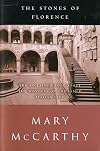
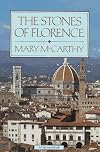
The Stones of Florence
by Mary McCarthy
On This Page
Description
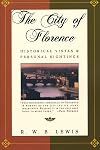
The perfect companion piece to Mary McCarthy's Venice Observed, this captivating book takes readers on a timeless journey to Florence, past and present Mary McCarthy's classic celebrates the Italian city often looked upon as the provincial sister to the better-dressed, more "feminine" Venice. To McCarthy, Florence, or Firenze, is a place of ageless enchantment, from the Duomo to the fortressed palaces. The Renaissance began here; art and architecture flourished. From its roots as a center of show more medieval trade to its transformation into one of the world's wealthiest cities, McCarthy charts Florence's rich and turbulent history. She introduces a cast of towering real-life characters. Through her probing writer's lens, the poetry of Dante and the magnificent artistry of Raphael and Botticelli come vibrantly alive. Along this illuminating journey, McCarthy offers fascinating bits of trivia: There are no ruins in Florence because the Florentines aren't sentimental about their past; America took its name from a Florentine traveler named Amerigo Vespucci. From Michelangelo to the Medicis to the story behind a statue's missing head, The Stones of Florence is Mary McCarthy's hymn to this unique city. This ebook features an illustrated biography of Mary McCarthy including rare images from the author's estate. show lessTags
Recommendations












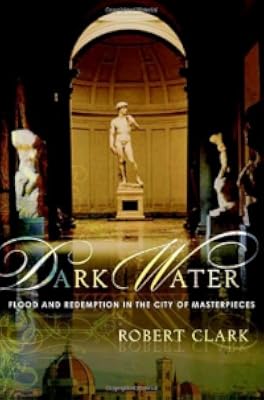



Member Recommendations
Member Reviews
Mary McCarthy didn’t just love Florence, she truly knew it. The good, the bad, the ugly, the downright sad, she observed it all, and The Stones of Florence is her report on the city. The book is not for the faint of heart, as it is as complicated as the history of the city itself. There is no seemingly obvious structure, with history and art intermingled throughout the book. Each chapter has a major theme, such as how Florence is not tourist-friendly, the sculpture, the paintings, the architecture. But she seems to meander in her chapters, ostensibly without a goal in mind, other than to present the city as she saw it. Since the book was written in the 1950s, I suspect that some of what she saw might be different over half a century show more later. The Stones of Florence is not a travel guide, a history lesson, or a discussion of Florentine art. Other books must be consulted for that information. Instead, it is an essay on the city, written by a perceptive spectator who appreciated the beauty of what she saw. I don’t know if I will see the same things in Florence that she did. However, I suspect that I will return to the book upon our return from the city. Only time will tell. show less
If I had read this history of Florence and its art and architecture before my trip to Florence 15 years ago, I might not have been so excited about my trip. McCarthy is knowledgeable with strong opinions on the topic. However, I found her complex prose dry and uninspiring. YMMV. If you’re going to read this book, try to get your hands on an edition with illustrations.
A brilliantly-written portrait of Florence. Originally appearing in the New Yorker, it makes no pretence to being a scholarly work, but the author’s erudition and close familiarity with mid-20thC Florence are everywhere evident. My edition was illustrated with stunning photographs by Evelyn Hofer which compliment the text.
In honour of the sixtieth anniversary of its publication a symposium on The Stones of Florence was held in Florence last year with an impressive list of participants, an indication of the enduring relevance of this book. https://lapietra.nyu.edu/event/mary-mccarthy-and-the-stones-of-florence-1959-six...
In honour of the sixtieth anniversary of its publication a symposium on The Stones of Florence was held in Florence last year with an impressive list of participants, an indication of the enduring relevance of this book. https://lapietra.nyu.edu/event/mary-mccarthy-and-the-stones-of-florence-1959-six...
Read this in preparation of my second trip to Italy. Well-written, evocative.
This book examines the historical significance of the arts in Florence, Italy. The city’s painting, sculpture, architecture, and literature, as well as the artists who created them, are all described. It’s Italy, so religion and politics are also addressed.
The description of this book sounded great, and I really wanted to like it. The writing and the actual content, however, were not good. There was very little organization, and we seemed to jump from topic to topic and back again randomly. In addition, the author wrote in a distinctly conversational style and didn’t pay much attention to grammar, punctuation, and clarity. She also assumed that her reader was as intimately acquainted with Florence as she was, so she didn’t show more bother to explain much of what she talked about. I’ve even been to Florence, and I had a hard time following her, so I can’t imagine what someone who has never been to Italy would think. Finally, she didn’t cite any sources or make any distinctions between what was factually true and what was just myth or legend, so I have no idea which pieces of information I can trust as valid. These four major problems meant that I got almost nothing out of the book because even when I was able to figure out what she was talking about, I still didn’t trust the author as a creditable authority on the topic. In hindsight, I probably should have given up on this book after the first chapter, but it was relatively short and every once in a while an insightful gem would pop up. show less
The description of this book sounded great, and I really wanted to like it. The writing and the actual content, however, were not good. There was very little organization, and we seemed to jump from topic to topic and back again randomly. In addition, the author wrote in a distinctly conversational style and didn’t pay much attention to grammar, punctuation, and clarity. She also assumed that her reader was as intimately acquainted with Florence as she was, so she didn’t show more bother to explain much of what she talked about. I’ve even been to Florence, and I had a hard time following her, so I can’t imagine what someone who has never been to Italy would think. Finally, she didn’t cite any sources or make any distinctions between what was factually true and what was just myth or legend, so I have no idea which pieces of information I can trust as valid. These four major problems meant that I got almost nothing out of the book because even when I was able to figure out what she was talking about, I still didn’t trust the author as a creditable authority on the topic. In hindsight, I probably should have given up on this book after the first chapter, but it was relatively short and every once in a while an insightful gem would pop up. show less
A classic, from a difficult but brilliant writer of a work I have read in parts, but only now in its whole.
A little dry in places but interesting all the same. Recommend it.
Members
- Recently Added By
Published Reviews
ThingScore 75
added by booksaplenty1949
Lists

Books set in Firenze (Florence, Italy)
35 works; 1 member
Author Information

43+ Works 7,587 Members
All Editions
Some Editions
Awards and Honors
Distinctions
Work Relationships
Is contained in
Is abridged in
Common Knowledge
- Canonical title
- The Stones of Florence
- Original publication date
- 1959; 1987
- Important places
- Florence, Tuscany, Italy; Pisa, Tuscany, Italy; Palazzo Vecchio, Florence; Palazzo Pitti, Florence
- Disambiguation notice*
- The accurate orthography of the surname of the author of this work is NOT:
MacCarthy, but has to be:
McCarthy
*Some information comes from Common Knowledge in other languages. Click "Edit" for more information.
Classifications
- Genres
- Travel, Nonfiction, Art & Design, General Nonfiction
- DDC/MDS
- 945 — History & geography History of Europe Italy
- LCC
- N6921 .F7 .M28 — Fine Arts Visual arts History
- BISAC
Statistics
- Members
- 610
- Popularity
- 47,891
- Reviews
- 10
- Rating
- (3.43)
- Languages
- 7 — Dutch, English, French, German, Japanese, Multiple languages, Spanish
- Media
- Paper, Ebook
- ISBNs
- 19
- ASINs
- 16