The Rite of Spring [sound recording]
by Igor Stravinsky (Composer), Pierre Monteux
On This Page
Tags
Recommendations


Member Reviews
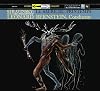
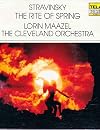
For me, a classic example of the eye doing the buying. Excuse the pun. In the late 50s, Woolworth’s produced a cheap series of classical albums on their Music for Pleasure label. I spotted this one in the racks and was so taken with the photo of the mountain (Ayres Rock in Australia, as it turned out) that resistance was impossible. With help from the liner notes, which I found incredibly illuminating, I could almost construct my own imagined dance to this fantastic piece of music. The ostinato theme for the four tubas is as powerful a riff as any found in rock. Earlier in my then short life I had bought Gustav Holst’s The Planets Suite, motivated by watching a tremendous sci-fi series on BBC television called The Quartermass show more Experiment from behind the sofa when my parents thought I had gone to bed. After each episode I would tiptoe back to my bedroom rigid with fear, so powerful did the action seem to me. The title music was “Mars, the Bringer of War,” so I already knew that classical music wasn't boring. show less
Writing technique: A
Writing musicality: A
Performance technique: B
Performance musicality: A
Arrangements: A
Coherence/concept: A
Pacing/listenability: A
Recording/mastering: C
Cover art: D
Enjoyment: A plus
GPA: 3.5/4
Writing musicality: A
Performance technique: B
Performance musicality: A
Arrangements: A
Coherence/concept: A
Pacing/listenability: A
Recording/mastering: C
Cover art: D
Enjoyment: A plus
GPA: 3.5/4
Ratings
Members
- Recently Added By
Lists

David Bowie’s 25 favourite albums
25 works; 1 member
Author Information

The Russian composer Igor Stravinsky, considered to be one of the greatest composers of the twentieth century, was born in 1882 near St. Petersburg. Stravinsky began piano lessons at the age of 9. He had little interest in a career in music, however, until 1902, when he was introduced to Rimsky-Korsakov while studying law at the University of St. show more Petersburg. For the next three years, he studied composition with Rimsky-Korsakov. In 1909 the ballet impresario Serge Diaghilev heard a performance of one of Stravinsky's symphonic works and commissioned him to compose three ballets for his Ballets Russes in Paris. These three pieces---The Firebird (1910), Petrouchka (1911), and The Rite of Spring (1913)--- established Stravinsky as the foremost musical innovator in his use of syncopated and irregular rhythms and harsh-sounding harmonies. After World War I, Stravinsky settled in France. The Russian Revolution of 1917 and the Communist dictatorships that followed kept him away from his native land until 1962. In France, Stravinsky's association with Diaghilev continued until the impresario's death in 1929. During this time, the composer adopted a simpler musical style, inspired by the classical composers of the eighteenth century. One of the first indications of this interest in classical music was heard in his ballet Pulcinella (1920). Stravinsky's interest in classical forms influenced his music for over 30 years. Stravinsky moved to the United States in 1939 and became an American citizen in 1945. His continued interest in ballet resulted in an association with the Russian-born choreographer George Balanchine and his New York City Ballet company, for whom Stravinsky wrote several works. In addition, Stravinsky composed a variety of other works, including several operas, the most famous of which is The Rake's Progress (1951). During the mid-1950s, Stravinsky became interested in serialism. The use of serialism in his later works resulted in highly structured and concise compositions, such as his choral composition Threni (1958). A unique and unpredictable composer, Stravinsky never founded a specific school of composition. Nevertheless, his work has had a great influence on many modern composers. (Bowker Author Biography) show less

25+ Works 116 Members
Some Editions
Work Relationships
Is contained in
Common Knowledge
- Canonical title
- The Rite of Spring [sound recording]
- Original title
- Le sacre du printemps; Весна священная
- Alternate titles
- The rite of spring : scenes of pagan Russia in two parts; Strawinsky Conducts Le Sacre du Printemps
Classifications
Statistics
- Members
- 78
- Popularity
- 406,294
- Reviews
- 2
- Rating
- (4.08)
- Languages
- English
- UPCs
- 4
- ASINs
- 23