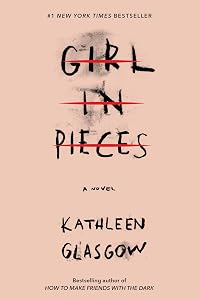
Girl in Pieces
by Kathleen Glasgow
On This Page
Description
As she struggles to recover and survive, seventeen-year-old homeless Charlotte "Charlie" Davis cuts herself to dull the pain of abandonment and abuse.Tags
Recommendations



Member Reviews
SPOILERS AND TRIGGER WARNING! This book is not for the faint of heart! This book for those who are triggered by self harm, alcoholism, and sexual abuse!!
"I cut because I can't deal. It's as simple as that. The world becomes an ocean, the ocean washes over me, the sound of the water is deafening, the water drowns my heart, my panic becomes as large as planets. I need release, I need to hurt myself more than the world can hurt me, and then I can comfort myself." pg. 42
This book moved something deep down inside of me, something that I did not even know was there. I have never felt every emotion along side a character as much as I did Charlie. Kathleen Glasgow has done the impossible, and actually gave us a sliver of an idea what people show more with depression, mental illness, etc. go through every single day. This book has opened my eyes to things that I did not even notice I could not see. This book does not hold back, she has given us the bad, the ugly, and the worse possible outcome of self-harm. At the same time, she gave me hope! She gave me hope that people can overcome! This book definitely put a whole new perspective on making sure the people around you are ok, make sure they are not fighting their demons on their own! This book is a incredible read, and I could not put it down! I have never been so absorbed in a character in a long time! I found myself hurting for her, crying with her, getting mad with her, and celebrating her triumphs as well! This is definitely a book that everyone should read at least once in their life! show less
"I cut because I can't deal. It's as simple as that. The world becomes an ocean, the ocean washes over me, the sound of the water is deafening, the water drowns my heart, my panic becomes as large as planets. I need release, I need to hurt myself more than the world can hurt me, and then I can comfort myself." pg. 42
This book moved something deep down inside of me, something that I did not even know was there. I have never felt every emotion along side a character as much as I did Charlie. Kathleen Glasgow has done the impossible, and actually gave us a sliver of an idea what people show more with depression, mental illness, etc. go through every single day. This book has opened my eyes to things that I did not even notice I could not see. This book does not hold back, she has given us the bad, the ugly, and the worse possible outcome of self-harm. At the same time, she gave me hope! She gave me hope that people can overcome! This book definitely put a whole new perspective on making sure the people around you are ok, make sure they are not fighting their demons on their own! This book is a incredible read, and I could not put it down! I have never been so absorbed in a character in a long time! I found myself hurting for her, crying with her, getting mad with her, and celebrating her triumphs as well! This is definitely a book that everyone should read at least once in their life! show less
This is a must read. It is the kind of book that you stay up late reading and wake up wanting more. Charlie's story will break your heart because you have met at least one Charlie. She went to your high school and sat in the back of class trying not to be noticed. You might see her on your way to get coffee huddled under a bridge trying to stay out of the rain. Or maybe Charlie is family member; your sister, cousin, or daughter and you just couldn't figure out how to help her. Or perhaps YOU are Charlie and you just want to find your place in this world and know that even with all your imperfections someone out there will still love you. Kathleen Glasgow shares the hard truth behind self harm, letting readers know this problem is bigger show more than we want to think it is, and that we need to come together as a community to help each other heal... because no matter how deep your scars are, it is never too late to heal. show less
This is the story of a 17-year-old girl who self-harms; she cuts her arms and legs. As the story opens, she is in a treatment centre, and it follows her release as she tries to make a life for herself. Charlie Davis was a victim of physical abuse by her mother, sexual assault and homelessness. Her father committed suicide and her best/only friend has become brain-damaged through self-harm. She makes some good choices when she strikes out on her own, but even more bad ones, especially getting involved in a relationship with her co-worker Riley. There is a lot of darkness in this story, but also a lot of hope.
I think the author did an excellent job of portraying the everyday struggles of those with addictions or mental illness. It's not show more only the major hurdles that defeat you, it can be any number of details and smaller choices. This book is well written and I felt strongly for Charlie. show less
I think the author did an excellent job of portraying the everyday struggles of those with addictions or mental illness. It's not show more only the major hurdles that defeat you, it can be any number of details and smaller choices. This book is well written and I felt strongly for Charlie. show less
Girls who write their pain on their body
The first few chapters of this book worried me. I felt like it was romanticising self-harm, specifically cutting. I persevered and was pleasantly surprised at the maturity of the message it ended with.
This is the intense story of Charlie Davies, a teen who heals from loss and self-harm. The book opens with Charlie in a treatment facility, in a ward with other women who engage in self-harm, including cutting and burning. Once out of the facility, she has to figure out how to create a new life when she hasn't fully dealt with the family issues and loss that drive her self-destructive behaviour. The book's an honest look at how people end up in desperate situations.
I have self-harmed and I could show more easily see that writer Kathleen Glasgow had too. Self-harm is dangerous because it is never satisfied. It could even be framed with the same language used for addiction issues: the momentary sense of relief and/or euphoria, the increasingly strong urges, the build-up of tolerance, etc. One moment snowballs into multiple moments, which then snowballs into a habit, which then snowballs into a full-blown addiction. show less
The first few chapters of this book worried me. I felt like it was romanticising self-harm, specifically cutting. I persevered and was pleasantly surprised at the maturity of the message it ended with.
This is the intense story of Charlie Davies, a teen who heals from loss and self-harm. The book opens with Charlie in a treatment facility, in a ward with other women who engage in self-harm, including cutting and burning. Once out of the facility, she has to figure out how to create a new life when she hasn't fully dealt with the family issues and loss that drive her self-destructive behaviour. The book's an honest look at how people end up in desperate situations.
I have self-harmed and I could show more easily see that writer Kathleen Glasgow had too. Self-harm is dangerous because it is never satisfied. It could even be framed with the same language used for addiction issues: the momentary sense of relief and/or euphoria, the increasingly strong urges, the build-up of tolerance, etc. One moment snowballs into multiple moments, which then snowballs into a habit, which then snowballs into a full-blown addiction. show less
As this novel opens, seventeen-year-old Charlotte (“Charlie”) Davis is waking up in the self-harm unit of a hospital, and thereafter gets transferred to a psychiatric facility.
Charlie is a girl who cuts herself, because, as her doctor says, she has internalized abuse and blames and punishes herself for the painfulness of her life. Such hurt can come from many things, such as sexual, physical, verbal, or emotional mistreatment. When the bad feelings build so much a person can’t deal with them, he or she starts cutting. But the “treatment” unfortunately spirals into more bad feelings. As Charlie herself understands:
“…the fucked-up part is once you start self-harming, you can never not be a creepy freak, because your whole show more body is now a scarred and charred battlefield and nobody likes that on a girl, nobody will love that, and so all of us, every one, is screwed, inside and out. Wash, rinse, fucking repeat.”
Charlie initially cut herself to make herself and her bad thoughts disappear:
“OUT. CUT IT ALL OUT. Cut out my father. Cut out my mother. Cut out missing Ellis. Cut out the man in the underpass, cut out Fucking Frank, the men downstairs; the people on the street with too many people inside them, cut out hungry, and sad and tired, and being nobody and unpretty and unloved, just cut it all out, get smaller and smaller until I was nothing.”
She explains, “I need release, I need to hurt myself more than the world can hurt me, and then I can comfort myself.” It hurts, she says, but “when the blood comes, everything is warmer, and calmer.”
Eventually, because she has no money, she is discharged from the safety of the psychiatric center. Her mother doesn’t want her, but gives her money for a bus to Tucson, where Charlie’s friend Mikey lives. There is much more pain ahead for her in Tucson, but also friendship, redemption, and hope. But it’s never easy. Charlie has to work hard to stay ahead of old comfortable ways of dealing with pain and setbacks. And sometimes she slips.
You may be thinking, I can’t read this, it would be too hard. But oddly enough, this is an uplifting book, and not because of any easy out. The author herself was a cutter, and she knows, and conveys, that there will always be struggling, and recovering. But Charlie is a character you can’t help rooting for, who has a survival instinct that helps her keep pushing forward.
In an Afterword, the author writes about the real world of cutting. As she has one of the characters argue, “People should know about us. Girls who write their pain on their bodies.” She reports:
“It’s estimated that one in every two hundred girls between the ages of thirteen and nineteen self-harms. Over 70 percent of those are cutters. It’s important to remember, though, that these statistics only come from what’s reported, and they don’t account for the increasing percentage of boys who self-harm. It’s my guess that you know someone, right now, who self-harms.”
She emphasizes that self-harm is not a grab for attention. Nor does it mean you are suicidal. It is a coping mechanism: “It means that you occupy a small space in the very real and very large canyon of people who suffer from depression or mental illness.”
The author says to any self-harmers reading her book:
“You are not alone. Charlie Davis’s story is the story of over two million young women in the United States. And those young women will grow up, like I did, bearing the truth of our past on our bodies.”
Charlie finds a way to reconstruct herself in this book, just as the author did. This is a gritty story, but inspirational and very worth reading.
Evaluation: This could be considered a “coming of age” book about a girl who struggles with finding a sense of self-worth after feeling lost and as if she is underwater. Somehow, she has to figure out a way to make it to the surface, and stay there. This poignant and affecting story is highly recommended. show less
Charlie is a girl who cuts herself, because, as her doctor says, she has internalized abuse and blames and punishes herself for the painfulness of her life. Such hurt can come from many things, such as sexual, physical, verbal, or emotional mistreatment. When the bad feelings build so much a person can’t deal with them, he or she starts cutting. But the “treatment” unfortunately spirals into more bad feelings. As Charlie herself understands:
“…the fucked-up part is once you start self-harming, you can never not be a creepy freak, because your whole show more body is now a scarred and charred battlefield and nobody likes that on a girl, nobody will love that, and so all of us, every one, is screwed, inside and out. Wash, rinse, fucking repeat.”
Charlie initially cut herself to make herself and her bad thoughts disappear:
“OUT. CUT IT ALL OUT. Cut out my father. Cut out my mother. Cut out missing Ellis. Cut out the man in the underpass, cut out Fucking Frank, the men downstairs; the people on the street with too many people inside them, cut out hungry, and sad and tired, and being nobody and unpretty and unloved, just cut it all out, get smaller and smaller until I was nothing.”
She explains, “I need release, I need to hurt myself more than the world can hurt me, and then I can comfort myself.” It hurts, she says, but “when the blood comes, everything is warmer, and calmer.”
Eventually, because she has no money, she is discharged from the safety of the psychiatric center. Her mother doesn’t want her, but gives her money for a bus to Tucson, where Charlie’s friend Mikey lives. There is much more pain ahead for her in Tucson, but also friendship, redemption, and hope. But it’s never easy. Charlie has to work hard to stay ahead of old comfortable ways of dealing with pain and setbacks. And sometimes she slips.
You may be thinking, I can’t read this, it would be too hard. But oddly enough, this is an uplifting book, and not because of any easy out. The author herself was a cutter, and she knows, and conveys, that there will always be struggling, and recovering. But Charlie is a character you can’t help rooting for, who has a survival instinct that helps her keep pushing forward.
In an Afterword, the author writes about the real world of cutting. As she has one of the characters argue, “People should know about us. Girls who write their pain on their bodies.” She reports:
“It’s estimated that one in every two hundred girls between the ages of thirteen and nineteen self-harms. Over 70 percent of those are cutters. It’s important to remember, though, that these statistics only come from what’s reported, and they don’t account for the increasing percentage of boys who self-harm. It’s my guess that you know someone, right now, who self-harms.”
She emphasizes that self-harm is not a grab for attention. Nor does it mean you are suicidal. It is a coping mechanism: “It means that you occupy a small space in the very real and very large canyon of people who suffer from depression or mental illness.”
The author says to any self-harmers reading her book:
“You are not alone. Charlie Davis’s story is the story of over two million young women in the United States. And those young women will grow up, like I did, bearing the truth of our past on our bodies.”
Charlie finds a way to reconstruct herself in this book, just as the author did. This is a gritty story, but inspirational and very worth reading.
Evaluation: This could be considered a “coming of age” book about a girl who struggles with finding a sense of self-worth after feeling lost and as if she is underwater. Somehow, she has to figure out a way to make it to the surface, and stay there. This poignant and affecting story is highly recommended. show less
This book was, at times, quite difficult to read. That's a good thing. It deals with many, many difficult subjects - self-harm being the primary and most obvious (as it is displayed on the cover), but addiction (both drug and alcohol), abuse, depression, trauma, and homelessness. I think that all of the difficult topics were treated with respect. The author stated that she tried not to romanticize it, and she succeeded in it, showing all the bad parts of addiction and self-harm. It didn't feel romanticized at all. It did feel like an overload of tragedy and hurt at times, though. Part of me feels like if this story had been focused solely on self-harm, it would have been more effective at helping people understand the mindset people who show more self-harm may have. But it's not the narrative that the author was going for, I don't think; just as many people who self-harm also have PTSD or substance abuse issues as those who don't.
The writing style was beautiful. Charlie's voice shines through as very honest and authentic. She sounds like a teenage girl and she acts like one as well. She makes bad choices and she recognizes that they're bad but she can't stop herself from making them, which I think is very realistic. Even though the novel had a quite slow pace, it never felt boring, because Charlie's such an interesting character. She's trying her best and it's a slow struggle for her but because it's a struggle every small step feels eventful.
Charlie Davis is seventeen years old and she has been through so much in her life and she just keeps trying, which is incredibly admirable. I have to say that it's a nice change to see a character who, at her core, turns out to be more optimistic, rather than the pessimistic or nihilist characters present in stories about mental illness. I appreciate in Glasgow's author's note that she said she wrote this for those who have self-harmed, and those who have stopped but still have to deal with scars every day. And while Charlie's story isn't anything like mine, or many girls who have self-harmed, I think Charlie's story can give hope that however far you fall, there's a way up. show less
The writing style was beautiful. Charlie's voice shines through as very honest and authentic. She sounds like a teenage girl and she acts like one as well. She makes bad choices and she recognizes that they're bad but she can't stop herself from making them, which I think is very realistic. Even though the novel had a quite slow pace, it never felt boring, because Charlie's such an interesting character. She's trying her best and it's a slow struggle for her but because it's a struggle every small step feels eventful.
Charlie Davis is seventeen years old and she has been through so much in her life and she just keeps trying, which is incredibly admirable. I have to say that it's a nice change to see a character who, at her core, turns out to be more optimistic, rather than the pessimistic or nihilist characters present in stories about mental illness. I appreciate in Glasgow's author's note that she said she wrote this for those who have self-harmed, and those who have stopped but still have to deal with scars every day. And while Charlie's story isn't anything like mine, or many girls who have self-harmed, I think Charlie's story can give hope that however far you fall, there's a way up. show less
Girl in Pieces is a poignant story of a seventeen year old’s stumbling journey towards healing. You see, Charlotte (Charlie) Davis is anything but an average teenager. Charlie cuts herself, the physical pain helps replaces the mental pain. It is what she does when things become overwhelming for her. She should be enjoying youth, life and looking forward to college but is sadly deprived of all this by circumstances beyond her control. Her father committed suicide when she was a young girl and was raised by an abusive mother. She never fit in at school and then her best friend commits suicide. Who else is left to help prop you?
A marvelously written story. There is no sugar coating the topic of self-harm, Glasgow throws it out there show more from the very beginning and strives to show the reader the depth of Charlie’s pain. Hats off to Glasgow, she did an outstanding job. As Charlie’s story unravels you are willing swept away with her on this painful journey.
I received a free copy of Girl in Pieces in exchange for my honest review. show less
A marvelously written story. There is no sugar coating the topic of self-harm, Glasgow throws it out there show more from the very beginning and strives to show the reader the depth of Charlie’s pain. Hats off to Glasgow, she did an outstanding job. As Charlie’s story unravels you are willing swept away with her on this painful journey.
I received a free copy of Girl in Pieces in exchange for my honest review. show less
Members
- Recently Added By
Lists

2019 Abraham Lincoln Teen Readers' Choice Award
20 works; 5 members

Booktok Books
69 works; 8 members

sad girl books
51 works; 3 members

Florida
366 works; 3 members

el
1,139 works; 1 member
Author Information

14+ Works 6,851 Members
Some Editions
Awards and Honors
Awards
Distinctions
Notable Lists
Common Knowledge
- People/Characters
- Charlotte "Charlie" Davis; Riley West; Bethany Stinson; Eleanor "Ellis" Vanderhaar; Julie Baxter; Michael "Mikey" Gustafson (show all 8); Linus Sebold; Felix Arneson
- Important places
- Tucson, Arizona, USA
- Epigraph
- I can never win with this body I live it. -- Belly, "Star"
Well I'll do anything in this godalmighty world / If you just let me follow you down -- Bob Dylan, "Baby Let Me Follow You Down"
I can't be myself / I can't be myself -- Elliott Smith, "Needle in the Hay" - Dedication
- this book / is for the grievers / this book / is for the left behind / this book / is for every broken heart searching for a home
- First words
- Like a baby harp seal, I'm all white.
- Last words
- (Click to show. Warning: May contain spoilers.)Dear Ellis, I have something really fucking angelic to tell you.
- Blurbers
- Zentner, Jeff; Kletter, Kerry; Baxter, Charles; Schumacher, Julie; Coplin, Amanda; Avasthi, Swati (show all 9); Wood, Summer; Febos, Melissa; Wildgen, Michelle
Classifications
Statistics
- Members
- 3,559
- Popularity
- 4,617
- Reviews
- 42
- Rating
- (4.12)
- Languages
- 9 — Dutch, English, French, German, Italian, Korean, Polish, Portuguese, Spanish
- Media
- Paper, Audiobook, Ebook
- ISBNs
- 47
- ASINs
- 11