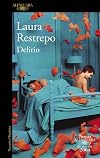
Delirium
by Laura Restrepo
On This Page
Description
In this remarkably nuanced novel, both a gripping detective story and a passionate, devastating tale of eros and insanity in Colombia, internationally acclaimed author Laura Restrepo delves into the minds of four characters. There's Agustina, a beautiful woman from an upper-class family who is caught in the throes of madness; her husband Aguilar, a man passionately in love with his wife and determined to rescue her from insanity; Agustina's former lover Midas, a drug-trafficker and show more money-launderer; and Nicolás, Agustina's grandfather. Through the blend of these distinct voices, Restrepo creates a searing portrait of a society battered by war and corruption, as well as an intimate look at the daily lives of people struggling to stay sane in an unstable reality. show lessTags
Recommendations





































Member Recommendations
Member Reviews
Delirium tells the story of Aguilar, a businessman who returns from a weekend away to find his wife (Agustina) in the throes of a severe nervous breakdown. She is unable to communicate with her husband, and so Aguilar, with the help of Agustina's Aunt Sofi, pieces together the threads of his wife's life, in order to determine the causes of her madness. Restrepo's book is divided into short chapters that alternate between these various threads, including the stories of her overbearing father, her effeminate brother, her family's disintegration, her relationship with Aguilar, and the actions of her former lover Midas McAlister.
I enjoyed Delirium a lot. It is skillfully woven psychological portrait of Agustina, blending a variety of show more narrative styles to great effect. However, its strength lies in treading a fine line between simply retelling the tales of Agustina's lives, and actually being a sort of detective fiction where the culprit is not a killer or thief, but simply a single traumatic event among many possibilities. Restrepo uses the latter device to give a narrative thrust to her backstories, and it creates a book that is both an engrossing study of one woman's mind, and also also a fairly gripping read. My only gripe is that the story of Midas McAlister need not have been nearly so lurid. While the rest of the book proceeded with fairly believable narratives, Midas' story involved an absurd bet with a friend about his sexual impotence, a murdered prostitute and Pablo Escobar's drugs empire. I think Restrepo perhaps didn't need to push this story as far as it went, because it stretched credulity a little too far, as did Agustina's eventual role in it. That said, the book as a whole really worked for me, and it was an engrossing read, and definitely one of the better ones I have read this year to date. show less
I enjoyed Delirium a lot. It is skillfully woven psychological portrait of Agustina, blending a variety of show more narrative styles to great effect. However, its strength lies in treading a fine line between simply retelling the tales of Agustina's lives, and actually being a sort of detective fiction where the culprit is not a killer or thief, but simply a single traumatic event among many possibilities. Restrepo uses the latter device to give a narrative thrust to her backstories, and it creates a book that is both an engrossing study of one woman's mind, and also also a fairly gripping read. My only gripe is that the story of Midas McAlister need not have been nearly so lurid. While the rest of the book proceeded with fairly believable narratives, Midas' story involved an absurd bet with a friend about his sexual impotence, a murdered prostitute and Pablo Escobar's drugs empire. I think Restrepo perhaps didn't need to push this story as far as it went, because it stretched credulity a little too far, as did Agustina's eventual role in it. That said, the book as a whole really worked for me, and it was an engrossing read, and definitely one of the better ones I have read this year to date. show less
1
Restrepo swings through perspectives, without giving much clue of chronology and it wasn’t until I’d settled into the different voices that I began to get into it. The first half of the book I must have read in small chunks as it left me confused; the last third I read in two sittings and that was only because I was disturbed. It’s a book that’s worth the time it takes to get into – uncomfortable but, apart from one scene, not excessively unpleasant. What trips you up is your own imagination which is trying to solve the mystery of what happened to poor Augustina And no wonder your imagination is panicking as the novel is set in late 1980s Colombia during the Pablo Escobar era and you’ve got drugs, money laundering and show more terrorism casually filling the pages. show less
Delirium is set in the 1980s in Bogota, Colombia at perhaps a low point in the country's history. Aguilar, a laid-off professor of literature has returned from a trip to find Agustina, his young wife, in a hotel room, delirious. What followed is an unraveling of the mystery of her illness, told in the first person by many voices - Aguilar, Aunt Sofi, Midas McAllister and even Agustina herself. It is the story of corruption, family secrets and lies upon lies. Restrepo's story is compelling, her prose, as translated, beautiful at times. I'm not sure I know enough about Colombia to speculate whether the delirious Agustina is a symbolic stand-in for a country also in what might be considered at the time to be a kind of insanity. It's not a show more perfect novel, the ending is not quite as satisfying as one would hope but it is still a worthy and fascinating read. I will be looking for more of Retrepo's novels in the future. show less
La novela es una historia de amor y a su vez de locura, de extraños misterios y grandes secretos en medio del declive de una sociedad colombiana inmersa en el trafico de las drogas y el lavado de dinero
En un principio la historia se torna un poco compleja y difícil de entender, sin embargo al transcurrir la historia los hechos se van aclarando y van concluyendo en un final impactante.
En un principio la historia se torna un poco compleja y difícil de entender, sin embargo al transcurrir la historia los hechos se van aclarando y van concluyendo en un final impactante.
Really 3.5 stars. The writing is pretty stunning but the story loses momentum several times. The background of the story is Columbian society during the Pablo Escobar years (guessing it was written in the 80's) and it's a pretty fascinating lens to a somewhat claustrophobic story of a woman going crazy and the people around her who are helping (or not).
Un hombre regresa a casa después de un corto viaje de negocios y encuentra que su esposa ha enloquecido completamente.No tiene idea de qué le pudo haber ocurrido durante los tres días de su ausencia, y con el fin de ayudarla a salir de la crisis empieza a investigar, sólo para descubrir lo poco que sabe sobre las profundas perturbaciones en el pasado dela mujer que ama.
I really did not like this book for a number of reasons.
The first couple, though minor in the overall scheme of things, have to do with the punctuation and layout of the paragraphs/sentences. I did not like how there were no quotation marks (making it difficult to discern when characters were talking and when they were simply thinking to themselves. The lack of question marks bothered me a great deal as well. As far as the paragraphs go, there were not nearly enough. Sentences, when they had actual punctuation marks, were smashed together to the point that it became difficult to tell who was talking or doing something.
The characters themselves were profoundly annoying. Augustina clearly has something wrong in her head and was in show more desperate need of professional help, which her family's money should have been able to provide, but no one gave enough of a damn to even get her that. The story taking place in a Columbia rife with poverty and violence and drugs clearly has an effect on getting her these things, but her money should have meant that she could leave the country and get help elsewhere.
The men, with the exception of Bichito perhaps, were are all way too full of that bullshit machismo, some to a more annoying degree than others. The women were all closer to dolls or playthings for the men than actual human beings. They were made to bare the brunt of the men's scorn, fury, and lashings out and then were made to clean up the messes (both physically and mentally) afterwards, especially Blanca, though all the others fell into roles similar to hers.
Overall, the story-telling, though not quite a jumbled mess, was twisted in the sense that it was difficult to tell who the narrator was and when exactly those events were taking/had taken place. I spent most of the story thinking that Midas McAllister and Aguilar were the same person, when in fact they were completely different. In the end, this book barely missed making in onto my "terrible" shelf. show less
The first couple, though minor in the overall scheme of things, have to do with the punctuation and layout of the paragraphs/sentences. I did not like how there were no quotation marks (making it difficult to discern when characters were talking and when they were simply thinking to themselves. The lack of question marks bothered me a great deal as well. As far as the paragraphs go, there were not nearly enough. Sentences, when they had actual punctuation marks, were smashed together to the point that it became difficult to tell who was talking or doing something.
The characters themselves were profoundly annoying. Augustina clearly has something wrong in her head and was in show more desperate need of professional help, which her family's money should have been able to provide, but no one gave enough of a damn to even get her that. The story taking place in a Columbia rife with poverty and violence and drugs clearly has an effect on getting her these things, but her money should have meant that she could leave the country and get help elsewhere.
The men, with the exception of Bichito perhaps, were are all way too full of that bullshit machismo, some to a more annoying degree than others. The women were all closer to dolls or playthings for the men than actual human beings. They were made to bare the brunt of the men's scorn, fury, and lashings out and then were made to clean up the messes (both physically and mentally) afterwards, especially Blanca, though all the others fell into roles similar to hers.
Overall, the story-telling, though not quite a jumbled mess, was twisted in the sense that it was difficult to tell who the narrator was and when exactly those events were taking/had taken place. I spent most of the story thinking that Midas McAllister and Aguilar were the same person, when in fact they were completely different. In the end, this book barely missed making in onto my "terrible" shelf. show less
Members
- Recently Added By
Lists

BBC World Book Club
267 works; 5 members

World Book Club (BBC World Service)
212 works; 1 member
Author Information

19+ Works 1,806 Members
Awards and Honors
Awards
Distinctions
Series
Belongs to Publisher Series
Common Knowledge
- Canonical title
- Delirium
- Original title
- Delirio
- Original publication date
- 2004
- Important places*
- Colombia
- Original language*
- Spanisch
*Some information comes from Common Knowledge in other languages. Click "Edit" for more information.
Classifications
- Genres
- Fiction and Literature, General Fiction
- DDC/MDS
- 863.64 — Literature & rhetoric Spanish Literature Spanish fiction 20th Century 1945-2000
- LCC
- PQ8180.28 .E7255 .D45 — Language and Literature French, Italian, Spanish and Portuguese literatures Spanish literature Provincial, local, colonial, etc. Spanish America
- BISAC
Statistics
- Members
- 682
- Popularity
- 42,225
- Reviews
- 30
- Rating
- (3.63)
- Languages
- 10 — Dutch, English, Finnish, French, German, Hebrew, Italian, Portuguese, Spanish, Turkish
- Media
- Paper, Ebook
- ISBNs
- 35
- ASINs
- 7