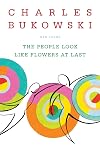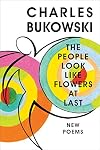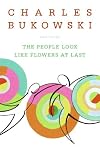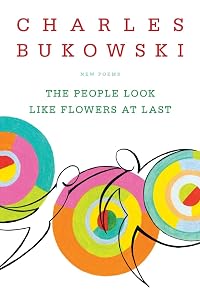
The People Look Like Flowers At Last: New Poems
by Charles Bukowski
On This Page
Description
"if you read this after I am dead It means I made it" -"The Creation Coffin" The People Look like Flowers at Last is the last of five collections of never-before published poetry from the late great Dirty Old Man, Charles Bukowski. In it, he speaks on topics ranging from horse racing to military elephants, lost love to the fear of death. He writes extensively about writing, and about talking to people about writers such as Camus, Hemingway, and Stein. He writes about war and fatherhood show more and cats and women. Free from the pressure to present a consistent persona, these poems present less of an aggressively disruptive character, and more a world-weary and empathetic person. show lessTags
Recommendations









Member Reviews
the creation coffin
the ability to suffer and endure -
that's nobility, friend -
the ability to suffer and endure
for an idea, a feeling, a way -
the ability to suffer and endure
that's art, my friend -
the ability to suffer and endure
when a love ends -
that's hell, old friend...
nobility, art and hell,
let's talk about art a while:
promulgation of my attitudes
like stilts walking centuries
beeswax for brains
destiny is my crippled daughter
look here, it's difficult
me against them
with them
Kafka let me in
Hemingway beware
Hegel you're funny
Cervantes you mean you wrote that
novel at the age of
80?
writers are indecent people
they live unfairly
saving the main part for paper
jesus christ would have been
a duller writer than Theodore Dreiser
jesus christ would show more have been a
very lousy writer
the beard and hair fit
but he was too good at
conversations and
miracles
a good human being may save the world
so the bastards can keep creating art
if you read this after I am long dead
it means I made it
and
it's your turn now
to misuse your wife
abuse your children
love thyself
live off the funds of others
dislike all art created before and
during your time,
and dislike or even hate humanity
singly or en mass
bastard, if you read this after I am long dead
shove me out of here. I
probably wasn't that
good.
All right, Camus
met this guy, somewhere, hell his eyes looked like a madman's
or maybe it was only my reflection of...
well, forget it, anyway, he said to me, uh uh you read Camus?
we're both in a very womanless bar looking
for a piece of ass or some way out of the top of the sky...
it wasn't working"”there was just the bartender wondering why he'd
ever gotten into the business
and myself, very discouraged with the fact that I had been translated
into 6 or 7 languages
and I was known more by more skidrow bums than college profs,
and this guy kept going on"”
The Stranger, you know, that depicts out modern society"”
the deadened man"”
couldn't cry at his mother's funeral,
killed an Arab or two without even knowing why"”
he kept on and on
on and on
telling me what a son of a bitch The Strange
was, and I kept thinking, maybe he's right"”
you know, those speeches before the Academies"”
you couldn't tell whether Camus was talla and laughing out of the
side of his mouth or
whether he was
insane. he talked the same as the guy next t me at the bar and we
were only looking for
pussy.
it was very sad"”
all along The Stranger had been my hero
because I thought he'd seen beyond trying
or caring
because it was such a bore
so senseless"”
that big hole in the ground looking up"”
and I was wrong again:
hell, I was THE STRANGER, and the book hadn't been written the way
it had been meant to
be.
the people, no
startling! such determination in the
dull and uninspired
and the copyists.
they never lose the fierce gratitude
for their uneventfulness,
nor do they forget to laugh
at the wit of slugs;
as a study in diluted senses
they'd make any pharaoh
cough up his beans;
in music they prefer the monotony of
dripping faucets;
in love and sex they prefer each other
and therefore compound the
problem;
the energy with which they propel their
uselessness
(without any self-doubt)
toward worthless goals
is as magnificent as
cow shit.
they produce novels, children, death,
freeways, cities, wars, wealth, poverty, politicians
and total areas of grandiose waste;
it's as if the whole world is wrapped in dirty
bandages.
it's best to take walks late at
night.
it's best to do your business only on
Mondays and
Tuesdays.
it's best to sit in a small room
with the shades down
and
wait.
the strongest men are the fewest
and the strongest women die alone
too. show less
the ability to suffer and endure -
that's nobility, friend -
the ability to suffer and endure
for an idea, a feeling, a way -
the ability to suffer and endure
that's art, my friend -
the ability to suffer and endure
when a love ends -
that's hell, old friend...
nobility, art and hell,
let's talk about art a while:
promulgation of my attitudes
like stilts walking centuries
beeswax for brains
destiny is my crippled daughter
look here, it's difficult
me against them
with them
Kafka let me in
Hemingway beware
Hegel you're funny
Cervantes you mean you wrote that
novel at the age of
80?
writers are indecent people
they live unfairly
saving the main part for paper
jesus christ would have been
a duller writer than Theodore Dreiser
jesus christ would show more have been a
very lousy writer
the beard and hair fit
but he was too good at
conversations and
miracles
a good human being may save the world
so the bastards can keep creating art
if you read this after I am long dead
it means I made it
and
it's your turn now
to misuse your wife
abuse your children
love thyself
live off the funds of others
dislike all art created before and
during your time,
and dislike or even hate humanity
singly or en mass
bastard, if you read this after I am long dead
shove me out of here. I
probably wasn't that
good.
All right, Camus
met this guy, somewhere, hell his eyes looked like a madman's
or maybe it was only my reflection of...
well, forget it, anyway, he said to me, uh uh you read Camus?
we're both in a very womanless bar looking
for a piece of ass or some way out of the top of the sky...
it wasn't working"”there was just the bartender wondering why he'd
ever gotten into the business
and myself, very discouraged with the fact that I had been translated
into 6 or 7 languages
and I was known more by more skidrow bums than college profs,
and this guy kept going on"”
The Stranger, you know, that depicts out modern society"”
the deadened man"”
couldn't cry at his mother's funeral,
killed an Arab or two without even knowing why"”
he kept on and on
on and on
telling me what a son of a bitch The Strange
was, and I kept thinking, maybe he's right"”
you know, those speeches before the Academies"”
you couldn't tell whether Camus was talla and laughing out of the
side of his mouth or
whether he was
insane. he talked the same as the guy next t me at the bar and we
were only looking for
pussy.
it was very sad"”
all along The Stranger had been my hero
because I thought he'd seen beyond trying
or caring
because it was such a bore
so senseless"”
that big hole in the ground looking up"”
and I was wrong again:
hell, I was THE STRANGER, and the book hadn't been written the way
it had been meant to
be.
the people, no
startling! such determination in the
dull and uninspired
and the copyists.
they never lose the fierce gratitude
for their uneventfulness,
nor do they forget to laugh
at the wit of slugs;
as a study in diluted senses
they'd make any pharaoh
cough up his beans;
in music they prefer the monotony of
dripping faucets;
in love and sex they prefer each other
and therefore compound the
problem;
the energy with which they propel their
uselessness
(without any self-doubt)
toward worthless goals
is as magnificent as
cow shit.
they produce novels, children, death,
freeways, cities, wars, wealth, poverty, politicians
and total areas of grandiose waste;
it's as if the whole world is wrapped in dirty
bandages.
it's best to take walks late at
night.
it's best to do your business only on
Mondays and
Tuesdays.
it's best to sit in a small room
with the shades down
and
wait.
the strongest men are the fewest
and the strongest women die alone
too. show less
Another day, another Bukowski book. At least that's the way it sometimes seems with this particularly prolific writer. Again, though, his work is more hit than miss, and this book finds him in particularly fine form, rolling with the punches, talking frankly about death (as I'm sure it was impending in at least a few of these poems), and quite simply looking into the maw of life without flinching. At this point I've written more than enough poems not only about Bukowski but downright mentioning him for the mark he's left on the heart of American letters. At this point I've written hundreds of poems aping his style in part just to see if I could get away with it and in part because I am so different from not only the way he presents show more himself in his texts but in all likelihood the way he really was. You can denigrate him for being so simple, but when a person does the things he does so well then what's the point? Bukowski is superior to Hemingway not because like Hemingway he presents a myth of himself but because unlike Hemingway he will break that myth. For that he deserves the keys. show less
53. The People Look Like Flowers at Last : New Poems by Charles Bukowski (2007, 301 pages, read Oct 21 – Dec 11)
These lines, which are quoted on the back-cover of my copy, stuck in my mind the entire time I read this, paced few poems a day. This collection is one of several posthumous ones by Bukowski, who passed away in 1994, but the first time I’ve read by him. What first strikes me about these poems is that they don’t read like poems. They read more like sketches, partially expressed thoughts quickly jotted down. I could race through them, only occasionally being forced to stop, but then I would miss a great deal. So I look it slow, a few poems a show more day...and suffered several days through a long section on poems about all the women Bukowski had and about how badly he treated them all (at least he seems honest).
Bukowski's poetry feels like an expression of his personality, or a personality anyway. They are bluntly honest, self-critical, and remarkably joyful in their celebration of a rather stark and meaningless world. And they are consistently on theme. The quality and depth seem to vary. There are a number of gems scattered about but also quite a few that seemed very light. Sometimes one that seemed more meaningful would come out of nowhere and catch me off guard.
These are very accessible, and maybe even something to recommend to someone who trying to figure out how to get started reading poetry.
2011
http://www.librarything.com/topic/120136#3103898 show less
it's not so much that nothing means
anything but more that it keeps meaning
nothing,
These lines, which are quoted on the back-cover of my copy, stuck in my mind the entire time I read this, paced few poems a day. This collection is one of several posthumous ones by Bukowski, who passed away in 1994, but the first time I’ve read by him. What first strikes me about these poems is that they don’t read like poems. They read more like sketches, partially expressed thoughts quickly jotted down. I could race through them, only occasionally being forced to stop, but then I would miss a great deal. So I look it slow, a few poems a show more day...and suffered several days through a long section on poems about all the women Bukowski had and about how badly he treated them all (at least he seems honest).
Bukowski's poetry feels like an expression of his personality, or a personality anyway. They are bluntly honest, self-critical, and remarkably joyful in their celebration of a rather stark and meaningless world. And they are consistently on theme. The quality and depth seem to vary. There are a number of gems scattered about but also quite a few that seemed very light. Sometimes one that seemed more meaningful would come out of nowhere and catch me off guard.
These are very accessible, and maybe even something to recommend to someone who trying to figure out how to get started reading poetry.
2011
http://www.librarything.com/topic/120136#3103898 show less
Charles Bukowski is a remarkable poet and The People Look Like Flowers at Last is a good showcase for this talent. Yet another posthumous collection, it shows how prolific he was but also how consistent he was. Particularly in the first part of the book, there is some seriously good poetry quite near to his best. Bukowski had a deceptively simple style, but it always works as poetry even in the lesser pieces. Unlike most writers' posthumous works, this is not a dredging of old pieces that were rejected during his lifetime. In fact, I am a little bewildered at how many good posthumous collections have been yielded from the life of Bukowski and where in the hell they have all come from.
Once again a fantastic collection. Either Bukowski is the most consistent writer of all time, or I've simply been lucky in my recent introduction to his work.
Most of all Bukowski is not boring, a goal that many of the "great" writers never even seemed to have aspired to. He rarely wastes a word, and often in a few hundred words manages to say more than others do in an entire novel.
Most of all Bukowski is not boring, a goal that many of the "great" writers never even seemed to have aspired to. He rarely wastes a word, and often in a few hundred words manages to say more than others do in an entire novel.
Yo why Charles Bukowski have to go so hard??? And what is his deal with spiders why does he hate spiders so much????
Ratings
Members
- Recently Added By
Author Information

544+ Works 52,859 Members
Charles Bukowski was born in Andernach, Germany, on August 16, 1920. He came to the United States with his parents when he was three years old and spent his early years in poverty. As a young man he was a transient, doing odd jobs. He lived most of his live in boarding houses in the Los Angeles area. He attended Los Angeles City College briefly. show more He worked for the United States Postal Service for about ten years. Bukowski was at home with street people and his work contains a brutal realism and graphic imagery. He began publishing short stories in the mid-1940s. Starting with Flower, Fist and Bestial Wail in 1959, he produced poetry collections almost once a year. His following had grown by the time his collection of poetry about down-and-outers titled It Catches My Heart in Its Hands appeared in 1963. His short story collections include Dirty Old Man and Ejaculations, Exhibitions and General Tales of Ordinary Madness. His novels, with an autobiographical character called Henry Chinaski, include Post Office and Factotum. Bukowski wrote the screenplay for the 1987 motion picture Barfly. He later wrote about the filming of Barfly in his novel, Hollywood. Bukowski died in San Pedro, California, on March 9, 1994. (Bowker Author Biography) show less
Common Knowledge
- Original publication date
- 2007
Classifications
Statistics
- Members
- 336
- Popularity
- 94,340
- Reviews
- 6
- Rating
- (4.07)
- Languages
- English, Portuguese
- Media
- Paper, Ebook
- ISBNs
- 5
- ASINs
- 5