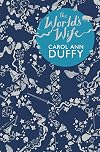
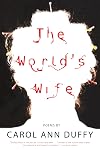
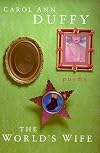
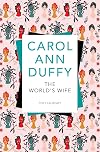
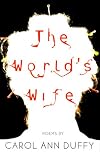
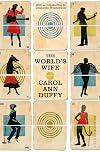
The World's Wife
by Carol Ann Duffy
On This Page
Description
This unique collection of poems from the Poet Laureate, filled with her characteristic wit, is a feminist classic and a modern take on age-old mythology. Who? Him. The Husband. Hero. Hunk. The Boy Next Door. The Paramour. The Je t'adore. Behind every famous man is a great woman - and from the quick-tongued Mrs Darwin to the lascivious Frau Freud, from the adoring Queen Kong to the long-suffering wife of the Devil himself, each one steps from her counterpart's shadow to tell her side of the show more story in this irresistible collection. Original, subversive, full of imagination and quicksilver wit, The World's Wife is Poet Laureate Carol Ann Duffy at her beguiling best. show lessTags
Recommendations








Member Reviews
One of 2011's World Book Night books. I am not normally a fan of poetry, but I am trying to read all of the 25 books before World Book Night 2012.
Behind every great man, as the old saying goes. Duffy brings us a collection of women, behind the men and well-known in their own right.
Through the different poems, Duffy brings us the many facets of women's lives, their emotions, their fate, and all in different tones. The subversion of familiar tales, such as Medusa and Circe, was both thought-provoking and fun. How could you help but laugh out loud at Mrs. Darwin. There are darker poems too, full of pain and longing, Mrs. Midas was particularly poignant for me.
I thoroughly enjoyed my first Duffy collection, and will look out more of her work.
Behind every great man, as the old saying goes. Duffy brings us a collection of women, behind the men and well-known in their own right.
Through the different poems, Duffy brings us the many facets of women's lives, their emotions, their fate, and all in different tones. The subversion of familiar tales, such as Medusa and Circe, was both thought-provoking and fun. How could you help but laugh out loud at Mrs. Darwin. There are darker poems too, full of pain and longing, Mrs. Midas was particularly poignant for me.
I thoroughly enjoyed my first Duffy collection, and will look out more of her work.
"Words, words were truly alive on the tongue, in the head,
warm, beating, frantic, winged; music and blood."
Within every [great- infamous- legendary- mythic] tale of a man is a woman with an equally important story to tell. These poems are Her stories.
From Beauty choosing the Beast because of his repugnant exterior to an overprotective Queen Herod to Mrs Sisyphus suffering a fool for a husband to a middle-aged Mrs Rip Van Winkle and her husband armed with Viagra -- each poem subverts well-known tales with its unique perspective, real or imagined.
I'd recommend this collection to anyone who wants to read poetry but often feels too intimidated to do so. Especially if that person has an interest in the feminist slant on myths, legends, fairy show more tales, pop culture, etc.
4 stars
"Mrs Midas"
I couldn't believe my ears:
how he'd had a wish. Look, we all have wishes; granted.
But who has wishes granted? Him. Do you know about gold?
It feeds no one; aurum, soft, nontarnishable; slakes
no thirst. He tried to light a cigarette; I gazed, entranced,
as the blue flame played on its luteous stem. At least,
I said, you'll be able to give up smoking for good.
"Mrs Beast"
But behind each player stood a line of ghosts
unable to win. Eve. Ashputtel. Marilyn Monroe.
Rapunzel slashing wildly at her hair.
Bessie Smith unloved and down and out.
Bluebeard's wives, Henry VIII's, Snow White
cursing the day she left the seven dwarfs, Diana,
Princess of Wales... show less
warm, beating, frantic, winged; music and blood."
Within every [great- infamous- legendary- mythic] tale of a man is a woman with an equally important story to tell. These poems are Her stories.
From Beauty choosing the Beast because of his repugnant exterior to an overprotective Queen Herod to Mrs Sisyphus suffering a fool for a husband to a middle-aged Mrs Rip Van Winkle and her husband armed with Viagra -- each poem subverts well-known tales with its unique perspective, real or imagined.
I'd recommend this collection to anyone who wants to read poetry but often feels too intimidated to do so. Especially if that person has an interest in the feminist slant on myths, legends, fairy show more tales, pop culture, etc.
4 stars
"Mrs Midas"
I couldn't believe my ears:
how he'd had a wish. Look, we all have wishes; granted.
But who has wishes granted? Him. Do you know about gold?
It feeds no one; aurum, soft, nontarnishable; slakes
no thirst. He tried to light a cigarette; I gazed, entranced,
as the blue flame played on its luteous stem. At least,
I said, you'll be able to give up smoking for good.
"Mrs Beast"
But behind each player stood a line of ghosts
unable to win. Eve. Ashputtel. Marilyn Monroe.
Rapunzel slashing wildly at her hair.
Bessie Smith unloved and down and out.
Bluebeard's wives, Henry VIII's, Snow White
cursing the day she left the seven dwarfs, Diana,
Princess of Wales... show less
This is the second poetry collection that I have reviewed this year, The World’s Wife was chosen by one of my two book groups as our May book. I already knew that I really liked Carol Ann Duffy’s work, although I hadn’t really read that much before – and never an entire collection in one go. This collection, first published in 1999 was Carol Ann Duffy’s first themed collection. In these wonderful poems Carol Ann Duffy takes traditional stories, tales of historical figures and myths which traditionally focus on a male character or perspective. Turning these stories on their head then, we see them from the perspective of the invisible women behind those men.
“Teach me, he said –
we were lying in bed –
how to care.
I show more nibbled the purse of his ear.
What do you mean? Tell me more.
He sat up and reached for his beer”
(from Delilah)
Duffy plays around a little with these stories with clever little twists and turns. Some of the poems tell a recognisable story from history that we think we know already, but from the perspective of the woman in that man’s life – as in the poems Mrs Quasimodo and Mrs Aesop. While other poems turn the male characters and their stories into stories of women as in the poem Mrs Krays. In the opening poem – and one of my favourites, Duffy changes the message of the original story of Little Riding Hood in her poem Little Red Cap. Here the woods represent the transition out of childhood, as Little Red Cap falls in love with the wolf, later taking revenge and using her experience of him as guidance for the rest of her life. I have read that the poem is also viewed as an autobiographical account of Carol Ann Duffy’s relationship with the poet Adrian Henri. I particularly loved the imagery in this poem, the streets of childhood, factories and allotments giving way to the unknown woods of an unexplored adult world.
“At childhood’s end, the houses petered out
into playing fields, the factory, allotments
kept, like mistresses, by kneeling married men,
the silent railway line, the hermit’s caravan,
till you came at last to the edge of the woods.
It was there that I first clapped eyes on the wolf.
He stood in a clearing, reading his verse out loud
in his wolfy drawl, a paperback in his hairy paw,
red wine staining his bearded jaw. What big ears
he had! What big eyes he had! What teeth!
In the interval, I made quite sure he spotted me,
sweet sixteen, never been, babe, waif, and bought me a drink,”
(From Little Red Cap)
These poems written very much from a feminist perspective cover such themes as birth, bereavement, sexism and equality. In this collection female characters are able to speak out for themselves no longer silenced by male dominance. A number of the poems remain set in their original historical period, while others are given an updated modern setting. Duffy also shows flashes of brilliant humour such as in Mrs Icarus.
“I’m not the first or the last
to stand on a hillock,
watching the man she married
prove to the world
he’s a total, utter, absolute, Grade A pillock.”
(Mrs Icarus)
In her poem Anne Hathaway Duffy was apparently inspired by the passage in William Shakespeare’s will which refers to his second best bed – this according to Duffy would have been the couple’s marriage bed – the bed not reserved for guests. The poem, a sonnet is a celebration of their love. This is a gently flowing poem, the language and imagery perfect and in a way a little Shakespearean, reminding us of Hamlet, The Tempest and other great works.
“The bed we loved in was a spinning world
of forests, castles, torchlight, clifftops, seas
where he would dive for pearls. My lover’s words
were shooting stars which fell to earth as kisses
on these lips; my body now a softer rhyme
to his, now echo, assonance; his touch
a verb dancing in the centre of a noun.
Some nights, I dreamed he’d written me, the bed
A page beneath his writer’s hands. Romance
and drama played by touch, by scent, by taste.
In the other bed, our best, our guests dozed on,
dribbling their prose. My living laughing love –
I hold him in the casket of my widow’s head
as he held me upon that next best bed.
(Anne Hathaway)
There is in fact so much to explore in this collection, so much to think about there are some quite complex and even controversial ideas in these superb poems, some of which I suppose are more accessible than others, though I found them all very readable and could have easily quoted far more than I have. show less
“Teach me, he said –
we were lying in bed –
how to care.
I show more nibbled the purse of his ear.
What do you mean? Tell me more.
He sat up and reached for his beer”
(from Delilah)
Duffy plays around a little with these stories with clever little twists and turns. Some of the poems tell a recognisable story from history that we think we know already, but from the perspective of the woman in that man’s life – as in the poems Mrs Quasimodo and Mrs Aesop. While other poems turn the male characters and their stories into stories of women as in the poem Mrs Krays. In the opening poem – and one of my favourites, Duffy changes the message of the original story of Little Riding Hood in her poem Little Red Cap. Here the woods represent the transition out of childhood, as Little Red Cap falls in love with the wolf, later taking revenge and using her experience of him as guidance for the rest of her life. I have read that the poem is also viewed as an autobiographical account of Carol Ann Duffy’s relationship with the poet Adrian Henri. I particularly loved the imagery in this poem, the streets of childhood, factories and allotments giving way to the unknown woods of an unexplored adult world.
“At childhood’s end, the houses petered out
into playing fields, the factory, allotments
kept, like mistresses, by kneeling married men,
the silent railway line, the hermit’s caravan,
till you came at last to the edge of the woods.
It was there that I first clapped eyes on the wolf.
He stood in a clearing, reading his verse out loud
in his wolfy drawl, a paperback in his hairy paw,
red wine staining his bearded jaw. What big ears
he had! What big eyes he had! What teeth!
In the interval, I made quite sure he spotted me,
sweet sixteen, never been, babe, waif, and bought me a drink,”
(From Little Red Cap)
These poems written very much from a feminist perspective cover such themes as birth, bereavement, sexism and equality. In this collection female characters are able to speak out for themselves no longer silenced by male dominance. A number of the poems remain set in their original historical period, while others are given an updated modern setting. Duffy also shows flashes of brilliant humour such as in Mrs Icarus.
“I’m not the first or the last
to stand on a hillock,
watching the man she married
prove to the world
he’s a total, utter, absolute, Grade A pillock.”
(Mrs Icarus)
In her poem Anne Hathaway Duffy was apparently inspired by the passage in William Shakespeare’s will which refers to his second best bed – this according to Duffy would have been the couple’s marriage bed – the bed not reserved for guests. The poem, a sonnet is a celebration of their love. This is a gently flowing poem, the language and imagery perfect and in a way a little Shakespearean, reminding us of Hamlet, The Tempest and other great works.
“The bed we loved in was a spinning world
of forests, castles, torchlight, clifftops, seas
where he would dive for pearls. My lover’s words
were shooting stars which fell to earth as kisses
on these lips; my body now a softer rhyme
to his, now echo, assonance; his touch
a verb dancing in the centre of a noun.
Some nights, I dreamed he’d written me, the bed
A page beneath his writer’s hands. Romance
and drama played by touch, by scent, by taste.
In the other bed, our best, our guests dozed on,
dribbling their prose. My living laughing love –
I hold him in the casket of my widow’s head
as he held me upon that next best bed.
(Anne Hathaway)
There is in fact so much to explore in this collection, so much to think about there are some quite complex and even controversial ideas in these superb poems, some of which I suppose are more accessible than others, though I found them all very readable and could have easily quoted far more than I have. show less
I picked up a free copy of this in New Beacon Books – there was a stack of them left over from World Book Night earlier this year.
It’s a collection of poems all on the same theme of overturning male-centred history, literature and myth, and looking at familiar stories from the neglected wife’s perspective. So, for example, we have Mrs Aesop tiring of her husband’s constant boring fables, and Delilah explaining why she cut off Samson’s hair (he’d complained to her that he didn’t know what it was to be gentle, and so she’d done it to help him change, to take away the pressure of always having to be strong). There are also more modern characters, like Frau Freud, the Kray sisters, and Elvis’s twin sister.
There’s a show more playful, humorous tone to the poems, and I enjoyed reading them on a quiet afternoon recently in a sun-drenched beer garden. A lot of them had the same basic premise, of a wife wryly mocking her husband’s posturing and self-aggrandisement, and this got a bit repetitive after a while. My favourite poems were those that truly brought a new twist to a familiar story, imputing new and more interesting motives to the characters, as in the Delilah example already mentioned, or my favourite of all, Queen Herod. In this poem, we learn that it wasn’t the King who ordered the killing of all first-born male children after all, but the Queen, who does it to protect her own newborn daughter: “No man, I swore, will make her shed one tear.” I found it a powerful and poignant reworking, and loved the last few lines:
We do our best,
we Queens, we mothers,
mothers of Queens.
We wade through blood
for our sleeping girls.
We have daggers for eyes.
Behind our lullabies,
the hooves of terrible horses
thunder and drum. show less
It’s a collection of poems all on the same theme of overturning male-centred history, literature and myth, and looking at familiar stories from the neglected wife’s perspective. So, for example, we have Mrs Aesop tiring of her husband’s constant boring fables, and Delilah explaining why she cut off Samson’s hair (he’d complained to her that he didn’t know what it was to be gentle, and so she’d done it to help him change, to take away the pressure of always having to be strong). There are also more modern characters, like Frau Freud, the Kray sisters, and Elvis’s twin sister.
There’s a show more playful, humorous tone to the poems, and I enjoyed reading them on a quiet afternoon recently in a sun-drenched beer garden. A lot of them had the same basic premise, of a wife wryly mocking her husband’s posturing and self-aggrandisement, and this got a bit repetitive after a while. My favourite poems were those that truly brought a new twist to a familiar story, imputing new and more interesting motives to the characters, as in the Delilah example already mentioned, or my favourite of all, Queen Herod. In this poem, we learn that it wasn’t the King who ordered the killing of all first-born male children after all, but the Queen, who does it to protect her own newborn daughter: “No man, I swore, will make her shed one tear.” I found it a powerful and poignant reworking, and loved the last few lines:
We do our best,
we Queens, we mothers,
mothers of Queens.
We wade through blood
for our sleeping girls.
We have daggers for eyes.
Behind our lullabies,
the hooves of terrible horses
thunder and drum. show less
A book of poems about the women who are married to men famous in history and fable - Mrs Faust, Mrs Aesop, Mrs Quasimodo, Mrs Midas. Wonderful images, thought provoking, warm and witty but with a steel edge under the velvet.
What a brilliant and witty collection that is accessible for all ages. The use of myth and history means most of the names will be at least familiar if not well known to readers. I found some of the ‘wives’ to be hilarious and thoroughly enjoyed Mrs Midas and from Mrs Tiresias. Duffy’s humour is excellent and not a word is wasted. You really get an idea of how the women are thinking by what she was written.
As a student or a teacher there are ample examples of poetic and literary devices that have been used but on this occasion I’m reviewing it solely as a reader of Carol Ann Duffy’s poetry. Well worth the purchase and the read. I bought my copy after hearing her read from it – which added so much to the experience. Fantastic show more writing and I think it is the best work she has done. show less
As a student or a teacher there are ample examples of poetic and literary devices that have been used but on this occasion I’m reviewing it solely as a reader of Carol Ann Duffy’s poetry. Well worth the purchase and the read. I bought my copy after hearing her read from it – which added so much to the experience. Fantastic show more writing and I think it is the best work she has done. show less
Short poems, but working together as a book, not just a collection. Some amazing descriptions and moments when the language is like a horse that Duffy is making show-jump.
Members
- Recently Added By
Lists

Tonikat reading completed on Librarything journals
329 works; 2 members

Best of Scottish Literature
35 works; 6 members

Poetry Corner
187 works; 15 members

BBC Radio 4 Bookclub
341 works; 13 members

Favorite Recent Poetry: 1980-2022
178 works; 70 members

Poetry volumes by single author
122 works; 8 members
Author Information

106+ Works 4,830 Members
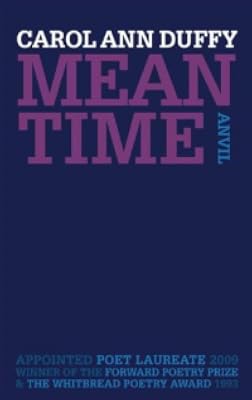
Carol Ann Duffy has published four highly praised collections of poetry. Her last, "Mean Time", won the "Forward" Poetry Prize & the Whitbread Poetry Prize. She lives in Manchester, England. (Publisher Fact Sheets) Carol Ann Duffy was born on December 23, 1955 in Gasgow. She is a Scottish poet and playwright. She is also Professor of Contemporary show more Poetry at Manchester Metropolitan University, and was appointed Britain's Poet Laureate in May 2009. She is the first woman, the first Scot, and the first openly LGBT person to hold the position. She was a passionate reader from an early age, and always wanted to be a writer, producing poems from the age of 11. When Duffy was 15, June Scriven sent her poems to Outposts, a publisher of pamphlets, where it was read by the bookseller Bernard Stone, who published some of them. She applied to the University of Liverpool and began a philosophy degree there in 1974. She had two plays performed at the Liverpool Playhouse, wrote a pamphlet, Fifth Last Song, and received an honours degree in philosophy in 1977. She worked as poetry critic for The Guardian from 1988 -1989, and was editor of the poetry magazine, Ambit. In 1996, she was appointed as a lecturer in poetry at Manchester Metropolitan University, and later became creative director of its Writing School. She has since gone on to write several works of poetry and children's books. Her title's The World's Wife, Rapture, and The Bees made the New Zealand Best Seller List. (Publisher Provided) show less
Awards and Honors
Distinctions
Work Relationships
Is abridged in
Has as a student's study guide
Common Knowledge
- Original publication date
- 1999
Classifications
Statistics
- Members
- 900
- Popularity
- 30,052
- Reviews
- 16
- Rating
- (4.11)
- Languages
- English, Italian
- Media
- Paper, Audiobook, Ebook
- ISBNs
- 13
- ASINs
- 9