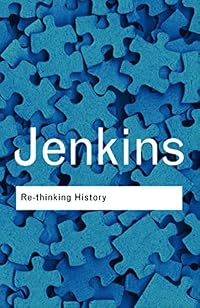
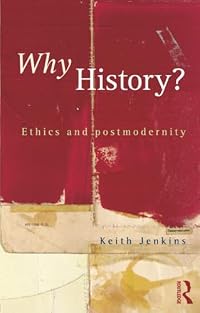
Re-thinking History (Routledge Classics)
by Keith Jenkins
On This Page
Description
History means many things to many people. But finding an answer to the question 'What is history?' is a task few feel equipped to answer. If you want to explore this tantalising subject, where do you start? What are the critical skills you need to begin to make sense of the past? The perfect introduction to this thought-provoking area, Jenkins' clear and concise prose guides readers through the controversies and debates that surround historical thinking at the present time, providing them show more with the means to make their own discoveries. show lessTags
Recommendations














Member Reviews
At only 84 pages long, this is a very small, slight paperback, but still not really worth the hour or so it took me to read. Jenkins warns you at the beginning that his work is a polemic, and he's not lying. He sets about to undermine the entire approach adopted by most western academic historians to the subject, especially through his use of postmodernism (a word which still makes many history professors shudder). I agree with some of his points, but his tone is arrogant and patronising; good for challenging you and making you think, but not in the way that Jenkins intended it.
Postmodernist history's bible. Jenkins makes good points (like postmodernism does) but (like postmodernism does) goes too far.
I took some notes as follow:
* History claims to knowledge (rather than belief or assertion) - It makes History the discourse it is.
* What can be known and how we can know, interact with "power".
* Even the most empirical chronicles has to invent narrative structures to give shape to time and place.
* HISTORY is never for itself; it is always for someone.
* Truth is a self-referencing figure of speech, incapable of accessing the phenomenal world: word and world, word and object, remain saparate
* History claims to knowledge (rather than belief or assertion) - It makes History the discourse it is.
* What can be known and how we can know, interact with "power".
* Even the most empirical chronicles has to invent narrative structures to give shape to time and place.
* HISTORY is never for itself; it is always for someone.
* Truth is a self-referencing figure of speech, incapable of accessing the phenomenal world: word and world, word and object, remain saparate
Ratings
Members
- Recently Added By
Author Information

13+ Works 486 Members
Keith Jenkins is Emeritus Professor, University of Chichester, UK. He is the author of five books on historical theory and co-editor (with Alun Munslow) of The Nature of History Reader and (with Sue Morgan and Alun Munslow) Manifestos for History, all published by Routledge.
Series
Belongs to Publisher Series
Classifications
Statistics
- Members
- 262
- Popularity
- 123,143
- Reviews
- 3
- Rating
- (3.68)
- Languages
- Chinese, English, Portuguese, Spanish
- Media
- Paper, Ebook
- ISBNs
- 10
- ASINs
- 3