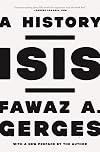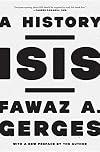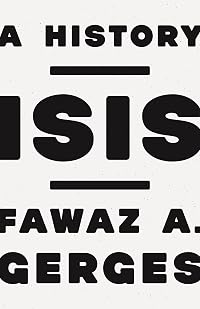
ISIS: A History
by Fawaz A. Gerges
On This Page
Description
"The Islamic State has stunned the world with its savagery, destructiveness, and military and recruiting successes. What explains the rise of ISIS and what does it portend for the future of the Middle East? In this book, one of the world's leading authorities on political Islam and jihadism sheds new light on these questions as he provides a unique history of the rise and growth of ISIS. Moving beyond journalistic accounts, Fawaz Gerges provides a clear and compelling account of the deeper show more conditions that fuel ISIS. The book describes how ISIS emerged in the chaos of Iraq following the 2003 U.S. invasion, how the group was strengthened by the suppression of the Arab Spring and by the war in Syria, and how ISIS seized leadership of the jihadist movement from Al Qaeda. Part of a militant Sunni revival, ISIS claims its goals are to resurrect a caliphate and rid "Islamic lands" of all Shia and other minorities. In contrast to Al Qaeda, ISIS initially focused on the "near enemy" -- Shia, the Iraqi and Syrian regimes, and secular, pro-Western states in the Middle East. But in a tactical shift ISIS has now taken responsibility for spectacular attacks in Europe and other places beyond the Middle East, making it clear that the group is increasingly interested in targeting the "far enemy" as well. Ultimately, the book shows how decades of dictatorship, poverty, and rising sectarianism in the Middle East, exacerbated by foreign intervention, led to the rise of ISIS -- and why addressing those problems is the only way to ensure its end. An authoritative introduction to arguably the most important conflict in the world today, this is an essential book for anyone seeking a deeper understanding of the social turmoil and political violence ravaging the Arab-Islamic world."--provided by publisher. show lessTags
Recommendations

























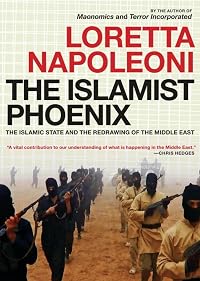

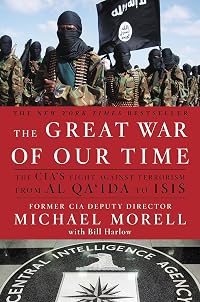





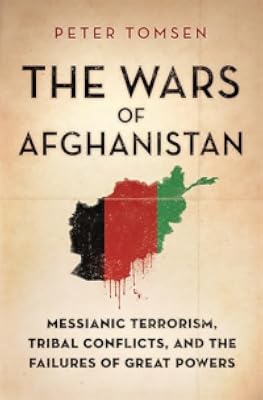

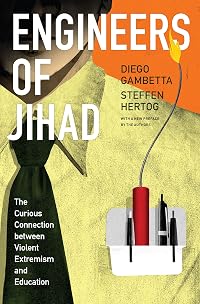



Member Reviews
ISIS: A History is a strongly sourced, objective account of the rise, personnel, and characteristics of the world's most infamous terrorist group. It's also a poorly edited mass that requires a lot of prior knowledge of the field, and could use at least two more passes to find some actual structure.
Gerges investigates the continuity and change between ISIS and previous Jihadi groups, like Al Qaeda in Iraq. ISIS focuses on the "near enemy" of Shiites and insufficiently devout Sunnis instead of the "far enemy" of the US and the Israel. Thanks to a complete collapse in State authority caused by the Syrian Civil War and Iraq's corrupt and sectarian government, ISIS expanded from a hunted band to a Caliphate dominating millions of people in show more a medieval nightmare. Gerges and his graduate assistants do the best possible job tracing the rise of ISIS's leader, Abu Bakr al-Baghdadi from the propaganda, but the man is still largely a cipher.
Gerges describes ISIS as theocratic plagiarists, making little advancement to Salafi-Jihadist thinking, but he doesn't really explain what that thinking is, or the importance of establishing of the Caliphate in the kind of utopian Muslim thinking that characterizes Jihad. From a conventional polisci perspective, it's true that ISIS provides basic government services (water, sewage, schools, police, etc) in areas that Iraq and Syria have abandoned, but the same could be said of the Taliban, and the Taliban hasn't attracted tens of thousands of foreign fighters, or routed professional armies. Gerges claims that ex-Baathist officers in the upper ranks contributed to ISIS taking Mosul, but I need more evidence for strategic thinking from the people who brought you the Iraq-Iran War.
Obviously, there's a lot about ISIS that is simply unknowable to the West, because of their tendency to behead journalists and other outsiders. But I found Graeme Wood's 2015 article in The Atlantic a much more coherent introduction to the organization, that if less detailed, is far more revealing. show less
Gerges investigates the continuity and change between ISIS and previous Jihadi groups, like Al Qaeda in Iraq. ISIS focuses on the "near enemy" of Shiites and insufficiently devout Sunnis instead of the "far enemy" of the US and the Israel. Thanks to a complete collapse in State authority caused by the Syrian Civil War and Iraq's corrupt and sectarian government, ISIS expanded from a hunted band to a Caliphate dominating millions of people in show more a medieval nightmare. Gerges and his graduate assistants do the best possible job tracing the rise of ISIS's leader, Abu Bakr al-Baghdadi from the propaganda, but the man is still largely a cipher.
Gerges describes ISIS as theocratic plagiarists, making little advancement to Salafi-Jihadist thinking, but he doesn't really explain what that thinking is, or the importance of establishing of the Caliphate in the kind of utopian Muslim thinking that characterizes Jihad. From a conventional polisci perspective, it's true that ISIS provides basic government services (water, sewage, schools, police, etc) in areas that Iraq and Syria have abandoned, but the same could be said of the Taliban, and the Taliban hasn't attracted tens of thousands of foreign fighters, or routed professional armies. Gerges claims that ex-Baathist officers in the upper ranks contributed to ISIS taking Mosul, but I need more evidence for strategic thinking from the people who brought you the Iraq-Iran War.
Obviously, there's a lot about ISIS that is simply unknowable to the West, because of their tendency to behead journalists and other outsiders. But I found Graeme Wood's 2015 article in The Atlantic a much more coherent introduction to the organization, that if less detailed, is far more revealing. show less
Very informative book. I admit being very confused about the past and current conflicts in the Middle East. The author did a good job presenting the data in a succinct manner, and I appreciate his objective inferences about the significance of certain events. I honestly will read this book again to better grasp the information.
Ratings
Members
- Recently Added By
Author Information

13+ Works 687 Members
Fawaz A. Gerges is professor of international relations and Emirates Chair in Contemporary Middle East Studies at the London School of Economics and Political Science. He is the author of several acclaimed books, including ISIS: A History (Princeton), The New Middle East, and The Far Enemy. Twitter @FawazGerges
Awards and Honors
Awards
Common Knowledge
- Important places
- Middle East; Syria
- Important events
- Iraq War
Classifications
- Genres
- Nonfiction, History, Religion & Spirituality, General Nonfiction, Politics and Government
- DDC/MDS
- 363.325 — Society, government, & culture Social problems and social services Public Safety - Police, Crime Investigation Terrorism, Disasters, Civil Defense Social conflict Terrorism
- LCC
- HV6433 .I722 .G47 — Social sciences Social pathology. Social and public welfare. Criminology Social pathology. Social and public welfare. Criminology Crimes and offenses
- BISAC
Statistics
- Members
- 112
- Popularity
- 284,682
- Reviews
- 2
- Rating
- (3.40)
- Languages
- English
- Media
- Paper, Audiobook, Ebook
- ISBNs
- 9
- ASINs
- 2