Words on the Move: Why English Won't—and Can't—Sit Still (Like, Literally)
by John McWhorter
On This Page
Description
"A bestselling linguist takes us on a lively tour of how the English language is evolving before our eyes and why we should embrace this transformation and not fight it. Language is always changing -- but we tend not to like it. We understand that new words must be created for new things, but the way English is spoken today rubs many of us the wrong way. Whether its the use of literally to mean "figuratively" rather than "by the letter" or the way young people use LOL and like or business show more jargon like Whats the ask? it often seems as if the language is deteriorating before our eyes. But the truth is different and a lot less scary, as John McWhorter shows in this delightful and eye-opening exploration of how English has always been in motion and continues to evolve today. Drawing examples from everyday life and employing a generous helping of humor, he shows that these shifts are a natural process common to all languages, and that we should embrace and appreciate these changes, not condemn them. Words on the Move opens our eyes to the surprising backstories to the words and expressions we use every day. Did you know that silly once meant "blessed?" Or that ought was the original past tense of owe? Or that the suffix -ly in adverbs is actually a remnant of the word like? And have you ever wondered why some people from New Orleans sound as if they come from Brooklyn? McWhorter encourages us to marvel at the dynamism and resilience of the English language, and his book offers a lively journey through which we discover that words are ever on the move and our lives are all the richer for it"-- show lessTags
Recommendations











Member Reviews
As usual for John McWhorter's pop linguistics books, Words on the Move is very accessible and friendly. Reading it felt like I had a chatty conversational partner at my side, explaining the concepts, almost. He relies heavily on pop culture of many different flavors to help explain topics or provide further examples of how a language feature might be observed elsewhere, and he avoids the International Phonetic Alphabet as a rule in his pop-ling books, to avoid any feelings of stuffiness or academese.
Frankly, when I read this book, or The Power of Babel, or his various articles around the web, I feel real smart. McWhorter is really good at that.
Unfortunately, this skill of his means this book is grounded in American English and less show more accessible for those who do not speak the language fluently or who do not know the references cited. Most of the time, if a pop culture reference is dated or even slightly obscure, there is an explanation and a short pointer to the source (old tv shows, for example), but this is not always the case.
Likewise, the lack of IPA means he relies on spelling conventions (and spacing, hyphens, capitalization) to express differences in pronunciation or stress. This is very useful if you have the right accent, but I found a lot of these to be fairly opaque. I tried to say the words out loud, but couldn't figure out why his "this is said this way" didn't sound right to my ears. Maybe IPA could have helped - or at least made a better distinction. He has recorded an audio book version, which I think would be excellent listening at those points. He does, afterall, take pains to point out that he has a Philadelphian accent himself, which is different from a lot of his audience.
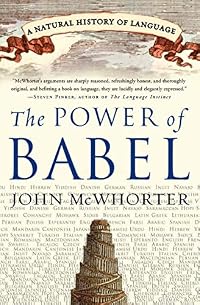
The topic for this book is evolutionary linguistics in general, but specifically the changes in language that we can observe right now, rather than how it changed in the past (such as in The Power of Babel or Our Magnificent Bastard Tongue). There are five main categories, all of which eventually are used to explain that little word "like".
To everyone who hates words like "impactful" or "irregardless", this book will not apologize for them. It will explain why these words are so tenacious and not going away, but it doesn't say that they or any word are right or wrong - just that they are. The final chapter, in discussing "like" (or even "all" as a quote marker), does point out that describing language this way doesn't mean approval. It's an acceptance that language, as with all fashions, change, and trying to explain why it is changing in this particular way. But society has rules for fashion, and likewise for language, and one must use language appropriately.
As someone who does read "All Things Linguistics" and "Language Log" and pop linguistics books fairly regularly, I find that the most informative and new thing in Words on the Move is the first chapter on pragmatics. I had never seen the subject explained in quite this way, and the FACE descriptor is very useful. The "Factuality, Acknowledgement of others, etc." listing helped me articulate concepts that I instinctively understood but couldn't explain. show less
Frankly, when I read this book, or The Power of Babel, or his various articles around the web, I feel real smart. McWhorter is really good at that.
Unfortunately, this skill of his means this book is grounded in American English and less show more accessible for those who do not speak the language fluently or who do not know the references cited. Most of the time, if a pop culture reference is dated or even slightly obscure, there is an explanation and a short pointer to the source (old tv shows, for example), but this is not always the case.
Likewise, the lack of IPA means he relies on spelling conventions (and spacing, hyphens, capitalization) to express differences in pronunciation or stress. This is very useful if you have the right accent, but I found a lot of these to be fairly opaque. I tried to say the words out loud, but couldn't figure out why his "this is said this way" didn't sound right to my ears. Maybe IPA could have helped - or at least made a better distinction. He has recorded an audio book version, which I think would be excellent listening at those points. He does, afterall, take pains to point out that he has a Philadelphian accent himself, which is different from a lot of his audience.
The topic for this book is evolutionary linguistics in general, but specifically the changes in language that we can observe right now, rather than how it changed in the past (such as in The Power of Babel or Our Magnificent Bastard Tongue). There are five main categories, all of which eventually are used to explain that little word "like".
- The Faces of English: Words get personal — on pragmatics, using a "FACE" acronym as the skeleton of the explanation (Feelings, Acknowledgement of others' state of mind, Counterexpectation, Easing)
- It's the Implication That Matters: Words on the move — on the drift of word meanings due to implications (positive, negative, broad, narrow, etc.)
- When Words Stop Being Words: Where does grammar come from? — on grammaticalization, for example "-ly" from "like"
- A Vowel is a Process: Words start sounding different
- Lexical Springtime: Words mate and reproduce — on how new coinages become standard, or old standards freshen up with some emphasis on Backshift
To everyone who hates words like "impactful" or "irregardless", this book will not apologize for them. It will explain why these words are so tenacious and not going away, but it doesn't say that they or any word are right or wrong - just that they are. The final chapter, in discussing "like" (or even "all" as a quote marker), does point out that describing language this way doesn't mean approval. It's an acceptance that language, as with all fashions, change, and trying to explain why it is changing in this particular way. But society has rules for fashion, and likewise for language, and one must use language appropriately.
As someone who does read "All Things Linguistics" and "Language Log" and pop linguistics books fairly regularly, I find that the most informative and new thing in Words on the Move is the first chapter on pragmatics. I had never seen the subject explained in quite this way, and the FACE descriptor is very useful. The "Factuality, Acknowledgement of others, etc." listing helped me articulate concepts that I instinctively understood but couldn't explain. show less
 This review was written for LibraryThing Early Reviewers.
Hugely entertaining, clever, and informative. If the modern use of "literally" gets under your skin and upspeak grates on you, this book just might change your mind. Either that or it'll drive you nuts. It's full of fascinating little factoids like how once upon a time "silly" meant "blessed," and Jonathan Swift got mighty mad when english speakers stopped pronouncing the "e" in the past tense in words like "blessed," and how many languages worldwide use their version of "like" as a speech marker (as in the often-deplored usage a la "And then he was like, 'I can't go'").
I listened to the audiobook, and I recommend that. So much of what he writes depends on pronunciation and accent, and it comes through very clearly when spoken aloud show more (plus he was a really great narrator). show less
I listened to the audiobook, and I recommend that. So much of what he writes depends on pronunciation and accent, and it comes through very clearly when spoken aloud show more (plus he was a really great narrator). show less
Linguist John McWhorter talks about the process of language change in general, and about the changes that English, in particular, has been through and continues to go through, and why that's normal and inevitable and nothing to panic over, and also kind of cool and interesting. I don't know that there was a whole lot here that was entirely new to me, if only because I regularly listen to his podcast, but McWhorter's writing is always fun to read. (Well, mostly. Even his weird sense of humor and tendency to come up with offbeat examples to illustrate the things he's talking about doesn't quite save an entire chapter on vowel shifts from making my eyes glaze over a little. But, really, you can't not talk about vowel shifts.)
And I do show more think it's an important and useful thing, the attempt that books like this make to bring a linguist's perspective to ordinary people, encouraging them to replace, or at least temper, the natural tendency to get all judgy and reactionary about language change with a genuine understanding of change as a fundamental part of what language does. Or possibly even what language is.
Although I will admit that even now, I still can't help but feel a bit annoyed at the use of "literally" as simply another intensifier. Just because, despite McWhorter's best attempts to reassure me otherwise, some part of my brain remains stubbornly convinced that one day I will use it to mean "not figuratively" -- because there is no other good word to use for that! -- and no one will understand what I mean. I'm working on chilling out about that, though. I really am. Because it's very clear to me at this point that if I never used a word in a way that hasn't been decried by someone, sometime, as a linguistic degeneracy of a type guaranteed to reduce us all to incomprehensibility, I'd never be able to say anything at all. show less
And I do show more think it's an important and useful thing, the attempt that books like this make to bring a linguist's perspective to ordinary people, encouraging them to replace, or at least temper, the natural tendency to get all judgy and reactionary about language change with a genuine understanding of change as a fundamental part of what language does. Or possibly even what language is.
Although I will admit that even now, I still can't help but feel a bit annoyed at the use of "literally" as simply another intensifier. Just because, despite McWhorter's best attempts to reassure me otherwise, some part of my brain remains stubbornly convinced that one day I will use it to mean "not figuratively" -- because there is no other good word to use for that! -- and no one will understand what I mean. I'm working on chilling out about that, though. I really am. Because it's very clear to me at this point that if I never used a word in a way that hasn't been decried by someone, sometime, as a linguistic degeneracy of a type guaranteed to reduce us all to incomprehensibility, I'd never be able to say anything at all. show less
Time changes things. The color of your hair and the tautness of your skin. Clothing styles. Moral standards. Even rivers and mountain ranges. Yet one of the most difficult changes to accept is that relating to the language we speak everyday. Whatever our political preferences, we tend to be conservative when it comes to language.
Columbia Professor John McWhorter makes the case in “Words on the Move (2016) that such change is inevitable, no matter how valiantly defenders of the language fight against it. Yet even those defenders of the language don’t want to go back to the English spoken by Chaucer. Rather they want to preserve the English they learned in school as children. Never mind that in the years since they have helped change show more the language by adopting teen slang in their youth, by using new words that came with new technology and by accepting cultural changes, such as using the pronoun they instead of he to refer to a person of either sex.
Language changes in a variety of ways. New words come into the language all the time, while others words drop out from lack of use. The meaning of words change. Pronunciation changes. Grammar changes. The people who make dictionaries will always have a job because their work, like that of a dish washer in a restaurant or a mortician, never ends.
McWhorter writes in an engaging, witty style, which is fortunate for him because much of what he says is bound to irritate some, if not most, readers. He is tolerant, for example, of those who use the word literally when they mean figuratively. Like other words that once represented truth, such as actually and really, literally now means something less than swear-on-the-Bible truth.
Phrases such as “you know” and “and stuff,” and even the word like, used by young people as a stand-in for the word said, are all acceptable to McWhorter. To him they are just natural, even sensible, changes in the way English is spoken. He argues that "casual speech full of likes is not, in truth, tentative or messy, but empathic and polite."
The way English is written changes, as well, but much more slowly. The fact that written language changes more slowly than spoken language explains, McWhorter says, why the spelling of English words seems so screwy. "Speech moved on; spelling stayed put," he writes. Often words are spelled the way they were once pronounced, not the way they are pronounced today.
If you are someone who still owns a dictionary in book form, it is out of date. Even if you just bought it new yesterday. show less
Columbia Professor John McWhorter makes the case in “Words on the Move (2016) that such change is inevitable, no matter how valiantly defenders of the language fight against it. Yet even those defenders of the language don’t want to go back to the English spoken by Chaucer. Rather they want to preserve the English they learned in school as children. Never mind that in the years since they have helped change show more the language by adopting teen slang in their youth, by using new words that came with new technology and by accepting cultural changes, such as using the pronoun they instead of he to refer to a person of either sex.
Language changes in a variety of ways. New words come into the language all the time, while others words drop out from lack of use. The meaning of words change. Pronunciation changes. Grammar changes. The people who make dictionaries will always have a job because their work, like that of a dish washer in a restaurant or a mortician, never ends.
McWhorter writes in an engaging, witty style, which is fortunate for him because much of what he says is bound to irritate some, if not most, readers. He is tolerant, for example, of those who use the word literally when they mean figuratively. Like other words that once represented truth, such as actually and really, literally now means something less than swear-on-the-Bible truth.
Phrases such as “you know” and “and stuff,” and even the word like, used by young people as a stand-in for the word said, are all acceptable to McWhorter. To him they are just natural, even sensible, changes in the way English is spoken. He argues that "casual speech full of likes is not, in truth, tentative or messy, but empathic and polite."
The way English is written changes, as well, but much more slowly. The fact that written language changes more slowly than spoken language explains, McWhorter says, why the spelling of English words seems so screwy. "Speech moved on; spelling stayed put," he writes. Often words are spelled the way they were once pronounced, not the way they are pronounced today.
If you are someone who still owns a dictionary in book form, it is out of date. Even if you just bought it new yesterday. show less
If you're going to read this (and I highly recommend that you do) you must commit to it. It's short, accessible, and engaging, so stick with McWhorter as he builds his argument.
I'm going along, thinking I got what I needed from the introduction, but still reading because I like his wit, his use of a healthy blend of formal and idiomatic language, his verve. I'm doing a lot of nodding, and a lot of wincing, and a lot of debating. I'm all like "Yeah but you're making these points about speaking (and primitive texting); Ima not gonna be so loosey-goosey about written language because then how can we understand books more than a few decades old without translations?"
And then, after inserting a bunch of bookdarts and thinking hard at each show more section break, I get to the end, in which he wraps it all up. Ah! Ok, I get it now!
I still don't agree with him 100%, but I'm going to be considerably less pedantic, and try to chill whenever I can.
So, yes, I think you should read it if you're a prescriptive pedant interested in the other perspective, if you want support for your descriptive perspective (if you find Lynne Truss annoying, for example) or if you want to get along better w/ ppl irl, or if you are a curmudgeonly stuffed shirt. Or if you're just curious.
So, now I'll add some of the bookdarted passages to try to lure you....
The meaning of words does change dramatically. Though the story of Charles II praising Christopher Wren's St. Paul's cathedral as "awful, pompous, and artificial" is mostly apocryphal, the fact is that he could have said it, and indeed those words would have been complimentary.
McWhorter also advocates for translations of Shakespeare to get more ppl to the stage. Not adaptations like West Side Story, but updating the approximately 10% of the words that don't resemble what we say today. I'm still thinking about this. If it mattered to me, I'd read that chapter again. But in my case what holds me back is the cost of the tickets! I do understand a traditionally staged video of a play better than I understand the script. Anyway, it's an interesting discussion and well worth a read even if you don't care.
One language change that's happening right now is that 'all' is becoming a legitimate grammatical marker. Whether we approve or not, things like 'What all do I need to pack' and 'Who's all going there' are here to stay. And that's ok.
His story of the development of the word 'fishburger' is great. And now I have to YouTube "Frankfurter Sandwiches."
Btw, I didn't write this review right away. And I find myself still thinking about the book. (Good book!) One thing I'm pondering is that I'm all for language change when it's evolution for something that enriches communication. And no, I don't just mean the random new word for technology, nor just spelling reform, but also what some would consider bigger changes like not fretting about the word 'whom' and all the words that inevitably get created by squishing, like electronic mail to e-mail to email.
But I really have trouble with messing up useful, specific words' meanings and pronunciations, for example appropriating literally for figuratively. What can we say now when we actually mean literally? Actually and really and in truth just don't cut it. And nucular for nuclear is just plain wrong. And I wish there wasn't so much drift, but I won't fight it: McWhorter says that a clan in a cave, with no outside influences, would still have a language changed from that their ancestors spoke, after just a few hundred years becoming less intelligible to one another.
Yeah. Read this. Or at least read something by McWhorter if your library doesn't have this. Ima gonna. show less
I'm going along, thinking I got what I needed from the introduction, but still reading because I like his wit, his use of a healthy blend of formal and idiomatic language, his verve. I'm doing a lot of nodding, and a lot of wincing, and a lot of debating. I'm all like "Yeah but you're making these points about speaking (and primitive texting); Ima not gonna be so loosey-goosey about written language because then how can we understand books more than a few decades old without translations?"
And then, after inserting a bunch of bookdarts and thinking hard at each show more section break, I get to the end, in which he wraps it all up. Ah! Ok, I get it now!
I still don't agree with him 100%, but I'm going to be considerably less pedantic, and try to chill whenever I can.
So, yes, I think you should read it if you're a prescriptive pedant interested in the other perspective, if you want support for your descriptive perspective (if you find Lynne Truss annoying, for example) or if you want to get along better w/ ppl irl, or if you are a curmudgeonly stuffed shirt. Or if you're just curious.
So, now I'll add some of the bookdarted passages to try to lure you....
The meaning of words does change dramatically. Though the story of Charles II praising Christopher Wren's St. Paul's cathedral as "awful, pompous, and artificial" is mostly apocryphal, the fact is that he could have said it, and indeed those words would have been complimentary.
McWhorter also advocates for translations of Shakespeare to get more ppl to the stage. Not adaptations like West Side Story, but updating the approximately 10% of the words that don't resemble what we say today. I'm still thinking about this. If it mattered to me, I'd read that chapter again. But in my case what holds me back is the cost of the tickets! I do understand a traditionally staged video of a play better than I understand the script. Anyway, it's an interesting discussion and well worth a read even if you don't care.
One language change that's happening right now is that 'all' is becoming a legitimate grammatical marker. Whether we approve or not, things like 'What all do I need to pack' and 'Who's all going there' are here to stay. And that's ok.
His story of the development of the word 'fishburger' is great. And now I have to YouTube "Frankfurter Sandwiches."
Btw, I didn't write this review right away. And I find myself still thinking about the book. (Good book!) One thing I'm pondering is that I'm all for language change when it's evolution for something that enriches communication. And no, I don't just mean the random new word for technology, nor just spelling reform, but also what some would consider bigger changes like not fretting about the word 'whom' and all the words that inevitably get created by squishing, like electronic mail to e-mail to email.
But I really have trouble with messing up useful, specific words' meanings and pronunciations, for example appropriating literally for figuratively. What can we say now when we actually mean literally? Actually and really and in truth just don't cut it. And nucular for nuclear is just plain wrong. And I wish there wasn't so much drift, but I won't fight it: McWhorter says that a clan in a cave, with no outside influences, would still have a language changed from that their ancestors spoke, after just a few hundred years becoming less intelligible to one another.
Yeah. Read this. Or at least read something by McWhorter if your library doesn't have this. Ima gonna. show less
I first became aware of John McWhorter's work through a couple of the lectures series he does for the Teaching Company. He has an enthusiasm for all area of linguistics and language and he presents his materials in a compelling and often humorous way.
So I was excited to see this book offered through LTER. I'm glad to say that his written work is just as good as the courses he's given. In Words on the Move, McWhorter riffs a little bit on material he's presented through TC courses, exploring more thoroughly the idea of how and why language changes, and how that's not always a bad thing (contrary to what language prescriptivists say)! If it didn't change, we'd still be talking in the language of Beowulf. McWhorter also explores the show more grammar of English language by comparison with other languages (eg, the German love of compound words).
I like how he discusses the etymology of many words, and how they've evolved from old English. The book is funny at times, especially if you love language and its usage. One example among many: "When it first appeared in English, borrowed from Latin, audition indeed meant 'hearing.' When a doctor recommended a substance that 'draweth out all which is in the Eares and administreth good auditione,' he meant that having your ears clear of whatever the disgusting stuff was, your hearing got better, not that it got you a part in the latest production of Henry V." (p. 66). And then he continues for another page or so about how the word "audition" drifted to have the meaning it has today. It's a really smart book that describes how languages grows and evolves over time, either through design or accident. I highly recommend this one. show less
So I was excited to see this book offered through LTER. I'm glad to say that his written work is just as good as the courses he's given. In Words on the Move, McWhorter riffs a little bit on material he's presented through TC courses, exploring more thoroughly the idea of how and why language changes, and how that's not always a bad thing (contrary to what language prescriptivists say)! If it didn't change, we'd still be talking in the language of Beowulf. McWhorter also explores the show more grammar of English language by comparison with other languages (eg, the German love of compound words).
I like how he discusses the etymology of many words, and how they've evolved from old English. The book is funny at times, especially if you love language and its usage. One example among many: "When it first appeared in English, borrowed from Latin, audition indeed meant 'hearing.' When a doctor recommended a substance that 'draweth out all which is in the Eares and administreth good auditione,' he meant that having your ears clear of whatever the disgusting stuff was, your hearing got better, not that it got you a part in the latest production of Henry V." (p. 66). And then he continues for another page or so about how the word "audition" drifted to have the meaning it has today. It's a really smart book that describes how languages grows and evolves over time, either through design or accident. I highly recommend this one. show less
This review was written for LibraryThing Early Reviewers.I literally, like, worship John McWhorter.
"No," you say, "You don't "literally" worship him. And quit using "like."" "Thank you," sez I, "that's exactly the response I was looking for. "
Language is a living thing, and like all living things, it grows and changes. As much as the use of "literally" to mean something that is figurative may make you tear out your hair, there are two things you should remember. First, that this is what language does, even to the point of some words coming to mean their exact opposite, frex, fast means something that is rapid. It also means something that is held immobile. Second, many of the words we use regularly, and think of as proper usage have already changed dramatically. Why don't we care? Because show more that happened long before we learned to speak. It's the newness that drives people crazy. They believe language must be frozen in dictionary form for eternity. But it doesn't work that way.
McWhorter is a brilliant scholar and lecturer, who can counter every argument you can come up with against some new usage in about half a dozen different ways without breaking a sweat. He explains how meanings change, how spelling and pronunciation change, and how grammar changes. He also explains why they do, how vowels shift from generation to generation, changing the pronunciation of a word over time. He discusses how word meanings change, citing examples such as our word "silly" which comes from the Old English "sǣliġ" which meant blessed, which later came to mean "innocent" and from there took on a negative connotation of weak-minded or silly.
Drawing examples from Chaucer, Shakespeare, Herman Melville, and even more contemporary sources such as Saul Bellow and F. Scott Fitzgerald, he cites examples of the huge changes English has gone through, continues to go through, will continue to go through, will we or nil we. As such, this book is an excellent primer on how not to be too pole-up-the-ass about casual usage. Yes, it's important for people to know how to communicate clearly in formal settings, but as he quite rightly points out, no language has ever devolved into meaningless babble in spite of the constant changes that it undergoes, and no language ever will.
Whether you're a language purist or someone who loves watching language evolve, I think you'll find yourself fascinated by this book. show less
"No," you say, "You don't "literally" worship him. And quit using "like."" "Thank you," sez I, "that's exactly the response I was looking for. "
Language is a living thing, and like all living things, it grows and changes. As much as the use of "literally" to mean something that is figurative may make you tear out your hair, there are two things you should remember. First, that this is what language does, even to the point of some words coming to mean their exact opposite, frex, fast means something that is rapid. It also means something that is held immobile. Second, many of the words we use regularly, and think of as proper usage have already changed dramatically. Why don't we care? Because show more that happened long before we learned to speak. It's the newness that drives people crazy. They believe language must be frozen in dictionary form for eternity. But it doesn't work that way.
McWhorter is a brilliant scholar and lecturer, who can counter every argument you can come up with against some new usage in about half a dozen different ways without breaking a sweat. He explains how meanings change, how spelling and pronunciation change, and how grammar changes. He also explains why they do, how vowels shift from generation to generation, changing the pronunciation of a word over time. He discusses how word meanings change, citing examples such as our word "silly" which comes from the Old English "sǣliġ" which meant blessed, which later came to mean "innocent" and from there took on a negative connotation of weak-minded or silly.
Drawing examples from Chaucer, Shakespeare, Herman Melville, and even more contemporary sources such as Saul Bellow and F. Scott Fitzgerald, he cites examples of the huge changes English has gone through, continues to go through, will continue to go through, will we or nil we. As such, this book is an excellent primer on how not to be too pole-up-the-ass about casual usage. Yes, it's important for people to know how to communicate clearly in formal settings, but as he quite rightly points out, no language has ever devolved into meaningless babble in spite of the constant changes that it undergoes, and no language ever will.
Whether you're a language purist or someone who loves watching language evolve, I think you'll find yourself fascinated by this book. show less
Members
- Recently Added By
Lists

Writing
81 works; 1 member
Author Information

69+ Works 7,063 Members
John H. McWhorter is Associate Professor of Linguistics at the University of California, Berkeley.
Awards and Honors
Awards
Common Knowledge
- Canonical title
- Words on the Move: Why English Won't—and Can't—Sit Still (Like, Literally) (Like, Literally)
- Original publication date
- 2016
- Dedication
- To Martha, I said having children would mean I would stop writing these. You didn't want me to, I couldn't, and thank you for enabling (in both senses) my habit.
- First words
- No one minds that today the clouds are neither in the same position nor in the same shapes they were yesterday.
- Last words
- (Click to show. Warning: May contain spoilers.)Among the many benefits of doing so: wonder replaces disgust, curiosity replaces condemnation, and overall, you have a lot more fun.
- Blurbers
- Deborah Tannen
Classifications
Statistics
- Members
- 342
- Popularity
- 91,755
- Reviews
- 26
- Rating
- (3.99)
- Languages
- English
- Media
- Paper, Audiobook, Ebook
- ISBNs
- 4
- ASINs
- 4