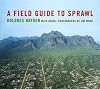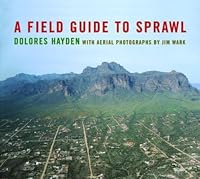
A Field Guide to Sprawl
by Dolores Hayden
On This Page
Description
"Can you define edge node, boomburb, tower farm, big box, and parsley round the pig? Sprawl is hard to pin down and the terms change every day. This concise book defines the vocabulary of sprawl from alligator to zoomburb, illustrating fifty-one colorful terms invented by real estate developers and designers to characterize contemporary building patterns. Sixty-nine aerial photographs, each paired with a definition, convey the impact of development and provide verbal and visual vocabulary show more needed by professionals, public officials, and citizens to critique uncontrolled growth in the American landscape. This "devil's dictionary" of American building accompanies a critique of metropolitan regions organized around unsustainable growth, where sprawling new areas of automobile-oriented construction flourish as older neighborhoods are left to decline."--Jacket. show lessTags
Recommendations










Member Reviews
Dolores Hayden's great glossary of sprawl uses aerial photographs by Jim Wark to further describe the American suburban phenomenon. Many of the terms are humorous, though not in the sense that sprawl is funny — in the way some expressions are latched on to some pretty absurd ways we use the land. There's the familiar "duck," "drive-through," and "strip," but also "ball pork" (a stadium built with public funds for a privately owned ball team), "litter on a stick" (billboards), and "ozoner" (drive-in movie theater). By using these and other terms (be it by creating new terms or using existing ones), Hayden makes the various components and results of sprawl memorable. Like Alex S. MacLean, seeing the landscape of America's (sub)urbanism show more from the air is one of the best ways to convey the scale of destruction and monotony that this country will have to face up to and remedy one of these days. show less
This books was both fun to look through and educative to read. Through the use of aerial photographs, it shows how the landscape in the United States has been changed through sprawl. Each photograph has a theme, such as privatopia, starter castle, logo building, car glut and the text amplifies the picture. This is well worth a read for any person interested in urban or regional planning.
Small coffee-table format picture book. There is a 10-page introduction, which is excellent, then 51 vocabulary terms. Each vocab term is 2 pages - one page is an aerial example picture, the facing page is text describing the term. The terms are mostly pejorative (slang) and are critical of certain types of development. This is not "new" stuff many of these terms and criticisms go back to the 1940s. While some of the terms are obvious (strip malls, McMansions) much of it is not obvious and opens a whole new way of seeing why certain things are laid out the way they are. More so, it helps to predict how future development will happen based on current development patterns. Fascinating, brings order to chaos.
Fantastic aerial photos of different types of sprawl along with bittersweet funny commentary and some valuable references. The idea is to encourage people to talk more about sprawl by popularizing a lexicon that can describe it.
A quick read. This is a picture book of things you might see in a typical sprawling suburb, with some clever terminology. For example, a LULU is a "Locally Unwanted Land Use". This could refer to a landfill, prison or nuclear power plant. A "ball pork" is a stadium or arena paid for by taxpayers but that benefits a rich owner. A TOAD is a "temporary, obsolete, abandoned or derelict site", such as a dead mall or factory. Each term comes with a very illustrative picture. For example, a "greenfield", that is a suburban development carved out of raw land, comes with a picture of tract homes juxtaposed with a working farm.
this was cute. i read it in a few hours! and now i know what a duck is.
Group N
Members
- Recently Added By
Lists

Books Read in 2017
4,249 works; 129 members
Author Information

10+ Works 950 Members
Dolores Hayden is professor of architecture and urbanism and professor of American studies at Yale University
Classifications
- Genres
- Sociology, Nonfiction, Art & Design, General Nonfiction, Science & Nature
- DDC/MDS
- 307.76 — Society, Government, and Culture Social sciences, sociology & anthropology Communities Specific kinds of communities Urban communities
- LCC
- HT321 .H3856 — Social sciences Communities. Classes. Races Communities. Classes. Races Urban groups. The city. Urban sociology The city as an economic factor. City
- BISAC
Statistics
- Members
- 203
- Popularity
- 160,578
- Reviews
- 8
- Rating
- (3.79)
- Languages
- English
- Media
- Paper
- ISBNs
- 2