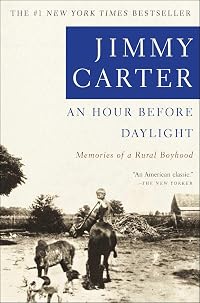
An Hour Before Daylight: Memories of a Rural Boyhood
by Jimmy Carter
On This Page
Description
President Jimmy Carter has become an acclaimed, best-selling author since his days in the White House. In An Hour Before Daylight, he offers poignant remembrances of his childhood days in Depression-era rural Georgia. With eloquent yet conversational prose, Carter recalls the events and people who shaped his life from his earliest days. He describes the sharecropping economy of the 1930s, where hard farm labor was done by hand and those who worked felt a kinship with the land. And he show more reminisces about the handful of people who had the greatest influence upon him, most of whom were black-a remarkable fact considering the strict segregation of the time. An Hour Before Daylight succeeds as both a timeless memoir and a powerful examination of a critical time period in American history. Narrator Tom Stechschulte captures the rhythms of the agricultural South and conveys in a wonderfully warm tone the nostalgic recollections of the 39th president of the United States. show lessTags
Recommendations















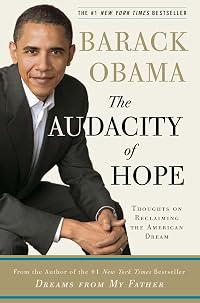

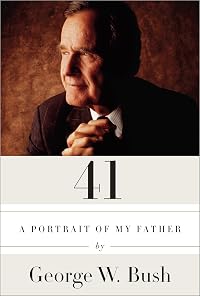


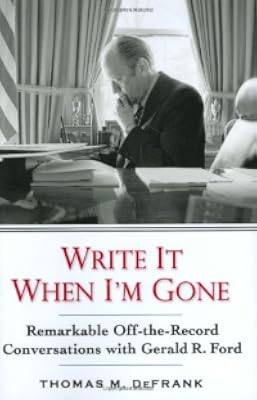

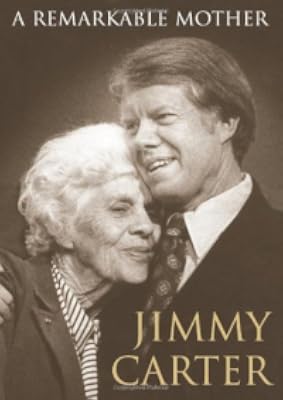
Member Recommendations

fulner They are both auto-biographies about a "character" you thought you knew. Both contain humorous stories and are great reads.

Member Reviews
I was half way through this memoir about Jimmy Carter's formative childhood years in Archery and Plains, Georgia when news hit on December 29th that Carter had died. Because of this, many of the tributes I subsequently read reflected aspects of Carter's life I was now aware of: his deep religiosity and faith, hard work, discipline, incredible Renaissance man ability to master any number of skills (carpentry, farming, fishing, writing, preaching, engineering, politics, diplomacy, etc.) The book is a masterful piece of story-telling and remembrance that is honest, never dull, and written in a clear voice for any audience, even a child or young adult. Particularly striking is Carter's amazing memory of names, places, and details of events show more and people from his earliest years. They say that most people forget 90% of what they experience in life but Carter seems to spin this statistic on its head, remembering 90%. He's brutally honest about how both the white and black communities accepted segregation, including his own family. Yet at the same time Carter spent an inordinate of time with his black neighbors and a few father and mother figures and childhood friends had an indelible impact on him. This is a good time to read this book. To better understand a man and a politician who had his flaws for sure, but who also had grit, intelligence, and perhaps most importantly, character and honesty. show less
I saw Mr. Carter discussing his book in a TV interview, and bought the book on the basis of that discussion. It is an intriguing read; I learned a good many things, but not necessarily what I expected to learn. The Carter family was fairly well off--owned land, businesses, etc., but still had no running water in the house. Mr. Carter claims that some of the policies of the New Deal harmed the poor farmers they were intended to assist. He lost his father, brother and both sisters to pancreatic cancer. His mother died of cancer too, although she lived to be quite old. He attributes all these deaths to smoking. Carter emerges as a real person with ordinary human failings, but no corruption or hypocrisy. His writing style is a bit dull at show more times; he talks much more easily. 3 1/2 stars
Reviewed January 15, 2001 show less
Reviewed January 15, 2001 show less
What I discovered about this book is it has less about politics and more about the time and place he grew up. I found it quite interesting to read a young boys take on the black-white relationships in the south when he was a boy. It was quite interesting to see how and why he became the man he did, whether or not you agree with him and his actions. Overall, this was a very good book and I really enjoyed it. So many times, I forgot that I was reading about a future president of our country. He has a good heart and you see that in this book.
Jimmy Carter recounts his boyhood growing up on a Georgia farm.
The only reason I picked it up was because it fit a book challenge I'm working through this year, and I'm really glad it prompted me to read this. Carter grew up in Archery and Plains, Georgia, working on the farm with his dad and alongside black sharecropping families. The style is somewhat meandering and conversational, but I went along for the ride and especially appreciated his reflection on segregation and his experiences and influences as a child. An enjoyable memoir from the 39th president of the United States.
The only reason I picked it up was because it fit a book challenge I'm working through this year, and I'm really glad it prompted me to read this. Carter grew up in Archery and Plains, Georgia, working on the farm with his dad and alongside black sharecropping families. The style is somewhat meandering and conversational, but I went along for the ride and especially appreciated his reflection on segregation and his experiences and influences as a child. An enjoyable memoir from the 39th president of the United States.
This well written memoir is essentially a slice of Jimmy Carter's life until he leaves for Annapolis in his Sophmore year of college. He shows you what his day-to-day life was like on his farm in Archery (a town which no longer exists) and at home and in school in Plains, and also gives you the background for his ancestors and his knowledge of and memories of his grandparents and parents.
What I found most fascinating was Jimmy Carter's view into every day life on his farm in the South during the depression. How they worked, what the economics was for him and the sharecroppers and day laborers on the farm and for his friends (all black), and what the social and political situations were.
Of course, Jimmy Carter could only report what he show more remembered and certainly his view would have been tempered by what was normal to him as opposed to how those same events would have been shared by his black neighbors, but he clearly tries to give us as much of their view as possible and also tries to see his childhood and the childhoods of his friends through adult eyes so that we can see how their lives differed from his. I thoroughly enjoyed this memoir of Georgia in the 30s and 40s. Recommended. show less
What I found most fascinating was Jimmy Carter's view into every day life on his farm in the South during the depression. How they worked, what the economics was for him and the sharecroppers and day laborers on the farm and for his friends (all black), and what the social and political situations were.
Of course, Jimmy Carter could only report what he show more remembered and certainly his view would have been tempered by what was normal to him as opposed to how those same events would have been shared by his black neighbors, but he clearly tries to give us as much of their view as possible and also tries to see his childhood and the childhoods of his friends through adult eyes so that we can see how their lives differed from his. I thoroughly enjoyed this memoir of Georgia in the 30s and 40s. Recommended. show less
One of the interesting projects in Jimmy Carter's generally well-regarded post-presidency is that he has become a prolific author. After writing the nearly obligatory memoir after he left office in 1981, he has published books on a range of topics from Middle East relations to Christianity; he has even tried his hand at fiction and poetry. In the midst of this writing career, he has reflected upon his life in additional memoirs through the years, including an extended consideration of his adolescence in "An Hour Before Daylight."
In this book, Carter writes of his life as a boy in Plains, Georgia, the son of a successful farmer and business owner at the center of rural sharecropping common in the south in the first half of the 20th show more Century. In straightforward language, Carter shares common experiences of a bygone era – chores and increasing responsibility on the farm; tales from the small school; stories about games, fishing, and Saturday matinees; and the sense that everyone in the small community knew everyone else's business.
In this tale, certain personalities loom large alongside Carter's father, especially his mother. As in many other places, the former president rhapsodizes about his mother's common wisdom and uncommon sense of justice in the Jim Crow south; in this book, he describes how these traits not only affected him but were important to the surrounding community due to her nursing career. Jack Clark, the African-American who helped manage the Carter farm, taught young Jimmy how to do all sorts of things around the farm, and the former president remembers he and his wife Rachel with special affection.
On one level, this is simply the story of a type of childhood once common in the United States, but now mostly a faded relic of yesterday. In this sense, these pleasant reflections seem to be mostly the variety that one imagines hearing while sitting on a porch at the end of a summer day. Two persistent themes elevate the book, though, and make it more historically interesting. First, Carter pays careful attention to the economics of sharecropping and the small Southern town during and after the Great Depression, offering an accessible social history of this once-common economy.
More importantly, and sometimes more devastatingly, Carter describes race relations before the Civil Rights movement had forced itself into the national consciousness. Not only does Carter describe the general social customs that maintained segregation between the races, even as their lives overlapped due to geographic proximity and simple economics; he also describes this personally. As a boy, young Jimmy played with others nearby who were close to his age, regardless of their race. But these relationships changed over time, at first subtly, and then more openly, and by his high school years Carter admits that only his relationships with other whites were on an equal basis.
Like Carter's other books, "An Hour Before Daylight" is well-written and a pleasant read. Unlike his policy books, there is little here that will raise controversy among most readers; similarly, though, there is little here that will strike most readers as memorable or exciting. Still, the observations on sharecropping and race relations are encouragement enough for those interested in American history. Beyond that, only those wanting to reminisce about a culture slipping away or those who are serious students or fans of Carter will likely find the book to be of substantial interest. show less
In this book, Carter writes of his life as a boy in Plains, Georgia, the son of a successful farmer and business owner at the center of rural sharecropping common in the south in the first half of the 20th show more Century. In straightforward language, Carter shares common experiences of a bygone era – chores and increasing responsibility on the farm; tales from the small school; stories about games, fishing, and Saturday matinees; and the sense that everyone in the small community knew everyone else's business.
In this tale, certain personalities loom large alongside Carter's father, especially his mother. As in many other places, the former president rhapsodizes about his mother's common wisdom and uncommon sense of justice in the Jim Crow south; in this book, he describes how these traits not only affected him but were important to the surrounding community due to her nursing career. Jack Clark, the African-American who helped manage the Carter farm, taught young Jimmy how to do all sorts of things around the farm, and the former president remembers he and his wife Rachel with special affection.
On one level, this is simply the story of a type of childhood once common in the United States, but now mostly a faded relic of yesterday. In this sense, these pleasant reflections seem to be mostly the variety that one imagines hearing while sitting on a porch at the end of a summer day. Two persistent themes elevate the book, though, and make it more historically interesting. First, Carter pays careful attention to the economics of sharecropping and the small Southern town during and after the Great Depression, offering an accessible social history of this once-common economy.
More importantly, and sometimes more devastatingly, Carter describes race relations before the Civil Rights movement had forced itself into the national consciousness. Not only does Carter describe the general social customs that maintained segregation between the races, even as their lives overlapped due to geographic proximity and simple economics; he also describes this personally. As a boy, young Jimmy played with others nearby who were close to his age, regardless of their race. But these relationships changed over time, at first subtly, and then more openly, and by his high school years Carter admits that only his relationships with other whites were on an equal basis.
Like Carter's other books, "An Hour Before Daylight" is well-written and a pleasant read. Unlike his policy books, there is little here that will raise controversy among most readers; similarly, though, there is little here that will strike most readers as memorable or exciting. Still, the observations on sharecropping and race relations are encouragement enough for those interested in American history. Beyond that, only those wanting to reminisce about a culture slipping away or those who are serious students or fans of Carter will likely find the book to be of substantial interest. show less
This audio book was great. The story flowed well and likely could have been about most anyone who grew up in the south at those times. I definitely saw correlation between what our president experienced and the way he is now, and similarly with my father-in-law who is only slightly younger than Mr. Carter.
I found it surprising how much respect he had for his father even though from the stories he tells it sure sounds like he wasn't deserving of that respect, particularly when you think of "how he knew to go to the back door, and exactly where the Turkey's where and why it took so long to settle up"
I recommend this to anyone, regardless of your political persuasion; it is really less about politics and more about people. Jimmy Carter's show more voice is great on audio, and I'm sure the hardcopy would be just as entertaining and informative. show less
I found it surprising how much respect he had for his father even though from the stories he tells it sure sounds like he wasn't deserving of that respect, particularly when you think of "how he knew to go to the back door, and exactly where the Turkey's where and why it took so long to settle up"
I recommend this to anyone, regardless of your political persuasion; it is really less about politics and more about people. Jimmy Carter's show more voice is great on audio, and I'm sure the hardcopy would be just as entertaining and informative. show less
Members
- Recently Added By
Lists

Presidential Autobiographies
37 works; 3 members

al.vick-parents books
301 works; 1 member
Author Information

78+ Works 13,533 Members
James Earl Carter Jr. was born on October 1, 1924 in Plains, Georgia. He graduated from the Naval Academy in Annapolis, Maryland in 1946, and spent seven years as an officer in the Navy. When his term was over, Carter returned to Plains and began his career in politics at the state level in 1962. In 1970, he was elected Governor of Georgia and six show more years later announced his candidacy for the Presidency. Carter campaigned against Gerald Ford and eventually won with 297 electoral votes, becoming the 39th President of the United States. As President, Carter established a National Energy Policy, expanded the National Park System and created the Department of Education. He was also instrumental in the Camp David Agreement of 1978, which helped to bring peace between Egypt and Israel. Carter established full diplomatic relations with the People's Republic of China and completed negotiations of the SALT II Nuclear Limitations Treaty with the Soviet Union. Upon completion of his term as President, he founded the Carter Center in Atlanta, a non-profit organization that works to prevent and resolve conflict and to enhance freedom and democracy around the world. In 2002, Carter received the Nobel Peace Prize. He has written several books including An Hour Before Daylight; Palestine: Peace Not Apartheid, Our Endangered Values, A Full Life: Reflections at Ninety, and Faith: A Journey for All. (Bowker Author Biography) Jimmy Carter who served as thirty-ninth president of the United States, was born in Plains, Georgia, in 1924. After leaving the White House he and his wife Rosalynn, founded the Atlanta-based Carter Center, a nonprofit organization that works to prevent and resolve conflicts, enhance freedom and democracy, and improve health around the world. (Publisher Provided) show less
Awards and Honors
Awards
Distinctions
Common Knowledge
- Original title
- An Hour Before Daylight: Memories of a Rural Boyhood
- Original publication date
- 2001
- People/Characters
- Earl Carter; Lillian Carter; Jimmy Carter; Gloria Carter; Ruth Carter; Billy Carter (show all 7); Rosalynn Carter
- Important places
- Georgia, USA
- Dedication
- To my newest grandson, Hugo, with hopes that this book might someday let him better comprehend the lives of his ancestors.
Classifications
- Genres
- Biography & Memoir, Nonfiction, General Nonfiction, History
- DDC/MDS
- 973.926092 — History & geography History of North America United States 1901- Cold War, Vietnam War, Digital Age (1953-2001) Jimmy Carter (1977-1981) Camp David Accords, Iran Hostage Crisis, Energy Crisis of the 70s Standard subdivisions History, geographic treatment, biography Biography
- LCC
- E873 .C36 — History of the United States United States Later twentieth century, 1961-2000 Carter's administration, 1977-1981
- BISAC
Statistics
- Members
- 1,409
- Popularity
- 16,780
- Reviews
- 24
- Rating
- (3.91)
- Languages
- English
- Media
- Paper, Audiobook, Ebook
- ISBNs
- 16
- UPCs
- 1
- ASINs
- 10