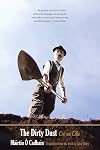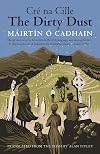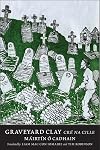
The Dirty Dust
by Máirtín Ó Cadhain
On This Page
Description
In an Irish graveyard, the corpses are distracted by local jealousies and petty disputes assuming global importance. Their banter is full of news of above-ground happenings, received from the recently arrived. As we listen in on the gossip, rumors, backbiting, complaining, and obsessing of the local community, we learn that in the afterlife the same old life goes on beneath the sod.Tags
Recommendations
















Member Reviews
First off - I really enjoyed this book. It’s funny! The reason for knocking off a half point from a solid 4 stars is simply because for me, it does get a mite repetitive.
That said, repetition is kind of the point. We're in a cemetery, as the Table of Contents explains.
Time: Eternity.
Place: The Graveyard.
You must let this sink in as you turn the pages and listen in on the incessant musings, conversations, arguments, belittling, taunting, snickering, lying, and brilliant cussing of the permanent residents of the cemetery as they recognize one another. They are mainly all from the local small village, in rural Ireland in the 1940s. World War II is happening. Other, more local events are also happening, and the occupants of the show more cemetery wait for updates on "above ground" from the next corpse to be lowered into the clay. They pounce for news, and another round of debate begins.
It seems like a bit of hell, and likely is. Mairtin O' Cadhain knows his characters very well - and we get to know them, too, through their speech patterns and repetitive phrases. This is a rural town, and these people worked the land as well as their livestock. They each have their own theory as to what led them to the graveyard clay, which is yet another talking point to debate and deny and belittle.
The writer is renowned for his knowledge of the Irish language, and this translation is heralded as the best. Translators are Liam Mac Con Iomaire and Tim Robinson. I appreciated the footnotes to clarify Irish history and folklore, as well as the idioms of that period.
In addition, there is a list of characters and a Guide to Dialogue Conventions, which I found greatly helpful.
As much as I have enjoyed it, I'm glad to get out of that graveyard! I have no doubt they are still bickering today. show less
That said, repetition is kind of the point. We're in a cemetery, as the Table of Contents explains.
Time: Eternity.
Place: The Graveyard.
You must let this sink in as you turn the pages and listen in on the incessant musings, conversations, arguments, belittling, taunting, snickering, lying, and brilliant cussing of the permanent residents of the cemetery as they recognize one another. They are mainly all from the local small village, in rural Ireland in the 1940s. World War II is happening. Other, more local events are also happening, and the occupants of the show more cemetery wait for updates on "above ground" from the next corpse to be lowered into the clay. They pounce for news, and another round of debate begins.
It seems like a bit of hell, and likely is. Mairtin O' Cadhain knows his characters very well - and we get to know them, too, through their speech patterns and repetitive phrases. This is a rural town, and these people worked the land as well as their livestock. They each have their own theory as to what led them to the graveyard clay, which is yet another talking point to debate and deny and belittle.
The writer is renowned for his knowledge of the Irish language, and this translation is heralded as the best. Translators are Liam Mac Con Iomaire and Tim Robinson. I appreciated the footnotes to clarify Irish history and folklore, as well as the idioms of that period.
In addition, there is a list of characters and a Guide to Dialogue Conventions, which I found greatly helpful.
As much as I have enjoyed it, I'm glad to get out of that graveyard! I have no doubt they are still bickering today. show less
The original language of this book is Irish. It was written during World War II and set in the Catholic graveyard of a small Connemara (very rural and remote part of County Galway in the West of Ireland) village where Irish was the only language spoken, not unlike the village where the author, Máirtín Ó Chadhain, grew up.
The novel documents the conversations between the corpses in the graveyard. The corpses can converse with one another but have no direct knowledge or communication with the living people of their village and only get a chance to update their knowledge of what has been happening in the world since their death when a recently deceased member of the community is buried and brings all the fresh gossip to the show more conversation.
Máirtín Ó Chadhain (1906 – 1970) is regarded as having been the best writer in the Irish language of the Twentieth Century. Cré na Cille is viewed by Gaelic scholars as the Irish language equivalent of Joyce’s Ulysses. (Disclaimer: I must put my hand up and confess that the two Joyce works I have attempted to read, “Ulysses” and “A Portrait of the Artist as a Young Man”, did not help me comprehend why his works are held in such high regard. I may be a Philistine but that’s the truth.) Being the Joycean Philistine that I am this accolade for Cré na Cille would not in itself encourage me to read the book. My introduction to Ó Chadhain’s work happened when I was commissioned to write a review of his recently translated novella, “An Eochair” (The Key), for the 1916 Commemoration Edition of “The Green Book”, a literary magazine published twice a year by The Swan River Press. When reviewing “The Key” I not only read the book but also researched the life of the author. Both my enjoyment of the novella and the knowledge I gleaned about the author and the societal context of his life and writings meant that I was bound to read this novel as soon as it became available to me in a language I could fully understand. This opportunity presented itself to me during 2015 and 2016 when the first two English translations of the novel, first published in 1949, appeared.
There is an hypothesis that translators were afraid to translate a novel so highly respected for fear that their translation would not do it justice and hence damage the reputation of the book as a masterpiece of the Irish language.
The 2016 edition I am reviewing was translated by Liam Mac Con Iomaire and Tim Robinson, and was published by Yale University Press. This is regarded as the more academic of the two translations with the English title of this version, “The Graveyard Clay”, being regarded as closer to the Irish, “Cré na Cille”, than the other edition’s English title, “The Dirty Dust”.
Being the more academic translation, “The Graveyard Clay” contains footnotes explaining points of translation and explaining some of the background behind allusions to Irish folklore or local sayings and customs. It also includes an extensive bibliography of Ó Chadhain’s original works, translations of his works, research references used in translating the book, and a selection of audio-visual materials relating to Ó Chadhain and his works. It also has a twenty-three page introductory note and a four page discussion on translating the book.
I read a comparison of the two translations in which the reviewer characterised the two books as follows (and I paraphrase):
“The Dirty Dust belongs on a bedside cabinet with a bookmark working its way slowly towards the back of the book while The Graveyard Clay belongs in an academic library.”
Not yet having read the other translation, generally regarded as more popularist and vulgar, I cannot express an informed opinion on the matter.
Apart from a few semi-florid soliloquies delivered by the longest resident corpse in the graveyard (who refers to himself as the “Trump” of the graveyard – more a reference to seniority than recent American political history) the book is reported speech with all the interruptions and disjointedness of a conversation in a relatively isolated, rural community, in a time when electricity and running water were unheard of, a slated roof was only something the gentry would have, and where your only source of heating was the turf fire fuelled with the turf you dug from the bog in the Spring. A motorcar was something of a novelty and the local schoolmaster and the priest were regarded as demigods who could do not wrong. It was a time when people whose relatives had emigrated to the U. S. of A. or to England would have to go to the Priest or the Master asking them to read any letters they received and also asking them to write letters to their relatives in response.
Life for the majority of people in the village was a struggle to make ends meet and a struggle with nature to provide food and shelter for their family.
The Cinema was something that only a few people in the village had seen; the priest’s sister wearing trousers and smoking cigarettes was something peculiar to talk about; and the only person of colour the people in the village had ever seen was a butler working for an English earl who has a big house in the area.
As stated earlier, the story takes place while World War II is taking place. Ireland was neutral in relation to that war and its recent history of revolution, war of independence, and civil war gave rise to a confused and mixed political tapestry amongst the residents of the village and, consequently, the graveyard.
Through the conversations of the corpses we find out about the petty hatreds and jealousies of the village; the suspected sharp practices of the shop keeper and the publican; the “tricks of the trade” practiced by the local insurance sales man who dupes people into taking out policies that will do them little good; the social hierarchy, from the miserably poor, through the people managing to survive by raising a few pigs, fattening a handful of cattle, selling the few eggs they can encourage their hens to lay, to the earl and his big house and property.
We hear about the two sisters who never speak because one of them married the man the other wanted; we hear about the postmistress who appears to know all the news about people’s relatives abroad before they receive letters with the news; we hear about the man who was stabbed by another villager because they were on opposite sides of the civil war; and we hear about every political view held in rural Ireland at the time, and which people carried with them to their graves.
Ó Chadhain has used the mechanism of conversations amongst the dead to paint an accurate picture of life in a remote rural village in the 1940s. While it is likely he based much of the characterisation on the inhabitants of his own home village, the characters, opinions, behaviours and jealousies would be fairly common to any such community.
The language in the book is strong in places, xenophobia and racism raise their heads a few times, and hatred of England appears occasionally. All in all, The Graveyard Clay, is an interesting depiction of life in a remote rural village in the west of Ireland and it acts as a microcosm of political views in the country at the time.
My commentary above may paint a rather bleak view of the book so I must hasten to say that this book is written with tremendous wit and humour. It is laugh out loud funny in places. Some of the humour is dependent upon knowledge of Irish history, particularly in relation to schemes initiated to influence society in a particular way, such as the revival of the Irish language. Given this book was written by a native Irish speaker and set in an area where only Irish is spoken, some of the moves to promote the use of Irish would appear redundant or totally foolish.
I would suggest this could be a difficult read for some people but it will be rewarding to those who can struggle through the colloquialisms and the footnotes. I will give it a four star rating with the proviso that it is probably not going to be everybody’s cup of tea. show less
The novel documents the conversations between the corpses in the graveyard. The corpses can converse with one another but have no direct knowledge or communication with the living people of their village and only get a chance to update their knowledge of what has been happening in the world since their death when a recently deceased member of the community is buried and brings all the fresh gossip to the show more conversation.
Máirtín Ó Chadhain (1906 – 1970) is regarded as having been the best writer in the Irish language of the Twentieth Century. Cré na Cille is viewed by Gaelic scholars as the Irish language equivalent of Joyce’s Ulysses. (Disclaimer: I must put my hand up and confess that the two Joyce works I have attempted to read, “Ulysses” and “A Portrait of the Artist as a Young Man”, did not help me comprehend why his works are held in such high regard. I may be a Philistine but that’s the truth.) Being the Joycean Philistine that I am this accolade for Cré na Cille would not in itself encourage me to read the book. My introduction to Ó Chadhain’s work happened when I was commissioned to write a review of his recently translated novella, “An Eochair” (The Key), for the 1916 Commemoration Edition of “The Green Book”, a literary magazine published twice a year by The Swan River Press. When reviewing “The Key” I not only read the book but also researched the life of the author. Both my enjoyment of the novella and the knowledge I gleaned about the author and the societal context of his life and writings meant that I was bound to read this novel as soon as it became available to me in a language I could fully understand. This opportunity presented itself to me during 2015 and 2016 when the first two English translations of the novel, first published in 1949, appeared.
There is an hypothesis that translators were afraid to translate a novel so highly respected for fear that their translation would not do it justice and hence damage the reputation of the book as a masterpiece of the Irish language.
The 2016 edition I am reviewing was translated by Liam Mac Con Iomaire and Tim Robinson, and was published by Yale University Press. This is regarded as the more academic of the two translations with the English title of this version, “The Graveyard Clay”, being regarded as closer to the Irish, “Cré na Cille”, than the other edition’s English title, “The Dirty Dust”.
Being the more academic translation, “The Graveyard Clay” contains footnotes explaining points of translation and explaining some of the background behind allusions to Irish folklore or local sayings and customs. It also includes an extensive bibliography of Ó Chadhain’s original works, translations of his works, research references used in translating the book, and a selection of audio-visual materials relating to Ó Chadhain and his works. It also has a twenty-three page introductory note and a four page discussion on translating the book.
I read a comparison of the two translations in which the reviewer characterised the two books as follows (and I paraphrase):
“The Dirty Dust belongs on a bedside cabinet with a bookmark working its way slowly towards the back of the book while The Graveyard Clay belongs in an academic library.”
Not yet having read the other translation, generally regarded as more popularist and vulgar, I cannot express an informed opinion on the matter.
Apart from a few semi-florid soliloquies delivered by the longest resident corpse in the graveyard (who refers to himself as the “Trump” of the graveyard – more a reference to seniority than recent American political history) the book is reported speech with all the interruptions and disjointedness of a conversation in a relatively isolated, rural community, in a time when electricity and running water were unheard of, a slated roof was only something the gentry would have, and where your only source of heating was the turf fire fuelled with the turf you dug from the bog in the Spring. A motorcar was something of a novelty and the local schoolmaster and the priest were regarded as demigods who could do not wrong. It was a time when people whose relatives had emigrated to the U. S. of A. or to England would have to go to the Priest or the Master asking them to read any letters they received and also asking them to write letters to their relatives in response.
Life for the majority of people in the village was a struggle to make ends meet and a struggle with nature to provide food and shelter for their family.
The Cinema was something that only a few people in the village had seen; the priest’s sister wearing trousers and smoking cigarettes was something peculiar to talk about; and the only person of colour the people in the village had ever seen was a butler working for an English earl who has a big house in the area.
As stated earlier, the story takes place while World War II is taking place. Ireland was neutral in relation to that war and its recent history of revolution, war of independence, and civil war gave rise to a confused and mixed political tapestry amongst the residents of the village and, consequently, the graveyard.
Through the conversations of the corpses we find out about the petty hatreds and jealousies of the village; the suspected sharp practices of the shop keeper and the publican; the “tricks of the trade” practiced by the local insurance sales man who dupes people into taking out policies that will do them little good; the social hierarchy, from the miserably poor, through the people managing to survive by raising a few pigs, fattening a handful of cattle, selling the few eggs they can encourage their hens to lay, to the earl and his big house and property.
We hear about the two sisters who never speak because one of them married the man the other wanted; we hear about the postmistress who appears to know all the news about people’s relatives abroad before they receive letters with the news; we hear about the man who was stabbed by another villager because they were on opposite sides of the civil war; and we hear about every political view held in rural Ireland at the time, and which people carried with them to their graves.
Ó Chadhain has used the mechanism of conversations amongst the dead to paint an accurate picture of life in a remote rural village in the 1940s. While it is likely he based much of the characterisation on the inhabitants of his own home village, the characters, opinions, behaviours and jealousies would be fairly common to any such community.
The language in the book is strong in places, xenophobia and racism raise their heads a few times, and hatred of England appears occasionally. All in all, The Graveyard Clay, is an interesting depiction of life in a remote rural village in the west of Ireland and it acts as a microcosm of political views in the country at the time.
My commentary above may paint a rather bleak view of the book so I must hasten to say that this book is written with tremendous wit and humour. It is laugh out loud funny in places. Some of the humour is dependent upon knowledge of Irish history, particularly in relation to schemes initiated to influence society in a particular way, such as the revival of the Irish language. Given this book was written by a native Irish speaker and set in an area where only Irish is spoken, some of the moves to promote the use of Irish would appear redundant or totally foolish.
I would suggest this could be a difficult read for some people but it will be rewarding to those who can struggle through the colloquialisms and the footnotes. I will give it a four star rating with the proviso that it is probably not going to be everybody’s cup of tea. show less
Another time, another place.
The Dirty Dust is eavesdropping at a party in the early 1940s in western Ireland. The party goes on forever, with different guests striking up conversations here and there. There is no coherence, no drift, and no point. They are all dead, and this is their cemetery. It is fantastically busy underground, at least as far as conversation. They relive old battles, reopen old wounds and perpetuate old wives tales, grudges and rumors. To be a fly on this wall makes your head spin.
There is no narrative (except for a short, generic introduction to each chapter); it’s entirely dialogue, though mostly monologue. The speakers are not identified unless you infer from the response to an accusation or a question. They show more are fiery, hard cursing, bitter and vengeful. They are in short a small Irish community where everyone was in everyone else’s business all the time.
There’s a lot of bitterness at being buried in the half guinea or the 15 shilling section rather than the one pound section, except none of them is certain that’s true, being underground and all. When someone new joins them, they ask about where they ended up and who came to the funeral. And then criticize them. The newly arrived feed the fires with the latest from aboveground.
There was no radio, television, telephone, texting or internet in western Ireland in the 1940s. There was no disengagement. A big city cemetery in 2015 would be, shall we say, much quieter. No one would know anyone buried there. In this cemetery, it’s as if nothing had ever stopped, but now the gloves come off, as there’s no longer any need for politeness.
There are running jokes, and everyone is a caricature. The best line in the book: ”May I not leave this spot if I am telling you a word of a lie.” So good O Cadhain used it twice.
The Dirty Dust is an entire soap opera in one condensed, closepacked package.
David Wineberg show less
The Dirty Dust is eavesdropping at a party in the early 1940s in western Ireland. The party goes on forever, with different guests striking up conversations here and there. There is no coherence, no drift, and no point. They are all dead, and this is their cemetery. It is fantastically busy underground, at least as far as conversation. They relive old battles, reopen old wounds and perpetuate old wives tales, grudges and rumors. To be a fly on this wall makes your head spin.
There is no narrative (except for a short, generic introduction to each chapter); it’s entirely dialogue, though mostly monologue. The speakers are not identified unless you infer from the response to an accusation or a question. They show more are fiery, hard cursing, bitter and vengeful. They are in short a small Irish community where everyone was in everyone else’s business all the time.
There’s a lot of bitterness at being buried in the half guinea or the 15 shilling section rather than the one pound section, except none of them is certain that’s true, being underground and all. When someone new joins them, they ask about where they ended up and who came to the funeral. And then criticize them. The newly arrived feed the fires with the latest from aboveground.
There was no radio, television, telephone, texting or internet in western Ireland in the 1940s. There was no disengagement. A big city cemetery in 2015 would be, shall we say, much quieter. No one would know anyone buried there. In this cemetery, it’s as if nothing had ever stopped, but now the gloves come off, as there’s no longer any need for politeness.
There are running jokes, and everyone is a caricature. The best line in the book: ”May I not leave this spot if I am telling you a word of a lie.” So good O Cadhain used it twice.
The Dirty Dust is an entire soap opera in one condensed, closepacked package.
David Wineberg show less
The Dirty Dust is a book set in the West of Ireland in the 1940s. World War II is going on but more important for the characters are the goings on in their small town. Through the book the individuals discuss what is happening and gossip about their friends, neighbours and enemies. The twist is that all this takes place in the graveyard as the protagonists are all dead!
The concept of the Dirty Dust is unusual and works well. The author is able to give each of the characters their own individual voice which works well. All in all an enjoyable book.
The concept of the Dirty Dust is unusual and works well. The author is able to give each of the characters their own individual voice which works well. All in all an enjoyable book.
I came to this story with no background which would help me understand it. I'm not a literature major, nor an Irish language enthusiast, nor an Irish history enthusiast. I like good writing, and good stories. This is both, but if you are looking for a plot, or completion with a wrapped up ending, it is not that. It is a book of conversations. Conversations of the dead who are in the cemetery.
This book was depressing in some ways for me. Imagine having to spend eternity listening to trivialities of all those in the graveyard; never do they grow or learn, it is a closed, endless, loop, like a cocktail party in Hell. It was very interesting however, to watch the writer develop the personalities of each resident to the point where the show more reader knew who was speaking simply by what they said. Their words defined them. There are no descriptive passages, only dialogue. One gets an idea of their lives through what they say and what their neighbors say in response.
I puzzled to find meaning in the story. What I came up with is this: It is a treatise on the ridiculous nature of humankind. It was interesting for culture, history and the craft of the writer. I won't read it again, but I'm not sorry I've read it because I find that it sticks with me and causes me to ponder about Life, the Universe and Everything.
I read the version with the title "Graveyard Clay" translated by Liam Mac Con Iomaire and Tim Robinson. Great introductory material. show less
This book was depressing in some ways for me. Imagine having to spend eternity listening to trivialities of all those in the graveyard; never do they grow or learn, it is a closed, endless, loop, like a cocktail party in Hell. It was very interesting however, to watch the writer develop the personalities of each resident to the point where the show more reader knew who was speaking simply by what they said. Their words defined them. There are no descriptive passages, only dialogue. One gets an idea of their lives through what they say and what their neighbors say in response.
I puzzled to find meaning in the story. What I came up with is this: It is a treatise on the ridiculous nature of humankind. It was interesting for culture, history and the craft of the writer. I won't read it again, but I'm not sorry I've read it because I find that it sticks with me and causes me to ponder about Life, the Universe and Everything.
I read the version with the title "Graveyard Clay" translated by Liam Mac Con Iomaire and Tim Robinson. Great introductory material. show less
I really wanted to like this book...and really struggled to finish it. I love the premise: that the dead continue to talk (and bitch and moan) just like they did before is hilarious. And that the main character does not have a gravestone and they keep dumping more bodies on top of her unmarked grave is even better.
The unidentified speakers didn’t bother me as much as it appears to have bothered other reviewers. But I did get to a point where there was just a certain sameness to what was being presented; while I wasn’t expecting “action” some manner of variation would have been nice. Or maybe it needed to be shorter...?
The unidentified speakers didn’t bother me as much as it appears to have bothered other reviewers. But I did get to a point where there was just a certain sameness to what was being presented; while I wasn’t expecting “action” some manner of variation would have been nice. Or maybe it needed to be shorter...?
I was utterly uninterested in this when I started it. Eventually, I was almost engaged but the idea of just the mainly unidentified voices talking in the graveyard did nothing for me. I would have preferred just a tiny bit of plot line to actually figure out a bit who everyone was.
Members
- Recently Added By
Published Reviews
ThingScore 75
"The Dirty Dust” is a feat of translation: vigorous and fun, each line rendered with idiomatic aplomb, not a shadow of the Irish grammar remaining....But this legibility comes at a price: Titley seems not have been able to resist his own (very distinctive) voice, and the results can feel overbearing at times."
added by theaelizabet
Lists

EU Fiction: 1950-2022
223 works; 68 members

Dead narrators
50 works; 4 members

Novels set in the Irish West
15 works; 1 member
Author Information

41+ Works 638 Members
Some Editions
Awards and Honors
Distinctions
Series
Belongs to Publisher Series
Common Knowledge
- Canonical title
- The Dirty Dust
- Original title
- Cré na cille
- Alternate titles
- The graveyard clay; Churchyard Clay
- Original publication date
- 1949
- First words
- In The Dirty Dysteveryone is dead. This may seem an unlikely way to write a novel, but Máirtín Ó Cadhain* was not your usual author. He was both traditional and experimental as he willed, and the device he chose for... (show all) this novel suited his own genius and the community he was depicting. -Translator's Introduction
Don't know if I am in the Pound grave, or the Fifteen Shilling grave? Fuck them anyway if they plonked me in the Ten Shilling plot after all the warnings I gave then. The morning I died I calls Patrick in from the kitchen, "I... (show all)'m begging you Patrick, I'm begging you, put me in the Pond grave, the Pound grave! I know some of us are buried in the Ten Shilling grave, but all the same..." -Interlude 1, The Black earth - Original language
- Irish
- Canonical DDC/MDS
- 891.6
- Canonical LCC
- PB1399.O28 C7413
Classifications
- Genres
- Fiction and Literature, General Fiction
- DDC/MDS
- 891.6 — Literature & rhetoric Literatures of other languages East Indo-European and Celtic literatures Celtic languages
- LCC
- PB1399 .O28 .C7413 — Language and Literature Modern languages. Celtic languages and literature Modern languages. Celtic languages Celtic languages and literature Irish
- BISAC
Statistics
- Members
- 403
- Popularity
- 77,327
- Reviews
- 12
- Rating
- (3.71)
- Languages
- 8 — Danish, Dutch, English, German, Irish, Norwegian (Bokmål), Norwegian, Tamil
- Media
- Paper, Audiobook, Ebook
- ISBNs
- 18
- ASINs
- 4