On This Page
Description
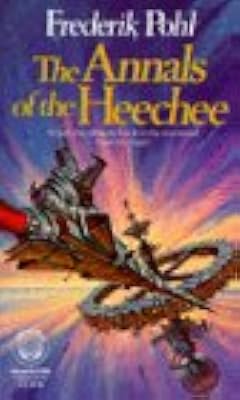
At last--the ultimate book in the renowned Heechee Saga! Advanced Heechee technology had enabled Robinette Broadhead to live after death as a machine-stored personality, enjoying his life by flitting along the wires from party to party with a host of other machine-people. But suddenly his decadent existence ends when an all powerful alien race intent on the utter destruction of all intelligent life reappears after eons of silence, and threatens the lives of all heechee and humans. Even show more Robin, virtually immortal and with unlimited access to millennia of accumulated data, cannot discover how to stop these aliens. It began to seem that only a face to face meeting could determine the future of the entire universe.... THE HEECHEE SAGE Book One: GATEWAY Book Two: BEYOND THE BLUE EVENT HORIZON Book Three: HEECHEE RENDEZVOUS Book Four: THE ANNALS OF THE HEECHEE The Gateway Trip: TALES AND VIGNETTES OF THE HEECHEE show lessTags
Recommendations

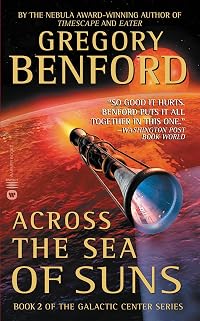
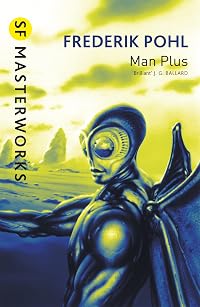

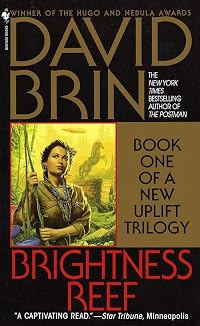
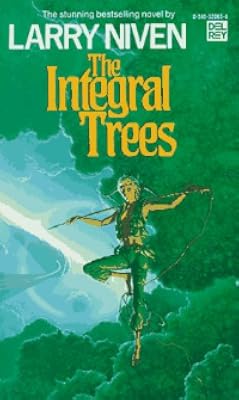















Member Reviews
What an execrable finale to the Heechee quartet.
The worst part of Pohl's Heechee series is that there's more than one book. Gateway (1977) is one of the finest sci-fi novels of the 20th century, bristling with creativity the childish sense of wonder. Beyond the Blue Event Horizon (1980), Heechee Rendezvous, and Annals of the Heechee (1987), on the other hand, utterly fail to live up to the original novel; they fail to even understand what made Gateway so dang good in the first place, making me hate them all the more, and hate that I felt obligated to push through the continuing, bland, repetitive, illogical adventures of Robinette Broadhead, S. Ya, and the obnoxious AI pal, Albert.
They nearly ruin the original Hugo- and Nebula-winning show more masterpiece, and this fourth, closing adventure is the worst of them.
Annals of the Heechee has an unusual structure: It's once again from the perspective of Robin, the anti-hero bum-slash-billionaire of the earlier books, who's long-dead and living as an AI construct inside future computers. He loves to talk about this fact, and spends pages upon pages repeating how being an AI is far better than being a 'meat' person. His digressive arguments and debates with his long-time AI pal, Albert Einstein, are excruciating boring, adding nothing at all to the plot -- and yet the naive philosophizing on the natures of the universe from these two make up the bulk of the book. Between these pages-long rants, we get a few adventures following a rag-tag group of outsider kids (including a Heechee child), and their story is the singular highlight. They feel real, and if the whole story followed them, there could have been another great novel here -- but it doesn't, and their story is a fraction of the pagecount, and it ends abruptly and unsatisfyingly with a deus ex machina before we revert focus back to the cyberspace of Robinette and Albert and the kids are never heard from again: Their story has no real resolution, they're simply dropped from the narrative once their story intersects with Robin.
Stick with Gateway and pretend the story ends there. It's a standalone adventure, with every positive perfectly holding its parabolic arc together. The three sequels drop the singularity of the original to form a new trilogy held together by obnoxious cliffhangers that push you to keep going; a trilogy that parts the curtains on every mystery Gateway won us over with. All the truths of the Heechee and the galaxy are played out in a really unsatisfying, overt way, leaving nothing to the imagination.
When I stumbled upon Gateway for the first time, I thought I had found myself a new best friend, a secret window into the real quality lurking in classic sci-fi -- the sort of sci-fi that should be dating itself by its 20th-century trappings and pseudoscience at this point -- but I was disappointed to see I was wrong, and the author barely seemed to understand his own work. Read Gateway. Now. But don't even think about picking up its sequels. show less
The worst part of Pohl's Heechee series is that there's more than one book. Gateway (1977) is one of the finest sci-fi novels of the 20th century, bristling with creativity the childish sense of wonder. Beyond the Blue Event Horizon (1980), Heechee Rendezvous, and Annals of the Heechee (1987), on the other hand, utterly fail to live up to the original novel; they fail to even understand what made Gateway so dang good in the first place, making me hate them all the more, and hate that I felt obligated to push through the continuing, bland, repetitive, illogical adventures of Robinette Broadhead, S. Ya, and the obnoxious AI pal, Albert.
They nearly ruin the original Hugo- and Nebula-winning show more masterpiece, and this fourth, closing adventure is the worst of them.
Annals of the Heechee has an unusual structure: It's once again from the perspective of Robin, the anti-hero bum-slash-billionaire of the earlier books, who's long-dead and living as an AI construct inside future computers. He loves to talk about this fact, and spends pages upon pages repeating how being an AI is far better than being a 'meat' person. His digressive arguments and debates with his long-time AI pal, Albert Einstein, are excruciating boring, adding nothing at all to the plot -- and yet the naive philosophizing on the natures of the universe from these two make up the bulk of the book. Between these pages-long rants, we get a few adventures following a rag-tag group of outsider kids (including a Heechee child), and their story is the singular highlight. They feel real, and if the whole story followed them, there could have been another great novel here -- but it doesn't, and their story is a fraction of the pagecount, and it ends abruptly and unsatisfyingly with a deus ex machina before we revert focus back to the cyberspace of Robinette and Albert and the kids are never heard from again: Their story has no real resolution, they're simply dropped from the narrative once their story intersects with Robin.
Stick with Gateway and pretend the story ends there. It's a standalone adventure, with every positive perfectly holding its parabolic arc together. The three sequels drop the singularity of the original to form a new trilogy held together by obnoxious cliffhangers that push you to keep going; a trilogy that parts the curtains on every mystery Gateway won us over with. All the truths of the Heechee and the galaxy are played out in a really unsatisfying, overt way, leaving nothing to the imagination.
When I stumbled upon Gateway for the first time, I thought I had found myself a new best friend, a secret window into the real quality lurking in classic sci-fi -- the sort of sci-fi that should be dating itself by its 20th-century trappings and pseudoscience at this point -- but I was disappointed to see I was wrong, and the author barely seemed to understand his own work. Read Gateway. Now. But don't even think about picking up its sequels. show less
5.5/10
I almost quit after reading about 30-40% of the book, just because I couldn’t stand Robin, the first person narrator, and his whining about how slowly “meat people” did things and how many things he (and others like him) could do in the space of a second, or a fraction of a second. Really, the reader understands it after the first, second, or third time, so stop repeating it!
The second half of the book picked up in terms of more plot movement and ended up being quite good (I read the last 40% in one sitting!). But what a slog to get to that point!
I almost quit after reading about 30-40% of the book, just because I couldn’t stand Robin, the first person narrator, and his whining about how slowly “meat people” did things and how many things he (and others like him) could do in the space of a second, or a fraction of a second. Really, the reader understands it after the first, second, or third time, so stop repeating it!
The second half of the book picked up in terms of more plot movement and ended up being quite good (I read the last 40% in one sitting!). But what a slog to get to that point!
In this final installment of the Heechee saga, humanity joins forces with the Heechee to finally deal with the Foe, a mysterious race of energy beings who want to eradicate all technological races and cause another big bang. However, like the previous book, this really only serves as the backdrop--the story is really about how society is dealing with large numbers of people becoming "stored intelligences" after they die (which is to say, they're not really dying), with multiple perspectives on how people live their new digital-only lives after their deaths (and occasionally before, in the case of "doppels"). It's an interesting exploration. Pohl does resolve the larger plot satisfactorily, but it's not really the focus anyway.
I read the first books of this series, and they were interesting, although it was starting to get slow at the end. But I wanted to finish the series while I still remembered the characters, so I kept going. Well, I almost regretted that decision.
The book really started to drag, mostly because of the repeated explanations of the difference between time for living people ("meat" people, they called them) and the electronically-stored versions, who interacted in milliseconds rather than seconds or minutes. Not to mention hearing over and over about the protagonist's psychological problems and his worries about everything.
My rating reflects the entire series, and is more of an average than a total rating, because I enjoyed the first parts. show more But if it were all one book, it might be lower. show less
The book really started to drag, mostly because of the repeated explanations of the difference between time for living people ("meat" people, they called them) and the electronically-stored versions, who interacted in milliseconds rather than seconds or minutes. Not to mention hearing over and over about the protagonist's psychological problems and his worries about everything.
My rating reflects the entire series, and is more of an average than a total rating, because I enjoyed the first parts. show more But if it were all one book, it might be lower. show less
This was almost one book too many in this series, but still good. By now we know most of what we needed to know about the HeeChee, but there had to be one more mission....
Heechee Saga conclusion -a post-physical Robinette Broadhead lives as a machine-stored personality. He must unite humanity and the reclusive Heechee to confront the Assassins, or Foe, pure-energy beings threatening to restructure the universe and destroy organic life.
This book is yet another little joke on the world by Pohl. Each and every one is the last; until the next one arrives on the scene. Sadly, there will be no more. "The BoyWho Would Live Forever" (published in 2004) will be the last word.
Members
- Recently Added By
Lists

Books Read in 2016
4,666 works; 197 members
Author Information

640+ Works 42,840 Members
Frederik Pohl was born in New York City on November 26, 1919. More interested in writing than in school, he dropped out of high school in his senior year and took a job with a publishing company. After serving as a public relations officer in the United States Army from 1943 to 1945, he returned to publishing as copywriter for Popular Science, a show more literary agent for several sci-fi writers, and the editor for the magazines Galaxy and If from 1959 until 1969, with If winning three successive Hugo awards. His first published work, a poem entitled Elegy to a Dead Satellite: Luna, was printed in Amazing Stories magazine in 1937 under the pen name Elton Andrews. His first science fiction novels were published in the mid 1960's, some written in collaboration with other writers, others created alone. During his lifetime, he won over 16 major awards for his writing (much of which was published pseudonymously) including six Hugo Awards and three Nebula Awards. His works include Gateway, which won the Campbell Memorial, Hugo, Locus SF, and Nebula Awards, Beyond the Blue Event Horizon, and Jem, which won the National Book Award in 1979. He also embraced blogging in his later years, using his online journal as an ongoing sequel to his autobiography, The Way the Future Was. He died on September 2, 2013 at the age 93. (Bowker Author Biography) show less
Some Editions
Series


Belongs to Publisher Series
Work Relationships
Is contained in
Common Knowledge
- Canonical title
- The Annals of the Heechee
- Original title
- The Annals of the Heechee
- Original publication date
- 1987
- First words
- It isn't easy to begin.
- Last words
- (Click to show. Warning: May contain spoilers.)But maybe just to go on asking them is enough.
- Original language*
- Inglés
*Some information comes from Common Knowledge in other languages. Click "Edit" for more information.
Classifications
Statistics
- Members
- 1,350
- Popularity
- 17,717
- Reviews
- 14
- Rating
- (3.45)
- Languages
- 10 — Czech, English, French, Hungarian, Italian, Polish, Portuguese, Russian, Spanish, Swedish
- Media
- Paper, Audiobook, Ebook
- ISBNs
- 18
- ASINs
- 10