
Beyond the Blue Event Horizon
by Frederik Pohl
The Heechee Saga: Story Order (3), The Heechee Saga (2)
On This Page
Description
The story begins when the hero of Gateway finances an expedition to a distant alien spaceship that may end famine forever. On the ship, the explorers find a human boy, and evidence that reveals a powerful alien civilization is thriving on a transport ship headed right for E.Tags
Recommendations
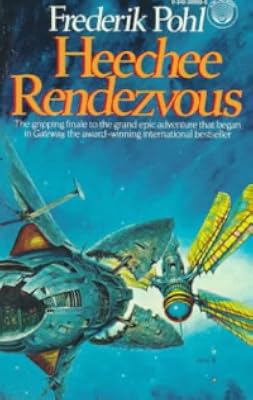
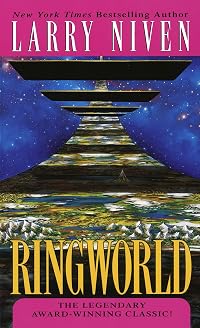
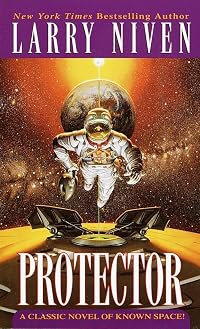
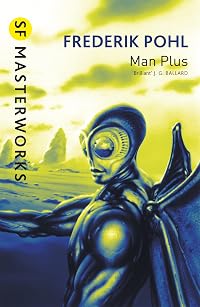






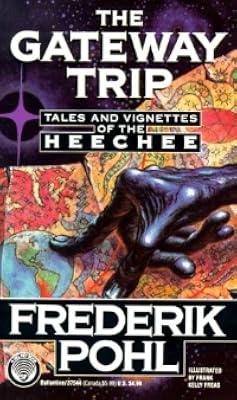
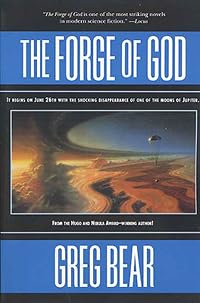
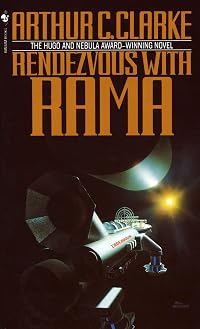
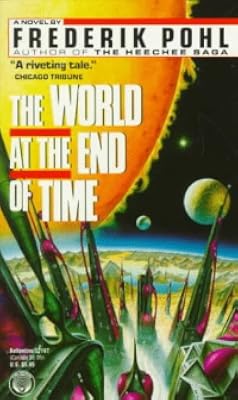



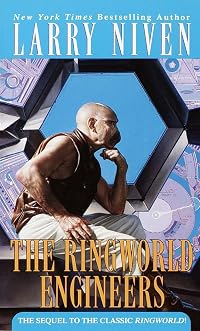

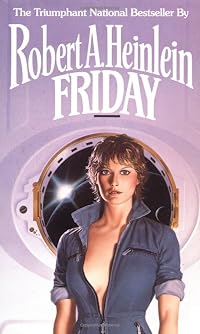
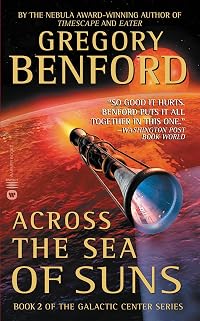
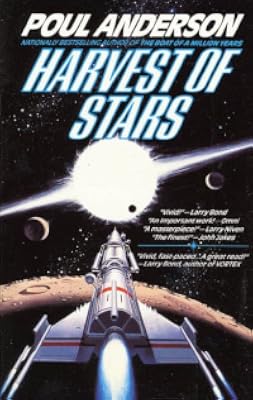


Member Recommendations
Member Reviews
Beyond the Blue Event Horizon, the second book in Frederik Pohl's Heechee Saga, takes readers on a thrilling space odyssey filled with ambition, guilt, and the quest for redemption. However, this journey is marked by a significant and uncomfortable aspect that may prove challenging for some readers.
The narrative revolves around Robinette Broadhead's pursuit of wealth through the risky expedition to the Food Factory, a Heechee spaceship capable of transforming basic elements into vast quantities of food. Yet, this ambitious venture is overshadowed by Robin's haunting guilt over abandoning his wife at the event horizon of a black hole. As the expedition unfolds, the hope of rescuing his beloved Gelle-Klara Moynlin becomes the driving show more force behind his actions.
The book is undeniably marred by a notable and troubling element - the portrayal of underage sexuality. This theme, uncomfortable and seemingly unending, serves as an elephant in the room that may prompt some readers to consider abandoning the book altogether. It is a critical factor that significantly impacts the overall reading experience and requires careful consideration.
Setting aside this uncomfortable issue, Beyond the Blue Event Horizon excels in other aspects. The exploration of the Old Ones and the Dead Ones introduces a fascinating layer to the storyline, providing readers with a captivating glimpse into diverse extraterrestrial races. The promise of unraveling the mysteries of the Heechee in future installments adds an exciting anticipation for the continuation of the series.
The dichotomy between the discomfort caused by certain thematic elements and the excellence in other aspects makes rating this book a challenging task. Without the contentious content, Beyond the Blue Event Horizon could easily merit a five-star rating for its engaging narrative, intriguing characters, and exploration of alien races. However, due to the discomfort induced by the underage themes, it falls to a four-star rating in this reviewer's perspective.
In conclusion, Beyond the Blue Event Horizon is a captivating but flawed installment in the Heechee Saga. It leaves readers torn between the desire to delve into the mysteries of the universe and the discomfort caused by the portrayal of certain themes. For those able to navigate this delicate balance, the book promises an exciting continuation with the potential for answers about the Heechee in the next installment. show less
The narrative revolves around Robinette Broadhead's pursuit of wealth through the risky expedition to the Food Factory, a Heechee spaceship capable of transforming basic elements into vast quantities of food. Yet, this ambitious venture is overshadowed by Robin's haunting guilt over abandoning his wife at the event horizon of a black hole. As the expedition unfolds, the hope of rescuing his beloved Gelle-Klara Moynlin becomes the driving show more force behind his actions.
The book is undeniably marred by a notable and troubling element - the portrayal of underage sexuality. This theme, uncomfortable and seemingly unending, serves as an elephant in the room that may prompt some readers to consider abandoning the book altogether. It is a critical factor that significantly impacts the overall reading experience and requires careful consideration.
Setting aside this uncomfortable issue, Beyond the Blue Event Horizon excels in other aspects. The exploration of the Old Ones and the Dead Ones introduces a fascinating layer to the storyline, providing readers with a captivating glimpse into diverse extraterrestrial races. The promise of unraveling the mysteries of the Heechee in future installments adds an exciting anticipation for the continuation of the series.
The dichotomy between the discomfort caused by certain thematic elements and the excellence in other aspects makes rating this book a challenging task. Without the contentious content, Beyond the Blue Event Horizon could easily merit a five-star rating for its engaging narrative, intriguing characters, and exploration of alien races. However, due to the discomfort induced by the underage themes, it falls to a four-star rating in this reviewer's perspective.
In conclusion, Beyond the Blue Event Horizon is a captivating but flawed installment in the Heechee Saga. It leaves readers torn between the desire to delve into the mysteries of the universe and the discomfort caused by the portrayal of certain themes. For those able to navigate this delicate balance, the book promises an exciting continuation with the potential for answers about the Heechee in the next installment. show less
If the whole book had been written like the last couple of chapters, this would have been a five-star rating.
Unfortunately, the first three-quarters, while having the odd flash of entertainment, was reasonably boring. Even if Pohl had gone for more of a Ringworld-type feel, with uncertain explorers discovering new and exciting things. Yes. There was a bit of that, including the revelation of the Heechee prayer fans, but overall, it felt mostly stilted and dull.
And there was, like Gateway before it, an unusual amount of time spent discussing sex. It would have been fine had this led anywhere. I mean, you had a very young girl trying her best for four years to seduce her sister's husband. You have a young survivor who's so ridiculously show more horny that the first time he sees a woman, he whips it out and jacks himself off.
So when Pohl finally brings these two together? They wait. The girl suddenly, inexplicably gains a mature attitude.
But it wasn't just with them. Robin's wife actually risks bodily danger to be able to hump her husband.
To me, if felt like much of this was written by a very horny fifteen-year-old virgin.
On the other hand, the last three chapters of the novel, unfortunately telling much more than showing, took us on a whirlwind expansion of the entire universe. We learn much about the Heechee and what they can do. It's worldbuilding and it's fascinating.
So, as I said, had Pohl been able to incorporate those elements much sooner, and stayed away from the boring day-to-day minutae of Robin's life, and added more zip into the exploratory sections, I would have enjoyed the book.
On a side note, it's stunning how dated this book has become, from the mentions of all the tapes still used in computers and video, to the one chapter that details a few seconds of the inner workings of one of the computer personalities ad nauseum. I'm sure it was all very cool and fascinating when the book was first released, but it's actually torturous to read now.
Because of this book, I have serious doubts as to whether I'll read any more of the Heechee saga. show less
Unfortunately, the first three-quarters, while having the odd flash of entertainment, was reasonably boring. Even if Pohl had gone for more of a Ringworld-type feel, with uncertain explorers discovering new and exciting things. Yes. There was a bit of that, including the revelation of the Heechee prayer fans, but overall, it felt mostly stilted and dull.
And there was, like Gateway before it, an unusual amount of time spent discussing sex. It would have been fine had this led anywhere. I mean, you had a very young girl trying her best for four years to seduce her sister's husband. You have a young survivor who's so ridiculously show more horny that the first time he sees a woman, he whips it out and jacks himself off.
So when Pohl finally brings these two together? They wait. The girl suddenly, inexplicably gains a mature attitude.
But it wasn't just with them. Robin's wife actually risks bodily danger to be able to hump her husband.
To me, if felt like much of this was written by a very horny fifteen-year-old virgin.
On the other hand, the last three chapters of the novel, unfortunately telling much more than showing, took us on a whirlwind expansion of the entire universe. We learn much about the Heechee and what they can do. It's worldbuilding and it's fascinating.
So, as I said, had Pohl been able to incorporate those elements much sooner, and stayed away from the boring day-to-day minutae of Robin's life, and added more zip into the exploratory sections, I would have enjoyed the book.
On a side note, it's stunning how dated this book has become, from the mentions of all the tapes still used in computers and video, to the one chapter that details a few seconds of the inner workings of one of the computer personalities ad nauseum. I'm sure it was all very cool and fascinating when the book was first released, but it's actually torturous to read now.
Because of this book, I have serious doubts as to whether I'll read any more of the Heechee saga. show less
Beyond the Blue Event Horizon tells the continuing story of Robin Broadhead, whose exploits as a down-on-his-luck prospector have turned him into a very rich man--one of the most influential on the planet. With his new-found wealth, Broadhead has funded an expedition to a new-found Heechee derelict outpost--a "food factory" which has the capacity to end human famine. The mission hits a snag when these expedition members encounter actual aliens, along with a maladjusted human boy who was raised by them. I found that the introduction of living aliens took away from much of the wonder and mystery of the first book, especially as some of the chapters are told from their point of view. Again, most of the characters were fairly unlikable show more (particularly the alien-raised boy); however, Broadhead himself, in his new life as a meddling millionaire, became very interesting to follow. This is a mixed bag overall, but it fails to capture the mysterious tenor of the first book. show less
7/10
This is a book of contrasts. There are the very human stories of the Herter-Hall expedition, of Wan, and even of Robin and Essie, which are engaging, frightening, frustrating, funny, and sad. These stories are set against a backdrop of alien technology and actions and serious theories and questions about physics, astrophysics, and astronomy. It is those theories and questions that require some pretty hefty infodumps, mostly handled by the Albert Einstein computer program/personality. While they are central to the overall story, they also pull the reader out of the flow of the characters’ lives, notwithstanding Pohl’s efforts to make Albert a unique character and relieve a little of the tedium of the infodumps. And then there’s show more the tantalizing final chapter—our first from the Heechee POV! show less
This is a book of contrasts. There are the very human stories of the Herter-Hall expedition, of Wan, and even of Robin and Essie, which are engaging, frightening, frustrating, funny, and sad. These stories are set against a backdrop of alien technology and actions and serious theories and questions about physics, astrophysics, and astronomy. It is those theories and questions that require some pretty hefty infodumps, mostly handled by the Albert Einstein computer program/personality. While they are central to the overall story, they also pull the reader out of the flow of the characters’ lives, notwithstanding Pohl’s efforts to make Albert a unique character and relieve a little of the tedium of the infodumps. And then there’s show more the tantalizing final chapter—our first from the Heechee POV! show less
Not as good as the previous book, but still enjoyable. I think that the story is good, but the technology described was a bit... lacking in this modern day age when everybody owns there own personal mini computers that doubles as a communication device. I do like the artificial intelligences in this story, they were well developed and added something to the story. This was technology that actually seemed plausible in the future.
Other things - the wannabee sex life of the 14 year old kid got old, fast. At least the adults in the ship acted like adults - and kept boundaries. Otherwise, for a book written in 1980, the characters were well written and sensible. I especially liked that the leader of the survey crew was female.
Highly show more recommended, but you should read the first book in the series before this one. show less
Other things - the wannabee sex life of the 14 year old kid got old, fast. At least the adults in the ship acted like adults - and kept boundaries. Otherwise, for a book written in 1980, the characters were well written and sensible. I especially liked that the leader of the survey crew was female.
Highly show more recommended, but you should read the first book in the series before this one. show less
A family of space explorers discover an ancient alien artifact -- a space station that can make food out of comets -- which leads them to another space station where those aliens might still be living.
I'm not sure which novel in this series I liked better, Gateway or its sequel, Beyond the Blue Event Horizon. Gateway was a stranger, more philosophical and probably more innovative novel. This novel had a more plot-driven and straightforward story that wasn't quite as murky as the first in the series. It could easily stand alone, as the key plot points of Gateway are re-introduced. However, it does truly end on a cliffhanger, and a baffling one, at that. This series about ancient aliens and deep space travel is still holding my interest, show more so I expect I'll plow ahead and read the third book. show less
I'm not sure which novel in this series I liked better, Gateway or its sequel, Beyond the Blue Event Horizon. Gateway was a stranger, more philosophical and probably more innovative novel. This novel had a more plot-driven and straightforward story that wasn't quite as murky as the first in the series. It could easily stand alone, as the key plot points of Gateway are re-introduced. However, it does truly end on a cliffhanger, and a baffling one, at that. This series about ancient aliens and deep space travel is still holding my interest, show more so I expect I'll plow ahead and read the third book. show less
La historia, continuación de esa obra maestra que es ’Pórtico’, tiene dos escenarios. Por un lado tenemos a Robin Broadhead, el que fuera protagonista de ‘Pórtico’, que financia una expedición hacia un artefacto Heechee, la Fábrica Alimentaria, que se encuentra en la nube de Oort, capaz de transformar ciertos elementos del universo en alimentos. Su intención es utilizarla para acabar con el hambre en la Tierra. Y por otro lado, está la propia expedición y sus miembros, que llevan viajando tres años y medio para llegar a la Fábrica. Ambas tramas me parecen interesantes, tanto lo que sucede con los artefactos Heechee, como lo que acontece en la Tierra con Robin.
‘Tras el incierto horizonte’ (Beyond the Blue Event show more Horizon, 1980), del norteamericano Frederik Pohl, sin llegar al nivel de excelencia de ‘Pórtico’, me ha parecido una muy buena novela. Me ha interesado todo lo que me ha ido contado, manteniendo mi interés hacia un final abierto al tercer volumen de la saga. show less
‘Tras el incierto horizonte’ (Beyond the Blue Event show more Horizon, 1980), del norteamericano Frederik Pohl, sin llegar al nivel de excelencia de ‘Pórtico’, me ha parecido una muy buena novela. Me ha interesado todo lo que me ha ido contado, manteniendo mi interés hacia un final abierto al tercer volumen de la saga. show less
Members
- Recently Added By
Lists

Best Science Fiction Novels
816 works; 430 members

Books Read in 2013
1,630 works; 51 members

Books Read in 2015
3,299 works; 126 members

1980 great books
63 works; 1 member
Author Information

641+ Works 42,936 Members
Frederik Pohl was born in New York City on November 26, 1919. More interested in writing than in school, he dropped out of high school in his senior year and took a job with a publishing company. After serving as a public relations officer in the United States Army from 1943 to 1945, he returned to publishing as copywriter for Popular Science, a show more literary agent for several sci-fi writers, and the editor for the magazines Galaxy and If from 1959 until 1969, with If winning three successive Hugo awards. His first published work, a poem entitled Elegy to a Dead Satellite: Luna, was printed in Amazing Stories magazine in 1937 under the pen name Elton Andrews. His first science fiction novels were published in the mid 1960's, some written in collaboration with other writers, others created alone. During his lifetime, he won over 16 major awards for his writing (much of which was published pseudonymously) including six Hugo Awards and three Nebula Awards. His works include Gateway, which won the Campbell Memorial, Hugo, Locus SF, and Nebula Awards, Beyond the Blue Event Horizon, and Jem, which won the National Book Award in 1979. He also embraced blogging in his later years, using his online journal as an ongoing sequel to his autobiography, The Way the Future Was. He died on September 2, 2013 at the age 93. (Bowker Author Biography) show less
Some Editions
Awards and Honors
Awards
Series


Belongs to Publisher Series
Orb Books (Tor)
J'ai lu (1814)
Prisma Science Fiction (1960)
Goldmann Science Fiction (23384)
Science Fiction Book Club (3867)
Work Relationships
Common Knowledge
- Canonical title*
- Jenseits des blauen Horizonts
- Original title
- Beyond the Blue Event Horizon
- Original publication date
- 1980-02-18
- People/Characters
- Robinette Broadhead; S. Ya. Lavorovna-Broadhead; Wan; Paul Hall; Janine Herter; The Oldest One (show all 8); Captain; Albert Einstein program
- Important places
- Heechee Heaven (space station); Food Factory (space station); Oort cloud
- First words
- It was not so easy to live, being young, being so completely alone.
- Last words
- (Click to show. Warning: May contain spoilers.)At least, Captain thought grayly to himself, when They do come back to reoccupy this universe that They are reshaping to suit Their whims, They'll have to get through those others before They get to us.
- Blurbers
- Williamson, Jack
- Original language
- English
*Some information comes from Common Knowledge in other languages. Click "Edit" for more information.
Classifications
Statistics
- Members
- 2,314
- Popularity
- 8,628
- Reviews
- 34
- Rating
- (3.64)
- Languages
- 12 — Czech, Dutch, English, French, German, Hungarian, Italian, Polish, Romanian, Spanish, Swedish, Turkish
- Media
- Paper, Audiobook, Ebook
- ISBNs
- 32
- ASINs
- 21