On This Page
Description
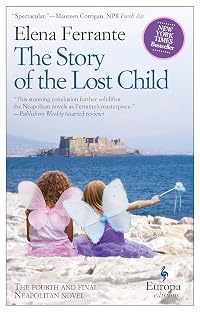
The Story of the Lost Child concludes the dazzling saga of two women—the brilliant, bookish Elena and the fiery, uncontainable Lila—who first met amid the shambles of postwar Italy.In this book, life's great discoveries have been made; its vagaries and losses have been suffered. Through it all, Elena and Lila's friendship remains the gravitational center of their lives. Both women once fought to escape the neighborhood in which they grew up. Elena married, moved to Florence, started a show more family, and published several well-received books. But now, she has returned to Naples to be with the man she has always loved.
Lila, on the other hand, never succeeded in freeing herself from Naples. She has become a successful entrepreneur, but her success draws her into closer proximity with the nepotism, chauvinism, and criminal violence that infect her neighborhood. Yet, somehow, this proximity to a world she has always rejected only brings her role as unacknowledged leader of that world into relief.
. show less
Tags
Recommendations








Member Reviews
Once again, Elena Ferrante brings the intimate friendship of her principle characters, Elena and Lila, to life, though much of what occurs in this final novel in her Neapolitan series is harmful to their friendship. Elena rushes into her relationship with Nino Sarratore, all the the while trying to suppress her suspicion of Lila’s disapproval. Indeed, much of what Elena does and thinks and even writes in her growing career as a novelist and intellectual is shaped and conditioned either by Lila’s explicit critique or by Elena’s imagined version of what Lila might say. And so Elena acts both for and against her childhood friend, desperate to attain some form of autonomy even whilst she foregoes it in her anxiety. Elena has moved show more back to Naples, though not the old neighbourhood, with her two daughters. And it is motherhood that comes to dominate the themes here as first Elena and then Lila herself become pregnant. Their shared condition is emblematic of just how entwined their lives have been throughout whether they were conscious of it or not.
Eventually Elena moves with her now three daughters into the flat above Lila’s in the old neighbourhood. Here the ties with the past are strong. But so too are the ties with elements from the earlier three novels. Ferrante weaves the stories together so tightly that everything in the current novel feels as though it might have been there in the very first one, just hidden around a corner. The lives of Elena and Lila, their lovers and children, and their friends from the old neighbourhood breathe with fire. And once that fire catches you, it is nearly impossible to put the book down.
Ferrante’s Elena narrates the whole of this volume but she is not spared. Even when she is most critical of her friend, the reader sees through her fears to the self-doubt at its root. While not an unreliable narrator, we come to see her view as slanted, as given to jealousy and pettiness as any other, and so she becomes, unsympathetically, even more believable. It is a remarkable balancing act. By the end, I found myself reading ever more slowly, fearing with each page the inevitably loss of this brilliant friendship. Fortunately, I can start again almost immediately, which is surely one of the great blessings of novels as fine as these. Highly recommended. show less
Eventually Elena moves with her now three daughters into the flat above Lila’s in the old neighbourhood. Here the ties with the past are strong. But so too are the ties with elements from the earlier three novels. Ferrante weaves the stories together so tightly that everything in the current novel feels as though it might have been there in the very first one, just hidden around a corner. The lives of Elena and Lila, their lovers and children, and their friends from the old neighbourhood breathe with fire. And once that fire catches you, it is nearly impossible to put the book down.
Ferrante’s Elena narrates the whole of this volume but she is not spared. Even when she is most critical of her friend, the reader sees through her fears to the self-doubt at its root. While not an unreliable narrator, we come to see her view as slanted, as given to jealousy and pettiness as any other, and so she becomes, unsympathetically, even more believable. It is a remarkable balancing act. By the end, I found myself reading ever more slowly, fearing with each page the inevitably loss of this brilliant friendship. Fortunately, I can start again almost immediately, which is surely one of the great blessings of novels as fine as these. Highly recommended. show less
The final volume of the Neapolitan Novels has just the balance of clarity and ambiguity that it deserves. All of the plotlines are "closed", but the central mystery of Lila's place in Elena's life is open forever, as it should be. Her children have given her a mixture of pride and frustration. Her past lovers brought both disappointment and fulfillment. Even the city of Naples, which she's been constantly running from but never entirely leaving, remains as alienating as it is inescapable. She ends the final book with Lila having vanished from her life, trying to write the story of her relationship with her best friend, knowing that it will never truly capture the most essential aspects of that friendship but unable to desist. You knew show more exactly how the story would end from the very beginning of the first volume, but you had to see how Ferrante would get there, and that ability to compel the reader's attention over the subsequent thousands of pages is the mark of a truly great writer. I can nitpick individual parts of the series but overall it's exactly as great as everyone says it is.
This fourth book in particular is many things, but as I was reading I felt that it was primarily about what happens when you're finally dealing with the full effects of your life choices. Your major life decisions are never yours alone, since all of them - marriage, adultery, divorce, having children, choosing a career, etc - affect the people close to you, but life is not just a morality play that ends in a big trial with a guilty/not guilty verdict. Decisions that seem perfectly sound at the time - leaving an unhappy relationship, or leaving a city you're miserable in, or deciding to pursue a demanding career that involves sacrifices - can have all sorts of unintended side effects. But even making the "wrong choice", for example getting involved with a faithless rake like Nino, doesn't necessarily mean that life punishes you; often it just means you have more choices to make. There are many clichés like "life is lived forwards but can only be understood backwards" or "history is just one damn thing after another", but they are perfectly true, and the most skilled novelists are able to show how the ceaseless onslaught of events in our lives obey their own logic, only in hindsight showing the true narrative.
One example of how Ferrante shows how time reveals unexpected consequences is when Elena is accused of being "unreliable" by Pietro's mother Adele, who went from being "on her side" to the opposite after Elena admitted she didn't love Pietro and was going to leave him for Nino:
"I trusted a son to you and you didn't treat him honestly. If you wanted someone else, why did you marry him?"
"I didn't know I wanted someone else."
"You're lying."
I hesitated, I admitted: "I'm lying, yes, but why do you force me to give you a linear explanation; linear explanations are almost always lies. You also spoke badly of Pietro, in fact you supported me against him. Were you lying?"
"No. I was really on your side, but within a pact that you should have respected."
"What pact?"
"Remaining with your husband and children. You were an Airota, your daughters were Airotas. I didn't want you to feel unsatisfied and unhappy, I tried to help you be a good mother and a good wife. But if the pact is broken everything changes. From me and from my husband you'll have nothing anymore, in fact I'll take away everything I've given you."
Adele's reaction to Elena's abandonment of her son is harsh, but it's hard to call it unfair, and Elena should have known that her decision would involve unpleasant realities like that one. Elena never had the kind of instant spark with Pietro that she did with Nino, which, depending on your attitude towards marriage, either means she could have "tried harder" in the marriage, or that she should have refused to marry Pietro in the first place. But she chose a different option. Was Elena wrong to leave Pietro for Nino, and are the difficulties she will now have with her soon-to-be-former in-laws an appropriate punishment for that sin? As Elena says, "linear explanations are almost always lies": it's not like Elena deliberately set out to ruin her own life, or her husband's, or her children's, or her mother-in-law's, it's just that, well, life happens, and sometimes you set out on one path and then figure out later on that it's not what you really want. The exact extent to which you should follow your heart in the moment as opposed to sticking it out through tough times is forever unknowable, and when you start trying to factor in all the reactions of all the people you care about, the more you try to make a "reasonable" decision the more unreasonable the weight you place on yourself is.
That being said, rare is the reader who doesn't think Elena's an idiot for picking Nino. Of course he's going to cheat on her, of course he won't leave his wife for her, of course he'll get his wife pregnant again, and of course all of his grand political speechifying is ultimately bullshit. Should Elena have known this? As a reader, you want to scream: yes, you idiot! But honestly, nobody ever achieves the same clarity towards their own relationships that they do toward someone else's, so all you can do is feel for Elena as she tries to deal with the fallout of her own actions. You also feel for Lila and her perspective: imagine that one of your friends, in fact your best friend, is doing something stupid, in fact the very same stupid thing, that you once did, and in fact with the very same stupid person that you did the stupid thing with, and for much less of a good reason (Pietro over the course of this volume reveals himself to be not such a bad guy, and Elena probably could have worked things out with him if she'd tried). What does being Elena's friend mean in this case? Especially when the last thing Elena wants to hear from her is honesty, such as when she reveals that Nino never left his wife:
"I cut Lila out of everything that followed. I was hurt, not because she had revealed that for more than two years Nino had been telling me lies about the state of his marriage but because she had succeeded in proving to me what in fact she had said from the start: that my choice was mistaken, that I was stupid."
I think everyone, if they're honest with themselves, has a mortal fear of looking stupid, and has allowed that fear to drive them to make questionable decisions, often to even stupider effect. And as expected, Elena feels the weight of disappointment from everyone around her: Lila, her mother, her sister. About the only person whose sympathy and support she has is Franco, her boyfriend prior to Pietro, but she loses him tragically to his own depression. Her own harshest critic is herself, however. One of the most poignant scenes in the book comes when Elena, who's been trying to balance her accelerating career with her newly chaotic home life, experiences a moment of humiliation in front of her daughters:
"The next day I returned to Genoa and said point-blank to Dede and Elsa, in the presence of my in-laws:
'Girls, I have a lot of work at the moment. In a few days I have to leave again and then again and again. Do you want to come with me or stay with your grandparents?'
Even today as I write that question I'm ashamed.
First Dede and then, right afterward, Elsa answered:
'With Grandma and Grandpa. But come back whenever you can and bring us presents.'"
That your own children take such a casual and mercenary attitude towards your presence must be the worst thing a parent can hear, especially if it's deserved. This volume focuses heavily on motherhood and daughterhood, and so that moment is just one of many with a bitter edge, as Elena experiences all the usual anxieties of not wanting her kids to do the same things she did - like cursing or running with a "rough crowd" - even if she did all that and still ended up "okay". The death of Elena's mother, who had consistently hectored and worried over her, is a big deal, and likewise she endlessly fusses over her own daughters, especially Imma, who she had with Nino, comparing her to Lila's daughter Tina, who was also a Nino production. There are strong implications that, had Tina remained in the story, her relationship to Imma might have recapitulated Lila's relationship to Elena, but perhaps that's oversimplifying things. Imma herself raises strong questions in Elena, not just because of her nature, but also what her existence says about Nino:
"In those first hours of our daughter’s life I observed him in every gesture, in the expressions of disappointment and those of approval. I felt happy and yet disoriented. Was it him? Was he the man I had always loved? Or a stranger I was forcing to assume a clear and definite character?"
And that not only bears on questions of to what extent you can measure yourself by your children, but how you measure your relationships overall. Even though Nino ends up being worthless, was the relationship "worth it" because of the child? Elena was looking for something in Nino that she was missing in herself; was her inevitable disappointment truly inevitable? If she had gotten with Nino earlier, could they have had a different life together? Given the way she reconciled with Pietro, was it a mistake to marry him, a mistake to divorce him, both, or neither? More broadly, is there a silver lining to every failed relationship, some gift of understanding or experience they pass along in spite of themselves?
And that goes doubly, triply, infinitely more for the most important relationship of Elena's life, the one she had with Lila. It's very interesting that the reader never actually gets to see any of Lila's writing that Elena considered so meaningful to her, particularly the childhood story "The Blue Fairy", which she credited with inspiring her entire writing career. Perhaps that's Ferrante's way of saying that the actual writing itself wasn't so important, only its effect on Elena; perhaps it's also a way of putting the same kind of distance between the reader and the characters as the distance that emerges between Elena and Lila, since we don't see Elena's writing about Lila that caused the break between them either. Whatever the literary point is, you see that Lila's sense of "dissolving boundaries" becomes literal and she vanishes entirely, having left not even a photograph of herself behind. As Elena writes, "Unlike stories, real life, when it has passed, inclines toward obscurity, not clarity. I thought: now that Lila has let herself be seen so plainly, I must resign myself to not seeing her anymore."
Kudos to Ann Goldstein for the translation, but Ferrante's style would be wonderful in any language, and her focus on the seemingly small lives of her characters is so skillfully done on they seem far larger. A line from the last book that will stick with me is "In the fairy tales one does as one wants, and in reality one does what one can." Like all the best insights, it's as simple to state as it is difficult to understand, because only by experiencing life through all its twists and turns can even the plainest truth become truly known. This was a fantastic end to a fantastic series show less
This fourth book in particular is many things, but as I was reading I felt that it was primarily about what happens when you're finally dealing with the full effects of your life choices. Your major life decisions are never yours alone, since all of them - marriage, adultery, divorce, having children, choosing a career, etc - affect the people close to you, but life is not just a morality play that ends in a big trial with a guilty/not guilty verdict. Decisions that seem perfectly sound at the time - leaving an unhappy relationship, or leaving a city you're miserable in, or deciding to pursue a demanding career that involves sacrifices - can have all sorts of unintended side effects. But even making the "wrong choice", for example getting involved with a faithless rake like Nino, doesn't necessarily mean that life punishes you; often it just means you have more choices to make. There are many clichés like "life is lived forwards but can only be understood backwards" or "history is just one damn thing after another", but they are perfectly true, and the most skilled novelists are able to show how the ceaseless onslaught of events in our lives obey their own logic, only in hindsight showing the true narrative.
One example of how Ferrante shows how time reveals unexpected consequences is when Elena is accused of being "unreliable" by Pietro's mother Adele, who went from being "on her side" to the opposite after Elena admitted she didn't love Pietro and was going to leave him for Nino:
"I trusted a son to you and you didn't treat him honestly. If you wanted someone else, why did you marry him?"
"I didn't know I wanted someone else."
"You're lying."
I hesitated, I admitted: "I'm lying, yes, but why do you force me to give you a linear explanation; linear explanations are almost always lies. You also spoke badly of Pietro, in fact you supported me against him. Were you lying?"
"No. I was really on your side, but within a pact that you should have respected."
"What pact?"
"Remaining with your husband and children. You were an Airota, your daughters were Airotas. I didn't want you to feel unsatisfied and unhappy, I tried to help you be a good mother and a good wife. But if the pact is broken everything changes. From me and from my husband you'll have nothing anymore, in fact I'll take away everything I've given you."
Adele's reaction to Elena's abandonment of her son is harsh, but it's hard to call it unfair, and Elena should have known that her decision would involve unpleasant realities like that one. Elena never had the kind of instant spark with Pietro that she did with Nino, which, depending on your attitude towards marriage, either means she could have "tried harder" in the marriage, or that she should have refused to marry Pietro in the first place. But she chose a different option. Was Elena wrong to leave Pietro for Nino, and are the difficulties she will now have with her soon-to-be-former in-laws an appropriate punishment for that sin? As Elena says, "linear explanations are almost always lies": it's not like Elena deliberately set out to ruin her own life, or her husband's, or her children's, or her mother-in-law's, it's just that, well, life happens, and sometimes you set out on one path and then figure out later on that it's not what you really want. The exact extent to which you should follow your heart in the moment as opposed to sticking it out through tough times is forever unknowable, and when you start trying to factor in all the reactions of all the people you care about, the more you try to make a "reasonable" decision the more unreasonable the weight you place on yourself is.
That being said, rare is the reader who doesn't think Elena's an idiot for picking Nino. Of course he's going to cheat on her, of course he won't leave his wife for her, of course he'll get his wife pregnant again, and of course all of his grand political speechifying is ultimately bullshit. Should Elena have known this? As a reader, you want to scream: yes, you idiot! But honestly, nobody ever achieves the same clarity towards their own relationships that they do toward someone else's, so all you can do is feel for Elena as she tries to deal with the fallout of her own actions. You also feel for Lila and her perspective: imagine that one of your friends, in fact your best friend, is doing something stupid, in fact the very same stupid thing, that you once did, and in fact with the very same stupid person that you did the stupid thing with, and for much less of a good reason (Pietro over the course of this volume reveals himself to be not such a bad guy, and Elena probably could have worked things out with him if she'd tried). What does being Elena's friend mean in this case? Especially when the last thing Elena wants to hear from her is honesty, such as when she reveals that Nino never left his wife:
"I cut Lila out of everything that followed. I was hurt, not because she had revealed that for more than two years Nino had been telling me lies about the state of his marriage but because she had succeeded in proving to me what in fact she had said from the start: that my choice was mistaken, that I was stupid."
I think everyone, if they're honest with themselves, has a mortal fear of looking stupid, and has allowed that fear to drive them to make questionable decisions, often to even stupider effect. And as expected, Elena feels the weight of disappointment from everyone around her: Lila, her mother, her sister. About the only person whose sympathy and support she has is Franco, her boyfriend prior to Pietro, but she loses him tragically to his own depression. Her own harshest critic is herself, however. One of the most poignant scenes in the book comes when Elena, who's been trying to balance her accelerating career with her newly chaotic home life, experiences a moment of humiliation in front of her daughters:
"The next day I returned to Genoa and said point-blank to Dede and Elsa, in the presence of my in-laws:
'Girls, I have a lot of work at the moment. In a few days I have to leave again and then again and again. Do you want to come with me or stay with your grandparents?'
Even today as I write that question I'm ashamed.
First Dede and then, right afterward, Elsa answered:
'With Grandma and Grandpa. But come back whenever you can and bring us presents.'"
That your own children take such a casual and mercenary attitude towards your presence must be the worst thing a parent can hear, especially if it's deserved. This volume focuses heavily on motherhood and daughterhood, and so that moment is just one of many with a bitter edge, as Elena experiences all the usual anxieties of not wanting her kids to do the same things she did - like cursing or running with a "rough crowd" - even if she did all that and still ended up "okay". The death of Elena's mother, who had consistently hectored and worried over her, is a big deal, and likewise she endlessly fusses over her own daughters, especially Imma, who she had with Nino, comparing her to Lila's daughter Tina, who was also a Nino production. There are strong implications that, had Tina remained in the story, her relationship to Imma might have recapitulated Lila's relationship to Elena, but perhaps that's oversimplifying things. Imma herself raises strong questions in Elena, not just because of her nature, but also what her existence says about Nino:
"In those first hours of our daughter’s life I observed him in every gesture, in the expressions of disappointment and those of approval. I felt happy and yet disoriented. Was it him? Was he the man I had always loved? Or a stranger I was forcing to assume a clear and definite character?"
And that not only bears on questions of to what extent you can measure yourself by your children, but how you measure your relationships overall. Even though Nino ends up being worthless, was the relationship "worth it" because of the child? Elena was looking for something in Nino that she was missing in herself; was her inevitable disappointment truly inevitable? If she had gotten with Nino earlier, could they have had a different life together? Given the way she reconciled with Pietro, was it a mistake to marry him, a mistake to divorce him, both, or neither? More broadly, is there a silver lining to every failed relationship, some gift of understanding or experience they pass along in spite of themselves?
And that goes doubly, triply, infinitely more for the most important relationship of Elena's life, the one she had with Lila. It's very interesting that the reader never actually gets to see any of Lila's writing that Elena considered so meaningful to her, particularly the childhood story "The Blue Fairy", which she credited with inspiring her entire writing career. Perhaps that's Ferrante's way of saying that the actual writing itself wasn't so important, only its effect on Elena; perhaps it's also a way of putting the same kind of distance between the reader and the characters as the distance that emerges between Elena and Lila, since we don't see Elena's writing about Lila that caused the break between them either. Whatever the literary point is, you see that Lila's sense of "dissolving boundaries" becomes literal and she vanishes entirely, having left not even a photograph of herself behind. As Elena writes, "Unlike stories, real life, when it has passed, inclines toward obscurity, not clarity. I thought: now that Lila has let herself be seen so plainly, I must resign myself to not seeing her anymore."
Kudos to Ann Goldstein for the translation, but Ferrante's style would be wonderful in any language, and her focus on the seemingly small lives of her characters is so skillfully done on they seem far larger. A line from the last book that will stick with me is "In the fairy tales one does as one wants, and in reality one does what one can." Like all the best insights, it's as simple to state as it is difficult to understand, because only by experiencing life through all its twists and turns can even the plainest truth become truly known. This was a fantastic end to a fantastic series show less
Lila und Lenu, die Ich-Erzählerin, sind nun beide in den Dreißigern und treffen sich im Rione wieder, dem Ort ihrer Kindheit. Lila hat sich gemeinsam mit Enzo, einem Freund ihrer Kindheitstage, ein erfolgreiches Unternehmen aufgebaut, während Lenu nach ihrem Studium eine erfolgreiche Autorin wurde. Für ihre große Jugendliebe Nino hat sie ihren Mann verlassen und ist gemeinsam mit ihren beiden Töchtern zurück nach Neapel gezogen. Noch immer verbindet die beiden Frauen ihre Freundschaft aus Kindertagen und als sie zeitgleich schwanger sind, kommen sie sich fast so nahe wie früher. Doch das Leben Beider erfährt jeweils eine dramatische Wendung, die Alles verändert.
So, wie sich die beiden Protagonistinnen im Laufe der Zeit show more verändern, wandelt sich auch der Stil des Buches. Während in den vorhergehenden Bänden das 'Außenleben' eine wichtige Rolle spielte, sind es nunmehr die Reflexionen der Ich-Erzählerin über sich selbst und ihre Freundin Lila, die überdies zunehmend komplexer werden. Obwohl Lenu mittlerweile gebildet und erfolgreich ist und Lila gerade einmal die fünfte Klasse Grundschule abgeschlossen hat, verspürt Lenu noch immer Minderwertigkeitskomplexe gegenüber ihrer Freundin. Doch man spürt auch, welchen Einfluss der Rione, ihre neue alte Heimat, auf sie hat. Noch immer ist es ein Ort der Gewalt und der Unterdrückung, obendrein ist mit dem Drogenhandel ein neues Geschäftsfeld aufgetaucht. Die gebildete, erfolgreiche Autorin realisiert, dass ihr diese Welt fremd geworden, während ihre Freundin, die den Rione nie verlassen hat, noch immer ein Teil davon ist. Zunehmend fühlt sich Lenu von Lila manipuliert und benutzt, damit diese ihre eigenen Interessen durchsetzt.
Beim Lesen war ich immer wieder auf's Neue hin- und hergerissen: Ist Lila tatsächlich so ein Biest, wie Lenu sie gelegentlich beschreibt? Oder ist sie nicht vielmehr eine Art Lichtgestalt, einer der wenigen Menschen, die ihre Werte und Überzeugungen auch dann vertreten, wenn sie ihnen zum Nachteil gereichen? Jemand, die sich der Konsequenz ihrer (eventuellen) Handlungen bewusst ist und entsprechend verstandesmäßig entscheidet? Ihren Verstand stets über ihre Gefühle stellt? Und Lenu nur aufgrund ihrer Komplexe Lila alles Mögliche unterstellt? Ich bin mir sicher, diese vier Bände werden künftigen GermanistikstudentInnen eine Menge Material für Interpretationen und Erörterungen bieten ;-)
Ich habe die Figuren dieser Neapel-Saga während des Lesens der vier Bände lieb gewonnen und hatte das Gefühl, mich tatsächlich im Rione ein bisschen auszukennen. Vielleicht sollte ich nun, nachdem ich von dort nichts mehr zu Lesen bekomme, mal selber nach Neapel fahren ;-) show less
So, wie sich die beiden Protagonistinnen im Laufe der Zeit show more verändern, wandelt sich auch der Stil des Buches. Während in den vorhergehenden Bänden das 'Außenleben' eine wichtige Rolle spielte, sind es nunmehr die Reflexionen der Ich-Erzählerin über sich selbst und ihre Freundin Lila, die überdies zunehmend komplexer werden. Obwohl Lenu mittlerweile gebildet und erfolgreich ist und Lila gerade einmal die fünfte Klasse Grundschule abgeschlossen hat, verspürt Lenu noch immer Minderwertigkeitskomplexe gegenüber ihrer Freundin. Doch man spürt auch, welchen Einfluss der Rione, ihre neue alte Heimat, auf sie hat. Noch immer ist es ein Ort der Gewalt und der Unterdrückung, obendrein ist mit dem Drogenhandel ein neues Geschäftsfeld aufgetaucht. Die gebildete, erfolgreiche Autorin realisiert, dass ihr diese Welt fremd geworden, während ihre Freundin, die den Rione nie verlassen hat, noch immer ein Teil davon ist. Zunehmend fühlt sich Lenu von Lila manipuliert und benutzt, damit diese ihre eigenen Interessen durchsetzt.
Beim Lesen war ich immer wieder auf's Neue hin- und hergerissen: Ist Lila tatsächlich so ein Biest, wie Lenu sie gelegentlich beschreibt? Oder ist sie nicht vielmehr eine Art Lichtgestalt, einer der wenigen Menschen, die ihre Werte und Überzeugungen auch dann vertreten, wenn sie ihnen zum Nachteil gereichen? Jemand, die sich der Konsequenz ihrer (eventuellen) Handlungen bewusst ist und entsprechend verstandesmäßig entscheidet? Ihren Verstand stets über ihre Gefühle stellt? Und Lenu nur aufgrund ihrer Komplexe Lila alles Mögliche unterstellt? Ich bin mir sicher, diese vier Bände werden künftigen GermanistikstudentInnen eine Menge Material für Interpretationen und Erörterungen bieten ;-)
Ich habe die Figuren dieser Neapel-Saga während des Lesens der vier Bände lieb gewonnen und hatte das Gefühl, mich tatsächlich im Rione ein bisschen auszukennen. Vielleicht sollte ich nun, nachdem ich von dort nichts mehr zu Lesen bekomme, mal selber nach Neapel fahren ;-) show less
And so I have reached the end of the saga of this passionate and uncomfortable friendship. Investing so much time and effort in a story means that one is, at the very least, interested. Oddly what hooked me most was Lenu's slow maturing, painful and maddening throughout: from her mother, from teachers, from Naples, from "being invented" by various men, from a need to please and do everything right, and most importantly, from her conviction that without Lila and their friendship she would have been no one at all. As with many books that one has had an ambivalent relationship to while reading (but never considered quitting), now that I am at the end, I am glad. While this final book has elements of heightened melodrama more than all the show more others--including the lost child of the title-- it is also, oddly, the one in which Lenu finally begins to pull away from all her dependencies and to rely, at last, on herself. I don't think it was just relief on my part to be almost done that I found the last 1/3 of this volume illuminating and convincing about the intertwining of Lila and Lenu--Lenu maybe getting it that Lila has depended on her as much as she has on Lila--and that both of them, I don't think this is spoiling, have "used" one another and benefited from one another as well as, yes, doing harm too. Lenu doubts her own worth in the face of Lila's abilities, and I do understand that. Lilas are rare, but they exist and they are catalysts, mysterious and potent, living muses, you could say. ****1/2 show less
Elena Ferrante in the Neapolitan Quartet, often dubbed as her magnus opus, has captured life and this books marks the end of the saga. That’s it. In four volumes, in our journey with Lila and Lenú from childhood to their old age, we experience a very natural flow of life of human beings and of Naples - which is more that a city, it is a central character.
At the end of the book I was simply left thinking about my life choices, my motivation. Elena Ferrante does two things beautifully - foreshadowing, personal reflections. She somehow brings everything into a neat conclusion while still leaving most things open-ended.
The evolution of Elena and Lila’s friendship comes full circle here. Throughout all four novels, we see Lila through show more Lenú’s eyes - a mysterious enigma who is at times a rival, a model, a ghost, and the person she loves the most. But in the end, Ferrante lets us glimpse how Lila saw Elena. And that cracked everything open. Lila, who detached from everything, be it people, be it dreams and ideas, made an exception for Elena. It wasn’t one-sided. The obsession, the flame, was real, and it was mutual. And Lila was the one who lit it and they both kept it alive.
The question of authorship runs deep here. Elena is plagued by feelings of inadequacy and imposter syndrome - she thinks she’s a thief. She doubts her own voice, calls herself derivative, constantly measures herself against Lila, and also, Nino. But Elena is unreliable, especially about herself. Her imposter syndrome is loud, but her work speaks for itself. She is the writer.
Another prominent facet is the depiction of rage in two ways. Elena intellectualizes hers. Lila unleashes it. But, neither of them wins. Or maybe both of them do. There’s no way to know, it’s really two women surviving in different keys. Or maybe not surviving. We don't know.
It doesn’t offer closure because life doesn’t. We tell ourselves stories to survive, but they’re never the full truth. All we really have is our interpretation of events and a thoroughly unreliable memory. And that’s what Elena Ferrante leaves us with. show less
At the end of the book I was simply left thinking about my life choices, my motivation. Elena Ferrante does two things beautifully - foreshadowing, personal reflections. She somehow brings everything into a neat conclusion while still leaving most things open-ended.
The evolution of Elena and Lila’s friendship comes full circle here. Throughout all four novels, we see Lila through show more Lenú’s eyes - a mysterious enigma who is at times a rival, a model, a ghost, and the person she loves the most. But in the end, Ferrante lets us glimpse how Lila saw Elena. And that cracked everything open. Lila, who detached from everything, be it people, be it dreams and ideas, made an exception for Elena. It wasn’t one-sided. The obsession, the flame, was real, and it was mutual. And Lila was the one who lit it and they both kept it alive.
The question of authorship runs deep here. Elena is plagued by feelings of inadequacy and imposter syndrome - she thinks she’s a thief. She doubts her own voice, calls herself derivative, constantly measures herself against Lila, and also, Nino. But Elena is unreliable, especially about herself. Her imposter syndrome is loud, but her work speaks for itself. She is the writer.
Another prominent facet is the depiction of rage in two ways. Elena intellectualizes hers. Lila unleashes it. But, neither of them wins. Or maybe both of them do. There’s no way to know, it’s really two women surviving in different keys. Or maybe not surviving. We don't know.
It doesn’t offer closure because life doesn’t. We tell ourselves stories to survive, but they’re never the full truth. All we really have is our interpretation of events and a thoroughly unreliable memory. And that’s what Elena Ferrante leaves us with. show less
The Story of the Lost Child is the fourth and final of Elena Ferrante’s Neapolitan Novels. It circles back to the first volume in at least two regards: it finally catches up with the frame narrative that started off My Brilliant Friend and in it both Raffaella / Lila and Elena / Lena return not only to Naples but to the neighbourhood where they spent their childhood and adolescence.
While the previous novels each spanned several years, this final one spans decades, roughly from the eighties into the 21st century, this incorporating both middle and old age of its protagonists. This shows how close Ferrante’s narrative nestles up against experience, and I mean not only in its content but in the specific way it is told – here, it show more mirrors the way time passes at varying speeds during different ages; a year is a very long time for a child who has not lived through many, but it passes almost without being noticed for someone who has experienced a considerable amount of them. I think everyone has noticed how time passes faster as we grow older, and Ferrante lets her series of novels reflect that structurally by giving her protagonists’ early years more room than their later ones. I am trying to avoid spoilers here, as this novel still is fairly recent and it continues to deploy a soap-operatic narrative strategy to keep the reader hooked, so I won’t be giving away any details of what is happening in The Story of the Lost Child (not that I am big on plot summaries in any case), and confine myself to saying that the feminist / political element is receding almost completely into the background (almost, but not quite – and the reader should be so sensitized by the previous novels to sense its presence even when the narrative does not shine a spotlight on it) in favour of the private circumstances of and relations between Lila and Lena.
That relationship has been at the core of the novels throughout, of course, and not the least impressive thing to admire about the Neapolitan Novels is how it has been changing constantly. Weirdly, that is something where soap opera and psychological realism meet – the first because it needs to keep the story going and thus can’t allow anything to remain static: basically, soap operas are in constant flux, there are continuous reveals of supposedly hidden sides to a character’s personality which in turn determine their various relationships. While that kind of layer cake psychology (as I like to call it) is not exactly realistic, it might end up looking very much like realism once you follow a relationship over decades as it happens in Ferrante’s novels, a period during which extreme changes in any kind of relationship are realistically almost inevitable. The difference between the two is of course that psychological realism is bound to stay within the bounds of plausibility while a soap opera emphatically is not limited by that – but this difference certainly is gradual rather than absolute, and it may be argued that in the final analysis plausibility is just another literary trope. From whichever perspective you view it, the friendship between LIla and Lena never ceases to fascinate, the way their lives revolves around each other, both drawn to and repelled by each other like twin stars, the way each mirrors the other’s hopes and desires, one always seeming to have attained what the other is lacking, and finally the way the course of this friendship traces the developments in Italian from the 1950s into the 21st century.
Like the previous volumes, The Story of the Lost Child pays close attention to language – the way it is used to not only mark geographical but also class distinctions, and how command of language, knowing how to write or talk well, can give some degree of power which is not bound to social status or financial wealth (although attaining that command will of course be greatly facilitated if one’s family is influential or wealthy). A power which can also be used to hurt – something that paradoxically not the writer Lena but Lila appears to be more aware of, maybe because, as the narrator keeps reminding us, the Neapolitan dialect Lila is speaking is inherently aggressive. So Lila attempts to erase herself out of existence like a failed novel while Lena finally finishes the memoirs of her friendship which she started at the beginning of A Brilliant Friend and publishes them, knowing this will hurt her friend’s feeling even as it might revive her failing career as an author, and so the book comes full circle in yet another regard, as that book is possibly the one we have been reading, this causing the series to metafictionally turn back upon itself. Or does it? The book Lena publishes is a referred to as a slim volume, and slim is something the Neapolitan Novels certainly are not. The circle does not quite close, there is a gap left, and in a way it is that gap which all four novels (all but the first of which are designated as “Storia” in their original Italian titles, by the way) has been revolving al the time, spinning its tale of friendship and power, of love and violence in that small but unclosable space between reality and fiction. show less
While the previous novels each spanned several years, this final one spans decades, roughly from the eighties into the 21st century, this incorporating both middle and old age of its protagonists. This shows how close Ferrante’s narrative nestles up against experience, and I mean not only in its content but in the specific way it is told – here, it show more mirrors the way time passes at varying speeds during different ages; a year is a very long time for a child who has not lived through many, but it passes almost without being noticed for someone who has experienced a considerable amount of them. I think everyone has noticed how time passes faster as we grow older, and Ferrante lets her series of novels reflect that structurally by giving her protagonists’ early years more room than their later ones. I am trying to avoid spoilers here, as this novel still is fairly recent and it continues to deploy a soap-operatic narrative strategy to keep the reader hooked, so I won’t be giving away any details of what is happening in The Story of the Lost Child (not that I am big on plot summaries in any case), and confine myself to saying that the feminist / political element is receding almost completely into the background (almost, but not quite – and the reader should be so sensitized by the previous novels to sense its presence even when the narrative does not shine a spotlight on it) in favour of the private circumstances of and relations between Lila and Lena.
That relationship has been at the core of the novels throughout, of course, and not the least impressive thing to admire about the Neapolitan Novels is how it has been changing constantly. Weirdly, that is something where soap opera and psychological realism meet – the first because it needs to keep the story going and thus can’t allow anything to remain static: basically, soap operas are in constant flux, there are continuous reveals of supposedly hidden sides to a character’s personality which in turn determine their various relationships. While that kind of layer cake psychology (as I like to call it) is not exactly realistic, it might end up looking very much like realism once you follow a relationship over decades as it happens in Ferrante’s novels, a period during which extreme changes in any kind of relationship are realistically almost inevitable. The difference between the two is of course that psychological realism is bound to stay within the bounds of plausibility while a soap opera emphatically is not limited by that – but this difference certainly is gradual rather than absolute, and it may be argued that in the final analysis plausibility is just another literary trope. From whichever perspective you view it, the friendship between LIla and Lena never ceases to fascinate, the way their lives revolves around each other, both drawn to and repelled by each other like twin stars, the way each mirrors the other’s hopes and desires, one always seeming to have attained what the other is lacking, and finally the way the course of this friendship traces the developments in Italian from the 1950s into the 21st century.
Like the previous volumes, The Story of the Lost Child pays close attention to language – the way it is used to not only mark geographical but also class distinctions, and how command of language, knowing how to write or talk well, can give some degree of power which is not bound to social status or financial wealth (although attaining that command will of course be greatly facilitated if one’s family is influential or wealthy). A power which can also be used to hurt – something that paradoxically not the writer Lena but Lila appears to be more aware of, maybe because, as the narrator keeps reminding us, the Neapolitan dialect Lila is speaking is inherently aggressive. So Lila attempts to erase herself out of existence like a failed novel while Lena finally finishes the memoirs of her friendship which she started at the beginning of A Brilliant Friend and publishes them, knowing this will hurt her friend’s feeling even as it might revive her failing career as an author, and so the book comes full circle in yet another regard, as that book is possibly the one we have been reading, this causing the series to metafictionally turn back upon itself. Or does it? The book Lena publishes is a referred to as a slim volume, and slim is something the Neapolitan Novels certainly are not. The circle does not quite close, there is a gap left, and in a way it is that gap which all four novels (all but the first of which are designated as “Storia” in their original Italian titles, by the way) has been revolving al the time, spinning its tale of friendship and power, of love and violence in that small but unclosable space between reality and fiction. show less
Elena Ferrante’s Neapolitan Novels explore, in great depth, the lifelong friendship between Elena Greco and Lila Cerullo. The women are two sides of the same coin, and although their lives take them in very different directions and the depth of their friendship waxes and wanes, the magnetic bond between the brings them together time and time again.
In this fourth and final novel, the women mature from their mid-30s into their 50s. Elena has followed the path she set for herself in the first novel and become a successful writer. She also challenges traditional views of motherhood, striving to have a career while raising her children. As always, Lila’s life has been subject to many more twists and turns. Despite her impoverished show more upbringing and lack of education, she is now a successful businesswoman and has found a supportive partner. She does not hesitate to share her candid opinions with Elena, even (and especially) when they touch on aspects of Elena’s life. Whether she does this out of love or rivalry is left to the reader to decide.
While reading The Story of the Lost Child, I found myself focusing on Ferrante’s literary techniques; the plot carried me along but I was alert to the way the story was being told. For example, the Neapolitan Novels are narrated by Elena, who has proven to be somewhat unreliable. She constantly questions herself, fails to spot signs of trouble or distress in others, and often grossly misinterprets the behavior of those around her. Her narrative is more focused on telling Lila’s story than on making herself look good; Elena’s selfish acts are presented in a matter-of-fact way as if she cannot see the potential consequences of her behavior.
Ferrante also repeatedly shows the good and bad sides of Lila and Elena and the ways that “good” events can have “bad” consequences, and vice versa. Sometimes she revisits a situation from a different vantage point in order to shed new light on it; for example, the “lost child” of the title, a very emotional moment in the novel, became even more so when seen from a different angle. The ending also brought surprises, making me want to re-read the series from the beginning for new details and insights. I love it when that happens and just might do so someday. show less
In this fourth and final novel, the women mature from their mid-30s into their 50s. Elena has followed the path she set for herself in the first novel and become a successful writer. She also challenges traditional views of motherhood, striving to have a career while raising her children. As always, Lila’s life has been subject to many more twists and turns. Despite her impoverished show more upbringing and lack of education, she is now a successful businesswoman and has found a supportive partner. She does not hesitate to share her candid opinions with Elena, even (and especially) when they touch on aspects of Elena’s life. Whether she does this out of love or rivalry is left to the reader to decide.
While reading The Story of the Lost Child, I found myself focusing on Ferrante’s literary techniques; the plot carried me along but I was alert to the way the story was being told. For example, the Neapolitan Novels are narrated by Elena, who has proven to be somewhat unreliable. She constantly questions herself, fails to spot signs of trouble or distress in others, and often grossly misinterprets the behavior of those around her. Her narrative is more focused on telling Lila’s story than on making herself look good; Elena’s selfish acts are presented in a matter-of-fact way as if she cannot see the potential consequences of her behavior.
Ferrante also repeatedly shows the good and bad sides of Lila and Elena and the ways that “good” events can have “bad” consequences, and vice versa. Sometimes she revisits a situation from a different vantage point in order to shed new light on it; for example, the “lost child” of the title, a very emotional moment in the novel, became even more so when seen from a different angle. The ending also brought surprises, making me want to re-read the series from the beginning for new details and insights. I love it when that happens and just might do so someday. show less
Members
- Recently Added By
Published Reviews
ThingScore 90
Ferrante evokes this unforgiving and opaque culture with great power. Its malevolence affects almost everyone.
added by ScattershotSteph
Ferrante’s accomplishment in these novels is to extract an enduring masterpiece from dissolving margins, from the commingling of self and other, creator and created, new and old, real and whatever the opposite of real may be.
added by ScattershotSteph
[Ferrante] has charted, as precisely as possible, the shifts in one person’s feelings and perceptions about another over time, and in so doing has made a life’s inferno recede even as she captures its roar.
added by ScattershotSteph
Lists

1001 Books You Must Read Before You Die
1,448 works; 1,136 members

Books Set in Italy
167 works; 19 members

Top Five Books of 2018
802 works; 265 members

Italian Literature
558 works; 43 members

Top Five Books of 2016
795 works; 228 members

The Economist Best Fiction 2015
7 works; 1 member

Books Read in 2017
4,249 works; 129 members

Finished in 2020
12 works; 2 members

Books Read in 2016
4,666 works; 199 members

Books Read in 2019
4,052 works; 110 members

NYT 100 best books of 21st C
100 works; 31 members

2024
34 works; 1 member

Mustich's 1000 Books to Read Before You Die: A Life Changing List
1,001 works; 20 members
Kirkus Starred Fiction Reviews of Books Published in 2015
310 works; 6 members

Mothers and Daughters
114 works; 10 members

Books Read in 2021
5,361 works; 114 members

My TBR
371 works; 3 members

Books Read in 2018
4,360 works; 110 members

Kirkus Reviews Best Fiction of 2015
98 works; 6 members

Bibliography of How the Old World Ended by Jonathan Scott
308 works; 1 member
Author Information
47+ Works 28,127 Members
Elena Ferrante was born in Naples, Italy. Her work includes Those Who Leave and Those Who Stay, The Story of the Lost Child, The Story of a New Name, The Lost Daughter, Fragments, and My Brilliant Friend. She is the author of My Brilliant Friend which made The New York Times Bestsellers List and The New Zealand Best Seller List 2015. She was show more included on Time magazine's annual list of the 100 most influential people in the world. (Bowker Author Biography) show less
Some Editions
Awards and Honors
Series

Belongs to Publisher Series
Work Relationships
Is contained in
Common Knowledge
- Canonical title
- The Story of the Lost Child
- Original title
- Storia della bambina perduta
- Alternate titles*
- L'amie prodigieuse. Tome 4 : L'enfant perdue
- Original publication date
- 2015
- People/Characters
- Raffaella Cerullo (Lila); Elena Greco (Lenuccia); Rino Cerullo; Elisa Greco; Stefano Carracci; Pinuccia Carracci (show all 18); Alfonso Carracci; Pasquale Peluso; Carmela (Carmen | Carmen); Ada Cappuccio; Antonio Cappuccio; Nino Sarratore; Marisa Sarratore; Enzo Scanno; Marcello Solara; Michele Solara; Gigliola Spagnuolo; Pietro Airota
- Important places
- Naples, Campania, Italy
- Epigraph*
- /
- Dedication*
- /
- First words
- From October 1976 until 1979, when I returned to Naples to live, I avoided resuming a steady relationship with Lila.
- Quotations
- There is this presumption, in those who feel destined for art and above all literature: we act as if we had received an investiture, but in fact no one has ever invested us with anything, it is we who have authorized ourselve... (show all)s to be authors and yet we are resentful if others say: This little thing you did doesn't interest me, in fact it bores me, who gave you the right.
- Last words
- (Click to show. Warning: May contain spoilers.)Contrairement aux récits, la vraie vie, une fois passée, tend non pas vers la clarté mais vers l'obscurité. Je me suis dit : Maintenant que Lila s'est montrée aussi nettement, il faut que je me résigne à ne plus la voir.
(Click to show. Warning: May contain spoilers.)I thought: now that Lila has let herself be seen so plainly, I must resign myself to not seeing her anymore. - Blurbers
- Deraniyagala, Sonali; Gilmore, Jennifer; Flanagan, Richard; Archer, Jeffrey; Malla, Pasha
- Original language
- Italian
- Canonical DDC/MDS
- 853.92
- Canonical LCC
- PQ4866.E6345
*Some information comes from Common Knowledge in other languages. Click "Edit" for more information.
Classifications
- Genres
- General Fiction, Fiction and Literature
- DDC/MDS
- 853.92 — Literature & rhetoric Italian, Romanian & related literatures Italian fiction 1900- 21st Century
- LCC
- PQ4866 .E6345 — Language and Literature French, Italian, Spanish and Portuguese literatures Italian literature Individual authors, 1961-2000
- BISAC
Statistics
- Members
- 3,432
- Popularity
- 4,904
- Reviews
- 133
- Rating
- (4.28)
- Languages
- 24 — Arabic, Catalan, Chinese, Czech, Danish, Dutch, English, Estonian, Finnish, French, German, Greek, Hungarian, Italian, Lithuanian, Polish, Portuguese, Romanian, Russian, Croatian, Slovenian, Spanish, Swedish, Ukrainian
- Media
- Paper, Audiobook, Ebook
- ISBNs
- 98
- UPCs
- 1
- ASINs
- 24
