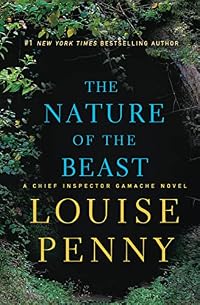
On This Page
Description
Hardly a day goes by when nine year old Laurent Lepage doesn't cry wolf. From alien invasions, to walking trees, to winged beasts in the woods, to dinosaurs spotted in the village of Three Pines, his tales are so extraordinary no one can possibly believe him. Including Armand and Reine-Marie Gamache, who now live in the little Quebec village. But when the boy disappears, the villagers are faced with the possibility that one of his tall tales might have been true. And so begins a frantic show more search for the boy and the truth. What they uncover deep in the forest sets off a sequence of events that leads to murder, leads to an old crime, leads to an old betrayal. Leads right to the door of an old poet. And now it is now, writes Ruth Zardo. And the dark thing is here. A monster once visited Three Pines. And put down deep roots. And now, Ruth knows, it is back. Armand Gamache, the former head of homicide for the Sûreté du Québec, must face the possibility that, in not believing the boy, he himself played a terrible part in what happens next. show lessTags
Recommendations




















Member Reviews
Summary: A young boy from Three Pines, prone to fantastic tales, reports seeing a big gun with a strange symbol, and then is found dead, setting off a search for a murderer, and an effort to thwart a global threat.
I never knew about Louise Penny until a year ago. One of the benefits of hosting an online book page is you learn of interesting authors you've not heard of. I've always loved classic crime fiction, and a great detective. I've been converted. Louise Penny's works, and her Chief Inspector Armand Gamache belong with this group.
I made a mistake and bought number eleven in the series, thinking it was the first. At this point, Gamache and his wife Reine-Marie are retired in the idyllic village of Three Pines in eastern Quebec, a show more place seemingly forgotten by GPS systems. A local theatre group is rehearsing a play by an unnamed author, She Sat Down and Wept. Gamache and a number of friends, including his successor Isabel Lacoste and his son-in-law Jean Guy are relaxing in a local bistro when Laurent LePage, a nine year old boy prone to telling tall tales bursts in with another one of a huge gun in the forest with a picture of a scary woman being drawn by seven horses on it. No one believes him and Gamache drives him home to his parents, Al and Evie, aging hippies (he, a supposed draft dodger) with a farm on the edge of town.
The next day, Laurent goes missing, and is found dead off the side of the road, apparently having lost control of his bicycle, falling and striking his head on a rock--or so it seems to all but Gamache. Something is not right about the position of the body, but no one buys it. Then Gamache realizes something else--Laurent's favorite stick (his "gun") is nowhere to be found. A search in the woods for the "gun" leads to a much bigger gun, hidden in camouflage for years. On it, an engraving of the whore of Babylon, being drawn by seven furious steeds. At it's base, Laurent's favorite stick. Laurent was telling the truth, which he paid for with his life. And no one, not even Gamache had believed him. Actually someone did, the murderer.
The story gets more complicated as an elderly physicist and two intelligence agents ("file clerks") who all had been investigating this weapon for years, descend on the quiet village and join in a quest to unravel the tale of its makers, seeking to find the plans for this weapon, which, in the wrong hands, could bring untold devastation and global conflict.
Meanwhile, it turns out that the author of the play is a wicked, sadistic serial murderer, John Fleming, with whom Gamache has a secret, and haunting connection that has been brought back to life. That is not his only connection to Three Pines. A batty old poet and kindly old grocer also carry haunting memories of this man.
Penny does so many things so well in this book. The setting is one I've seen a number of people say they would love to live in. The characters have depth, especially Gamache, but also Reine-Marie, Jean-Beauvoir, Lacoste, and even Ruth Zardo, the batty old poet. Gamache at this stage is deeply conflicted, wounded and weary from his efforts to cleanse the Sureté, yet ambivalent about really calling Three Pines and retired life the only life he will know. The unsolved murder of the boy he did not believe awakens all of this. Combine all this with superb writing and an ever-more suspenseful plot and you have all the ingredients of great crime fiction.
As I write, there are fifteen books in this series with a sixteenth due in September 2020. Temptation, thy name is Gamache! I suspect this won't be the last review of a Louise Penny work you see here. show less
I never knew about Louise Penny until a year ago. One of the benefits of hosting an online book page is you learn of interesting authors you've not heard of. I've always loved classic crime fiction, and a great detective. I've been converted. Louise Penny's works, and her Chief Inspector Armand Gamache belong with this group.
I made a mistake and bought number eleven in the series, thinking it was the first. At this point, Gamache and his wife Reine-Marie are retired in the idyllic village of Three Pines in eastern Quebec, a show more place seemingly forgotten by GPS systems. A local theatre group is rehearsing a play by an unnamed author, She Sat Down and Wept. Gamache and a number of friends, including his successor Isabel Lacoste and his son-in-law Jean Guy are relaxing in a local bistro when Laurent LePage, a nine year old boy prone to telling tall tales bursts in with another one of a huge gun in the forest with a picture of a scary woman being drawn by seven horses on it. No one believes him and Gamache drives him home to his parents, Al and Evie, aging hippies (he, a supposed draft dodger) with a farm on the edge of town.
The next day, Laurent goes missing, and is found dead off the side of the road, apparently having lost control of his bicycle, falling and striking his head on a rock--or so it seems to all but Gamache. Something is not right about the position of the body, but no one buys it. Then Gamache realizes something else--Laurent's favorite stick (his "gun") is nowhere to be found. A search in the woods for the "gun" leads to a much bigger gun, hidden in camouflage for years. On it, an engraving of the whore of Babylon, being drawn by seven furious steeds. At it's base, Laurent's favorite stick. Laurent was telling the truth, which he paid for with his life. And no one, not even Gamache had believed him. Actually someone did, the murderer.
The story gets more complicated as an elderly physicist and two intelligence agents ("file clerks") who all had been investigating this weapon for years, descend on the quiet village and join in a quest to unravel the tale of its makers, seeking to find the plans for this weapon, which, in the wrong hands, could bring untold devastation and global conflict.
Meanwhile, it turns out that the author of the play is a wicked, sadistic serial murderer, John Fleming, with whom Gamache has a secret, and haunting connection that has been brought back to life. That is not his only connection to Three Pines. A batty old poet and kindly old grocer also carry haunting memories of this man.
Penny does so many things so well in this book. The setting is one I've seen a number of people say they would love to live in. The characters have depth, especially Gamache, but also Reine-Marie, Jean-Beauvoir, Lacoste, and even Ruth Zardo, the batty old poet. Gamache at this stage is deeply conflicted, wounded and weary from his efforts to cleanse the Sureté, yet ambivalent about really calling Three Pines and retired life the only life he will know. The unsolved murder of the boy he did not believe awakens all of this. Combine all this with superb writing and an ever-more suspenseful plot and you have all the ingredients of great crime fiction.
As I write, there are fifteen books in this series with a sixteenth due in September 2020. Temptation, thy name is Gamache! I suspect this won't be the last review of a Louise Penny work you see here. show less
I'm not sure if Louise Penny is prescient, or just really, really good at paying attention to current events -- in addition to the story (excellent, cliffhanger right to the end, so nice to spend time with 3 pines and the Gamaches again), I really enjoyed the thoughtful conversation about whether artwork can be separated from the maker, can be enjoyed despite the behavior of the maker. Clearly there's not final answer to this, and it's always going to be an individual choice, but in the me too world it becomes an ever more relevant question. Which is not to say that it hasn't been a relevant question before -- history written by the winners, evils of colonialism, the long history of repression and persecution that flows throughout human show more culture, but I think more people are confronting this question for themselves now. More people are aware of predatory and unacceptable behavior.
Anyway, such a sad, intense, extra creepy book. I worry about what happens next. show less
Anyway, such a sad, intense, extra creepy book. I worry about what happens next. show less
The Nature of the Beast - Penny
Audio performance by Robert Bathurst
4 stars
“You’re an artist,” said Reine-Marie. “Do you think a work should be judged by its creator? Or should it stand on its own?”
The book begins with the characters of Three Pines facing an ethical dilemma. Most of them are involved with a local theater group. They have just discovered that their current play was written by a psychopathic serial killer. There’s little doubt that they will all refuse to continue their participation, but there is a lively discussion. It’s a conversation about freedom of expression and censorship ranging across banned books and Wagner’s operas. ( I’ve HAD this very conversation, especially regarding Wagner’s music. I show more was married to a brass player.) I wanted to grab a glass of wine and jump right into the debate.
I can’t just read straight through one of Penny’s mysteries. She sends me down so many rabbit holes checking literary, culinary, art and music references. This book had me also looking up one of the most shameful events in 20th century American history. There were so many threads to this story which begins with the murder of one child and harks back to the 1968 Mai Lai Massacre. It links the horrific acts of a serial killer to the discovery of a weapon of mass destruction. There’s some nail biting suspense before life settles down in Three Pines. I was glad to see disaster averted and the killer caught. But, I read for the way Penny captures the human condition.
Ruth still gets credit for Margaret Atwood's poetry, but in this book she’s also quoting Yeats’ The Second Coming. It’s also Louise Penny’s fault that I’ve been listening to Neil Young and Pete Seeger.
This is the first book in this series that was performed by Robert Bathurst. I prefer him to Ralph Cosham. I may listen to the other books in the series, but I’m sure I will also want the text. show less
Audio performance by Robert Bathurst
4 stars
“You’re an artist,” said Reine-Marie. “Do you think a work should be judged by its creator? Or should it stand on its own?”
The book begins with the characters of Three Pines facing an ethical dilemma. Most of them are involved with a local theater group. They have just discovered that their current play was written by a psychopathic serial killer. There’s little doubt that they will all refuse to continue their participation, but there is a lively discussion. It’s a conversation about freedom of expression and censorship ranging across banned books and Wagner’s operas. ( I’ve HAD this very conversation, especially regarding Wagner’s music. I show more was married to a brass player.) I wanted to grab a glass of wine and jump right into the debate.
I can’t just read straight through one of Penny’s mysteries. She sends me down so many rabbit holes checking literary, culinary, art and music references. This book had me also looking up one of the most shameful events in 20th century American history. There were so many threads to this story which begins with the murder of one child and harks back to the 1968 Mai Lai Massacre. It links the horrific acts of a serial killer to the discovery of a weapon of mass destruction. There’s some nail biting suspense before life settles down in Three Pines. I was glad to see disaster averted and the killer caught. But, I read for the way Penny captures the human condition.
Ruth still gets credit for Margaret Atwood's poetry, but in this book she’s also quoting Yeats’ The Second Coming. It’s also Louise Penny’s fault that I’ve been listening to Neil Young and Pete Seeger.
This is the first book in this series that was performed by Robert Bathurst. I prefer him to Ralph Cosham. I may listen to the other books in the series, but I’m sure I will also want the text. show less
Gamache has moved to the village of Three Pines and is enjoying this retired life when death comes again, to him and to Three Pines. Nine-year-old Laurent Lepage is given to telling tall tales, and one day it's no different. Gamache is there to hear his story of finding a "big gun" that is held by a "monster". Laurent begs Gamache to come with him so he can see it but the whole village has heard so many of these tales that he dismisses it. Especially given the part about the monster.
The next day Laurent is missing. Search parties are formed. What they find is completely unexpected.
The Surete is called in. Isabel Lacoste has replaced Gamache, with his blessing, and she asks for his help.
Meanwhile, a local acting group is preparing to show more stage an unknown play. The director, Antoinette Lemaitre, insists on hiding the identity of the author "as a means to stir up interest". Her partner, Brian Fitzpatrick, blurts out the name: John Fleming. Armand recognizes the name and wonders if it is the same one who is now in prison, who committed horrific crimes.
The author's identity causes a rift among the players and Brian keeps on taking on more jobs as actors quit. Antoinette sees Gamache as the one who started it, and bad feelings develop.
When the discovery in the woods is made, Gamache can't help but connect the play to the discovery. I wondered at the time if he was just psychic, but there are some concrete reasons he might go there.
The case is unusual, to say the least, involving experts from outside the usual fields and two agents from another Canadian spy agency. The situation is so bizarre that I had to wonder where the idea came from. Fortunately, the author tells us at the end of the book.
I enjoyed the complexities and the relationships among the villagers and Gamache's loyalists. I have become a little tired of the language of insult employed by and toward Ruth. At first it is surprising but by this time in the series I had hoped for some movement away from simplistic silly insults. I honestly can understand how this happens, as something similar happened with me in my youth, but I know from experience that, even when said in jest, such things can wear one down.
And as I have said in previous notes on these novels, I wish Ruth would learn that bread is not good for ducks. show less
The next day Laurent is missing. Search parties are formed. What they find is completely unexpected.
The Surete is called in. Isabel Lacoste has replaced Gamache, with his blessing, and she asks for his help.
Meanwhile, a local acting group is preparing to show more stage an unknown play. The director, Antoinette Lemaitre, insists on hiding the identity of the author "as a means to stir up interest". Her partner, Brian Fitzpatrick, blurts out the name: John Fleming. Armand recognizes the name and wonders if it is the same one who is now in prison, who committed horrific crimes.
The author's identity causes a rift among the players and Brian keeps on taking on more jobs as actors quit. Antoinette sees Gamache as the one who started it, and bad feelings develop.
When the discovery in the woods is made, Gamache can't help but connect the play to the discovery. I wondered at the time if he was just psychic, but there are some concrete reasons he might go there.
The case is unusual, to say the least, involving experts from outside the usual fields and two agents from another Canadian spy agency. The situation is so bizarre that I had to wonder where the idea came from. Fortunately, the author tells us at the end of the book.
I enjoyed the complexities and the relationships among the villagers and Gamache's loyalists. I have become a little tired of the language of insult employed by and toward Ruth. At first it is surprising but by this time in the series I had hoped for some movement away from simplistic silly insults. I honestly can understand how this happens, as something similar happened with me in my youth, but I know from experience that, even when said in jest, such things can wear one down.
And as I have said in previous notes on these novels, I wish Ruth would learn that bread is not good for ducks. show less
I never thought this day would come. This is the first time I've been disappointed in a book written by Louise Penny, and making this admission hurts. I'm so used to writing glowing reviews of her work-- her fascinating, in-depth character studies, the sheer poetry of her descriptions-- that I'd rather not say a word at all, but...
The Nature of the Beast just doesn't measure up to her previous books. Once again we have murders in Three Pines, a tiny village that's become the Cabot Cove of Quebec. Gone are her mouth-watering descriptions of meals eaten at the bistro. Gone are her insightful characterizations. Always before even the worst of her characters have been shown to have shreds of humanity. Here characters like John Fleming are show more simply evil.
In previous books, Penny would've broken our hearts with little Laurent's fate. Here he's little more than a plot device. I also experienced great anticipation knowing that my favorite character, Ruth Zardo, would have a larger role in this book, but her part fell flat. In fact, the entire book felt flat and slow.
In The Nature of the Beast, too many things stretched belief beyond breaking point-- even something based in truth like the "Whore of Babylon." I am familiar with Penny's current circumstances. Her beloved husband has Alzheimer's, and they've had to move from their idyllic life in the country to a condo in Montreal. Loved ones come before books. They always should. I've seen the deep affection her fans feel for Louise Penny. I am one of those fans, and I don't think I'm the only one who would rather she take some time off instead of risk causing irreparable harm to characters and to a village so many of us adore. show less
The Nature of the Beast just doesn't measure up to her previous books. Once again we have murders in Three Pines, a tiny village that's become the Cabot Cove of Quebec. Gone are her mouth-watering descriptions of meals eaten at the bistro. Gone are her insightful characterizations. Always before even the worst of her characters have been shown to have shreds of humanity. Here characters like John Fleming are show more simply evil.
In previous books, Penny would've broken our hearts with little Laurent's fate. Here he's little more than a plot device. I also experienced great anticipation knowing that my favorite character, Ruth Zardo, would have a larger role in this book, but her part fell flat. In fact, the entire book felt flat and slow.
In The Nature of the Beast, too many things stretched belief beyond breaking point-- even something based in truth like the "Whore of Babylon." I am familiar with Penny's current circumstances. Her beloved husband has Alzheimer's, and they've had to move from their idyllic life in the country to a condo in Montreal. Loved ones come before books. They always should. I've seen the deep affection her fans feel for Louise Penny. I am one of those fans, and I don't think I'm the only one who would rather she take some time off instead of risk causing irreparable harm to characters and to a village so many of us adore. show less
Three Pines will perform a brilliant play until Gamache learns the identity of playwright kept secret by producer. Readers and townspeople witness an angry side of Gamache barely ever seen in this series.
Penny exposes corruption, hate and evil and the harm and destruction they cause. But she always balances those forces with kindness, beauty, loyalty, wisdom and love.
Another compelling offering from a master story-teller. Penny writes great murder mysteries but uniquely (and why I love them) each is brimming with heart and soul.
Is it my imagination or is Ruth actually mellowing?
Penny exposes corruption, hate and evil and the harm and destruction they cause. But she always balances those forces with kindness, beauty, loyalty, wisdom and love.
Another compelling offering from a master story-teller. Penny writes great murder mysteries but uniquely (and why I love them) each is brimming with heart and soul.
Is it my imagination or is Ruth actually mellowing?
Armand Gamache is like pretty much every other "retired" person I know. Which is to say, he seems genuinely to want to maintain a peaceful life, ambling around his small town home with his dog and his eternally, almost preternaturally patient wife, but work keeps falling in his lap. Of course, it makes perfect sense for a homicide detective to "retire" to the small town that probably has the highest per capita murder rate in Canada. Anyway, this time out a "boy who cried wolf" turns up dead in the woods, and a huge armament piece is discovered, hidden among the trees, its discovery stirring up all kinds of trouble. As she often does, Louise Penny incorporates a somewhat obscure episode in Canadian history and builds a murder mystery show more around it. While investigating the murder of a little boy, the police and townspeople find themselves at the centre of a story involving science, federal intelligence, assassination, and international terrorism and arms dealing. And yet Penny manages to keep the story small enough, so that the reader never forgets what is really at stake in the investigation, right down to the literal ticking clock in the climax. show less
Members
- Recently Added By
Lists

Recommend the 20 best books you've read in the last five years
2,167 works; 601 members

Kirkus Starred Fiction Reviews of Books Published in 2015
310 works; 6 members

Top Five Books of 2015
811 works; 240 members

Kirkus Reviews Best Fiction of 2015
98 works; 6 members
Books Read in 2016
4,666 works; 199 members

Books Read in 2021
5,361 works; 114 members

Favorite Books from the 2010s
75 works; 3 members

To be read
7 works; 1 member

Books recommended by Calgary Public Library staff
1,588 works; 4 members
Author Information

47+ Works 63,111 Members
Louise Penny was born in Toronto, Canada in 1958. She earned a Bachelor of Applied Arts (Radio and Television) from Ryerson Polytechnical Institute (now Ryerson University) in 1979. Before she turned to writing mystery novels in 2004, she was a journalist and radio host for the Canadian Broadcasting Corporation in various cities across Canada for show more 25 years. She writes the Chief Inspector Gamache Novel series. She has won numerous awards including the New Blood Dagger, Arthur Ellis, Barry, Anthony, and Dilys awards for Still Life and the 2007 Agatha Award for Best Novel for A Fatal Grace. Louise's title, The Long Way Home, made the Hot Mystery Title's List for Summer 2014. Her titles The Nature of the Beast made The New York Times best seller list in 2015 and A Great Reckoning made The New York Times best seller list in 2016. (Bowker Author Biography) show less
Some Editions
Awards and Honors
Awards
Series

Belongs to Publisher Series
Work Relationships
Is contained in
Has as a reference guide/companion
Common Knowledge
- Canonical title
- The Nature of the Beast
- Original title
- The Nature of the Beast
- Original publication date
- 2015-08-25
- People/Characters
- Armand Gamache (former Chief Inspector of Homicide, Sûreté du Quebec); Reine-Marie Gamache (Armand's wife); Laurent Lepage (a very imaginative nine-year-old boy); Isabelle Lacoste (Chief Inspector of Homicide, Quebec Sûreté); Jean-Guy Beauvoir (Inspector, Quebec Sûreté, pronounced 'Jawhn-Gee', with a hard 'G'); John Fleming (serial killer) (show all 23); Gabrie Dubeau (antique seller, Olivieri's lover); Olivier Brulé (owner of Olivier's Bistro); Ruth Zardo (poet who lives in Three Pines); Myrna Landers (former psychologist, owns the bookstore in Three Pines); Antoinette Lemaitre (producing a play); Brian Fitzpatrick (Antoinette's lover); Michael Rosenblatt; Gerald Bull (arms dealer); Al Lepage (farmer, Laurent's father); Evelyn Lepage (Al's wife, Laurent's mother); Mary Fraser; Sean Delorme; Dr. Sharon Harris; Adam Cohen; Rosa (Ruth's duck); Clara Morrow; Monsieur Béliveau
- Important places
- Three Pines, Québec, Canada (fictional village in the Eastern townships, a couple of kilometers from the US border); Olivier's Bistro, Three Pines, Québec, Canada (in the heart of Three Pines); Myrna's Livres, Neufs et Usagés; the Gamaches' house, Three Pines; Olivier & Gabri's bed-and-breakfast, Three Pines; Special Handling Unit, Sainte-Anne-des-Plaines, Québec, Canada (SHU, Canada's highest security unit)
- Dedication
- For our friends and neighbors--our family of the heart
- First words
- Running, running, stumbling, running.
- Quotations
- “Partly, but I run a bookstore,” said Myrna, looking at the row upon row of books, lining the walls and creating corridors in the open space. “So many of them were banned and burned. That one,” she pointed to the Fahr... (show all)enheit 451 Clara still had in her hands. “To Kill a Mockingbird. The Adventures of Huck Finn. Even The Diary of Anne Frank. All banned by people who believed they were in the right. Could we be wrong?” “You’re not banning it,” said Clara. “He’s allowed to write and you’re allowed to pull your support.”
If anyone believed in second chances, it was the man who sat before her. She’d been his friend and his unofficial therapist. She’d heard his deepest secrets, and she’d heard his most profound beliefs, and his greatest f... (show all)ears. But now she wondered if she’d really heard them all. And she wondered what demons might be nesting deep inside this man, who specialized in murder.
This isn’t our parents’ generation, Armand. Now people have many chapters to their lives. When I stopped being a therapist I asked myself one question. What do I really want to do? Not for my friends, not for my family. N... (show all)ot for perfect strangers. But for me. Finally. It was my turn, my time.
But suspicion was inevitable and often turned out to be true. People were almost always killed by someone they knew, and knew well, which compounded the tragedy and was probably why, Gamache thought, so many murder victims di... (show all)d not look frightened. They looked surprised.
Clara knew that grief took a terrible toll. It was paid at every birthday, every holiday, each Christmas. It was paid when glimpsing the familiar handwriting, or a hat, or a balled-up sock. Or hearing a creak that could have ... (show all)been, should have been, a footstep. Grief took its toll each morning, each evening, every noon hour as those who were left behind struggled forward. - Last words
- (Click to show. Warning: May contain spoilers.)Then Reine-Marie sat down at the old pine table, and wept.
- Original language*
- Inglés
*Some information comes from Common Knowledge in other languages. Click "Edit" for more information.
Classifications
Statistics
- Members
- 2,481
- Popularity
- 7,739
- Reviews
- 137
- Rating
- (4.05)
- Languages
- 7 — Czech, English, Finnish, French, Italian, Spanish, Swedish
- Media
- Paper, Audiobook, Ebook
- ISBNs
- 36
- ASINs
- 14