Pomo Indian basketry
by S. A. Barrett
On This Page
Description
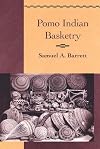
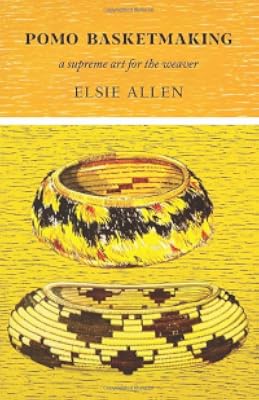
At the time of its publication in 1908, Pomo Indian Basketry was the most complete and detailed study of a single Native American basketry tradition. The work, prepared as Samuel Barrett's doctoral dissertation, earned the author the first Ph.D. in anthropology at UC Berkeley. Among its contents are sections devoted to materials, techniques, forms, and designs. This edition is supplemented with two early articles, "Basket Designs of the Pomo Indians" by Barrett (1905) and "California show more Basketry and the Pomo" by his teacher Alfred Kroeber (1909). Sherrie Smith-Ferri's introduction reviews Barrett's early life and research and identifies the human sources of Barrett's collections and information--a community of talented Pomoan basket weavers. Sherrie Smith-Ferri (Dry Creek Pomo/Bodega Miwok) is a curator at the Grace Hudson Museum in Ukiah, California. show lessTags
Recommendations























Member Reviews
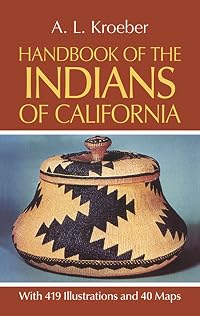
To make their trademark sun baskets, the Pomo covered a basket completely with the vivid red feathers of the pileated woodpecker until the surface resembled the smoothness of the bird itself. With the feathers--30 to 50 to every inch--the Indians fastened beads to the basket's border and hung pendants of polished abalone shell from the basket itself. Pomo women sometimes spent months or years making such gift baskets. Pomo baskets were not only gifts, Archambault says. Baskets were central to Pomo life. Featherless woven baskets of different sizes and shapes were made mostly by women for a variety of Pomo children were cradled in baskets; acorns--a major food staple--were harvested in great conical burden baskets, and wickerwork fish show more traps and quail traps--made by Pomo men--helped furnish other seasonal foods. In fact, food was stored, cooked and served in baskets, some watertight. In earth colors of black, tan and deep brown, the baskets were often covered or accented with tiny colored songbird feathers, clamshell disks (which once served the Pomo as money), glass beads, abalone pendants and stones. They brought in good money for Pomo women, who could earn between $30 and $60 per basket. It beat doing white people's laundry at $1 a day or picking stringbeans for $1.50; what's more, it could be done at home. Often, several generations of a family participated, mothers teaching their daughters and granddaughters. show less
Members
- Recently Added By
Author Information
36 Works 189 Members
Dr. Samuel Alfred Barrett, a noted anthropologist, archaeologist, and ethnologist, was born in 1879. He came to the Milwaukee Public Museum in Wisconsin 1909 as curator of anthropology and developed his special field of expertise, Native Americans of Wisconsin. He was the director of the museum from 1920 to 1940. As director Dr. Barrett was well show more known for his executive abilities, for his scholarship, and for the promotion of museums through a Works Progress Administration project. In 1919 Barrett began the archaeological excavations of the Aztalan Indians. His book Certain Mounds and Village Sites of Shawano and Oconto Counties, Wisconsin (1932) was based on the state's Native Americans. In 1933 he wrote Ancient Aztalan, a scholarly chronicle of the diggings and their impact of the study of Wisconsin's Native Americans. His work has become a classic in the field. Barrett was also an authority on the Native Americans of California. He wrote more than ten books on this subject including Pomo Myths and The Geography and Dialects of the Miwok Indians. In 1906, one of his archaeological discoveries, a Miwok granary, was donated to the Phoebe Hearst Museum of Anthropology, University of California at Berkeley. (Bowker Author Biography) show less
Classifications
Statistics
- Members
- 35
- Popularity
- 819,641
- Reviews
- 1
- Languages
- English
- Media
- Paper
- ISBNs
- 6
- ASINs
- 2